Wallis Island

This place has found its way into our hearts. We were very lucky to connect with the Australian couple when we arrived. They told us about the Cultural Bureau tour, which we probably would not have come upon on our own. The tour was wonderful. Our guide was born here, but has lived in other parts of the world, so she had an interesting perspective. The fact that she also spoke good English was a big plus. We bombarded her with an endless stream of questions, while we were taking in the sights.

Ancient peoples apparently lived on this island as far back as 2,000 BC, maybe earlier. Around 1700 the island was ‘colonized’ by Tongans, who brought nobles and set up a hierarchical society. They built forts, one of which we visited. Around 1830 Christian missionaries arrived. The first batch tried to impose their own ways of doing things; they were killed. But the next batch was more open to the existing culture, and they were accepted. After several years the local king converted, and then of course everyone did. The Catholic Church provided schools, which added to their acceptance. The number of churches here is incredible. Every community has one, and there are lots of communities (not clear to an outsider where one stops and the next begins). Plus there is a large cathedral. The structures are elaborate and beautiful. (Photos to follow when Internet allows.)

The United States stationed forces here during World War II. They built a fuel depot that is still used today. Many of those troops perished at Guadalcanal. After the war, Jeeps and other equipment were pushed over a cliff into the deep volcanic lake, which we visited. The crater is remarkable because of its shape — nearly a perfect circle, with sheer cliffs all the way around.

Wallis and Futuna became a protectorate of France in 1961, with a referendum vote 94% in favor. Our guide remembers life before then, with essentially no infrastructure. There was a boarding school at the south end of the island; people got there mostly on horseback. She was sent there at age five, because her mother was sick and needed care in New Caledonia. Our guide said she felt like she had been sent to the end of the earth.

The population now is about 9,000. France has provided roads and electricity and schools and a hospital. Students can complete high school here. If they go on to university, they usually go to New Caledonia or to France. Parents are scared to have their children leave the island, as they have heard about the many bad things that happen “out there.” Sometimes parents go with the child. Others get Internet (at relatively hefty expense) so they can stay in touch via Skype. The Internet is very slow here, so it’s hard to imagine using Skype! The post office offers 10 minutes of free wifi per day, which we found was just enough to check email; forget doing anything else. Residents are hoping they will get an undersea cable laid to the island to greatly boost bandwidth, but it doesn’t sound like this is coming anytime soon.

The French connection seems to be welcomed here. My sense back in the Marquesas was that there was disdain for the French “colonists,” and we felt that it was important to fly the Polynesian courtesy flag, and say hello in Marquesan. Here the French courtesy flag seems appropriate (which is a good thing because each of the three districts has its own flag, which of course we don’t have, and flying the wrong one would probably get us into trouble). People seem happy here to have the French support, and French citizenship, and they appreciate our feeble attempts to speak a little French.

Everywhere there are small “plantations.” Land is owned by families — plots are all small; no big agribusiness. Taro and cassava are major crops. Unfortunately we haven’t made it to the produce market, which is open every day in town, but only from 5am to 6am! The time works for everyone going to/from the morning church service. We’re told that the singing in the church is something wonderful to behold, but we haven’t made it to a service. Sunday morning the service isn’t until 7am, which is still too much of a stretch for me, though Bob might try to do it tomorrow morning before we leave. Going to church is further complicated by the need to wear long pants, while there is no dinghy dock to allow getting ashore dry.

The caretaker at the Tongan fort brought us green coconuts. The tops were sliced off so we could drink the juice, which was the sweetest I had ever tasted. And hold on to that sliced-off top piece, because when he cuts the coconut open for you it can be used like a spoon to scoop out the soft meat. I’ve never been a coconut lover, but these were really good! Our guide mentioned about the troubles of the world, “When Wallisians hear about people going hungry in other parts of the world, we think, ‘If only we had a way to share our coconuts with them…'”

I asked if the Cultural Bureau had specific projects in the works, and she explained that the big projects are trying to train her staff, and to get the politicians to understand that the 15 year Development Plan needs to include a cultural component. Development needs to be sustainable, not only in terms of natural resources, but also of the culture and the quality of life that they enjoy here. She says sometimes new staff come from France and they think they know what is needed here, instead of listening and learning about the culture. These people are focused on climbing their own career ladder. I said she must have “seen it all” and know how to deal with such people. She laughed and said, “You never know — your own neighbor may surprise you!”

Talking with Bill and Bob later that evening, we realized we have a nagging question that we neglected to ask: Do Wallisians want more yachts to come here? Or is the average of about one per week all they care to see!? I think more would come if they knew what was here. But we’re not sure if we should tell them!

One last reason that Wallis has become special to us is that our coming here was completely outside the purview of the BPO. Not a big deal, but it was the first time that we were entirely on our own to choose the anchorage, negotiate the formalities, and learn about the place, without information provided to us by Jimmy or a local BPO support rep. A little taste of world cruising outside of the rally structure.

We cleared out with the gendarme today, in preparation for leaving tomorrow. He asked our next destination, and we told him Tuvalu. He chuckled and said something to the effect of, “Tuvalu – soon to be underwater!” This is the first time I can recall anyone referring to sea level rise without our bringing up the topic.
A funny Thing Happened on the Way to Tokelau

We got underway from Tonga about mid-day, and saw whales blowing in the distance as we worked our way out of the maze of islands. We had twenty knots of wind on the beam, which meant fast sailing. Too fast. Once we were clear of land it became quite uncomfortable. But more importantly we had allowed three days to get to the vicinity of Samoa, where Drina was, and it was only going to take two. We had the idea that we would spend a night at anchor in Apia, without going ashore, so we could avoid going through the formalities, and then we would leave the next morning in company with Drina. But an email from Michael on Drina said not to try it — that the Samoan officials would require that we clear in and out, including paying a minimum of $100. Michael also wrote that when he gets to Tokelau he planned to have a boat pick up Doina and her son Dan, and since there is no safe anchorage he would simply drift for the day.

These prospects did not sound pleasant. We were crashing through big waves with deeply reefed sails; we needed to kill an entire day so as not to arrive in Tokelau before Drina; and then to spend another day drifting off Tokelau… We decided to drop the Tokelau plan. After an hour’s deliberation we decided to head for Wallis Island (in the French group Wallis and Futuna), west of Samoa and on the way to Tuvalu, where we still hope to rendezvous with Drina.

I had some misgivings about withdrawing our support from Doina’s effort to visit Tokelau — a place she had visited as a child, and a place that is severely threatened by climate change. But here’s the funny (though sad) thing. The next day we got another email telling us that Doina’s request to visit Tokelau had been denied! I can’t imagine why they wouldn’t want the Blue Planet Odyssey support, or simply allow Doina to visit. But whatever…suddenly I felt good about our change of plan!

The wind continued to blow in the mid 20’s, occasionally gusting to 30, and although we tried to take it easy (sailing through the night with just a partially furled jib), it was still uncomfortable and difficult to sleep. Also our cruising guide said that when the wind blows hard at Wallis, a very strong current flows out of the pass (similar to Maupiti), so we had some concern about what lay ahead.

But we arrived unscathed and had no problem at the pass. Two other boats were in the anchorage. We dinghied over to the Australian (English-speaking) one to ask for information about where to land the dinghy and how to clear in. We hit the jackpot — they told us all that and much more, and provided us with a hand drawn map of the places most important to yachties (gendarmerie, customs, supermarket, restaurants). We hitchhiked into town (first car picked us up), and cleared in with the gendarme, but the customs office was already closed for the day. We went to the post office, where they offer 10 minutes of free wifi per day, and checked email (which takes about 10 minutes with their slow Internet connection). We investigated the grocery stores, which are far better stocked than in Tonga. Then we hitchhiked back to the boat (first car picked us up) with fresh baguettes and a few other goodies, and invited the Australian couple to join us for hors d’oeuvres. Very enjoyable. They started sailing their 52-foot boat from Spain seven years ago…and they don’t plan to stop sailing in Australia, but will keep on going around. I picked up a few tips about cruising and sightseeing in Oz.

Next day we hitchhiked back to town (easy, again), and cleared through customs. In fact, the customs official cleared us OUT, too, so that we can leave whenever we want. Very laid back. He told us we were the 19th pleasure boat to come to Wallis this year. This place is off the beaten track… We also visited the Cultural Bureau, which provides information about the islands, and free tours (we plan to do that tomorrow). There is no tourism office here.

We stopped for a chocolate croissant, bought more baguettes and Camembert cheese; we stopped at the post office for our 10 minutes of Internet; and hitchhiked (easy) back to the boat. The other two boats have left, so we have the anchorage to ourselves. All very relaxed. None of my usual “yet another paradise blues” — especially since I have zero expectations here, and no particular schedule…no hurry, no worry. We’re thinking we will stay another three days +/-, and try to pick a good weather window for the 400 mile sail to Tuvalu.

Tonga Addendum

Our BPO support person (Norwegian ex-pat) taxied me to immigrations, the port authority and customs, so we could clear out. I asked him about the mix of two cultures. He said, “The cultures are so utterly different that if you aren’t religious you would have nothing to talk about with the Tongans.” Of course that is an overstatement, as there is always family and the weather, but it provided some insight. He says white people have traditionally been looked up to (after all, they brought the Christian faith), though not so much by the younger people. He expressed admiration for the family values of the Tongans, mentioning specifically respect for elders.

But his feeling is that he lives in a community of 200 ex-pats interspersed in a larger, culturally separate Tongan community. All friendships and most other relationships are within the group of 200 ex-pats only. He doesn’t much like the small town feel of a community of only 200, and he says it will be the ex-pats that eventually drive him to leave, not the Tongans.

+++++++++

While I dealt with the authorities the rest of the crew bought frozen foods and bread and eggs, and picked up our laundry. I tried to make my bed before we left, and discovered that one of my sheets was missing. We don’t have spares, or so we thought. I went back to the laundry shop, where the lady said, “Oh no! I know which boat has it. They had a lot of bedding, and I mixed yours in with theirs.” We tried to hail them on the radio, to no avail. She thought they were moored near the charter company, so I got in the dinghy and checked out all boats there. Didn’t find them. Went to the charter company office and asked about them. “Yes, they were on one of our moorings, but they left earlier today.”

It was time for us to go, so I returned to the laundry shop and gave her the names of all the BPO boats, so if the sheet was returned she could pass it to one of them. Off we went, checking the names of all the boats we passed. We saw a likely boat in an anchorage we had in mind, so we stopped there, but no luck. Next I got in the dinghy and zoomed around toward other likely boats under sail, and to another popular anchorage. Again I saw a boat that matched the description, but it wasn’t the one. One good thing, though — I saw other BPO boats there, and they told me about a family on the nearby island that had invited us all to a Tongan feast the next day (for a fee, of course).

Returning to the boat, I felt good that I had given it the ol’ college try to recover my sheet, but I wasn’t happy sleeping without it. In the morning I tried calling for the boat via the morning “net” that most yachties listen to. No luck. We searched deeper into the bowels of the boat, and found another set of sheets! Dirty, stained, smelly. But the laundry would still be open for 2 or 3 hours. So back into the dinghy for another long and wet ride, back to town. The laundry lady told me she had trouble sleeping because of her mistake. I told her I was going to give her a chance to make it up to me, by washing the sheets ASAP. Ninety minutes later I told her we were even and she should sleep well. Bought gas before embarking on the four miles back in the dinghy.

Bill claimed that because I had taken care of the lack of sheets, we would run into the boat that had mine. And he was right. As we were sailing out of the anchorage they were sailing in. We tried to hail them on the radio, with no luck. So I again jumped into the dinghy for a short wet ride over to them. They were obviously perplexed to see a dinghy pounding over the waves coming at them as they sailed along at 7 knots. But when I shouted that they had a sheet of mine, they said, “Yes! We ended up with an extra one. But how did you track us down??”

++++++++++

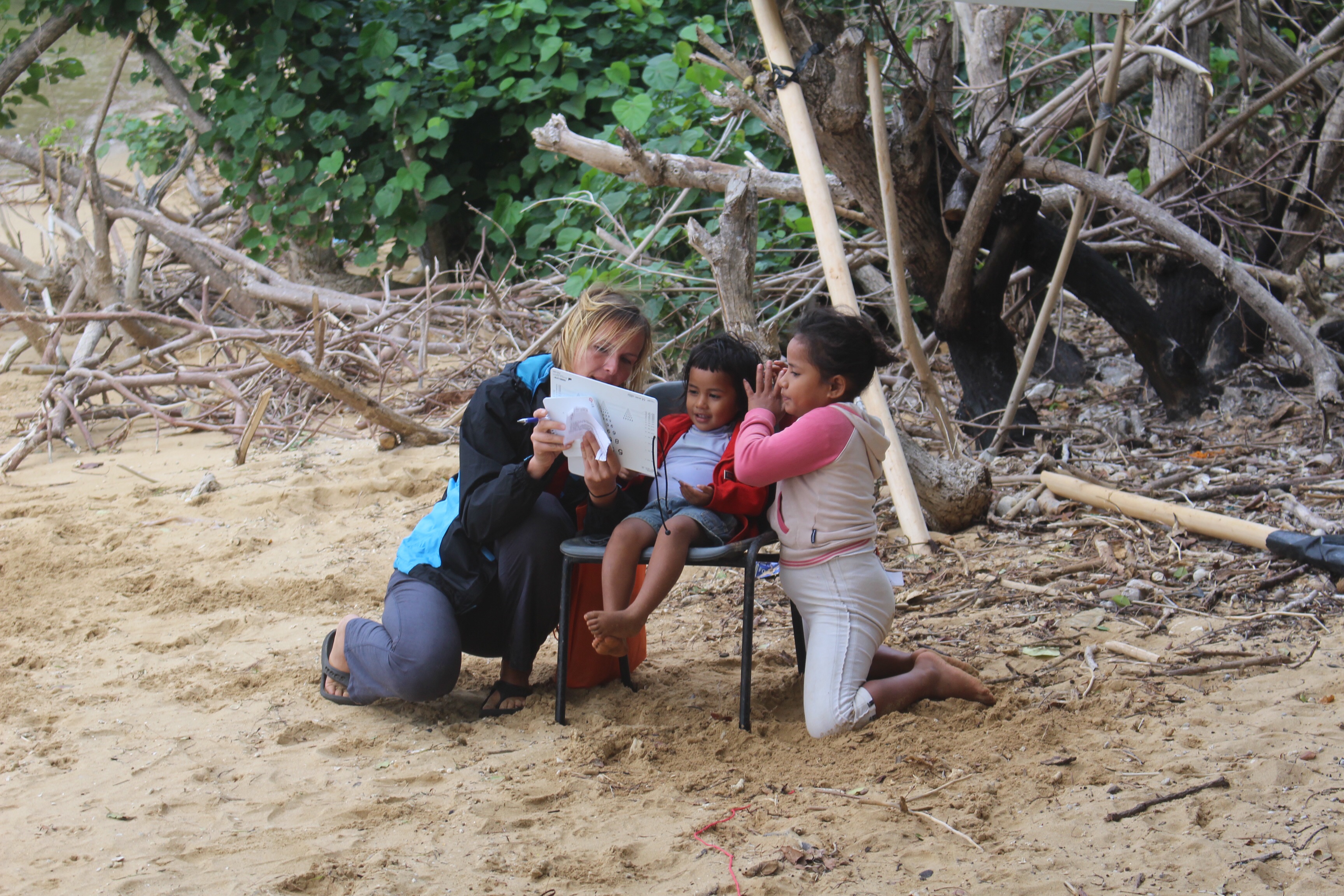
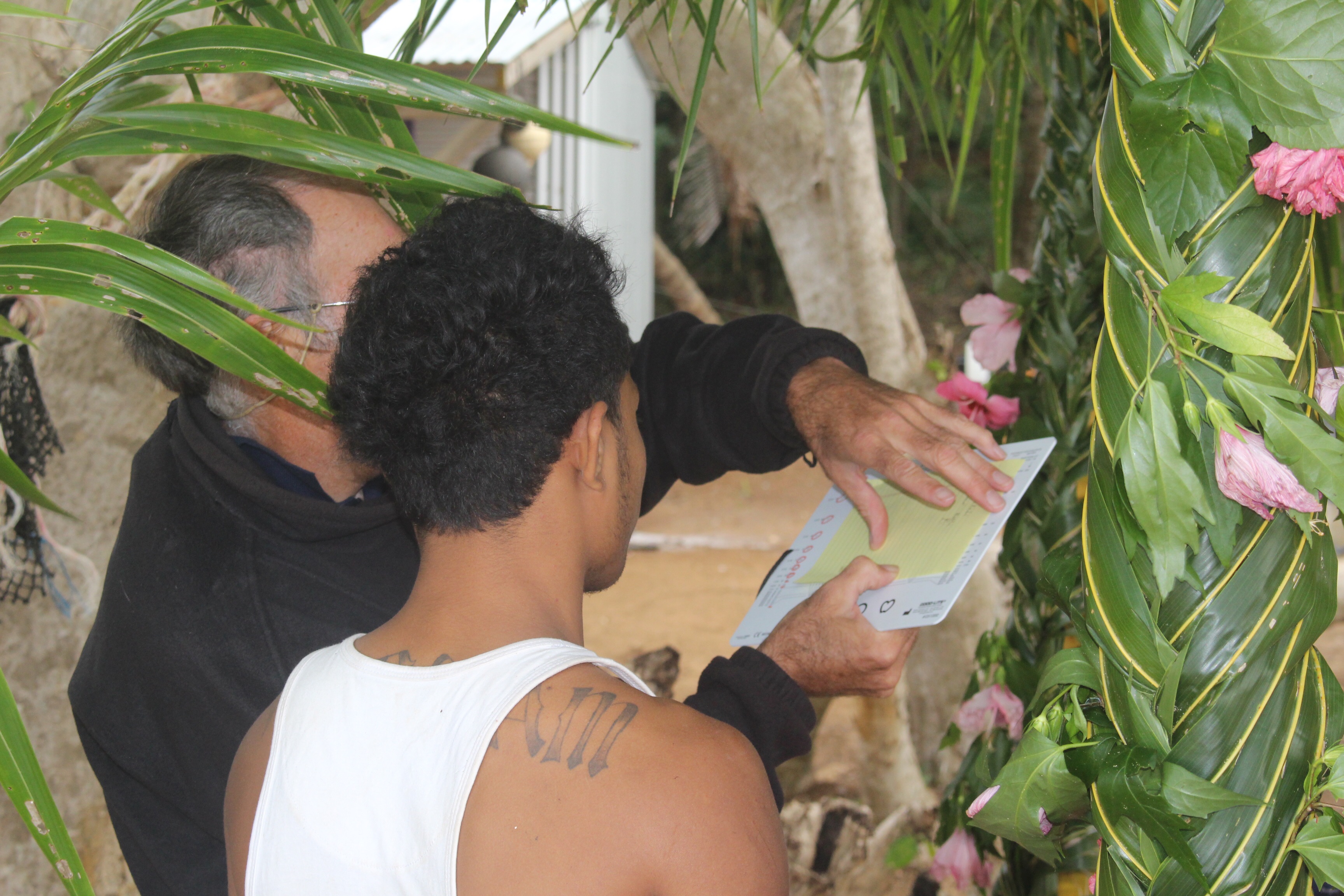
Shortly thereafter we were anchored near the other BPO boats. Most crews were already heading ashore to do eye testing of the eleven kids in the family. I don’t think I’ve mentioned that this is a service that several of the BPOers, including Bob on our boat, are doing in conjunction with a non-profit in Germany. The BPOers were trained in Papeete to test the kids’ eyesight. They report the results back to the non-profit, which makes glasses for the kids who need them. And then the really cool part — they connect with boats bound for the same islands, and have the glasses delivered. That may happen a year later, but it is eye care that the kids likely would not have at all otherwise. What a great idea!

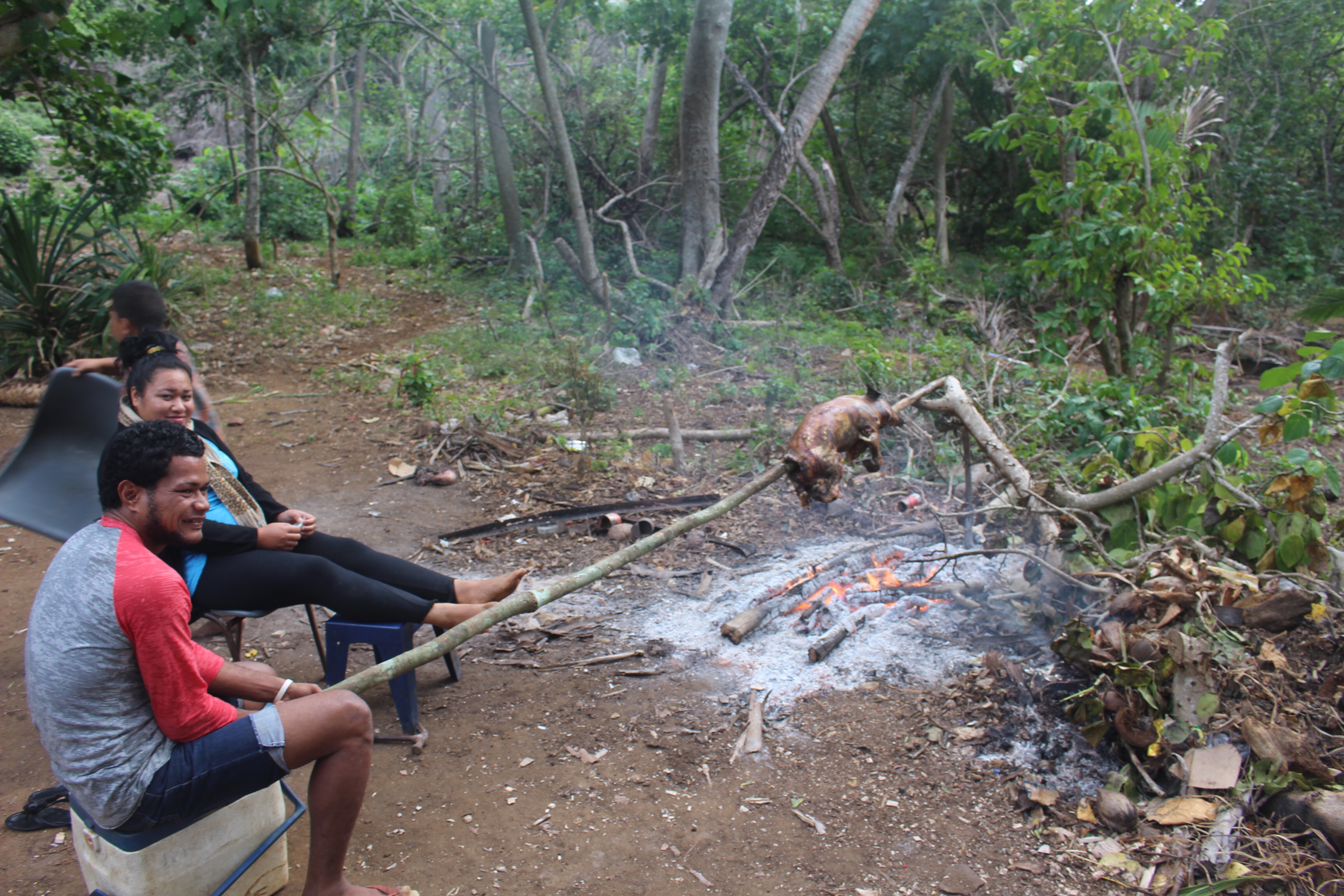
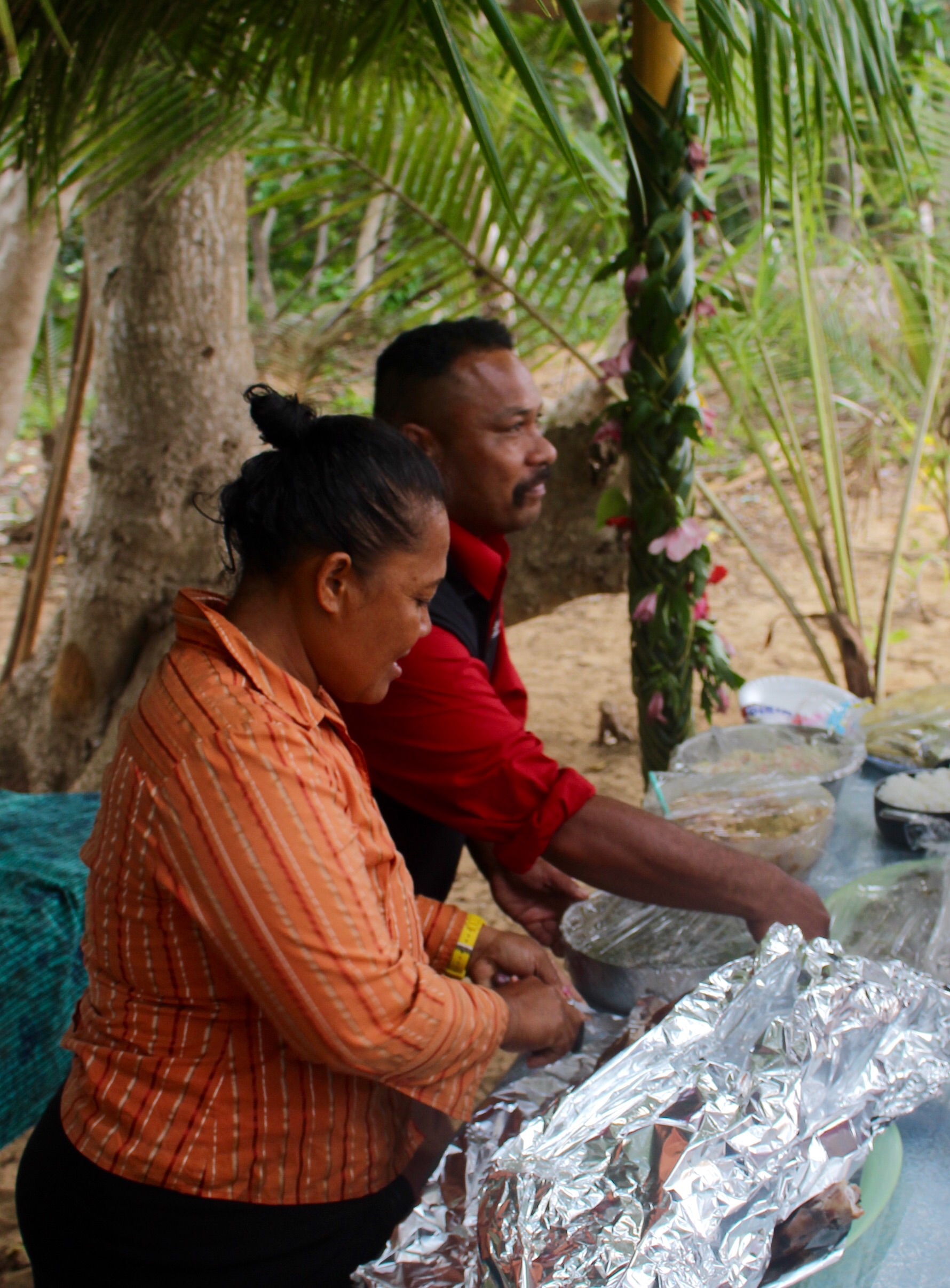
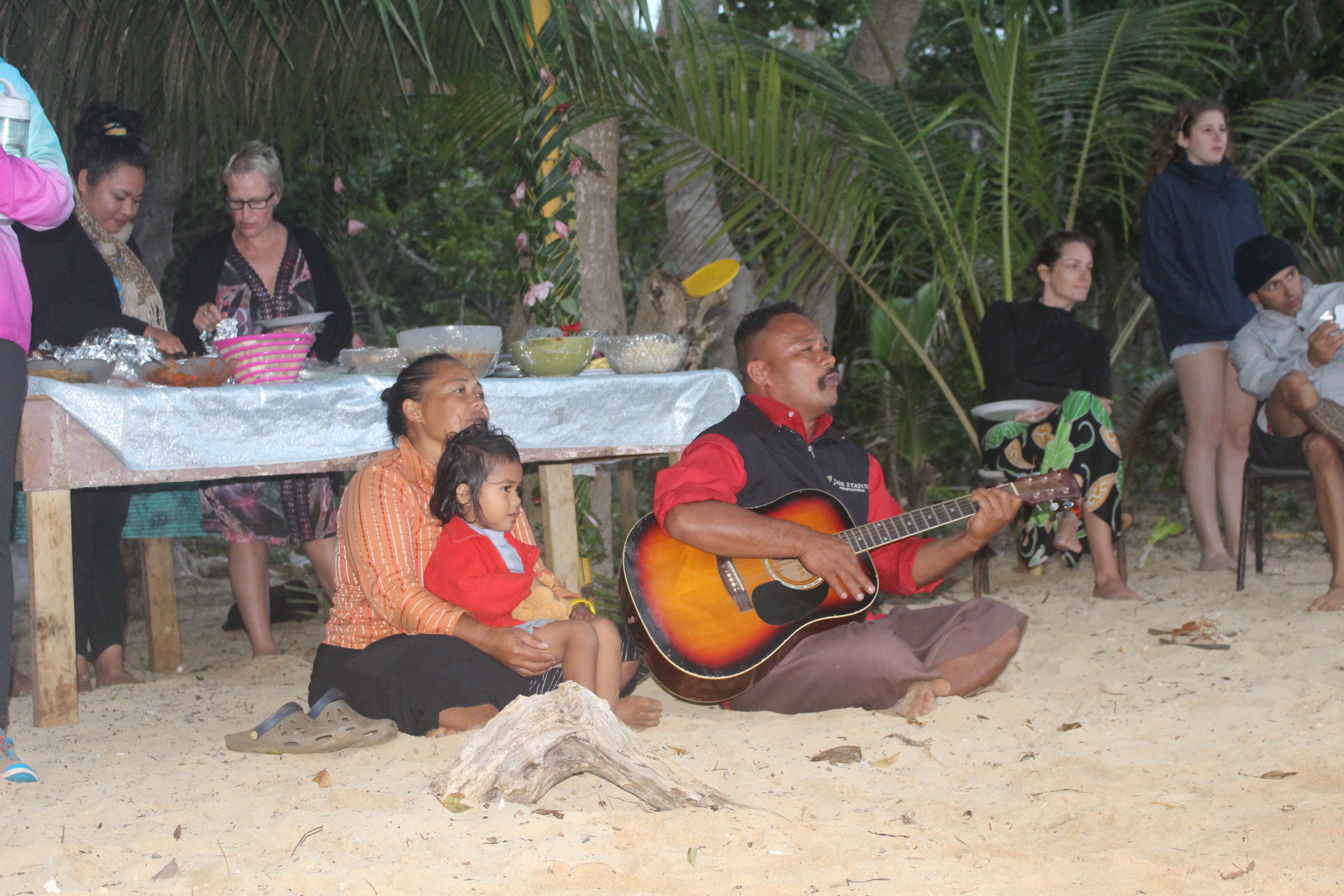
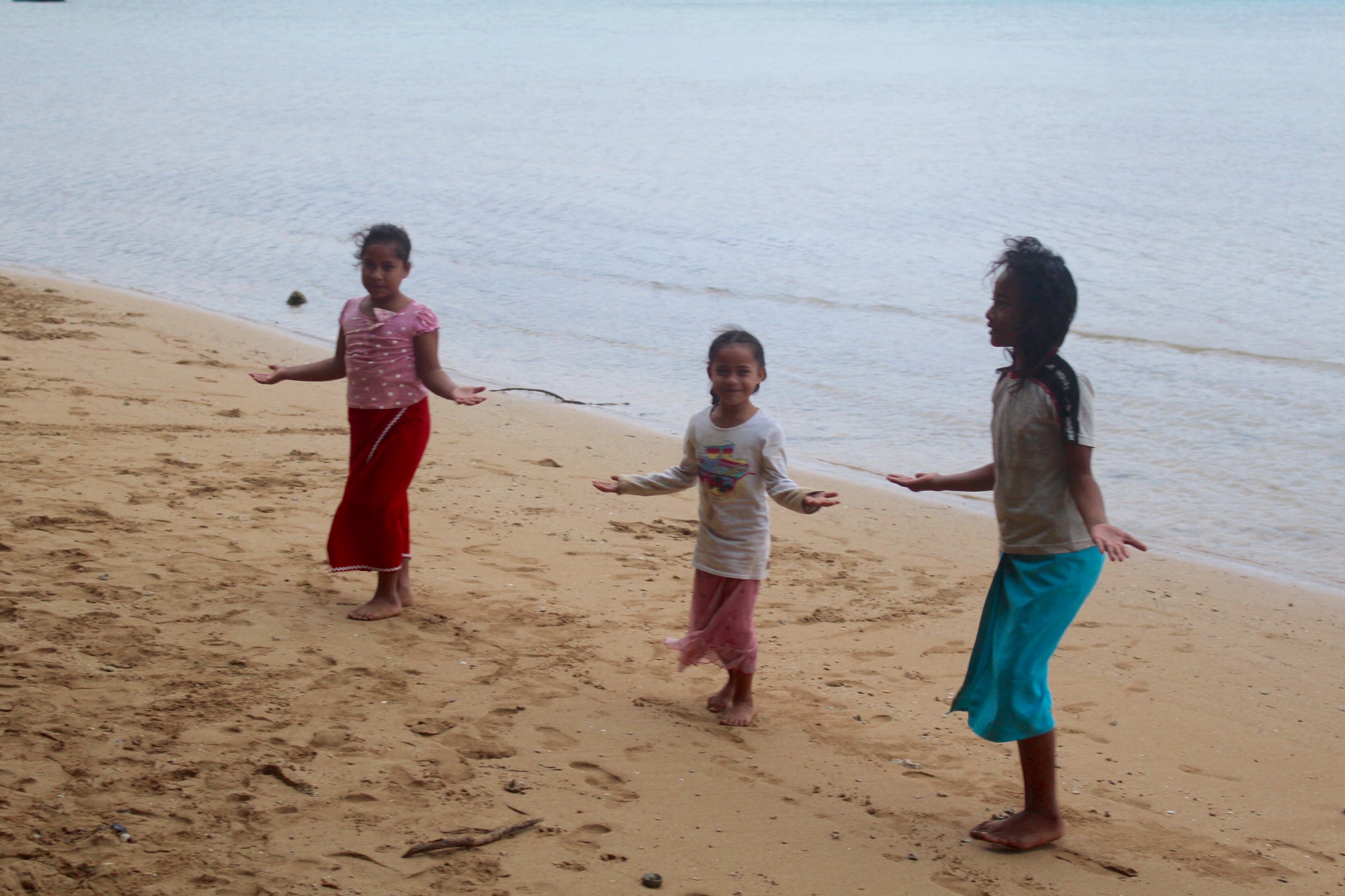
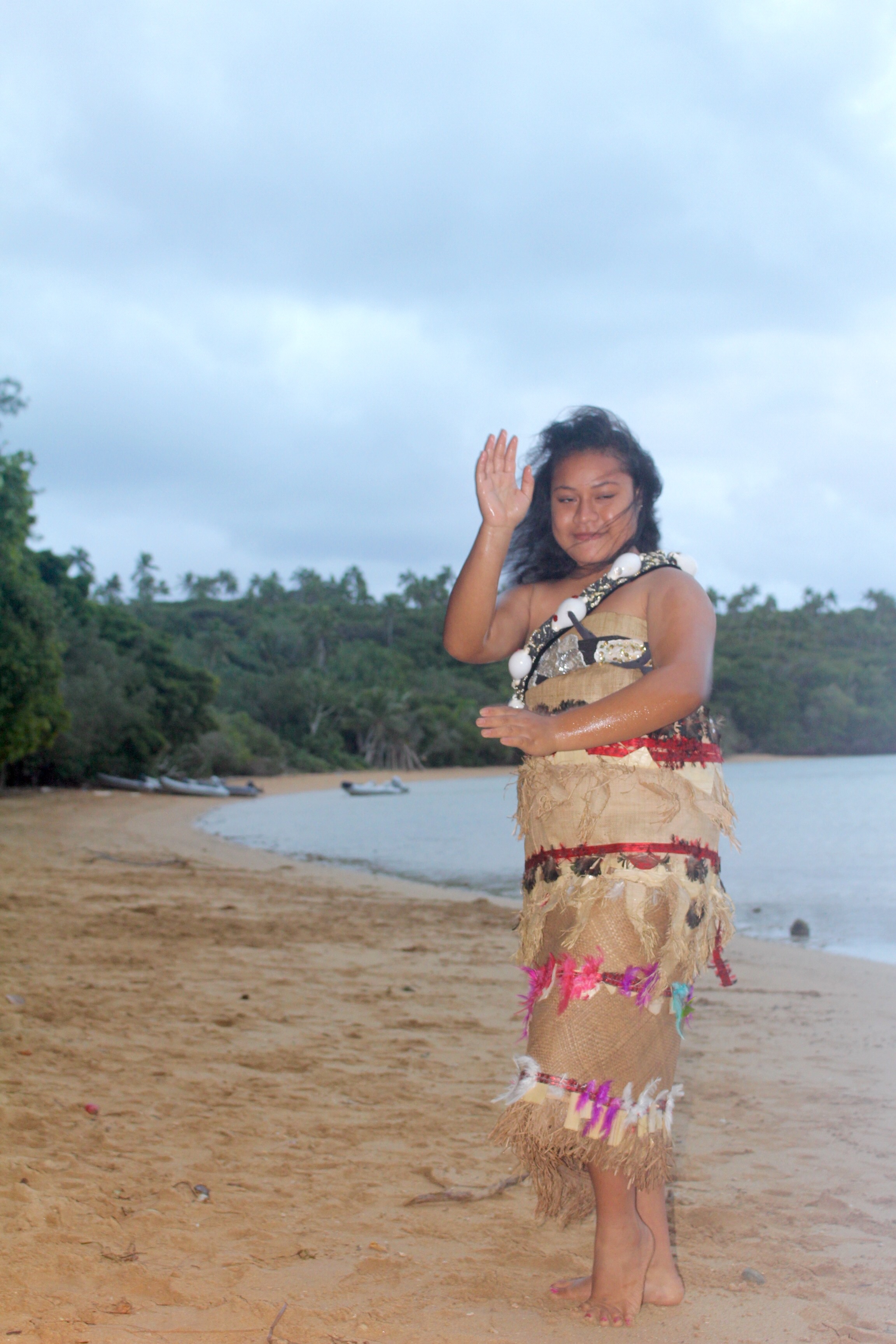
The rest of us soon followed ashore, and were provided what truly qualified as a feast. There is only the one family on the island, yet they managed to prepare at least a dozen different dishes for twenty hungry people. Plus Dad played guitar and sang, with Mom accompanying on vocals, and the girls did traditional dancing.

Tomorrow morning we are going to provide some epoxy resin to help our host patch a hole in his boat, before we REALLY leave Tonga bound for Tokelau.

Eye testing
Eye testing
Eye testing
Eye testing
Roasting dinner
Roasting dinner
Dinner is served
Dinner is served
And song
And song
And dance
And dance

image