Thanks to all who posted comments about climate change. It’s not too late — would love to hear more thoughts and opinions.








Thanks to all who posted comments about climate change. It’s not too late — would love to hear more thoughts and opinions.
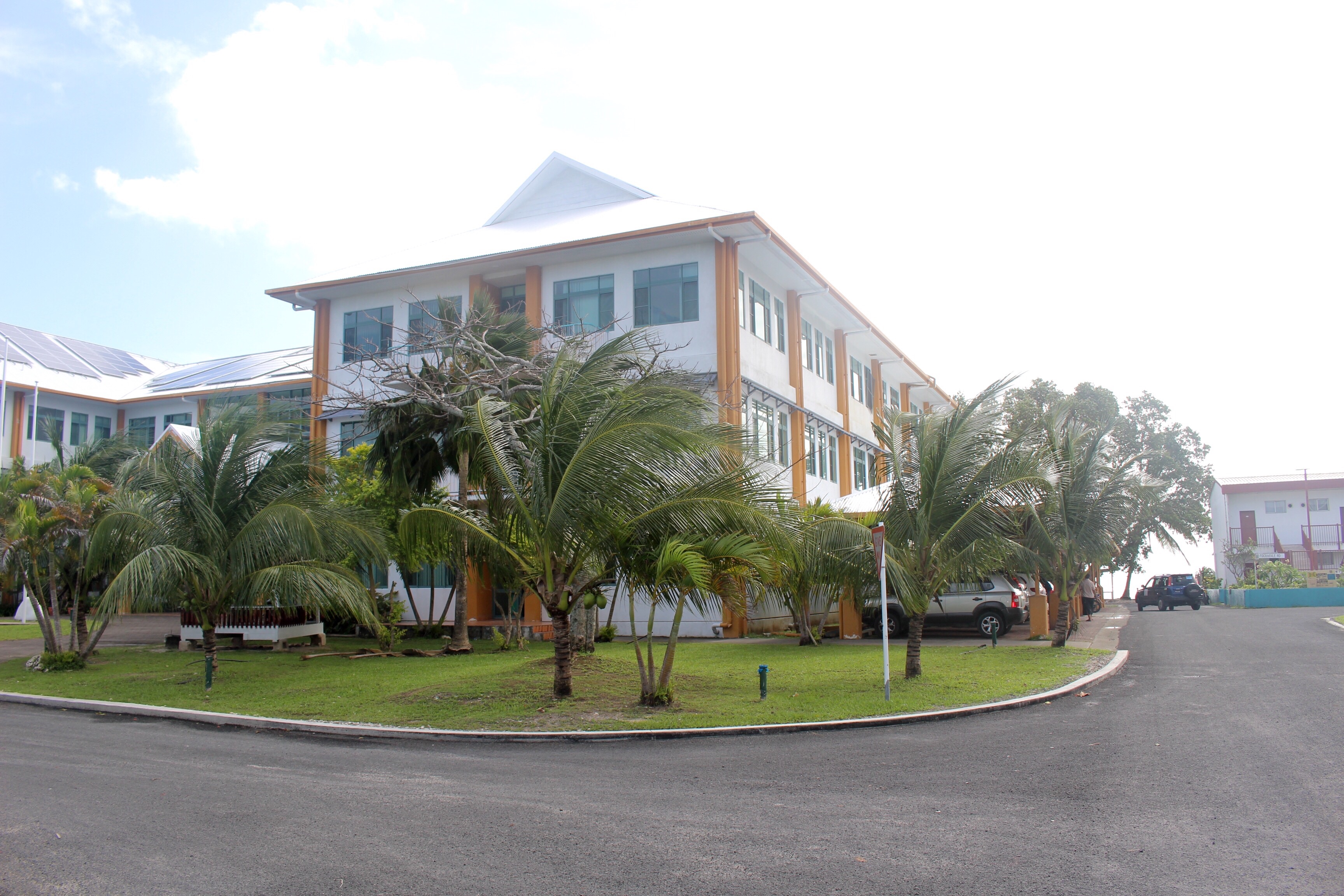
Going ashore with Doina (Jimmy Cornell’s daughter) is interesting. She has contacts here. As a child she was here in 1978 when the country became independent. The Cornells made a lasting connection with a local family. And Michael on Drina has connections as well from sailing here decades ago. These connections led to a referral to the Finance Minister. Bob and I followed Doina and her son Dan to the Finance Minister’s office, and watched and smiled and nodded and shook hands as Doina explained about Jimmy and the BPO and we are on visiting yachts sailing around the world and we want to call attention in our little ways to the plight of Tuvalu… “The Prime Minister is very focused on climate change,” he said. “Have you met with him?”
“No,” says Doina, “Could you arrange for us to do that?” Wow, she’s good at this! We come away with a tentative meeting, to be confirmed the next day.
When Bob and I take Doina ashore the next morning, we are met at the dinghy dock by a messenger. “The Prime Minister would like you to attend the workshop today.” No, the messenger doesn’t know anything about the workshop, only that he was to invite the people on the yachts.
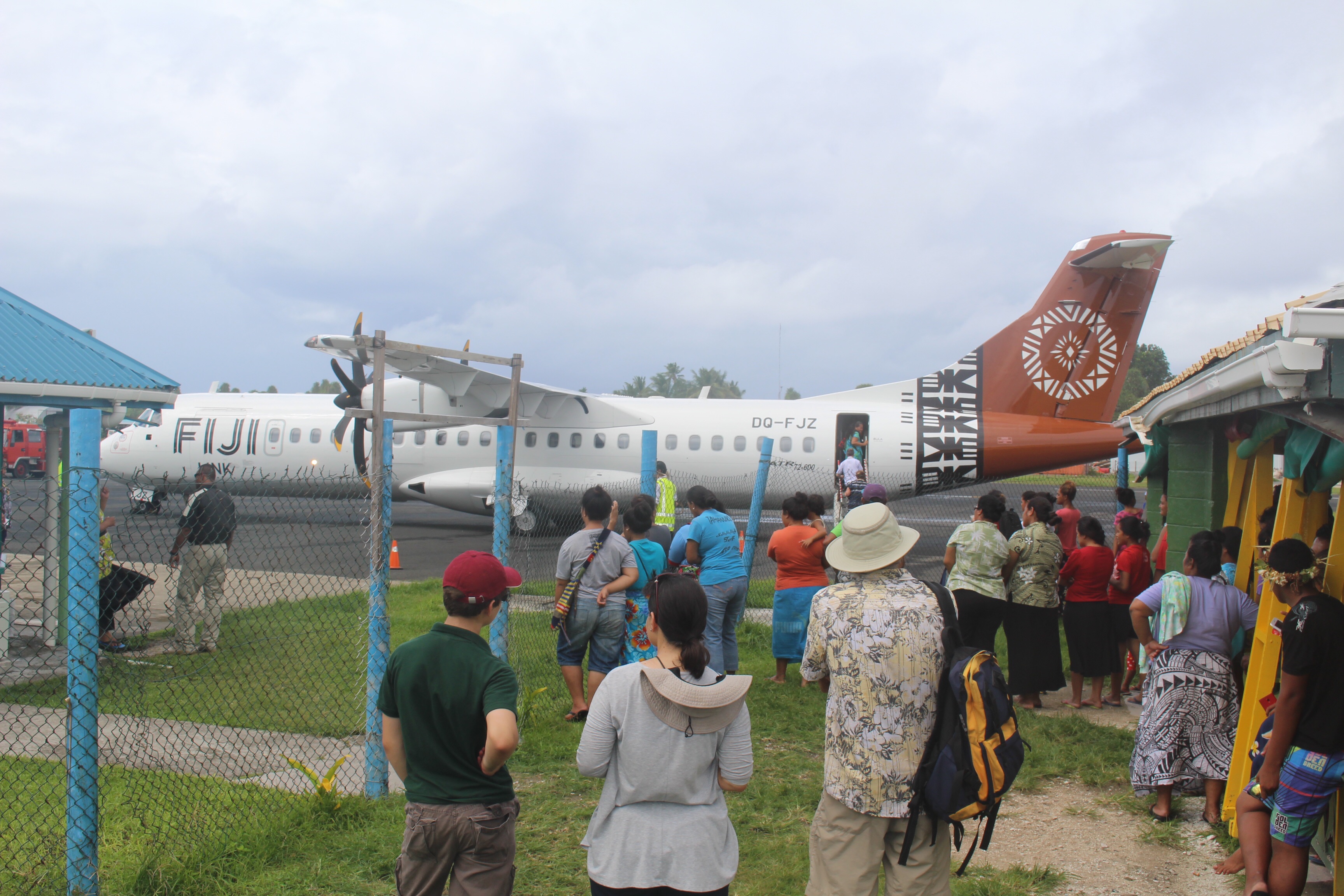
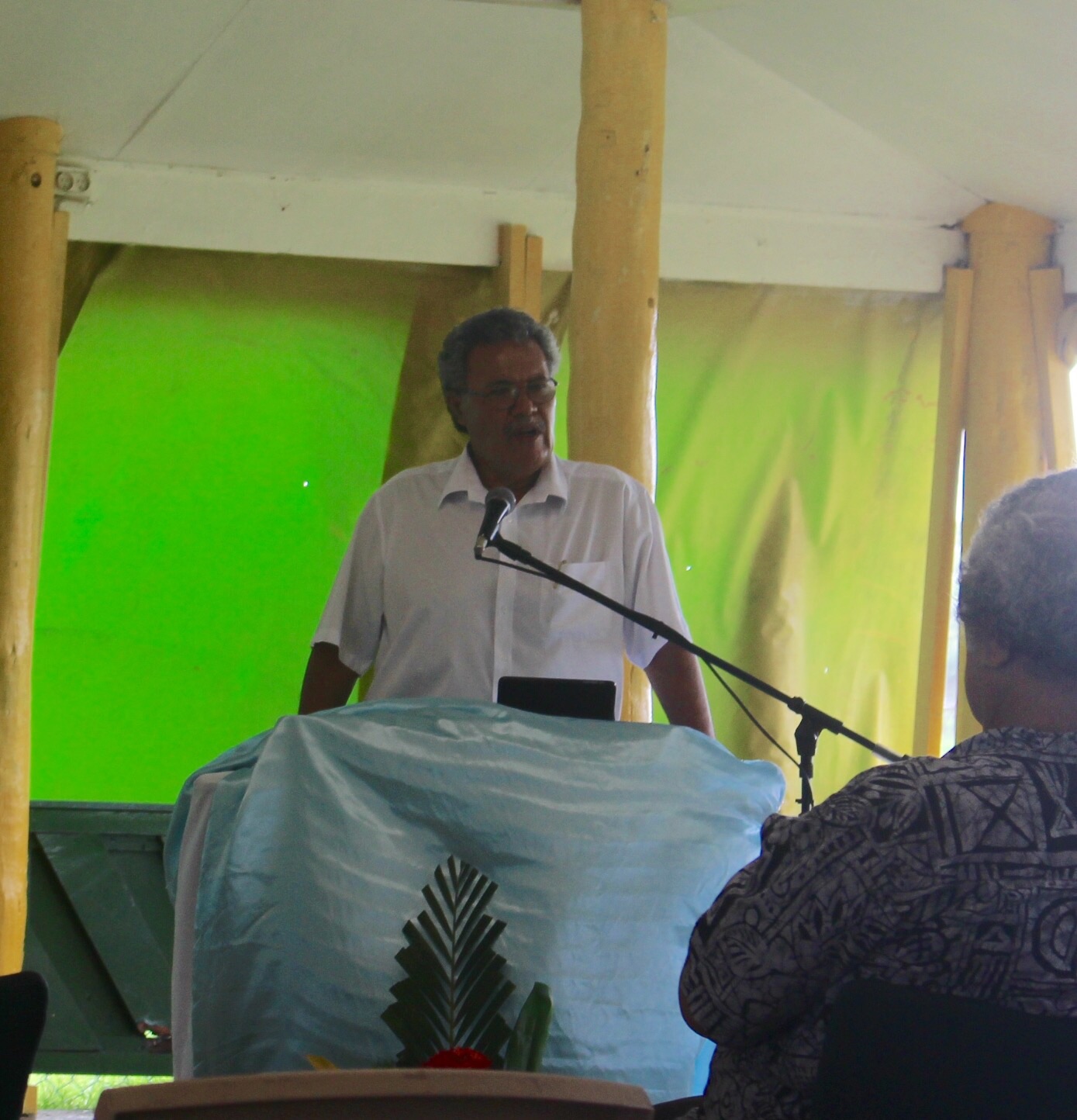
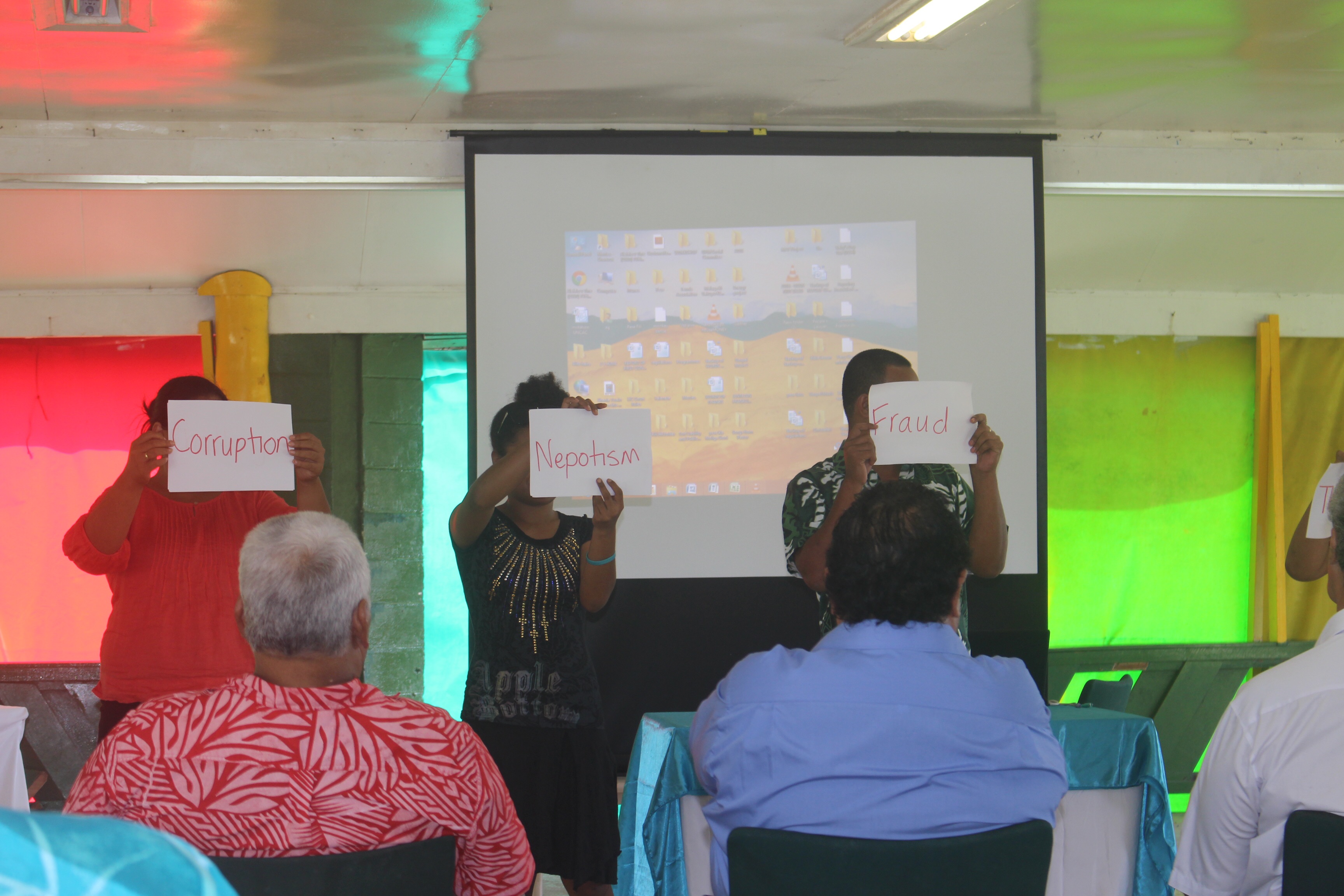
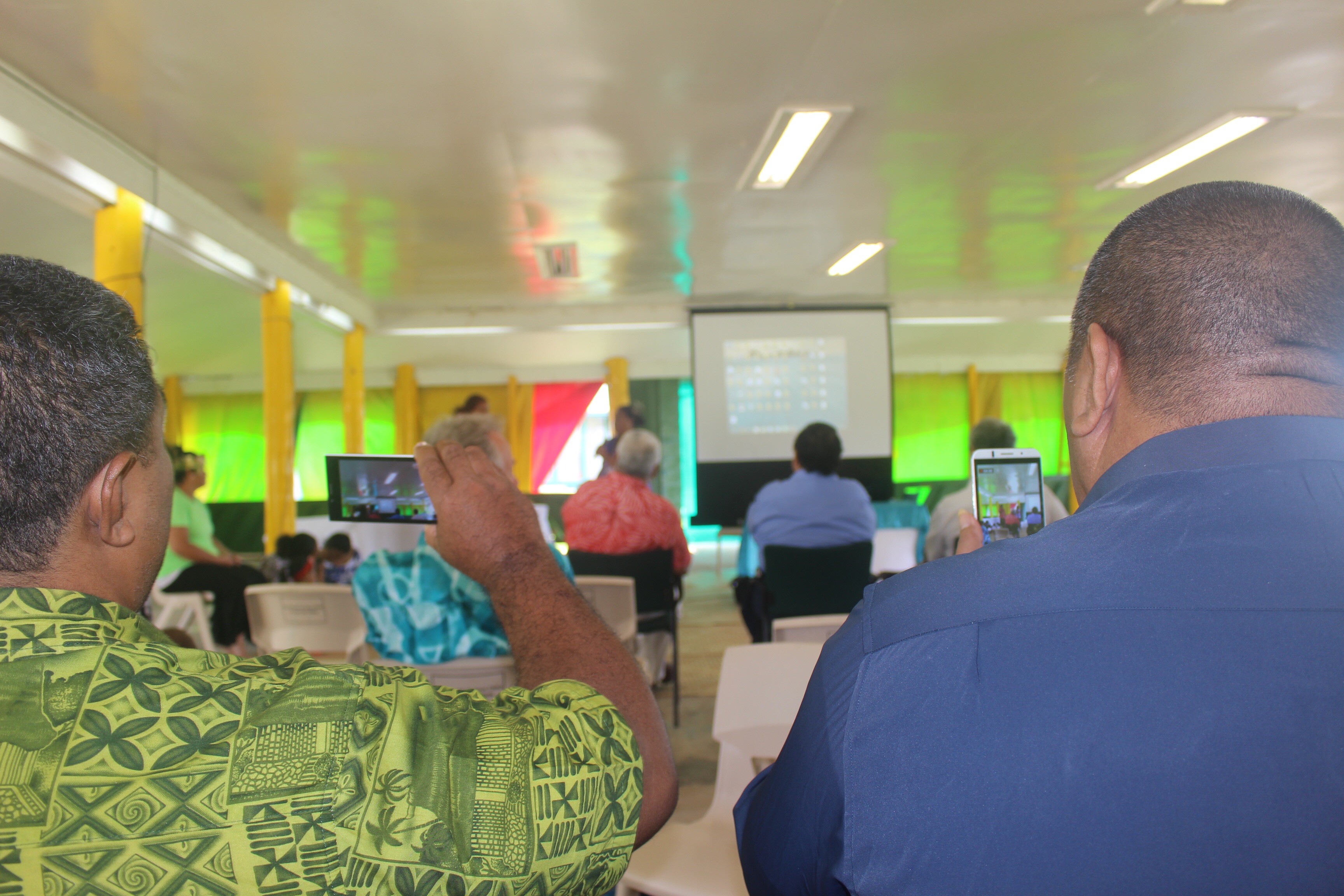
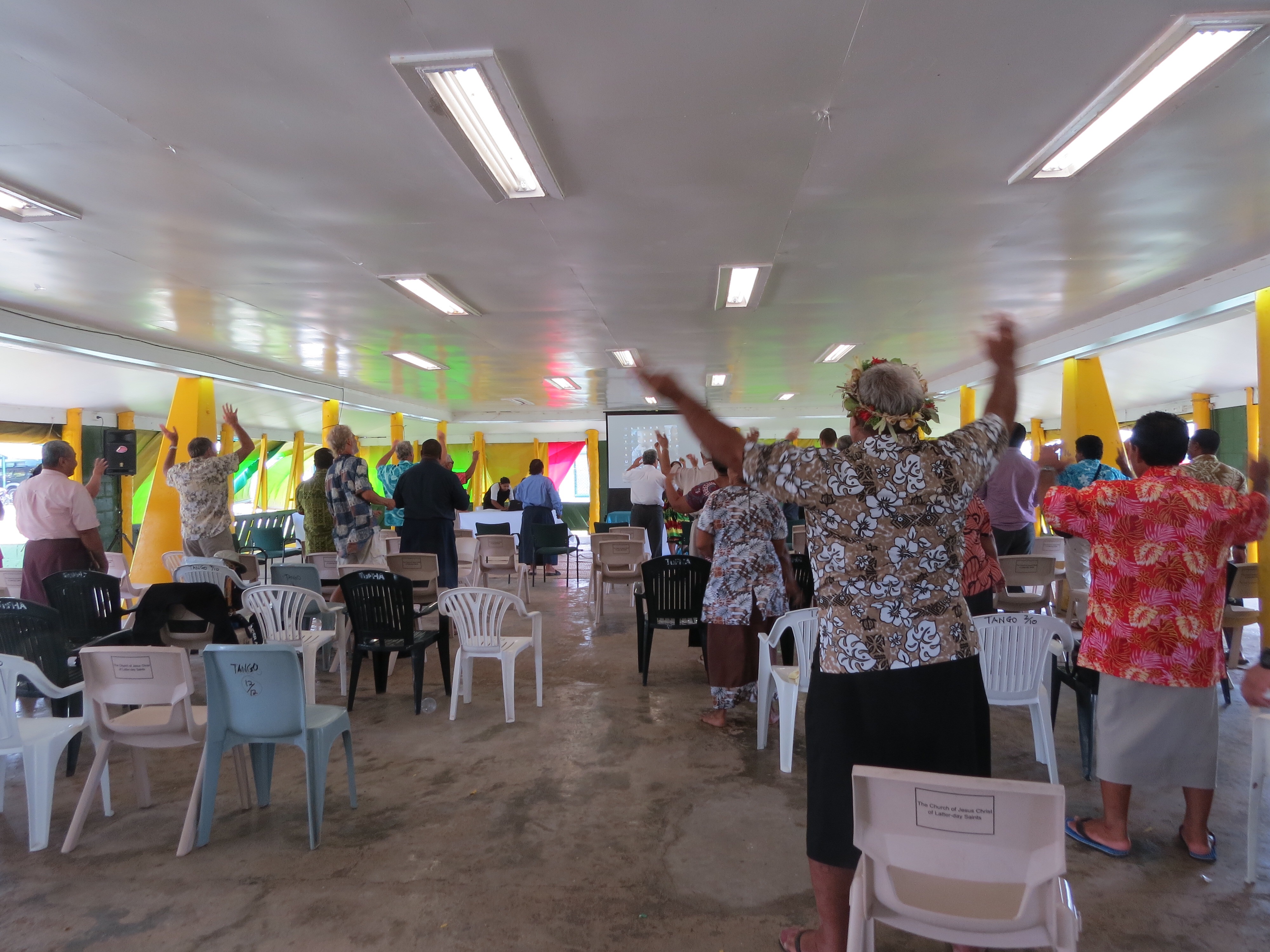
With no idea what to expect, we go to the same pavilion where families were watching loved ones board the airplane yesterday. It is now filled with chairs. The chairs (with lettering on the back saying they were supplied by the Mormon Church) seem to be absurdly far apart…until you factor in the size of many Tuvaluans… We are told that the PM is going to sign the accord for the United Nations Conference Against Corruption.
We got to listen to speeches in Tuvaluan, peppered with English terms like “public sector” and “bribe” and “leadership and management” and “contextualize.” The PM’s speech was largely understandable from the English phrases, and I found it very interesting. The gist of it was this:
The spirit of the United Nations Conference Against Corruption is “Do the right thing. And do things the right way.” Tuvalu is doing the right thing, in the right way, and we are happy to sign the accord. However, we must also call attention to the problems facing Tuvalu. Tropical cyclones are our biggest threat. We have “development partners” who offer to help us. But these agencies are not democratized. They are controlled by powerful governments and commercial interests. The World Bank must be reformed. The Agency for International Development must be reformed. The development partners think of their efforts as charity. It is not charity for Tuvalu; it is a survival fund.
I found this rather inspiring. Here is a man willing to stand up for what he believes is right, and ask the world to stand with him.
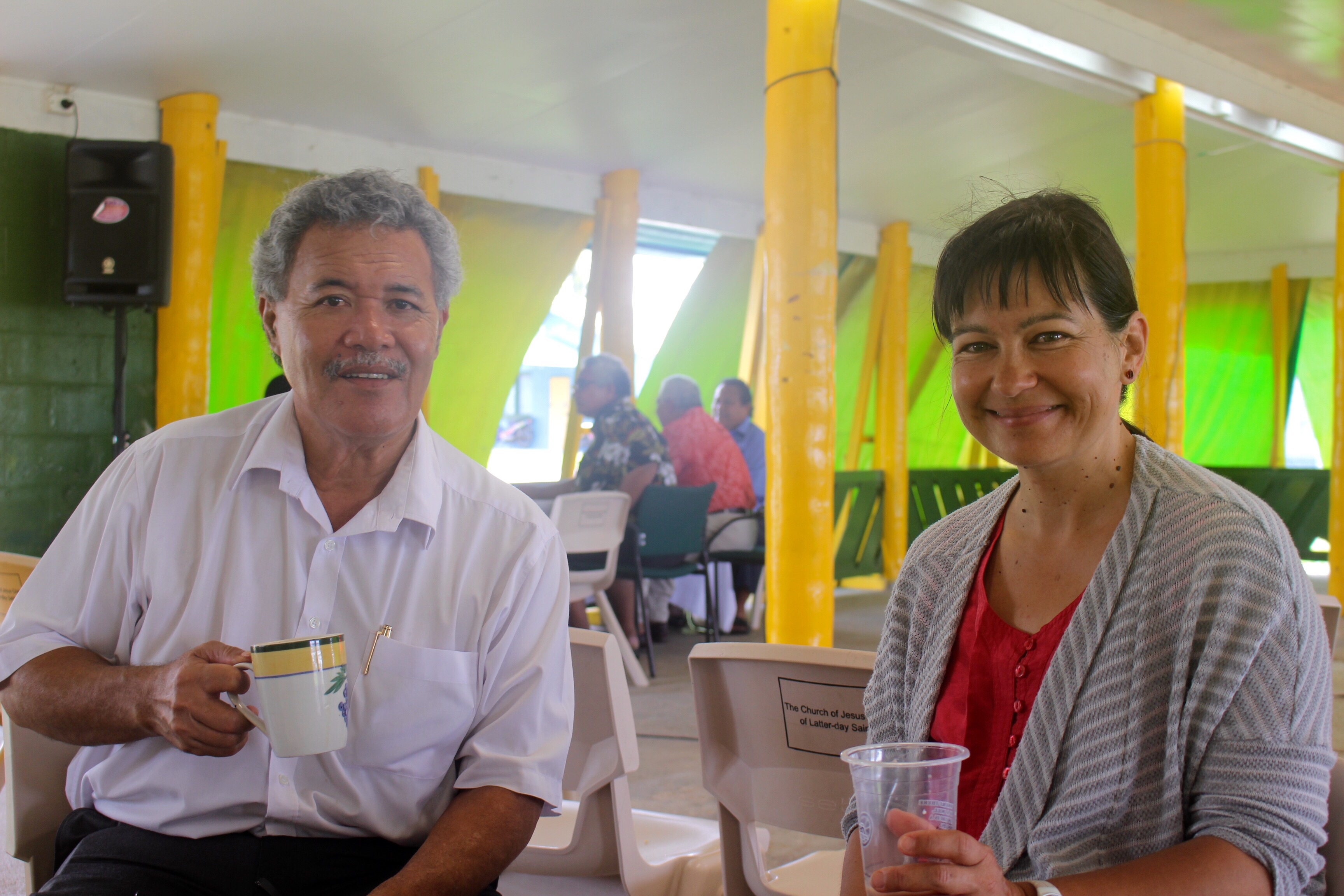
There was a break for tea, which turned out to be a feast of interesting food, and weak hot chocolate. The Finance Minister joined us and said he would ask the PM over. And so we got to chat with the Prime Minister of Tuvalu. He asked about Jimmy, and he appreciated our concern for Tuvalu. He hoped we would help raise awareness of his country’s situation. He said his motto these days is, “Save Tuvalu, save the world.” He lamented that although there are funds pledged to help places affected by climate change, the “bureaucracy and paperwork is higher than sea level rise.”
I offered that raising awareness is the main thing we can do, and maybe we should make T-shirts with his “Save Tuvalu, save the world” motto. He liked that idea, though he quipped that the industrialized countries have scheduled the upcoming Paris climate change conference when it will be too cold for T-shirts…and when global warming will not be present in people’s experience.
I found the entire event fascinating…and it leaves me face to face with a familiar personal dilemma. One the one hand, I like this place, and I like the people I have met, and I like what I have seen of their culture. If/when sea levels rise, and cyclones hit, this country is going to be destroyed — the people will become “climate change refugees,” and their culture will almost certainly be lost along with their homes. I would be proud to take a stand with Enele Sopoanga, PM of Tuvalu, demanding that all the countries of the world “do the right thing” in limiting climate change, and minimizing the effects.
On the other hand, change happens. Forces are already in play that will impact Tuvalu and the world climate. I believe that mankind is generating some of these forces, and I believe there are “natural” (non-human) variations also at play. Is the “right thing” to try to preserve Tuvalu? Or is it to help the Tuvaluans adapt to the coming changes?
Either way, here I am trying to raise awareness. Now you know a bit about nine South Pacific atolls and reefs called Tuvalu. I would be delighted to read your comments — what you think is “the right thing” about Tuvalu, about climate change, about related policies of industrialized and developing countries, about renewable energy sources, and about what actions an individual can/should take. Or, like me, what questions you have that leave you uncertain about what to think and what to do.
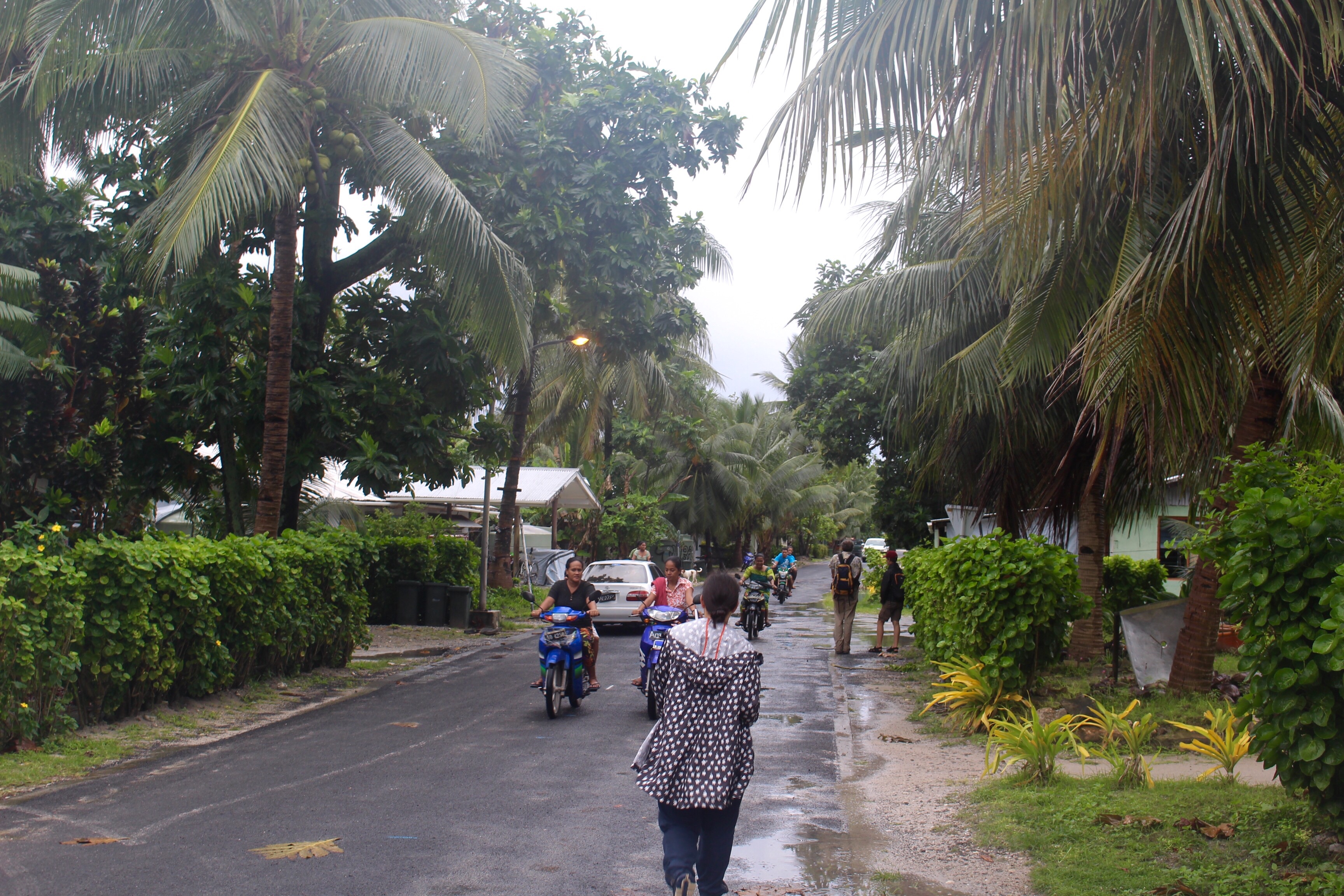
Tuvalu is full of little stores. They all carry a few imported canned goods, and onions. The biggest one, the “supermarket” also has imported/refrigerated apples and oranges and a handful of other items. When we asked about a produce market, we were told, “Friday morning at 5am, near the end of the airstrip.” We were also told by a policeman at the airstrip, “Down the main road 150 meters. Open until 8am.” Having no fruit left on board, Bob and I got up at dawn and went for it.
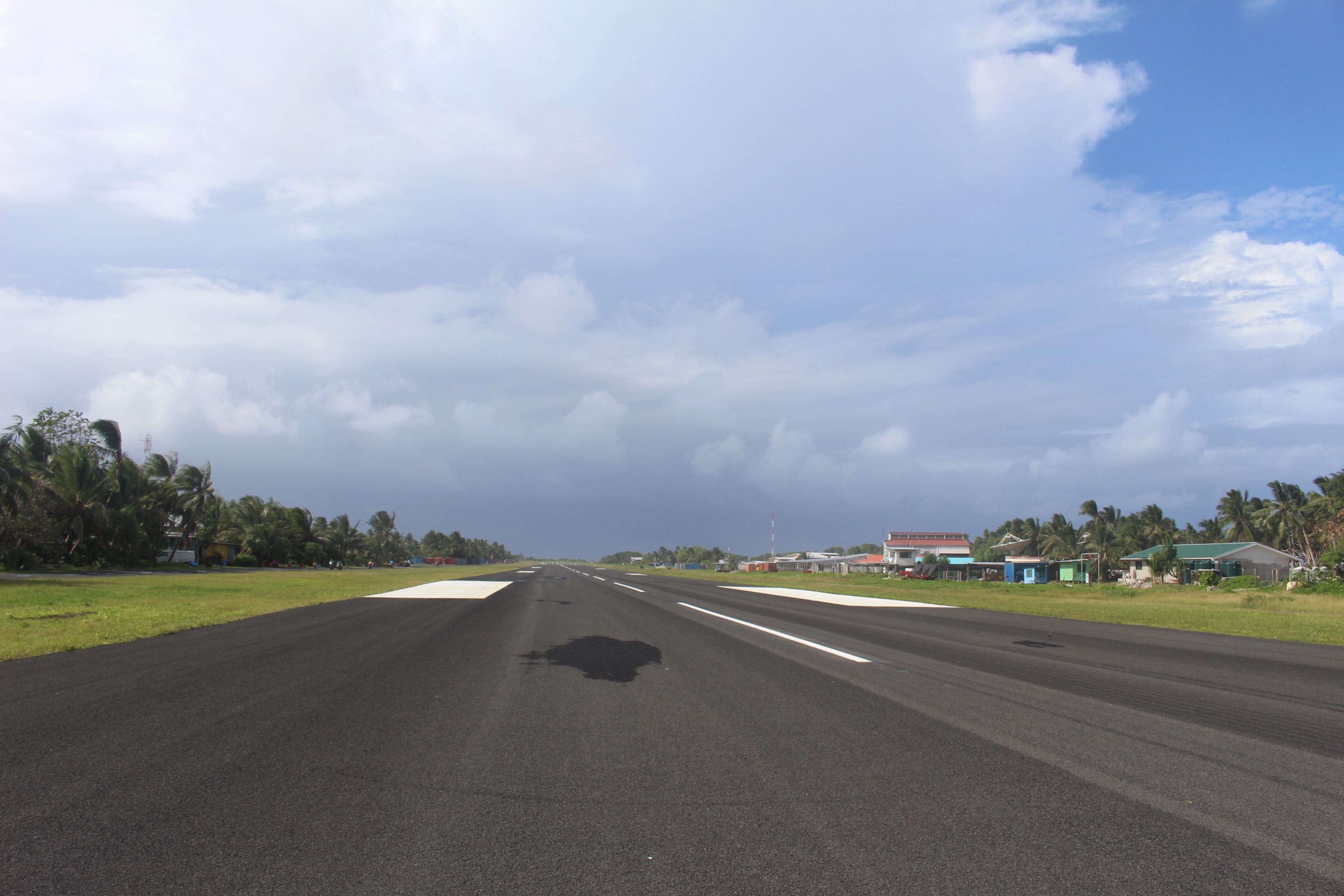
Seeing no market in the 150 meter vicinity, we asked, and were told, “Across the runway, on the ocean side of the island.” And on the other side of the runway we got further pointers to a place where a couple dozen women were waiting with plastic baskets and tubs. Tables were spread out, mostly covered with seedlings. But also cucumbers and lettuce. Someone told us to put our name on the list (we were number 36) and they would call us by number. But not seeing any fruit, we asked, and were told the fruit was already gone. And when we asked specifically about bananas, the answer was, “I don’t think they have any bananas; they don’t have any banana trees…” Further questions led to a description of a market across the runway and down the road on the lagoon side, where we would see bananas hanging, and they also sell bread. Our spirits lifted, we crossed the runway again. (When an airplane is approaching, the fire engine blares its siren, and people stop crossing the runway.)
We asked several women sweeping in front of their houses. They all gave us puzzled looks, and the consensus was, “Maybe at the supermarket.” At this point we had walked in a big circle. But we knew where the ‘supermarket’ was, and thought maybe early Friday morning they had fresh produce. Not so. Asking there, we again got puzzled looks, and the clearest answer yet — “I don’t know.”
Feeling thoroughly thwarted, with no new ideas about where to try, we headed back to the dinghy. But we ducked into another store along the way. No bananas. Did you try at the supermarket? The gentleman tending the store was huge, and had a stammer making it difficult for him to get out a sentence, but he had a captivating smile. Bob told him how much I was wanting bananas, but nobody had them for sale, as we headed out the door. He said something unintelligible but commanding — perhaps “Wait!” in Tuvaluan. He raised up his massive self and padded out the back door. Probably gone to ask the woman of the house where to find bananas. But he was gone for a long time. We thought about leaving, but he was trying to help us, so we waited. And when he returned it was with a plate of bananas!!
Of course we offered to pay him. Of course he said no. I have a feeling the way my eyes lit up and the smile erupted on my face, he received his “payment.” In fact, he seemed to take enormous delight in having presented us with this gift. With a proliferation of thanks, we said goodbye and headed to the dinghy with a lighter step. It seems that you cannot buy bananas here in Tuvalu…
 ZekeTheSailor