Our driver from our Dune 7 tour met us in the morning to drive us to immigrations/customs (no charge; a bonus). Dealing with the authorities at Walvis Bay was a breeze. The only place easier was Wallis, where the cleared you out at the same time they cleared you in. At the yacht club we filled our 5 gallon water jug for the third time, and then back to the boat. We were underway by 11am.
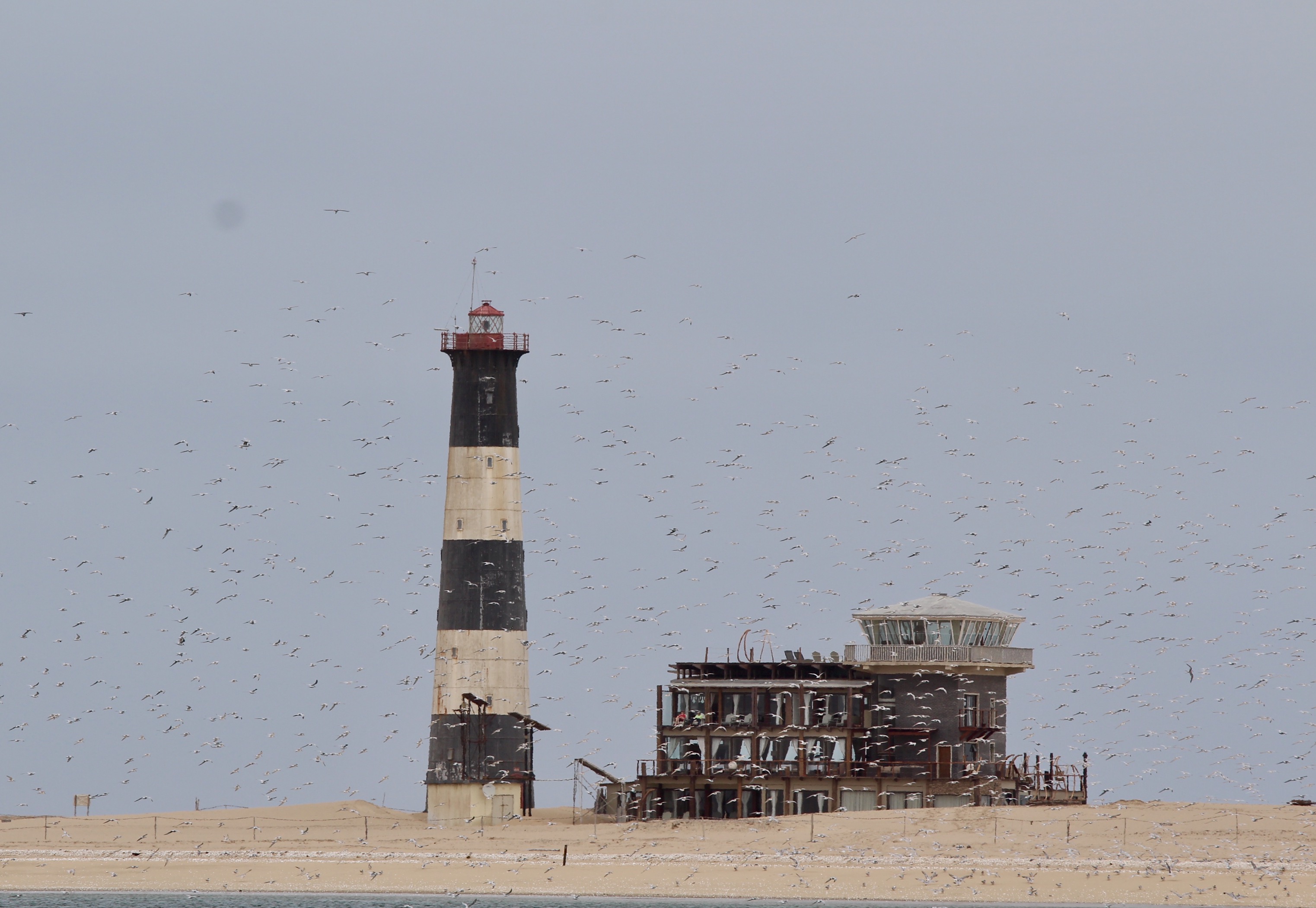
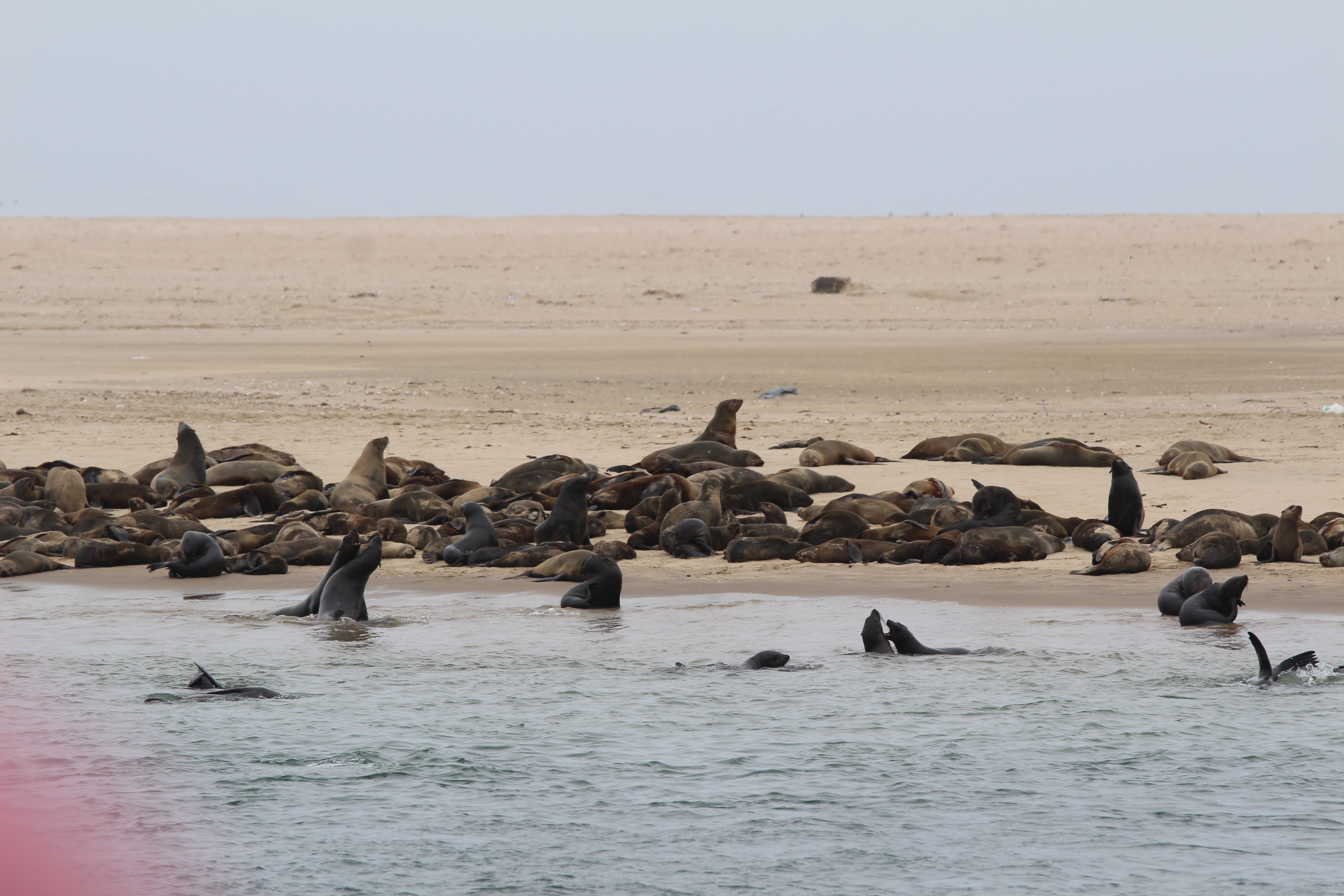
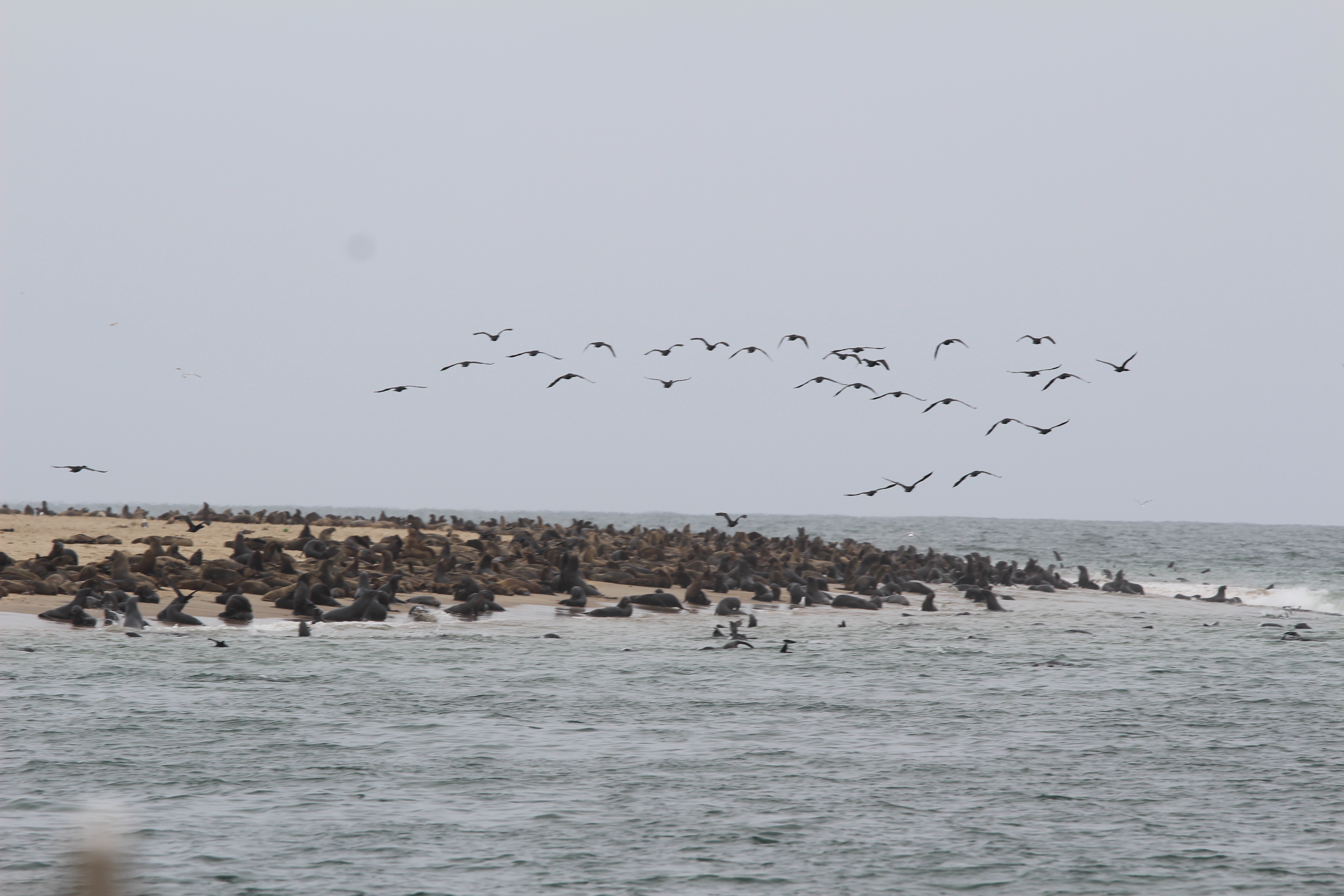
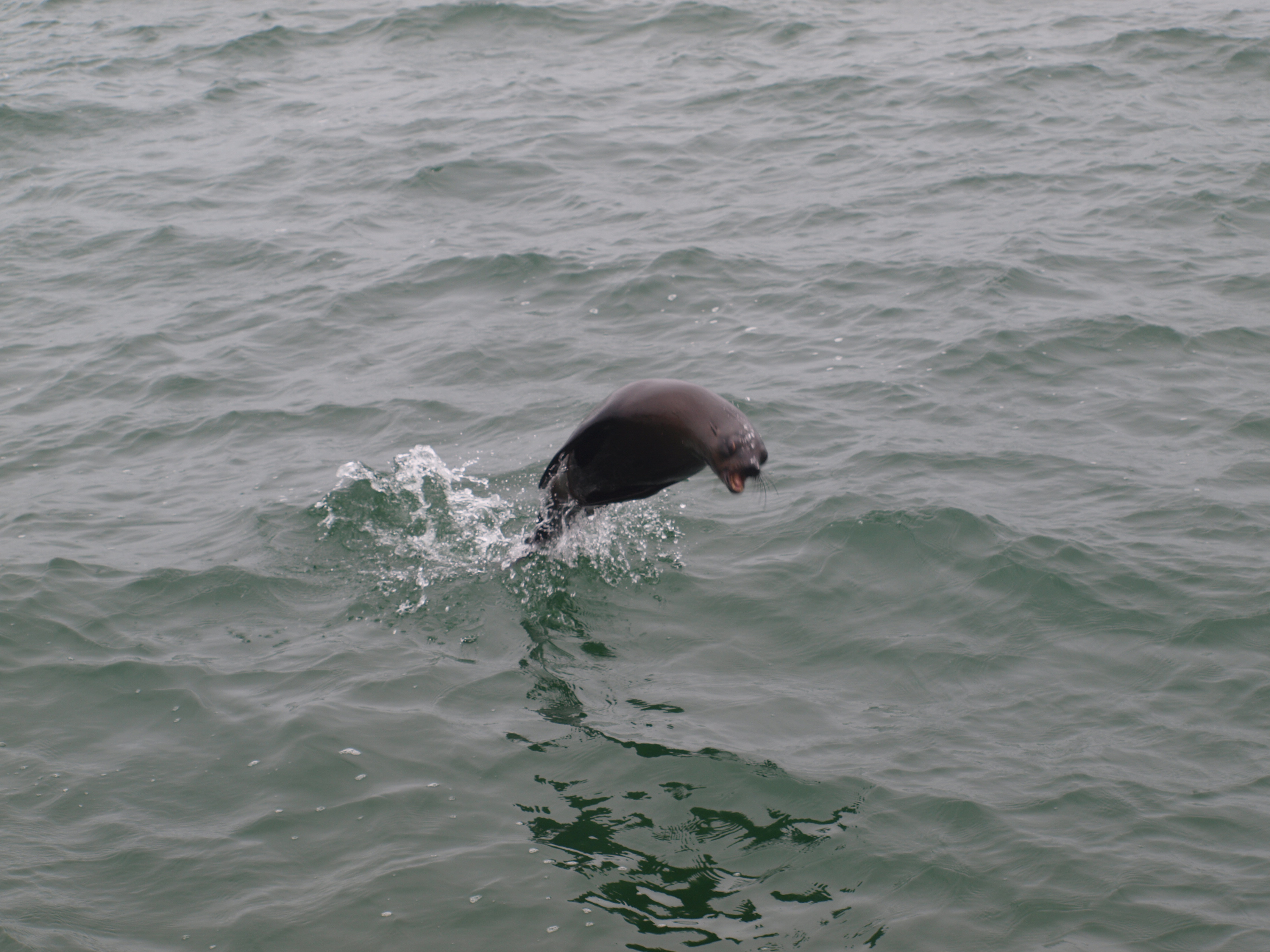
We took the “scenic route” out, hugging Pelican Point so we could see the huge seal colonies there. Fun to watch their antics. Some performed alongside the boat, probably expecting us to reward them, as I expect the tour boats do.
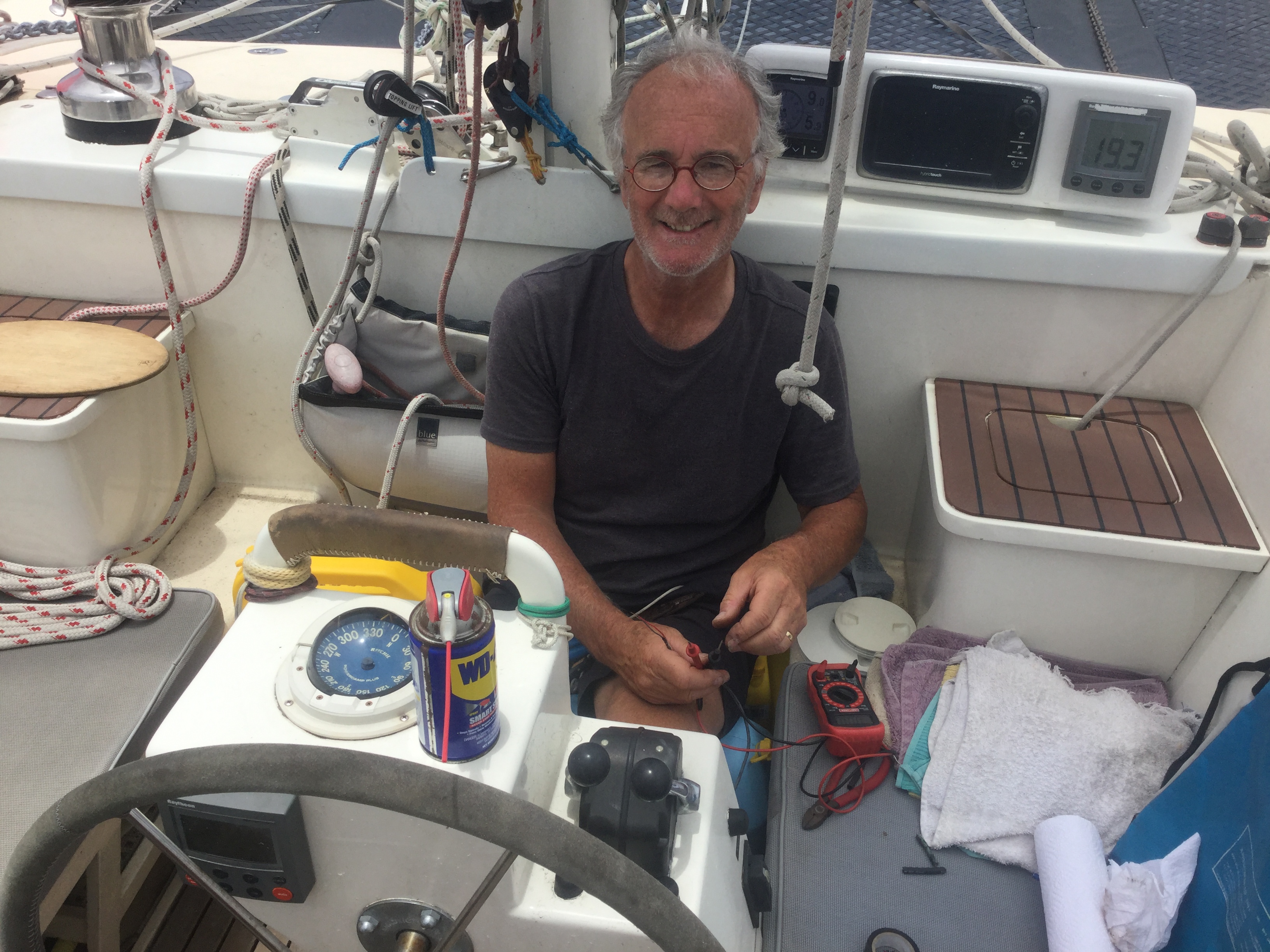
The wind was light and against us, so we motored for the first few hours, trying to get clear of the coast with its fog and local winds. We ran the watermaker for the first time in ages. After fifteen minutes or so there was a POP, and the machine sped up as though it no longer had any resistance. I feared that its reverse osmosis membrane had failed. But as I experimented with it, water appeared in the lockers under our settee, and it was apparent that the plumbing had sprung a leak. In fact two hoses bound by a hose clamp had simply slipped apart. Fixing the plumbing was easy. Emptying the lockers to mop up the mess and dry it out was a pain. But done.
The wind gradually came up and came more south, as expected, and we sailed through the night with the screecher. Full moon lighting up the cold mist that is still here. Can’t wait to get west of the Benguela Current!
Two months ago we were approaching Durban, and I had the feeling that WOW, this is Africa! It has been an wondrous time. And now leaving Namibia I have a similar feeling of awe that we are leaving Africa and heading for another continent across an ocean!
@@@@@@
End of Day 2 — Air temp is up over 70. A blanket can finally come off the bed. Sea temp is up from a chilling 55 when we left to 65. Hopefully we won’t have fog/mist tonight. We are reaching in 20 knots of wind, doing 10 knots boat speed with a single reef in the main. Since noon we are on track for a 200 mile day. I made a good dinner and had a beer with it. Everything (that we currently need) is working as it should. We are out beyond the shipping routes, so it should be a quiet night with a just-past-full moon. Two hundred miles behind us, a thousand ahead. I love this stuff!
@@@@@@
Day 4 — Although we did over 100 miles in 12 hours, the wind then eased so our noon to noon run was 193. Next day, same thing. We exceeded 100 miles by midnight, but “only” 183 by the following noon. An email from home tells us though that we are simply looking at the wrong interval — that from 4pm to the following 4pm we did indeed cover 200 miles.
The air temp is now over 80 (Fahrenheit, of course), and the sea temp is up to 67. Wind is pretty much behind us at 15 – 17 knots…just what is advertised for this part of the ocean. The big spinnaker is up, and it wouldn’t surprise me if it stayed up for the next 4 days.
Last night we once again lost the blades off our hydrogenerator prop. Third time. Annoying (particularly given the high replacement cost), but whatcha gonna do? We also started fishing for the first time, hooked a beautiful tuna that would feed us for 3 days, but it came off the hook just after we gaffer it, and the gaff was not set well enough to hold it…so despite having it briefly on the transom steps, we lost it. Next time we’ll get it right!
I took a short bracing shower on deck today, and stretched out and listened to good old rock music with the headphones. Ah, the way life should be. We haven’t been warm and had pleasant/relaxing sailing conditions since somewhere on the Indian Ocean. Soaking it up!
@@@@@@
Day 6 — Nora and I have a routine in the morning, where we bring the small spinnaker down and put up the big one. As we were getting the big one ready to go, Nora noticed that the small block for the “snuffer line” was damaged — the sheave was gone, so the line was dragging over the pin/axle. We found a small snatch block that we could use to replace it. But as we worked on it we also noticed that the halyard was chafed entirely through its outer braid, exposing the inner strands. We should cut off the worn end, but not now; I decided to go ahead and raise the sail. It went up half way and stopped. Something fouled aloft. So we brought it back down, and at that point noticed that the halyard was also chafed through the braid further along, where it would pass through the masthead block when the small spinnaker was set. And the frayed braid was apparently jamming in the block.
Okay, so we will need to rig a new halyard at our first opportunity. But I doubted it would break. Instead we covered the two worn spots with white rigging tape. The tape would prevent the frayed bits from jamming, and the white would be visible from below so we could be adjust the halyard so it wouldn’t wear at those critical points. Up goes the big spinnaker again; sets fine; all seems well. But looking through binoculars to check where the white tape was relative to the block, it was apparent that something was still wrong. The line appeared to be off the sheave, jammed into the side of the block. Not good…let’s bring the sail back down again. Except…it really is jammed…and it won’t budge up or down!
Luckily we could still use the snuffer to get the sail mostly under control, and luckily the wind was relatively light. But to get the sail down was going to require a trip up the mast — not a pleasant experience in waves! Aloft in the bosun’s chair, it was almost all I could do to hold on. I could not budge the halyard. There might have been creative things to try to use the power of a winch below to free it, but I knew I had very little time before I would be exhausted. The only practical thing to do was to release the snap shackle on the halyard, and let the snuffed spinnaker fall to the deck or over the side. I had meant to bring a line aloft to help control this, but I forgot it. So I simply (well, actually even this was not easy under the load) pulled the pin and let it drop…onto Nora!
Luckily she was only bruised and not seriously injured. It was a terrible lapse of judgment on my part to allow that to happen. I was struggling with my end of things and simply didn’t think about what was going to happen below. In fact I had even stationed her in that position to be ready to pull the sail out of the water if it went over the side. I still feel upset about my lapse in caution/safety. It’s not like me…
In any case the halyard is still jammed aloft, and that isn’t going to get fixed until we are in a quiet (?) anchorage. Not sure if the anchorage at St Helena is quiet… We have ideas about rigging the blocks aloft differently (back the way they used to be before I “improved” the system in Australia), but that also has to wait. We also have a line that I believe is long enough to replace the damaged halyard, but that, too, has to wait. For now we are not flying a spinnaker, as the wind is allowing us to use the screecher with fair results. If we need a spinnaker, we will have to lower the screecher to the deck to borrow its halyard. That’s tricky because it will end up sprawled all over the deck. But it is the only practical way for now to raise a spinnaker.
The wind has gone light. We motored for a couple hours, including this afternoon when we had the highlight of the day — crossing the Prime Meridian. To celebrate our return to the Western Hemisphere, I let the boat drift for a few minutes and jumped in the ocean. No other takers for that today. Maybe next time. We changed our clocks two hours to St Helena time, which (naturally, given our zero degrees longitude) is the same as UTC / Greenwich Mean Time. Still 340 miles to go. I’m not in any rush, except that it would be nice to arrive before the other boats have left.
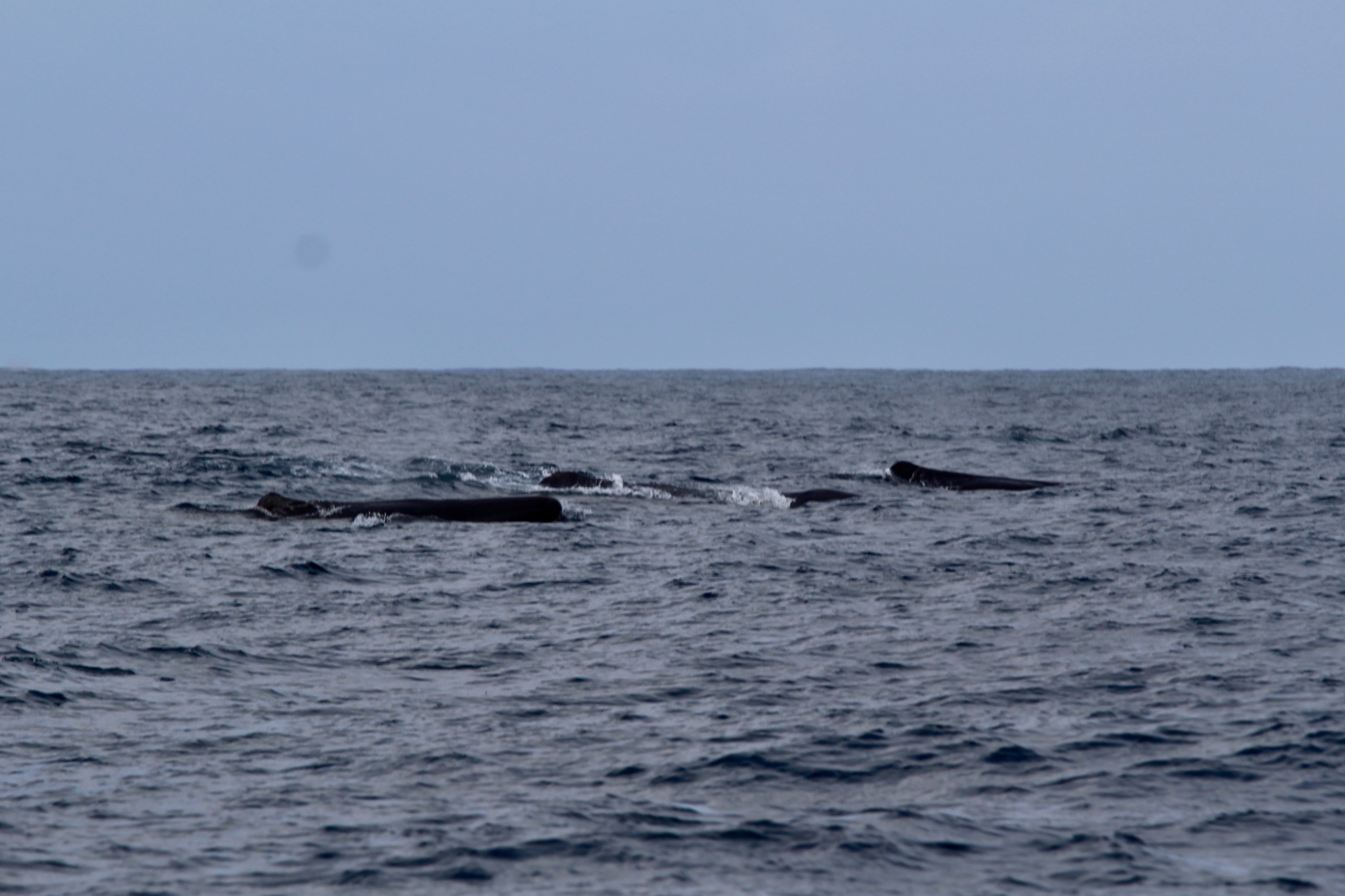
Actually there was another highlight today, which was a pod (gam?) of whales swimming by, maybe 75 yards away. No dolphins seen, and very few birds. I imagine that might change as we get closer to the island.
@@@@@@
Today we lowered the screecher to the deck, and raised the spinnaker. Wind has been about 10 knots all day, so we are gliding along quietly at 5 knots. Very peaceful. Sixty miles to go; we will arrive in the morning.
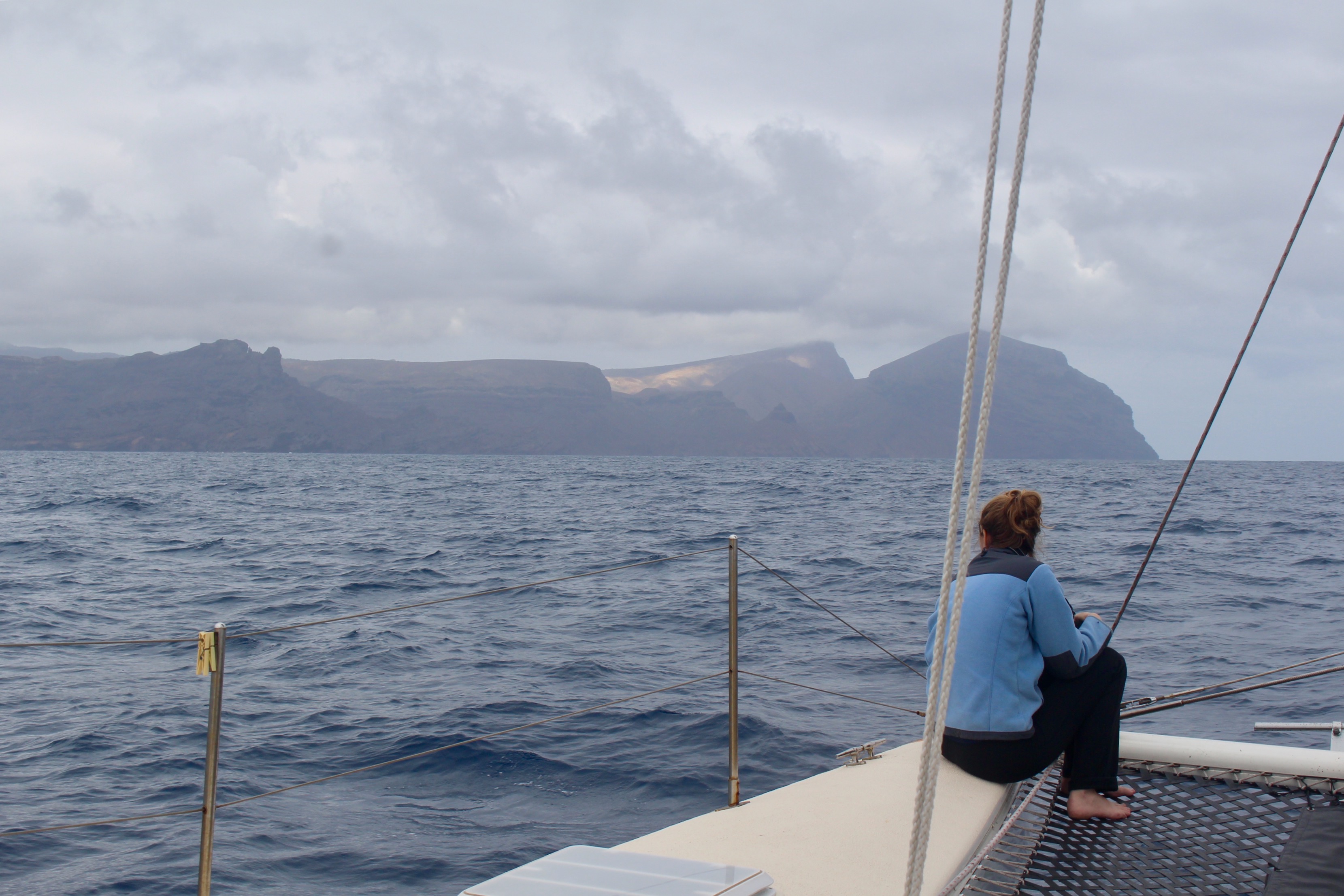
Locating a small island in mid-ocean used to be an exciting time, especially if the sky was overcast so you couldn’t get sextant sights. Even with good sextant readings there might be a nagging doubt about whether you added when you were supposed to subtract, and thus you might be off by 30 miles — enough to never see the island. But now we all take GPS for granted. We know exactly where we are all the time, and there is no drama about seeing St Helena when dawn dawns.
@@@@@@
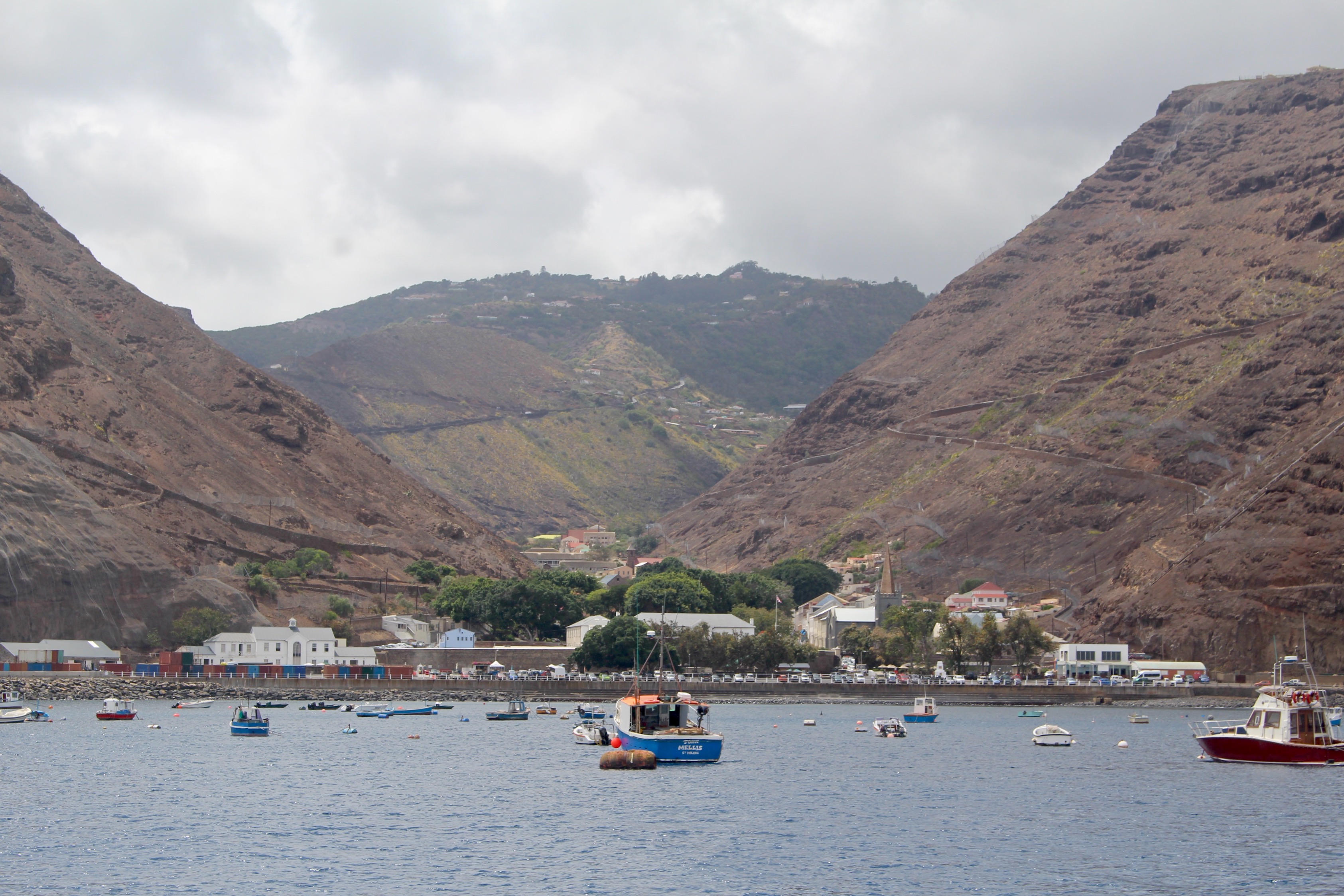
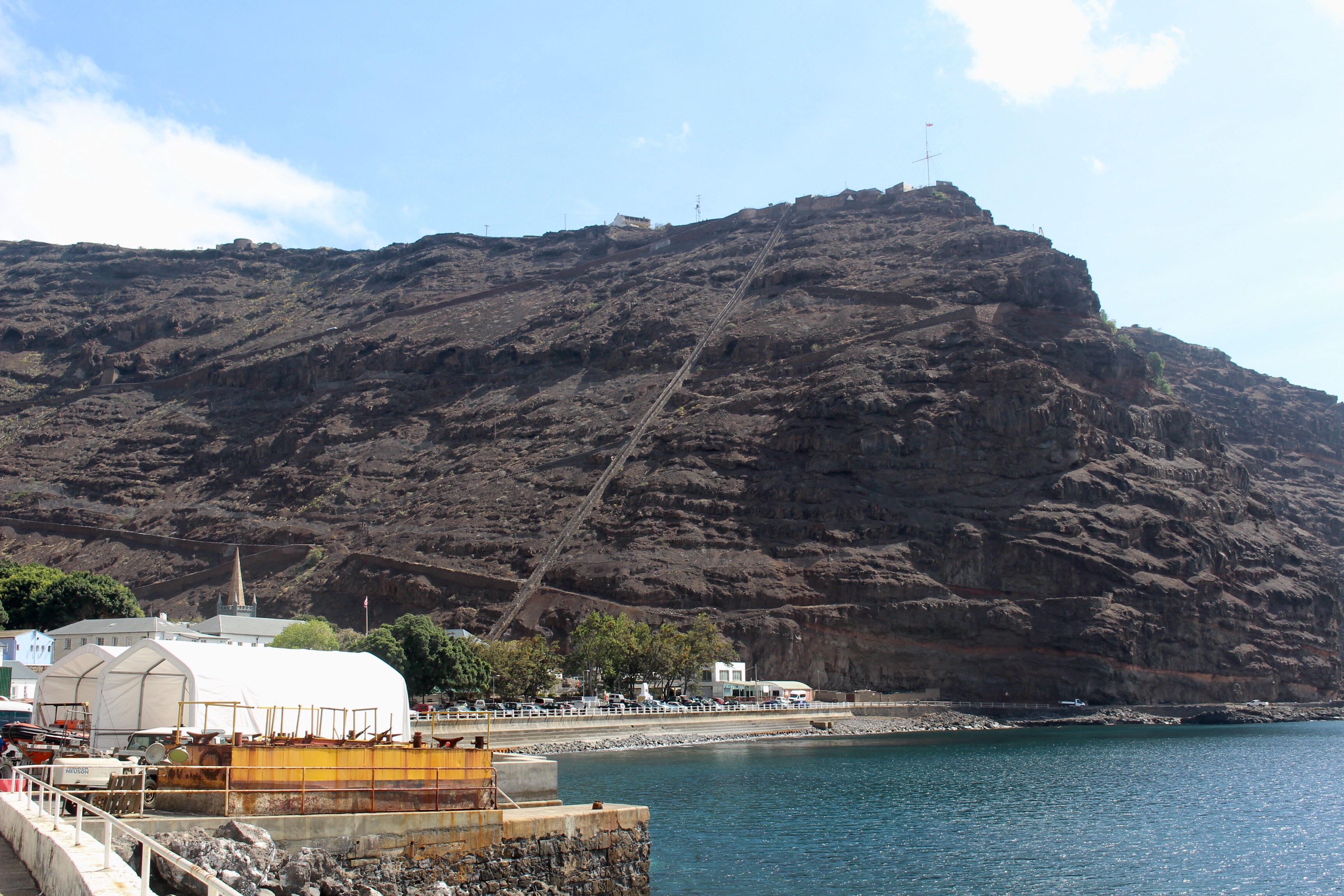
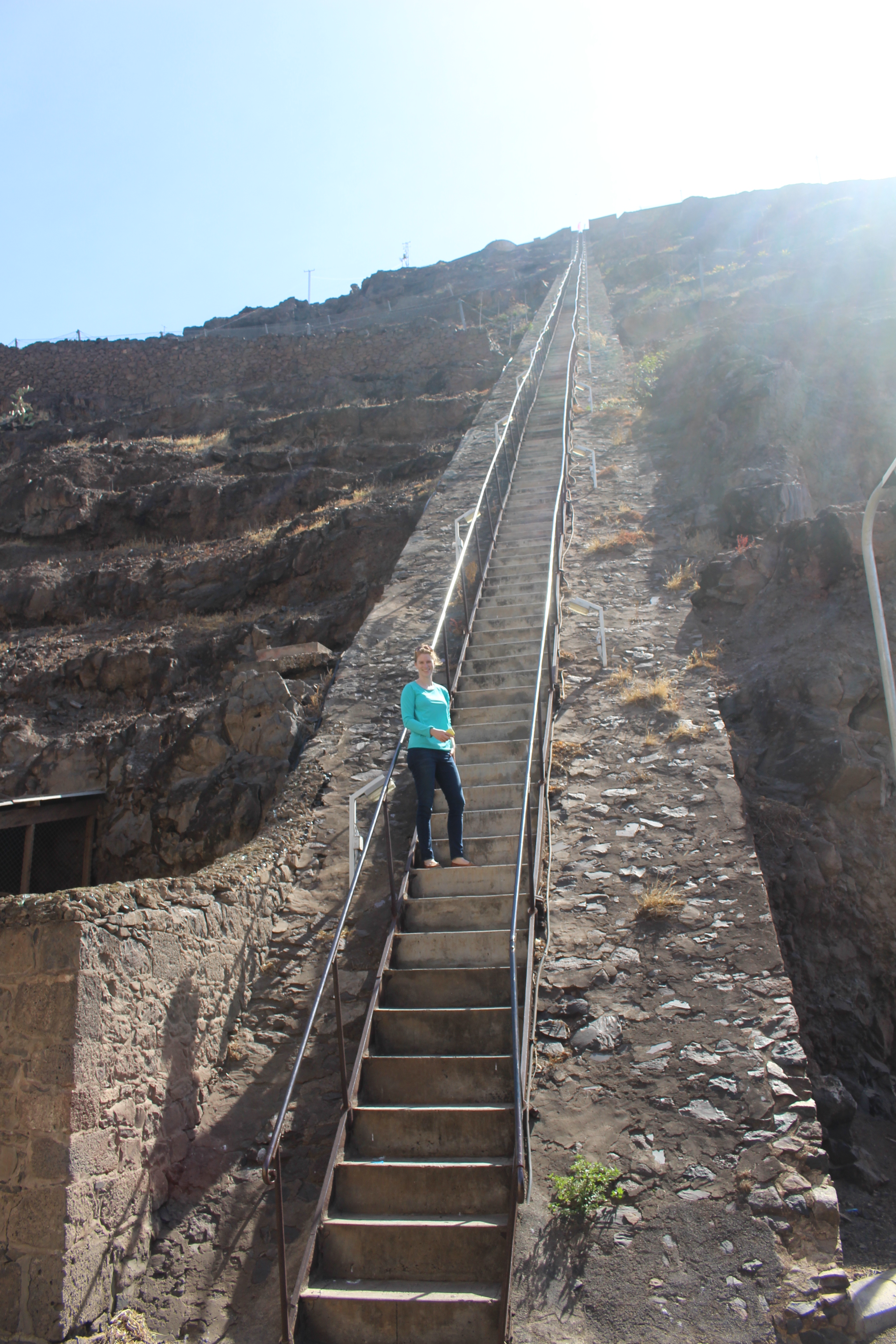
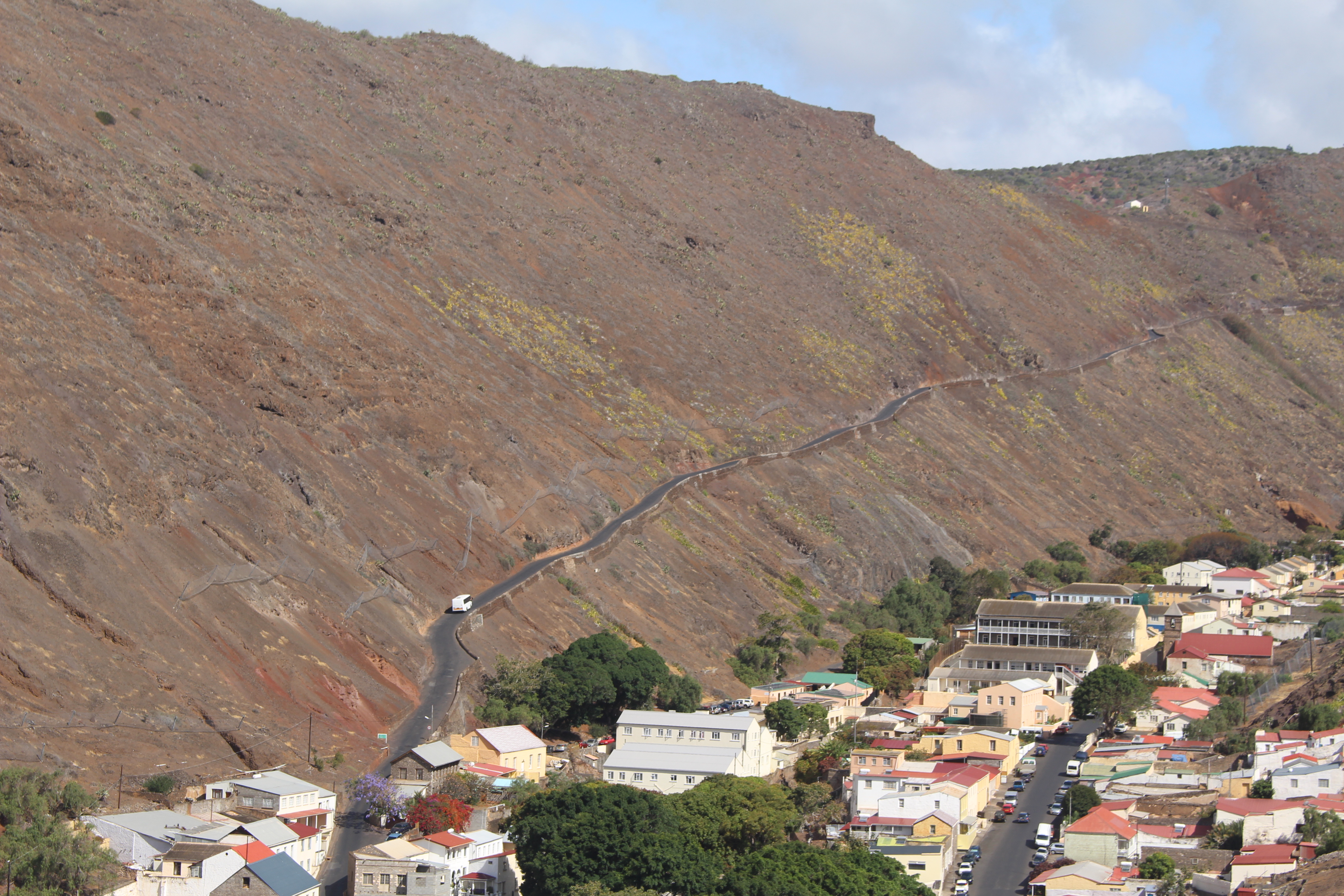
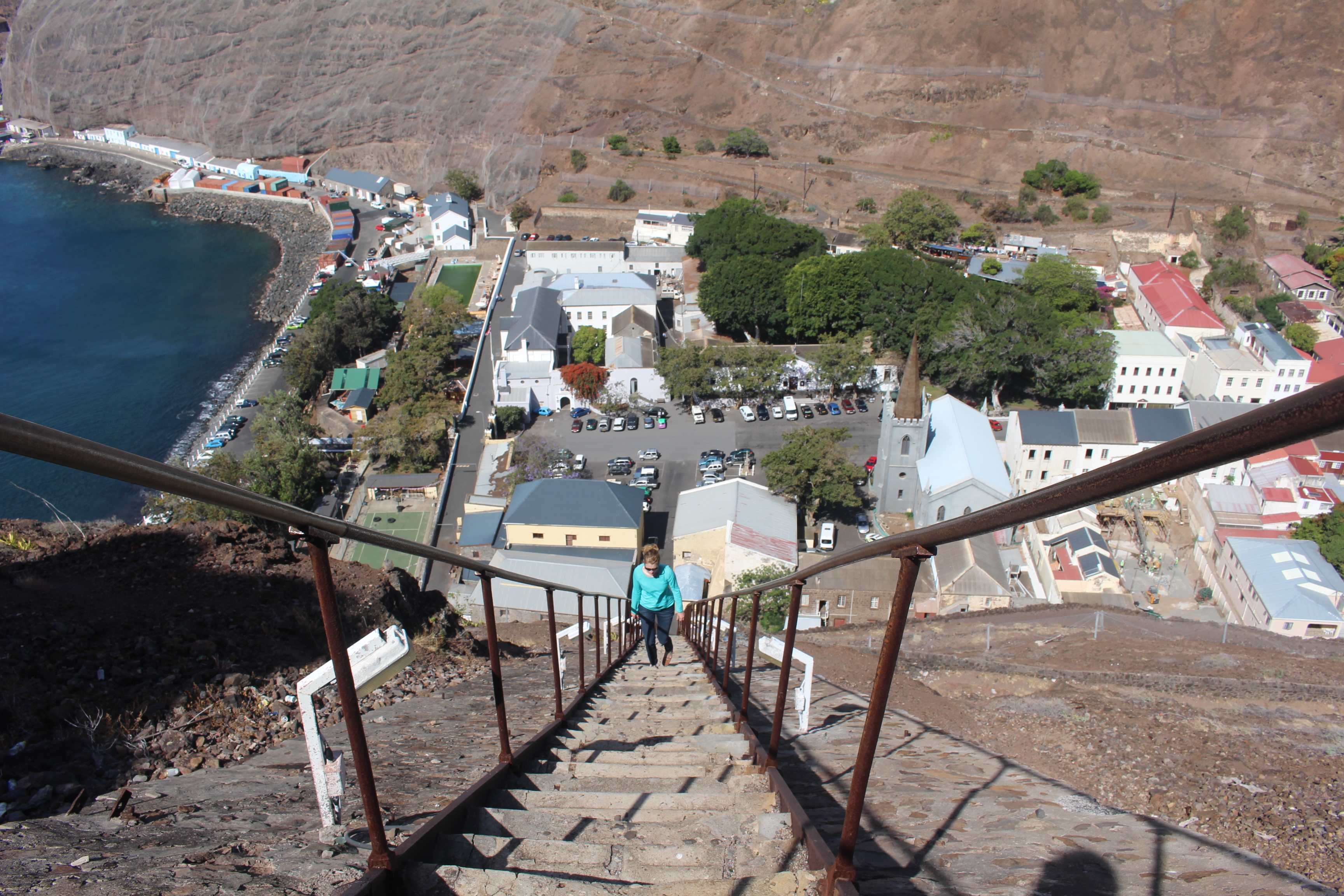
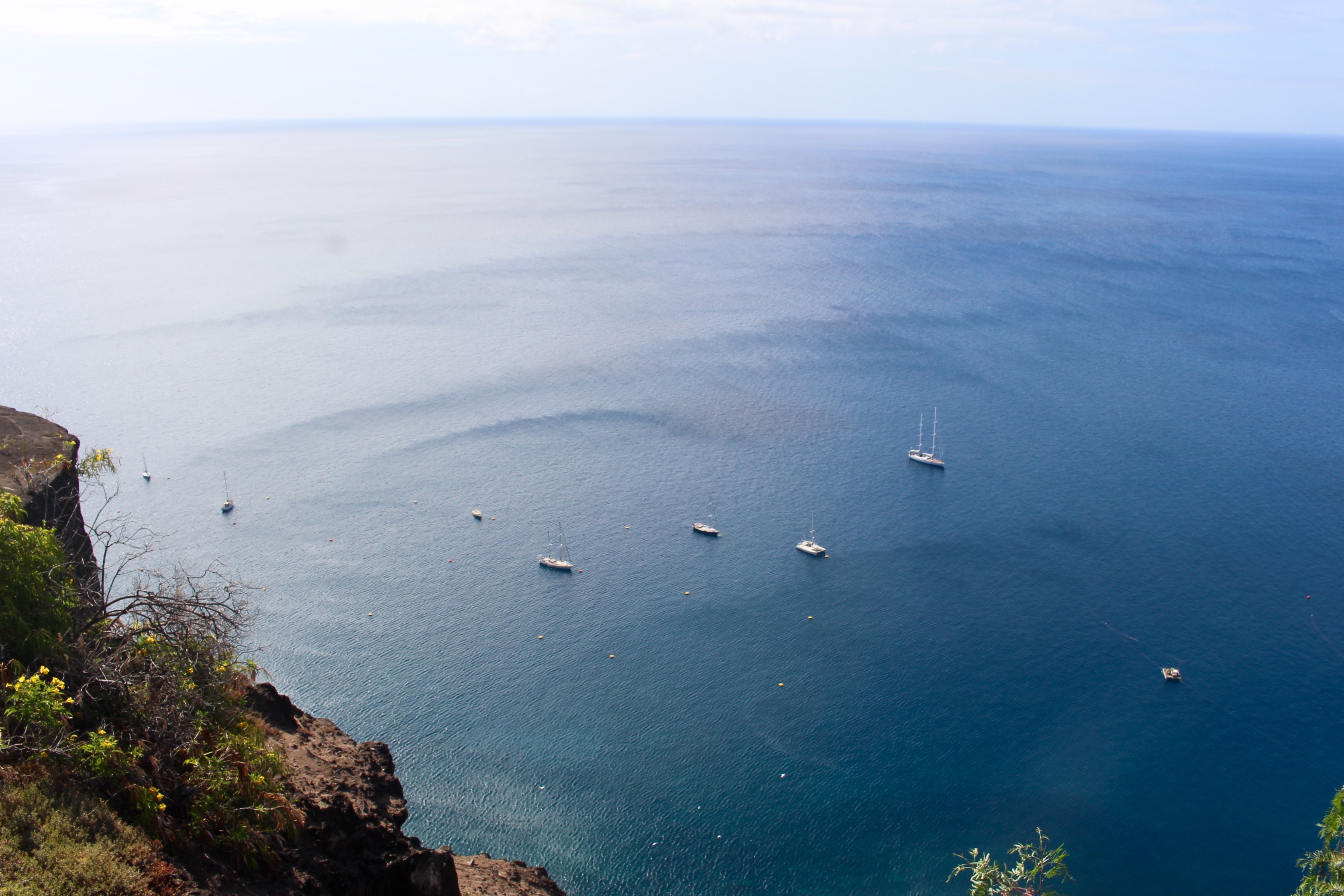
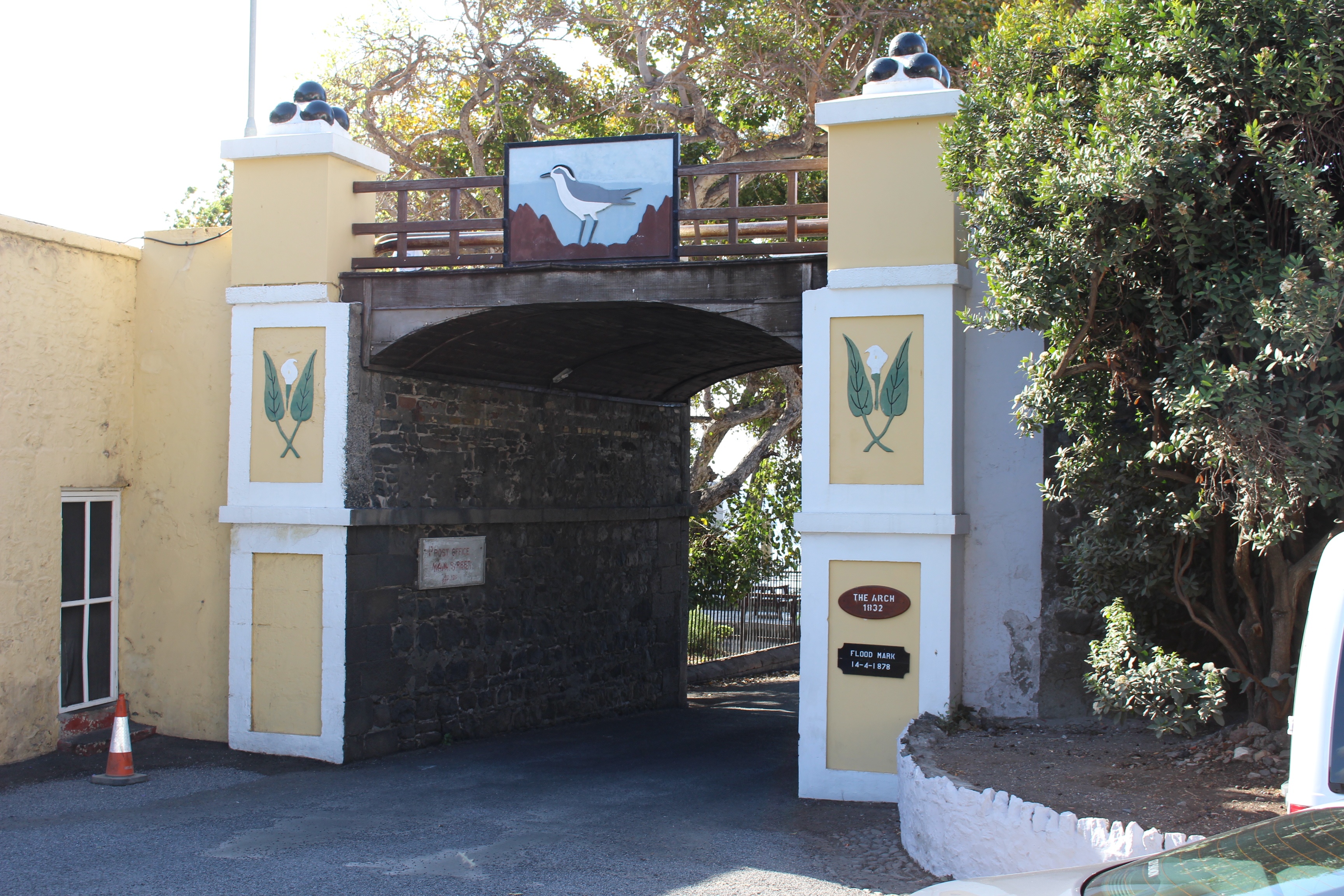
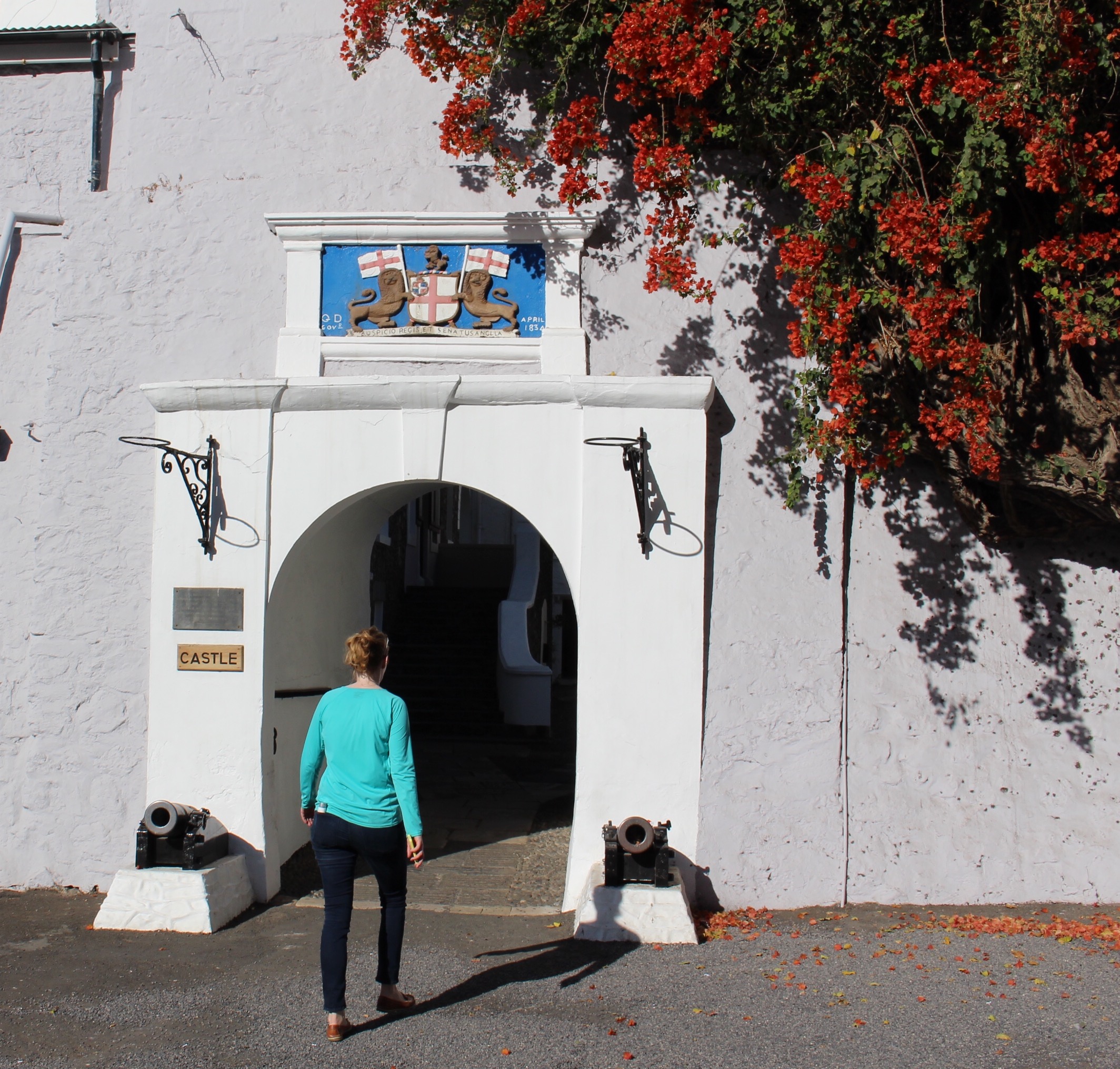
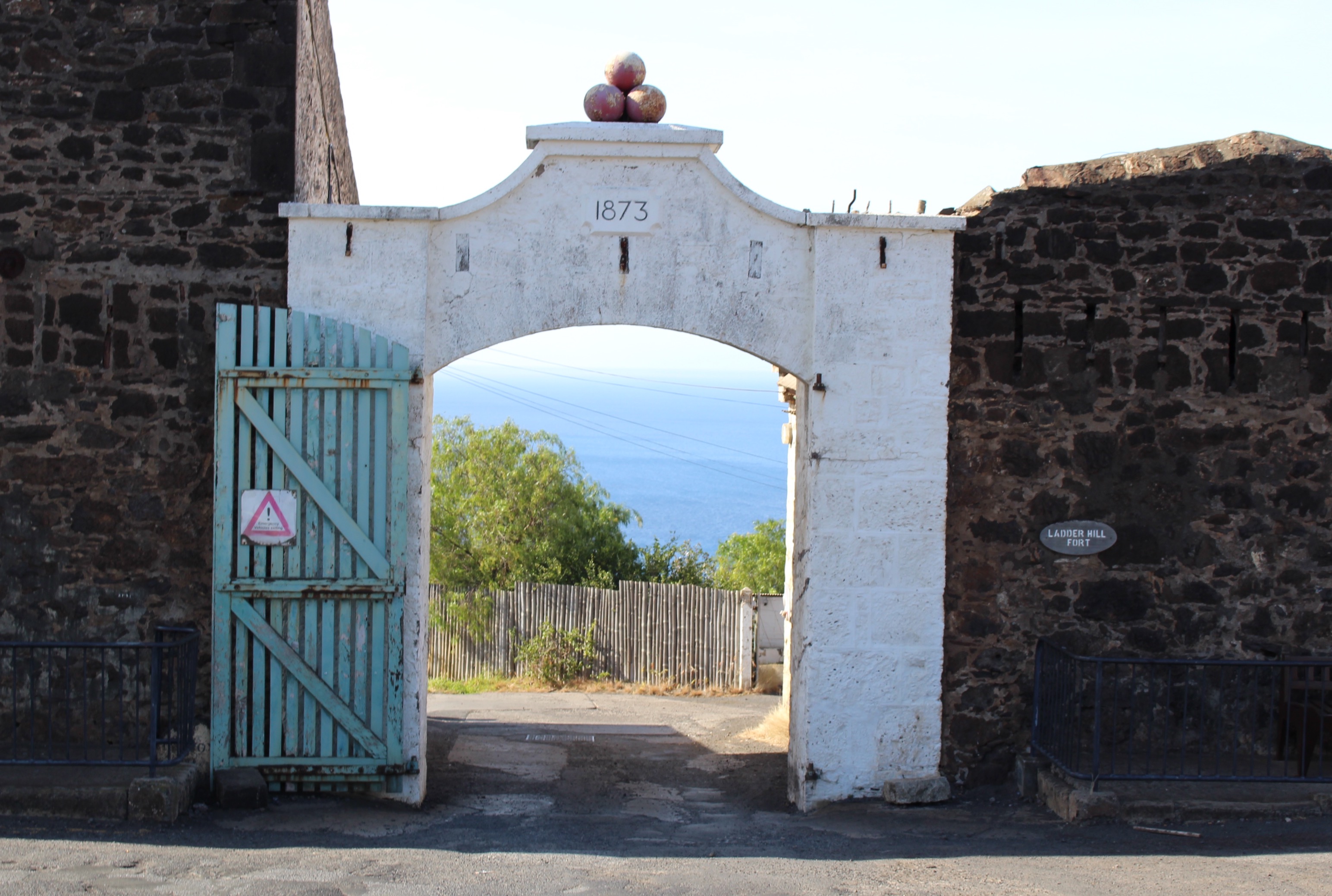
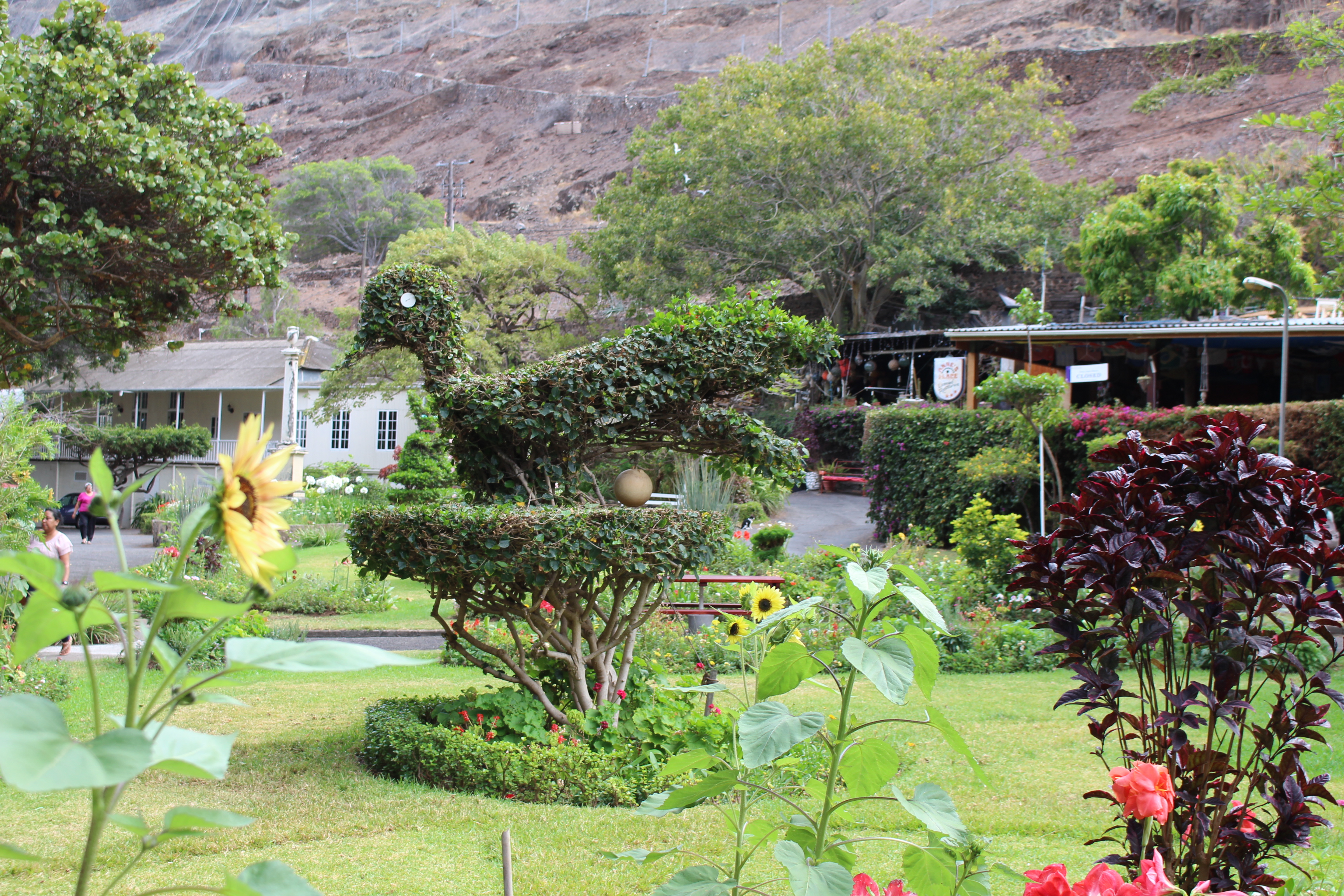
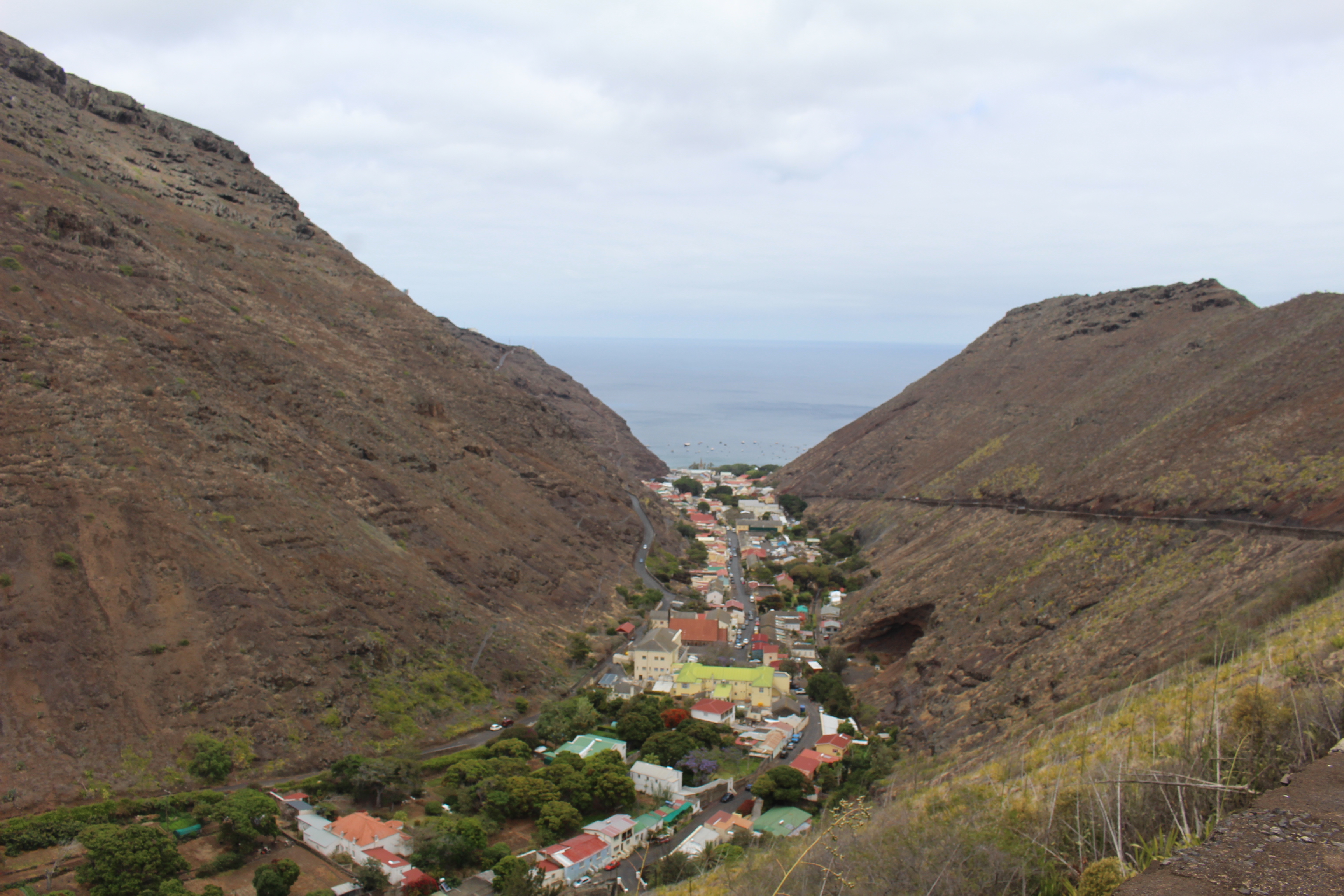
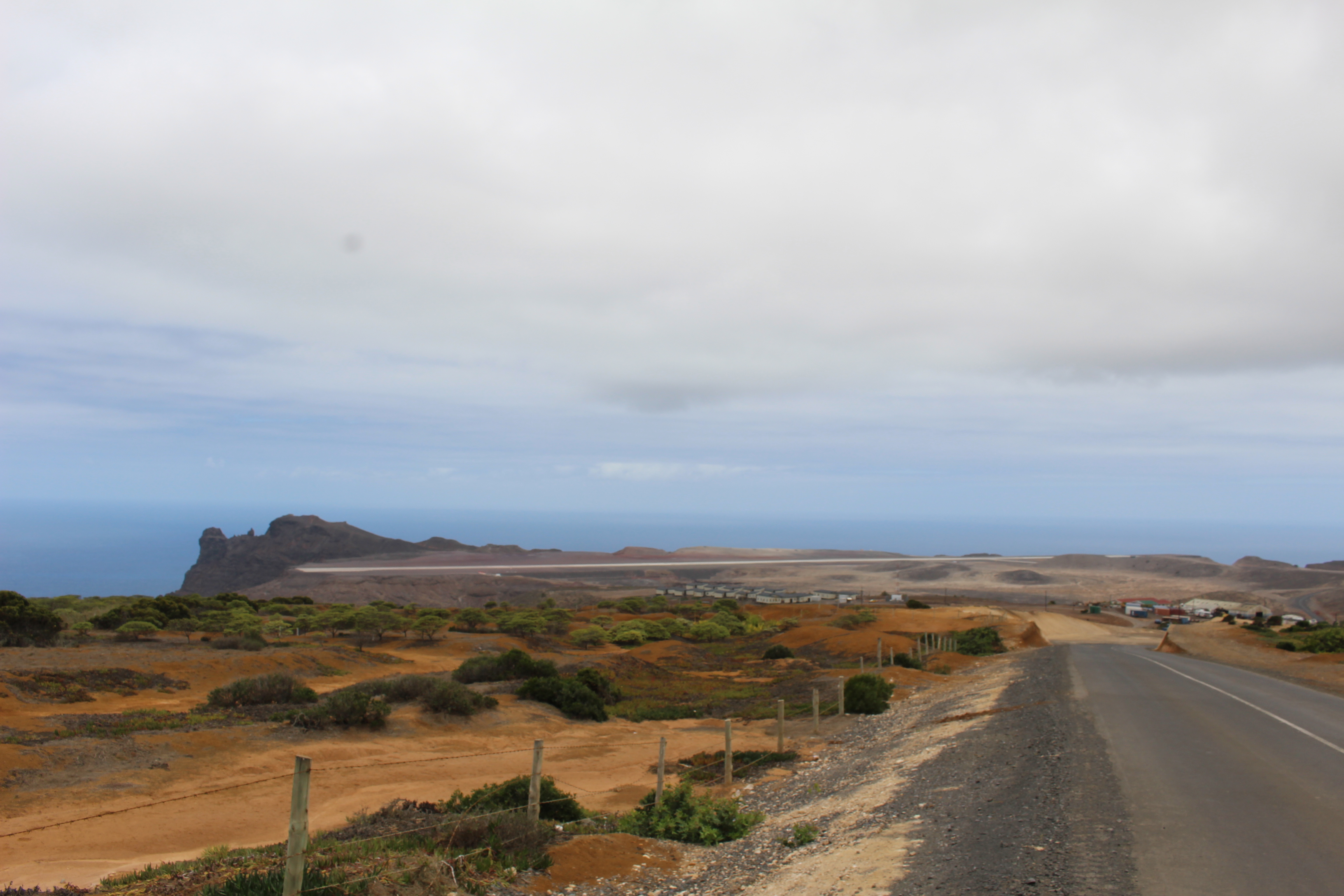
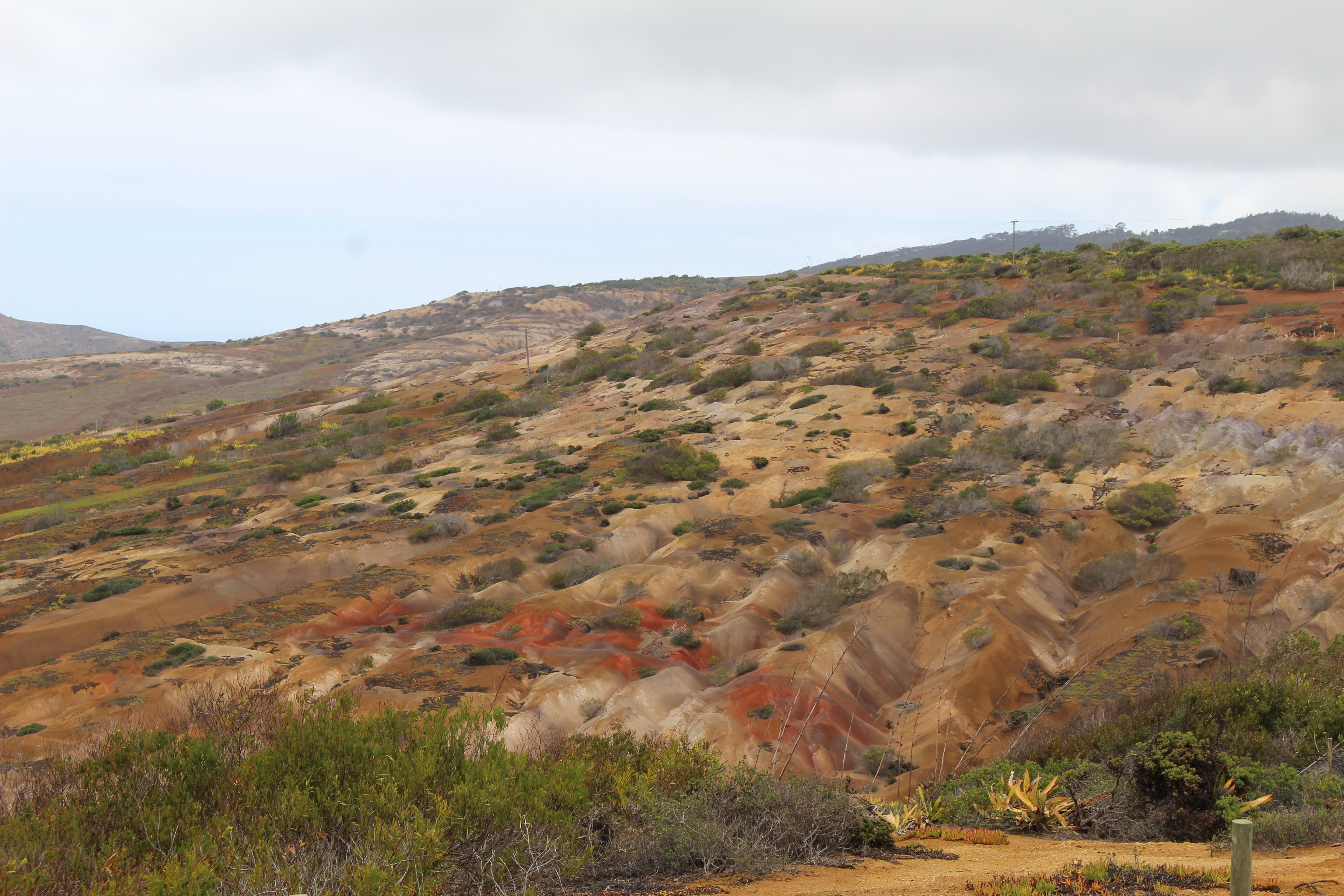
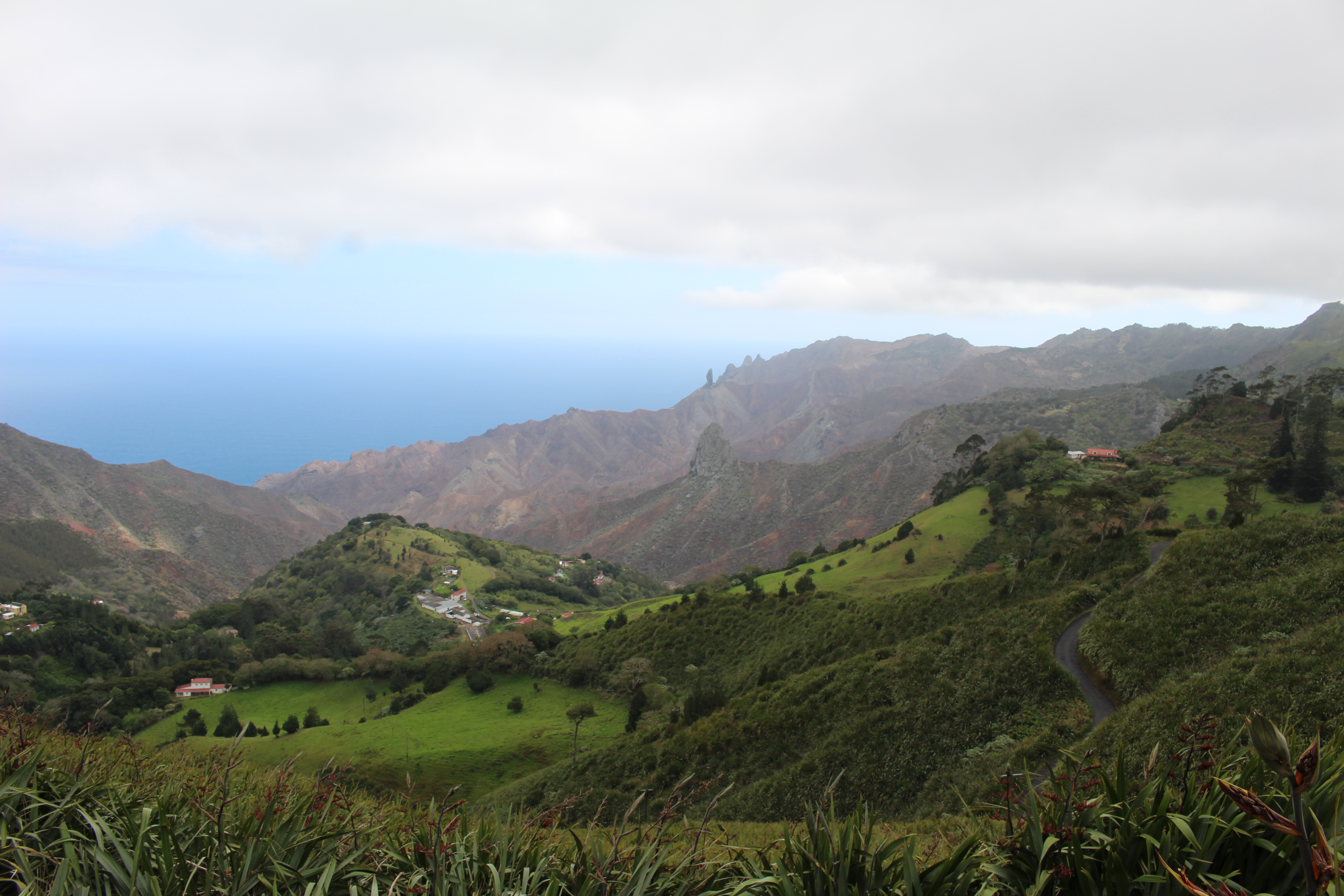
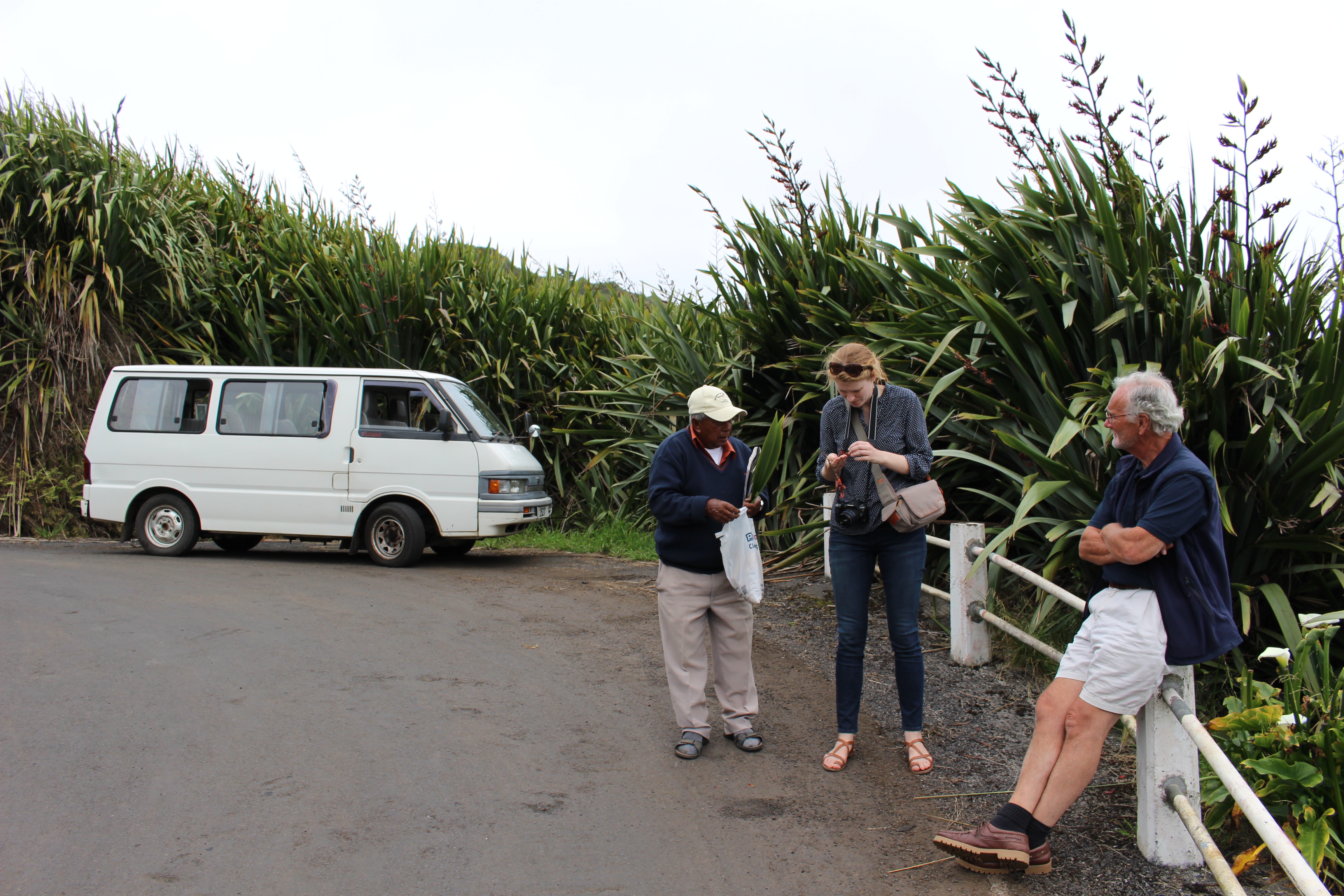
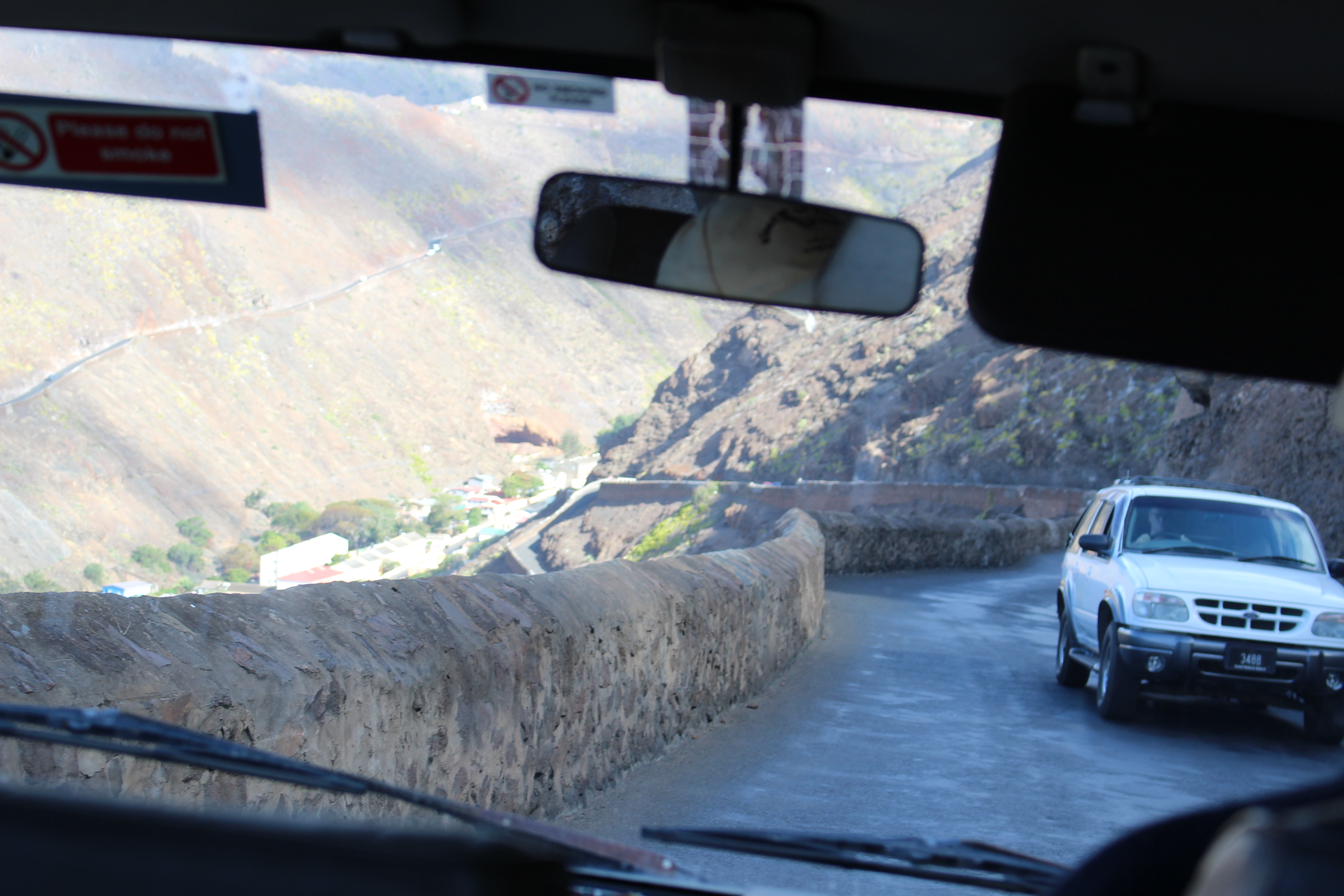
Arrived before noon; picked up a mooring next to Maggie and Tahawus. No problems with the authorities. Everyone is friendly; people say hello; drivers wave to you. We explored some. We booked a tour for Thursday — our Thanksgiving activity. Nora and I walked the 699 steps up “Jacobs Ladder.” We all took showers ashore. And we had a very pleasant welcome/farewell gathering of the “three ships” aboard Maggie. The others plan to set out tomorrow, since they have already been here a week. We will probably stay here three days, and leave Friday in pursuit of the others.
@@@@@@
Replaced the blocks at the masthead. Rove a new spinnaker halyard. Changed engine oil. Got drinking water ashore. Disposed of trash and old oil. We will be ready to go after tomorrow’s Thanksgiving tour. Saw Maggie and Tahawus off this morning.
Internet is very expensive here, with very limited bandwidth. So no photos until we get to Brazil.




 ZekeTheSailor