The Wild Coast

The area between Durban and Cape Town is known as the Wild Coast. Weather changes in a flash. Winds blow hard along the coast in one direction, then switch and blow hard in the other direction. And there is the always looming specter of the Agulhas Current, and the impact it has on the seas.

Monday started with Liam calling my name with an urgent tone. I had my head in a locker…”What?”

“Collision!” he says. This doesn’t compute. But I look out and see that one of the Yacht Club boats is pushed up against our bow. The sole person aboard is trying to restart its outboard motor. We hold his boat off until he is successful, and we give him a good push out. Just a scratch in one bow…whatcha gonna do…?

Then it is Norm. “Did you see the email from our weather router? He says we have a short window first thing tomorrow to get as far as East London or Port Elizabeth.” Hmm, I was just talking with Rob and Carol about the crazy idea of leaving the boats for another week, flying to Cape Town, and touring the area; hoping for changes in the weather pattern by the time we got back. But Norm is clearly beyond ready to depart, even if it entails some marginal weather.

So we all study the email and consult our various wind prediction web sites (such as earth.nullschool.net — check it out if you haven’t seen it before). I also have to consult with the diesel mechanic, who has one of my engines spread out in many pieces. But he seems to think it will be ready in time.

It takes a little while to adjust to this sudden plan. And as we discuss it, the consensus is we shouldn’t wait until morning, but rather get going at dusk. This may put us into some nasty wind initially, but the hope is it will avoid even nastier wind at the other end of the hop, 2+ days later. Edd, our BPO rep, tells us we need to get moving ASAP with clearing out. Even though we aren’t leaving the country, here we have to do forms for customs, immigrations and the port authority before we can leave for another port.

Nobody seems to know definitively what we have to do. Edd was told when we checked in with immigrations that we didn’t need to see them to leave, but the port authority tells us otherwise. At immigrations they can’t find my inbound forms, even though they were done at the same time as Tahawus, whose form they have. So I fill out the inbound forms as well as outbound. They briefly asserted that our crews needed to present themselves, but when we said we’d have to drive back to the marina to fetch them, the officers decided it wasn’t necessary…

No worries, two hours of forms and walking between the three offices, and we were “out.” The plan was to go at 6pm, and hopefully sail as far as Port Elizabeth (about 370 miles), with an option to stop at East London (250 miles). There is no place to stop closer than 250 miles, so one has to be prepared to deal with whatever the weather brings for nearly two days. Nora and Liam had their Scopalamine patches on by the time I got back; I popped a Bonine.

Tahawus went first, on schedule. Maggie was about to go next, when a nasty looking rain squall blew in. They decided to wait a few minutes. As the squall began to subside the daylight was waning, so with the wind still blowing Maggie backed out of their slip into the narrow channel, barely wide enough for them to turn in. As they tried to back and turn, the wind blew their bow down toward us, and I saw our second (and much more damaging) collision of the day about to happen. Some shouting ensued. Maggie’s anchor overhangs their bow, and it was one inch (no kidding) away from taking a chunk out of No Regrets when their boat magically stopped its approach. The magic must have been their bow thruster, which had been repaired the day before.

As we motored out the channel, surprisingly large waves began rolling in. And then we could see the end of the breakwater, lit up periodically by the adjacent navigation light, with huge surf crashing over it! What were we getting ourselves into!? As we motored past the breakwater and turned directly into the seas, wave tops were breaking here and there, and we were plunging down off of crests into steep troughs. I was glued to the helm, adrenaline pumping. Nora and Liam were both sick already!

[Later on the radio we heard ships calling Port Control for permission to enter the harbor. They were denied — “The port is closed due to the seven meter waves breaking across the entrance.” We didn’t see 7 meters, but it was exciting, and funny to think that ships were being denied entrance.]

The hope at this point was that the big, steep seas were caused by the shallow water along the shore, and we headed toward open water. The expectation was that doing so would also put us in the strong current, with the wind opposed to it, so there was a risk that the seas would get even worse… In fact we found ourselves in not only adverse winds, but an adverse counter-current, too. The waves moderated slightly, but we could only motor into the mess at about 5.5 knots (with both engines), which was only giving us about 3.5 knots made good against the current. This was going to be a long night.

Chris, the singlehander aboard Tom Tom, made a quip a few days ago that I was “singlehanding with two passengers.” This was a nasty comment, and not close to the truth about my crew. But for this night I was going to get a taste of singlehanding. I stood watch all night (with catnaps, of course), and let Nora and Liam try to sleep. Not sure they got any more sleep than I did, though!

We expected the wind to go light in the morning, then shift to east, then at the end of the day come behind us from the northeast, and give us a night and following day of good sailing before our weather window closed with another blow in our faces. Until the wind changed we would be doing a lot of motoring. The engines were working fine. But a pump that transfers fuel from a large forward tank to a smaller tank at the port engine failed. We couldn’t move against the wind and seas with one engine, so we had to siphon a Jerry jug of diesel into the port tank, while bouncing around in the seas. This was accomplished without incident, thankfully.

We got out of the counter-current and into 3+ knots of Agulhas current going our way. The wind came up at a good sailing angle. I managed to replace the impeller in the fuel pump — a good trick in windy conditions. Things were looking up. I was feeling chuffed (new British word I learned here) about being at sea and mastering a challenging situation.

The second night the skipper made French toast for dinner — trying to make something the crew would eat. Everyone had some. Good. Although the crew was still feeling green, their spirits remained positive.

The night sky was spectacular. But it was too cold to stay outdoors and enjoy it for long. We put up our small spinnaker for some relatively comfortable downwind sailing. Until 4:30am, when I was awoken by the surge of the boat, and went up to find the wind was approaching 30 knots. We were sailing beautifully and very fast (with the extra boost of the current, we hit 20 knots over the ground at one point). But the spinnaker was at its limit, and we didn’t want to test the wind’s limit…so time to bring it down…always a challenge in the night…Liam and I did enough shouting to wake Nora who says she can sleep through anything…the three of us succeeded in getting it “snuffed”…and switched to just a reefed jib…still going fast. When the wind gusted over 40 knots we were very happy to have taken the spinnaker down!

The morning brought superb sailing. Blowing about 30 from behind, with a big push from the current, waves surprisingly manageable. On a midnight radio checkin with our fellow BPOers, we committed along with Tahawus to proceeding for Port Elizabeth. Maggie planned to stop at East London. Now it is mid-afternoon and we have 40 miles to go. The wind is going to change back and blow 20-25 on our nose, if we don’t make it to PE first. We can see the clouds ahead signaling the change. But the forecast gives us until about 8pm, which would be just about what we need. As we approach the coastline we no longer have the free ride from the Agulhas, but we still have plenty of wind from behind. Hope the front holds off just a little so we can get in comfortably, and Tahawus (about 10 miles behind us), too!

Regardless of how this chapter ends, this will be remembered by me as the Wild Coast.

@@@@@@@

As it turned out, our wind went light when we were about 10 miles out, and we motored in as the wind came against us and started to build. But Tahawus was still out, and they had 40 knots, gusting to 50, on the nose. They could barely motor into it. We stayed up to take their lines; got squared away around midnight.

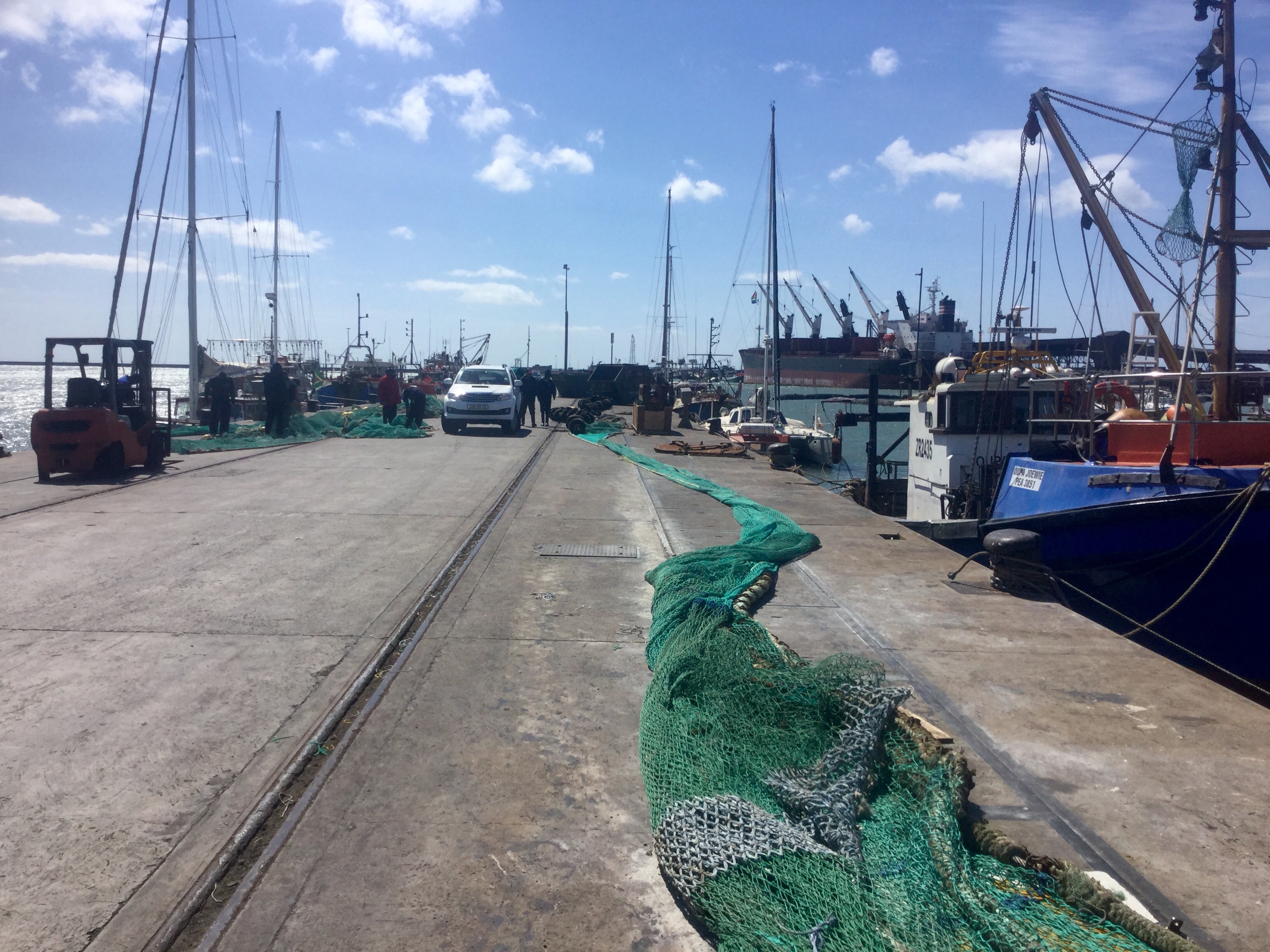
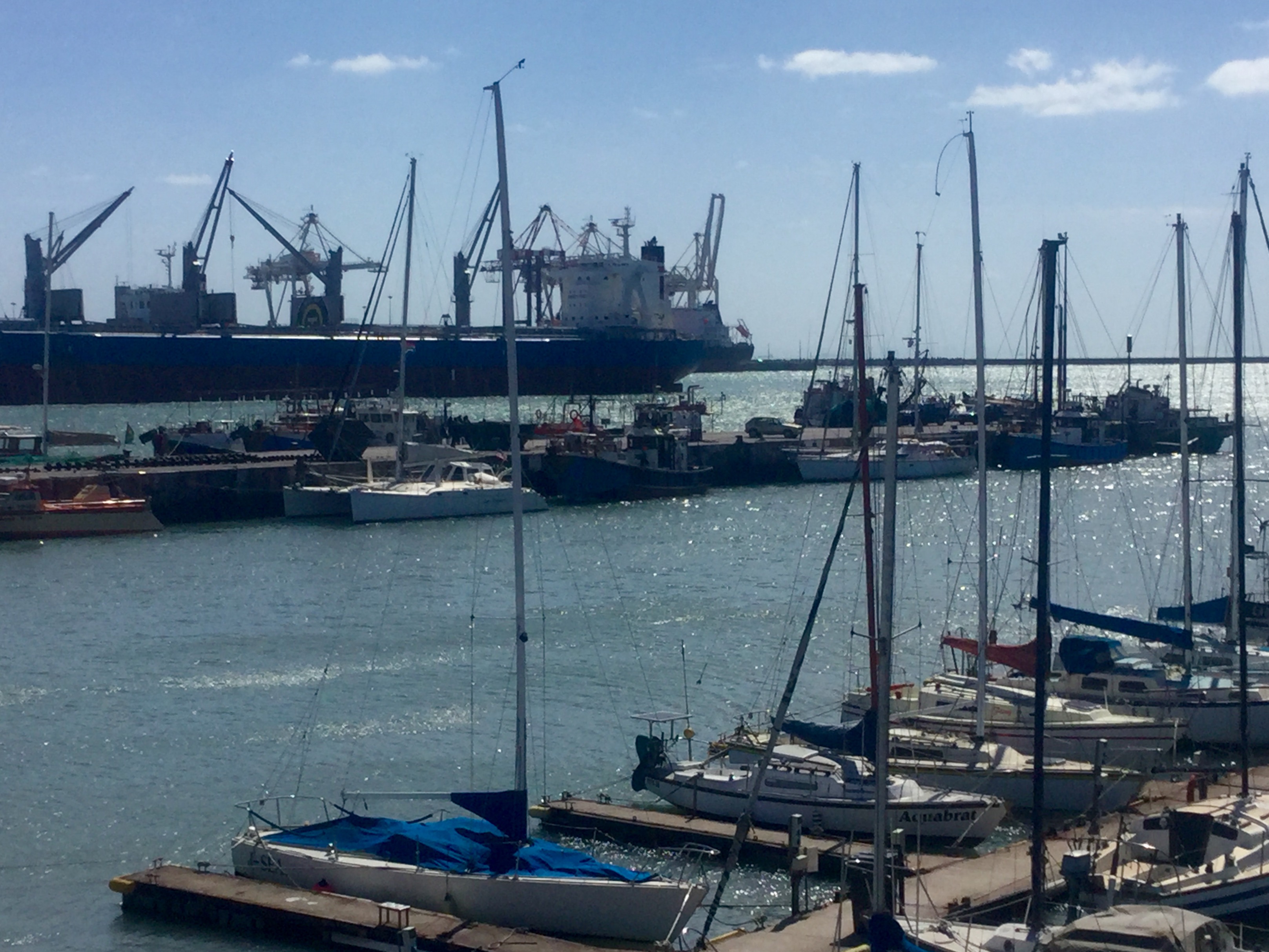
I was very disappointed with what we found here. It is tricky to get into the yacht dock — they told us just to tie to the fisheries pier instead. Giant tires are keeping us off the wall (and painting black smudges on our topsides). There is a surge as well as crazy wind, so uncomfortable motion, and grinding noises, and banging into the tires. Still challenging to sleep, and Nora is still feeling ill at the dock. At one point the boat lurched as I was stepping from the deck to the cockpit, and I ended up in a pile on the floor with a bleeding scalp (not serious).

We are amidst a hive of activity of fishing boats coming and going, nets hauled up on the jetty, and deckhands gawking at our boat (lots of compliments). A short walk away is the yacht club, with a bar and restaurant, and very nice hot showers. Things are looking a little better. But our primary task here is to identify another weather window for moving on. I wish the weather window would include some warmth, too — winter does not seem to have yielded to spring yet in these parts.

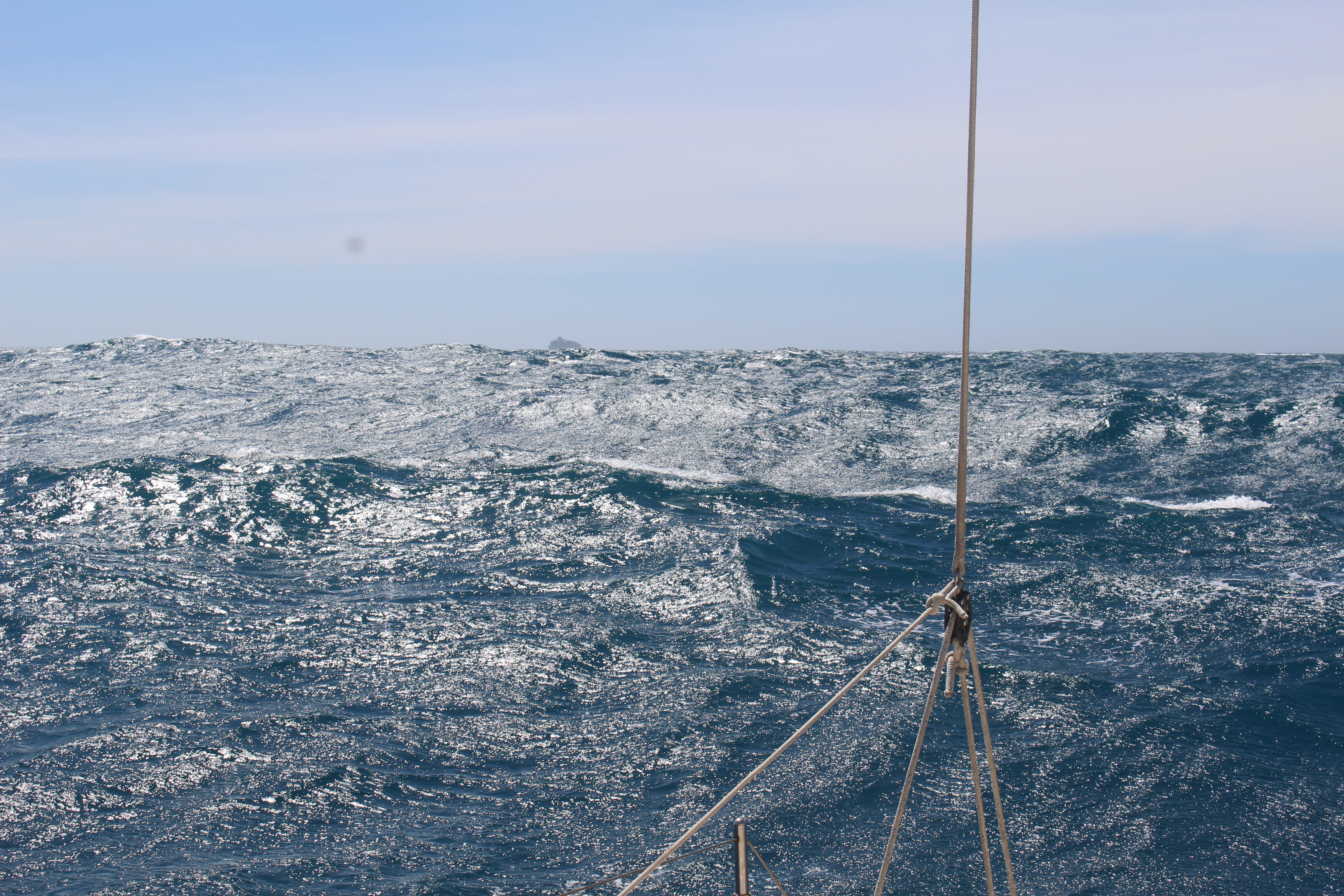
African coast visible in the haze, we are 10 miles out in the Agulhas Current.
Beautiful day!
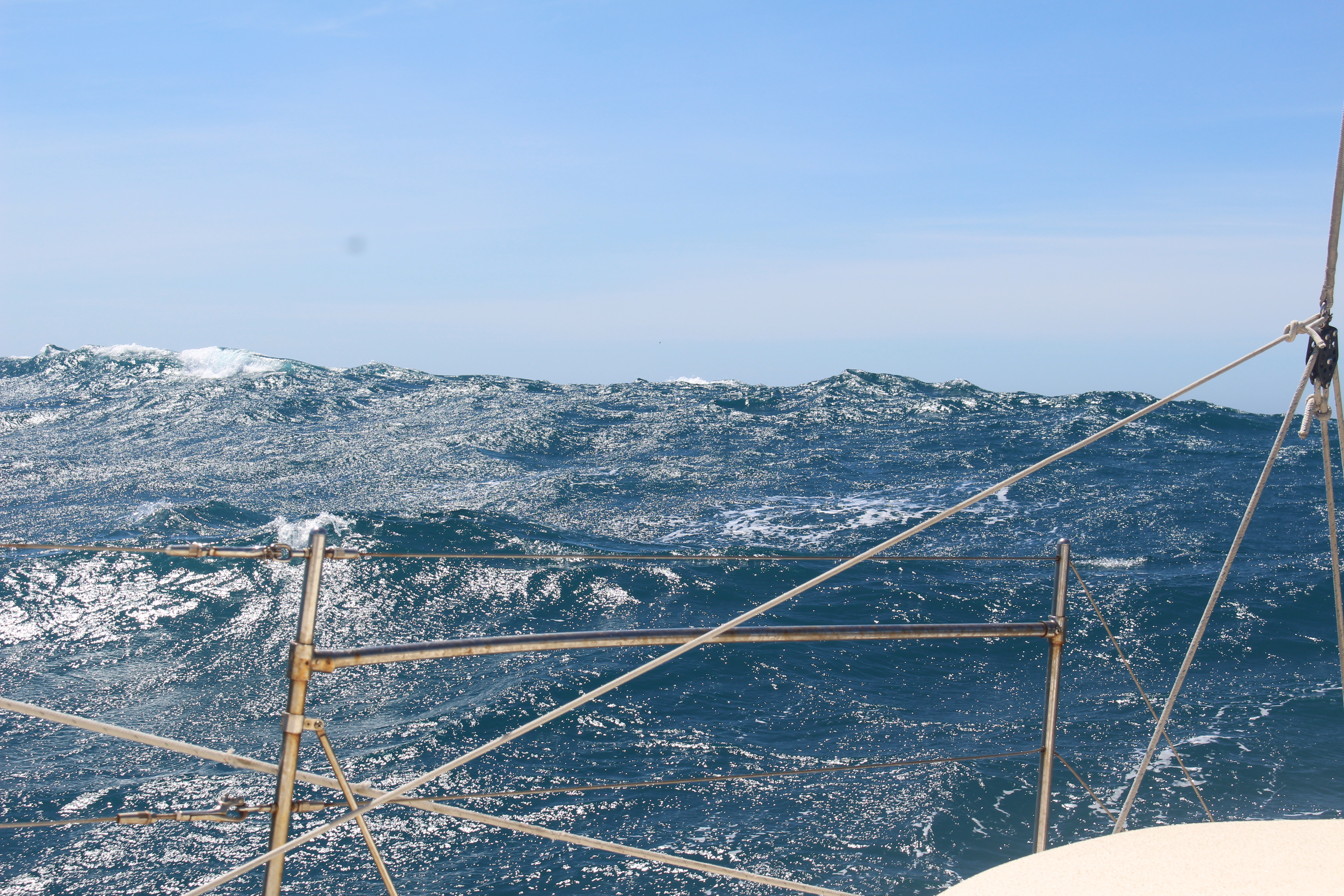
Beautiful day!
Kinda lumpy; ship on the horizon

image

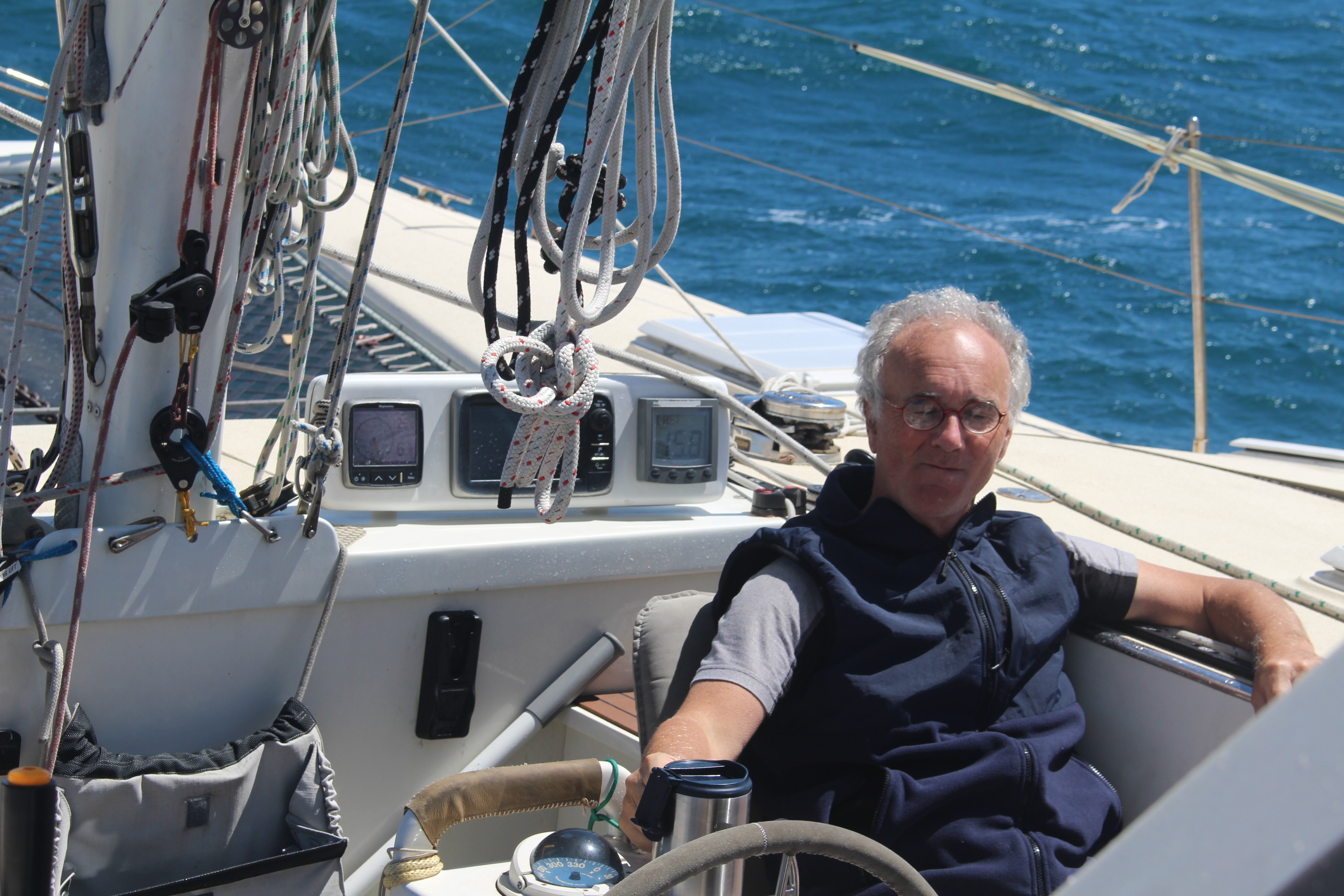
Liam soaks up some sunshine and enjoys his pot of tea.
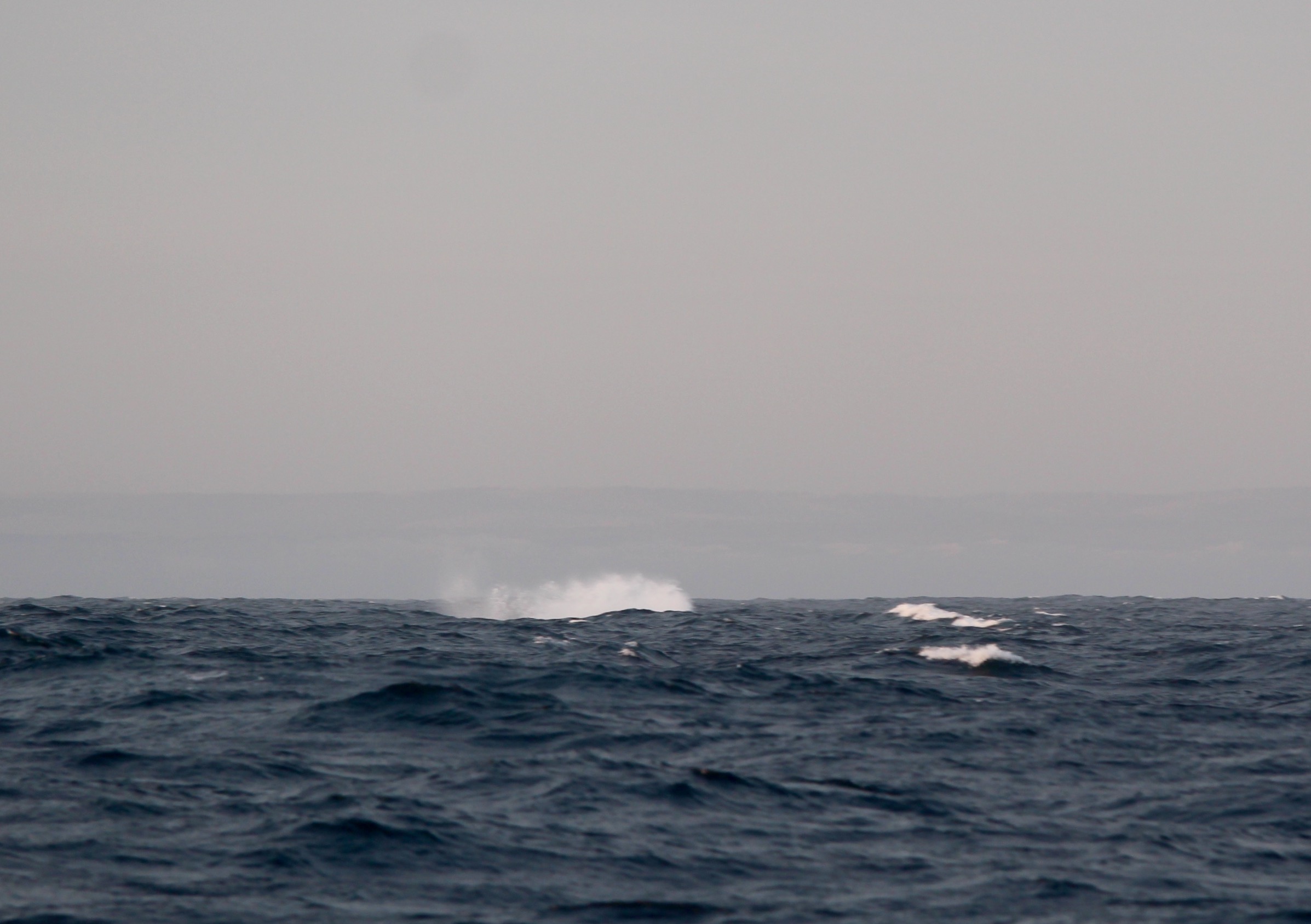
Add this to my collection of bad whale shots. A large humpback did a huge breach. I got the splash after...
Add this to my collection of bad whale shots. A large humpback did a huge breach. I got the splash after…
No Regrets at the fisheries pier
No Regrets and Tahawus at the fisheries pier

Waiting…

Stuck inside of Durban with the Cape Town blues again (sorry Bob Dylan)…

It has been eight days since our tour ended. We are all itching to move on. But the weather is not cooperating. It looked like we would have a “window” several days ago. But the window closed before it arrived. Then again a few days later. Again it didn’t pan out. Now maybe Thursday or Friday, but even that seems suspect. Although it is spring here, it is cold like the depth of their winter, and the winds keep coming from the unwelcome SW. The conditions change rapidly, so we get brief spells inviting us to go, but the forecast says no.

Right now the wind is blowing 30+ knots from the SW, and we are very happy to be in a harbor. We spent one fun day with Greg, our tour guide. He had promised to take us back to the Valley of 1000 Hills to see Zulu dancing, which was rained out on our original one day tour. So we did that, and then had Greg and his sweetheart Sue and his daughter Emma come to see the boats. He brought each boat a gift of “Three Ships” South African scotch, which we have been enjoying. He also brought a gift for Liam to acknowledge Liam’s knowledge and interest about the South African history and culture — a deck of knowledge cards about Gandhi, signed by two of Gandhi’s grandchildren. Greg and family know nothing about sailing, and they were fascinated to take the three-boats tour.

The No Regrets crew made a list of boat tasks to do, and we have crossed almost all of them off. One thing we did that I’m pleased about is we had a sailmaker repair the spinnaker snuffer that originated with our asymmetrical spinnaker. It’s hoop/bucket had broken, so we substituted the snuffer from our old Parasailor. But the latter is bulky and awkward and complex. Our repaired snuffer will fit in our bag much more easily, and be simpler to use.

The starboard engine has been reluctant to start, so we engaged a mechanic to check it out. He removed injectors and the injector fuel pump, and took them home to test. He says they check out fine. Upon return he did a compression test. Two cylinders are like new, one is marginal. But it seems unlikely that it would account for the symptoms we see. Next step, hopefully tomorrow, will be to investigate the fuel delivery system and the exhaust elbow. The problem remains a mystery.

We spoke with three different “battery guys” about replacing our ailing batteries. Two said they couldn’t match what we have, and while they offered alternative batteries they didn’t offer a plan for how to install them (and the placement and wiring would have to be quite different from what we have today). The third guy also could not match what we have, but he did offer a plan that seemed workable. But in the end we decided to struggle on with what we have, rather than tackling major rework of our wiring tangle, that would entail some risk of dislodging some small wire and requiring a month of troubleshooting.

We cleaned. We had diesel delivered. We tried to get propane but have been unable to find an outfit that can fill our American tanks. We repaired a lifeline, tightened alternator belts, inspected aloft, cleaned and lubed stuck zippers, lubed hatch dogs, inspected our repaired daggerboard, tested our temporary windlass repair, re-repaired our cockpit floorboards and reglued gaskets on hatches.

And the wind generator has our attention. It has also been reluctant to start generating. A year ago we replaced the bearings, and when that didn’t help we replaced the blades. Still not good. So we’ve been looking into its wiring. The relay that switches it on is getting hot. Hopefully that is a sign that it is faulty, so replacing it (or modifying the system to leave it out) will help. It’s not a common relay, so it may not be replaceable here. But for today, with a howling wind, the generator is going gangbusters. We’ll leave the hot relay in place (turning the system off if we leave the boat) until the wind calms down; then we have ideas about a simpler wiring scheme with no relay. Will that help with its effectiveness? Stay tuned…

Now that most of our other chores are complete, we are reading a lot. Going out for a meal most every day. Tagging along when others make a shopping run, even though we don’t really need to. Starting to think about the schedule ahead post-Brazil…how much time in the Eastern Caribbean…how much in the Bahamas…when back to the NE USA…and who will be aboard, as I will probably we looking for crew. I met with Rob and Carol (of Maggie) to pick their brains about where to go between Trinidad and the Bahamas.

Everyone (all three boats) seems to be getting a wee bit irritable, even though we put on happy faces. Will we ever get a good forecast to get out of here…? Jimmy told us to allow a month between Durban and Cape Town, despite it being only 800 miles. But I didn’t think we would click off so many of those days waiting to get started…

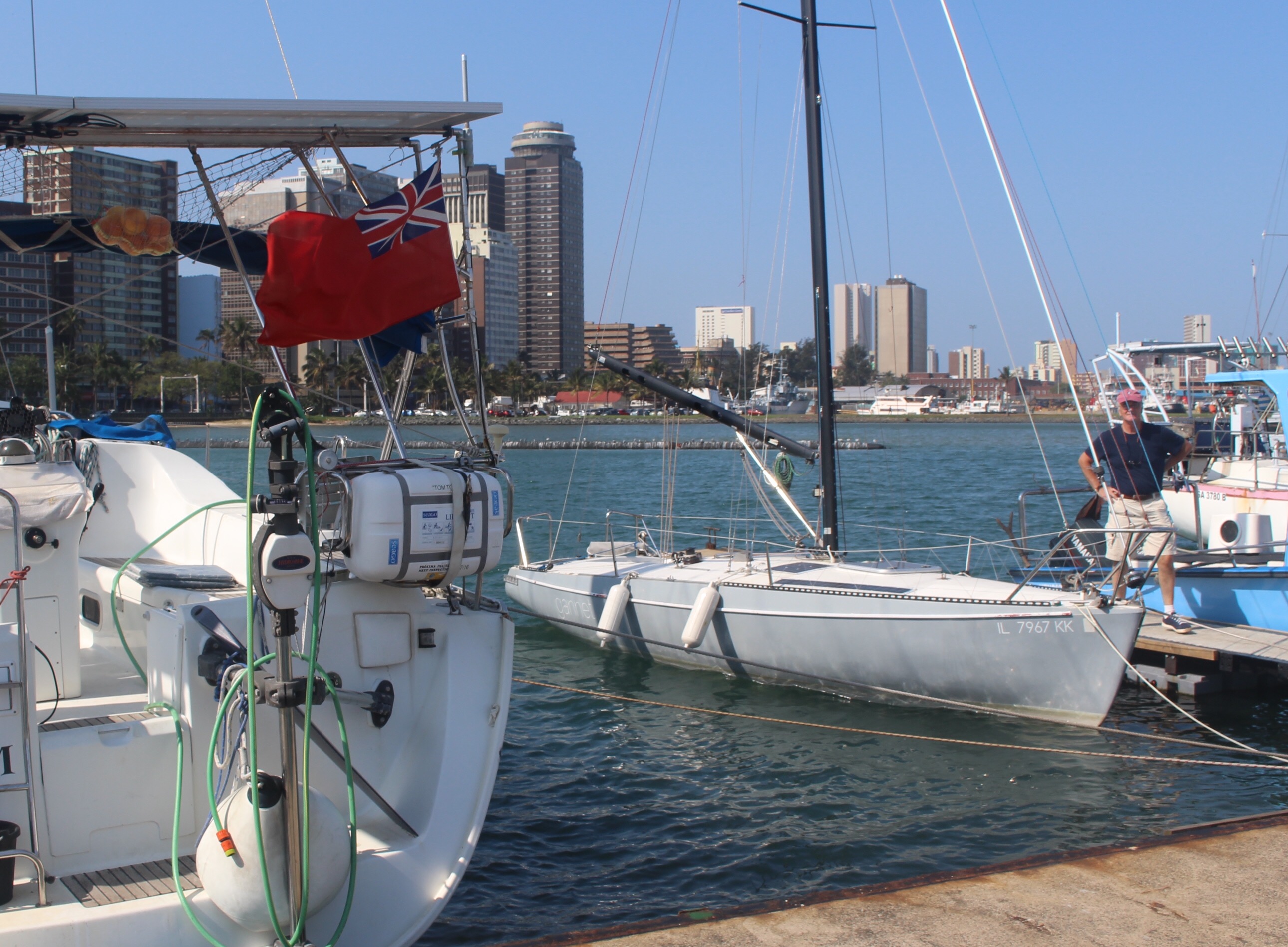
Just across the dock from us, we met Webb Chiles, a well-known singlehander and author of many books. Liam poses by his boat Gannet to show how tiny it is! He has done a circumnavigation aboard that little boat. (It was 55 grueling days at sea for him, sailing here direct from Darwin, Australia.) But he's also circumnavigated aboard an even smaller boat! He's an interesting guy; you might google him... In the foreground is Tom Tom, sailed by another singlehander, again to drive home how small Gannet is.
Just across the dock from us, we met Webb Chiles, a well-known singlehander and author of many books. Liam poses by his boat Gannet to show how tiny it is! He has done a circumnavigation aboard that little boat. (It was 55 grueling days at sea for him, sailing here direct from Darwin, Australia.) But he’s also circumnavigated aboard an even smaller boat! He’s an interesting guy; you might google him… In the foreground is Tom Tom, sailed by another singlehander, again to drive home how small Gannet is.
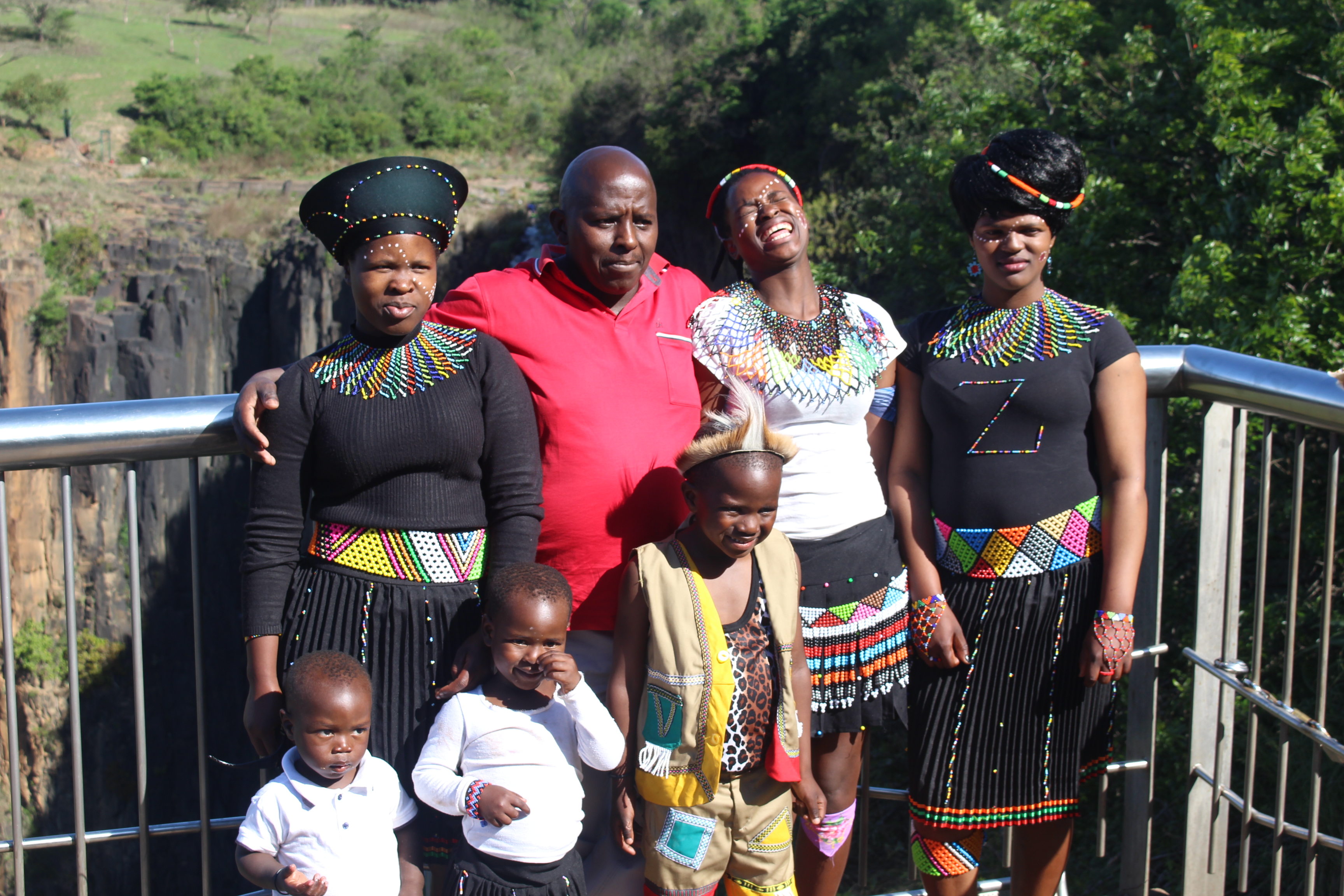
Back on our tour we saw locals dressed traditionally for Heritage Day.
Back on our tour we saw locals in traditional garb for Heritage Day.
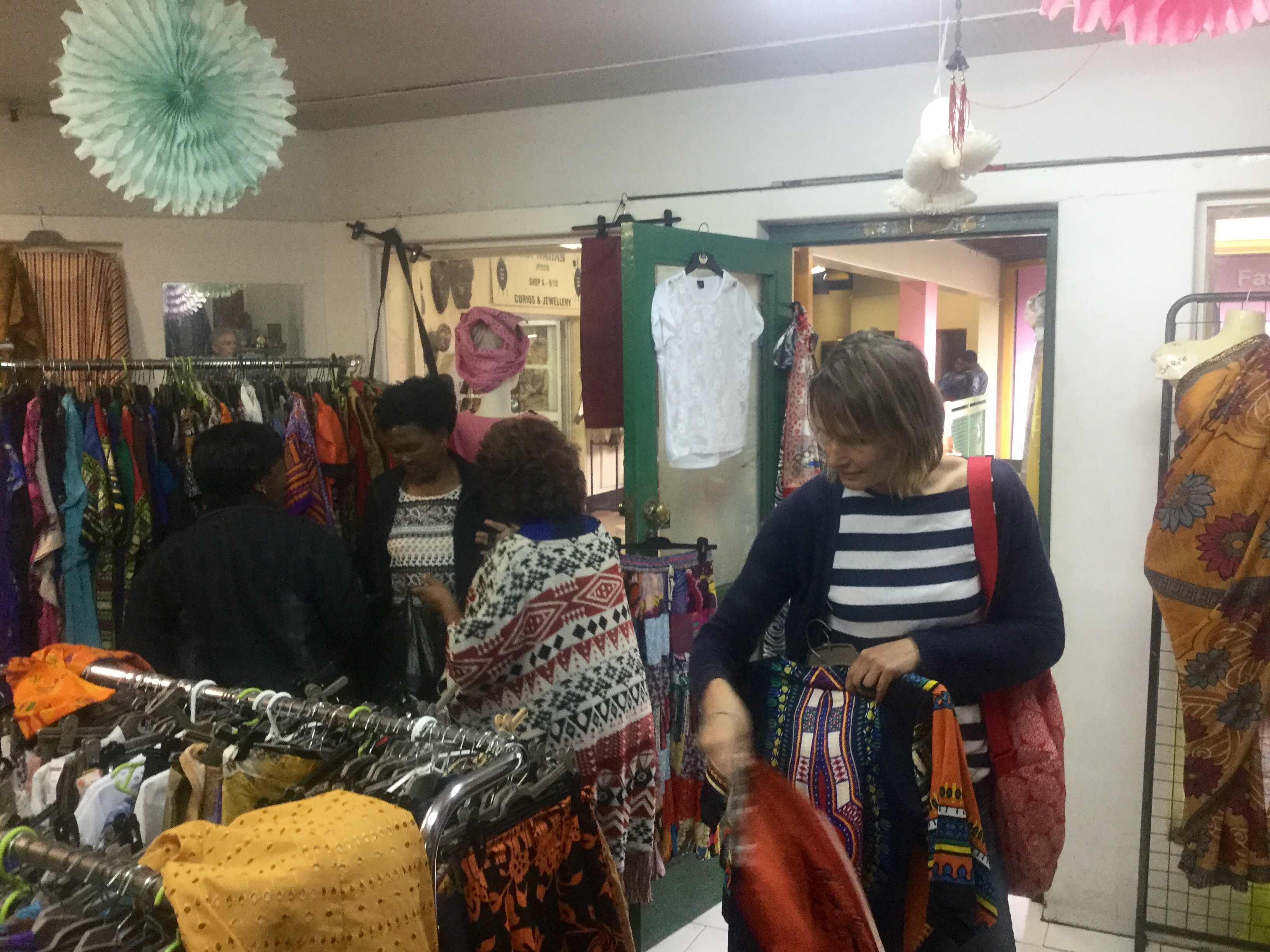
Shopping with Klaudia
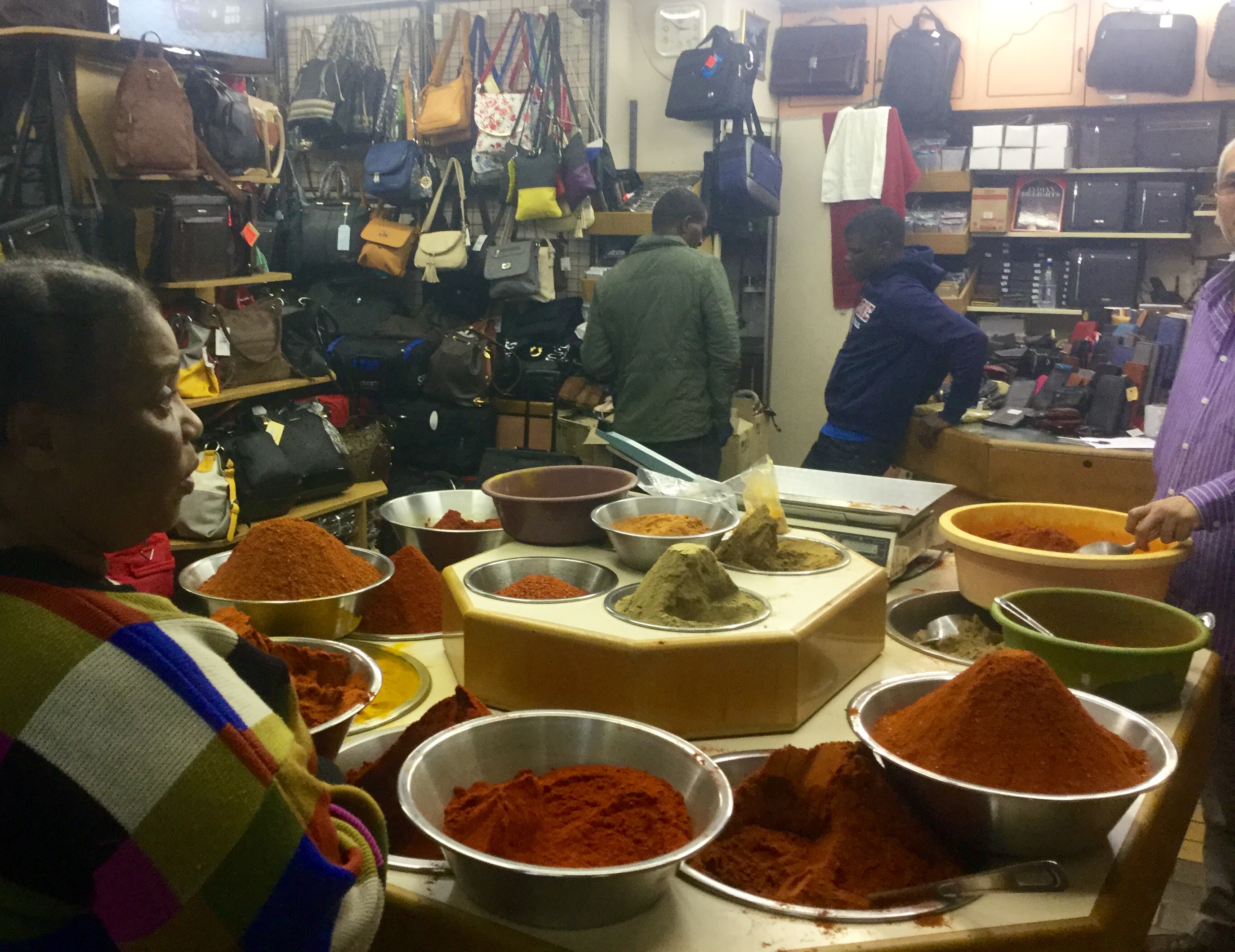
The curry (and luggage) store at Victoria Street Market.
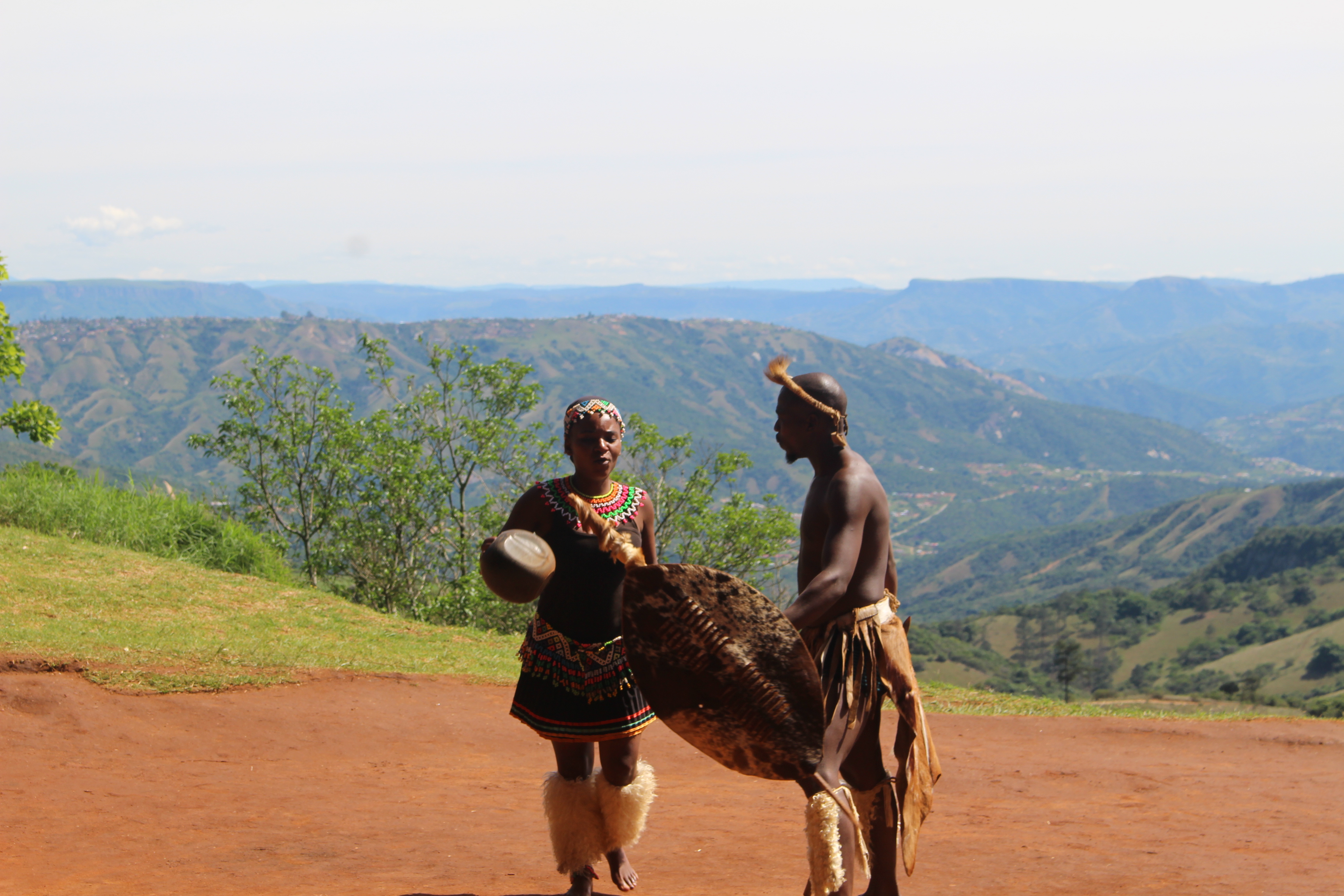
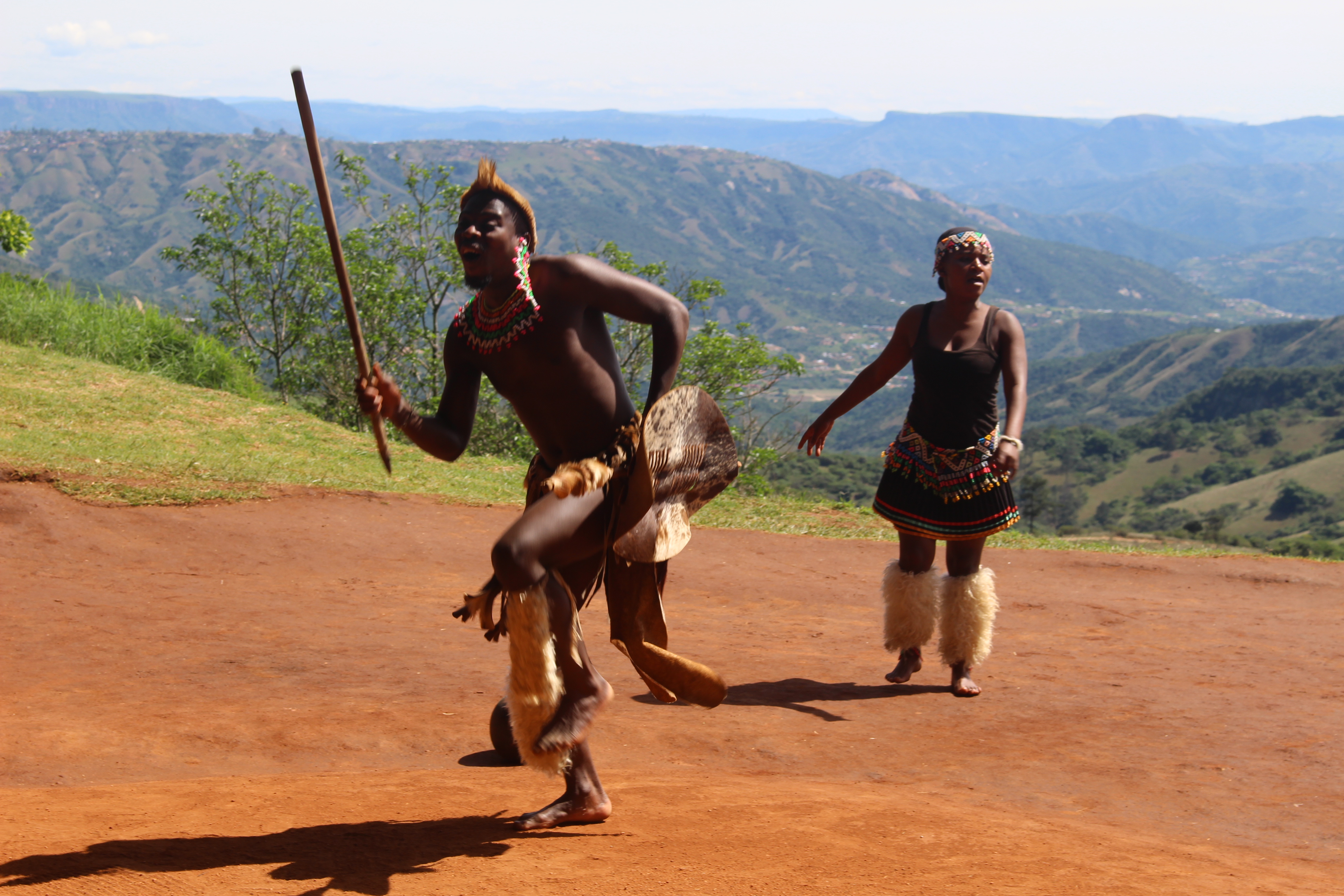
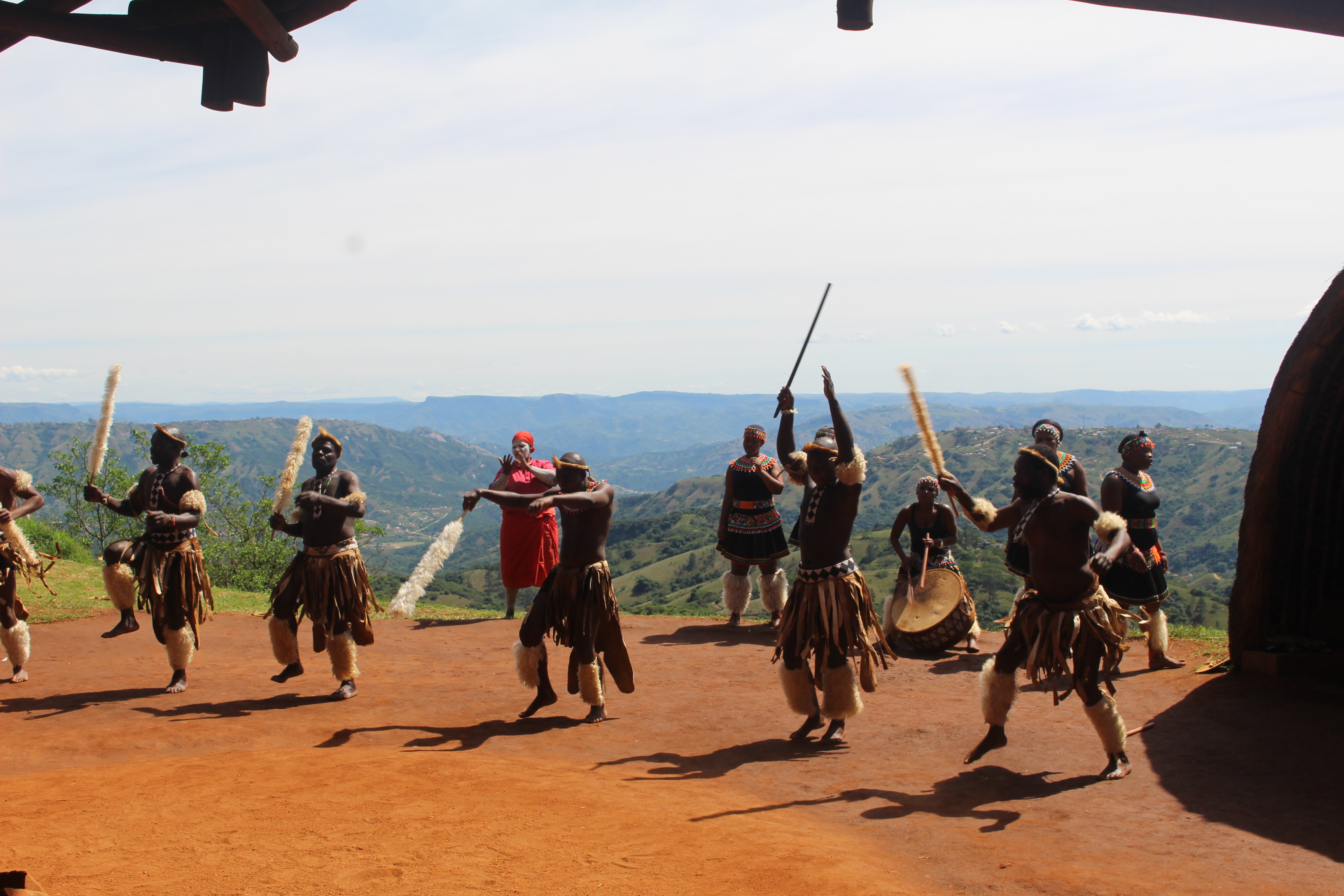
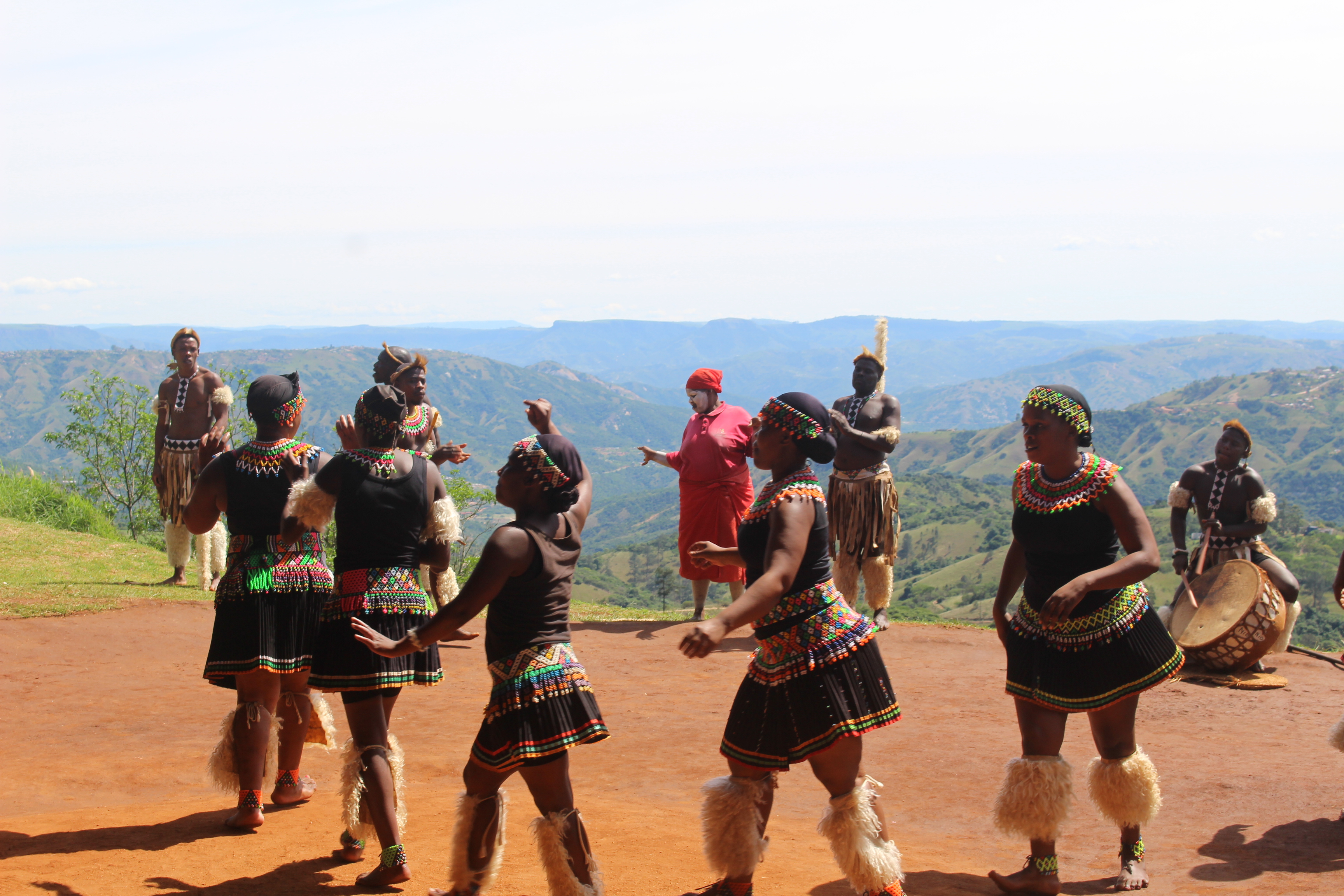
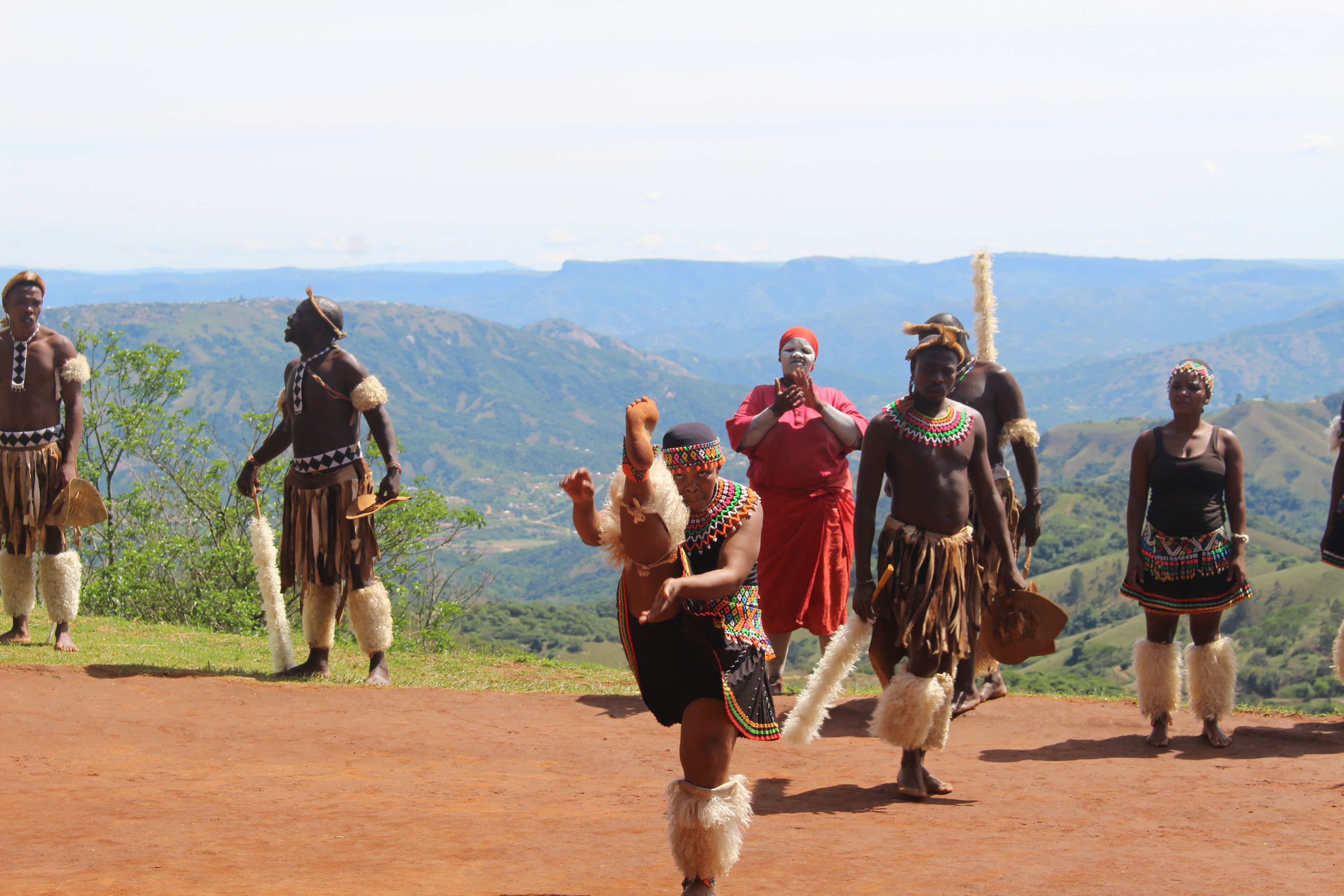
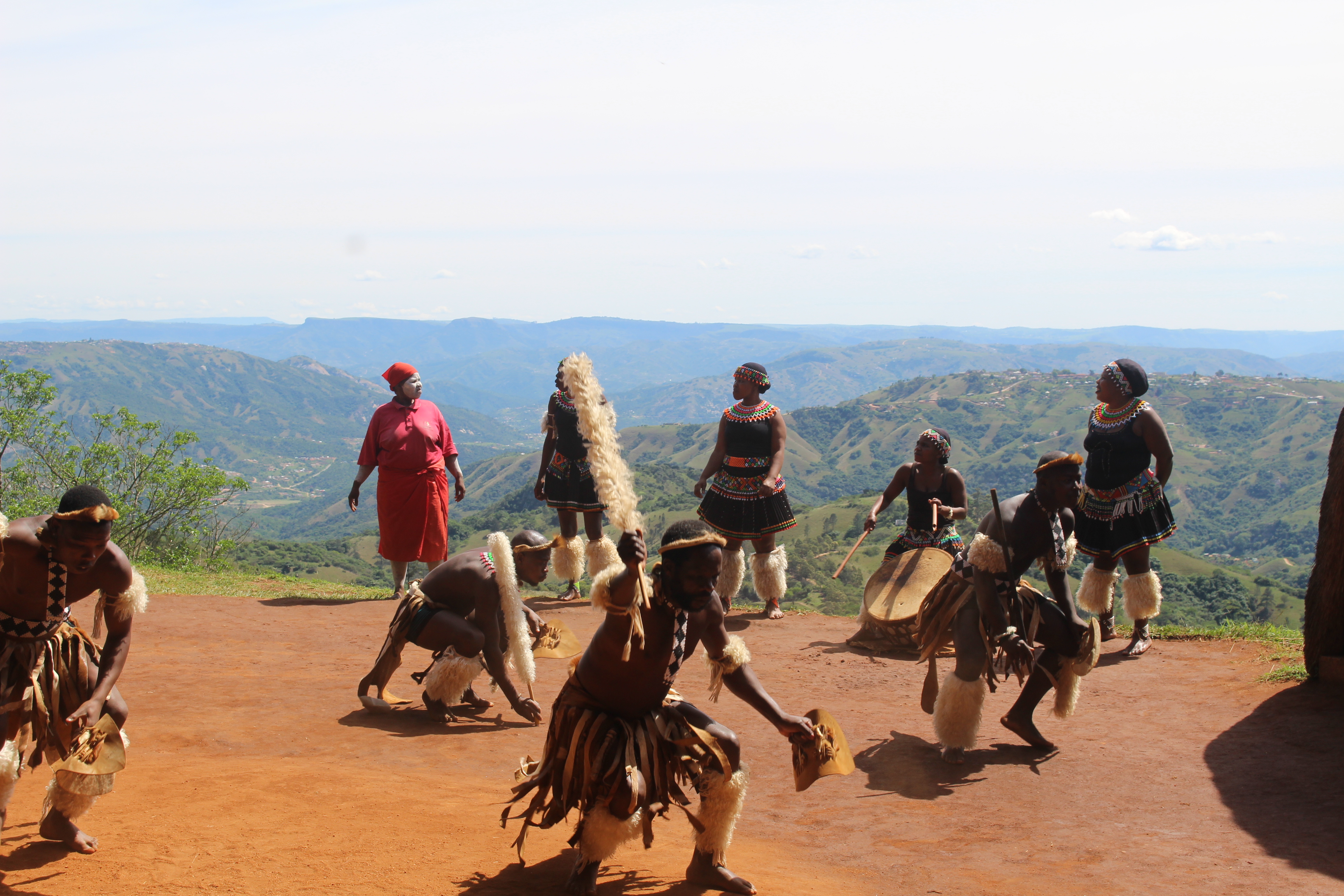
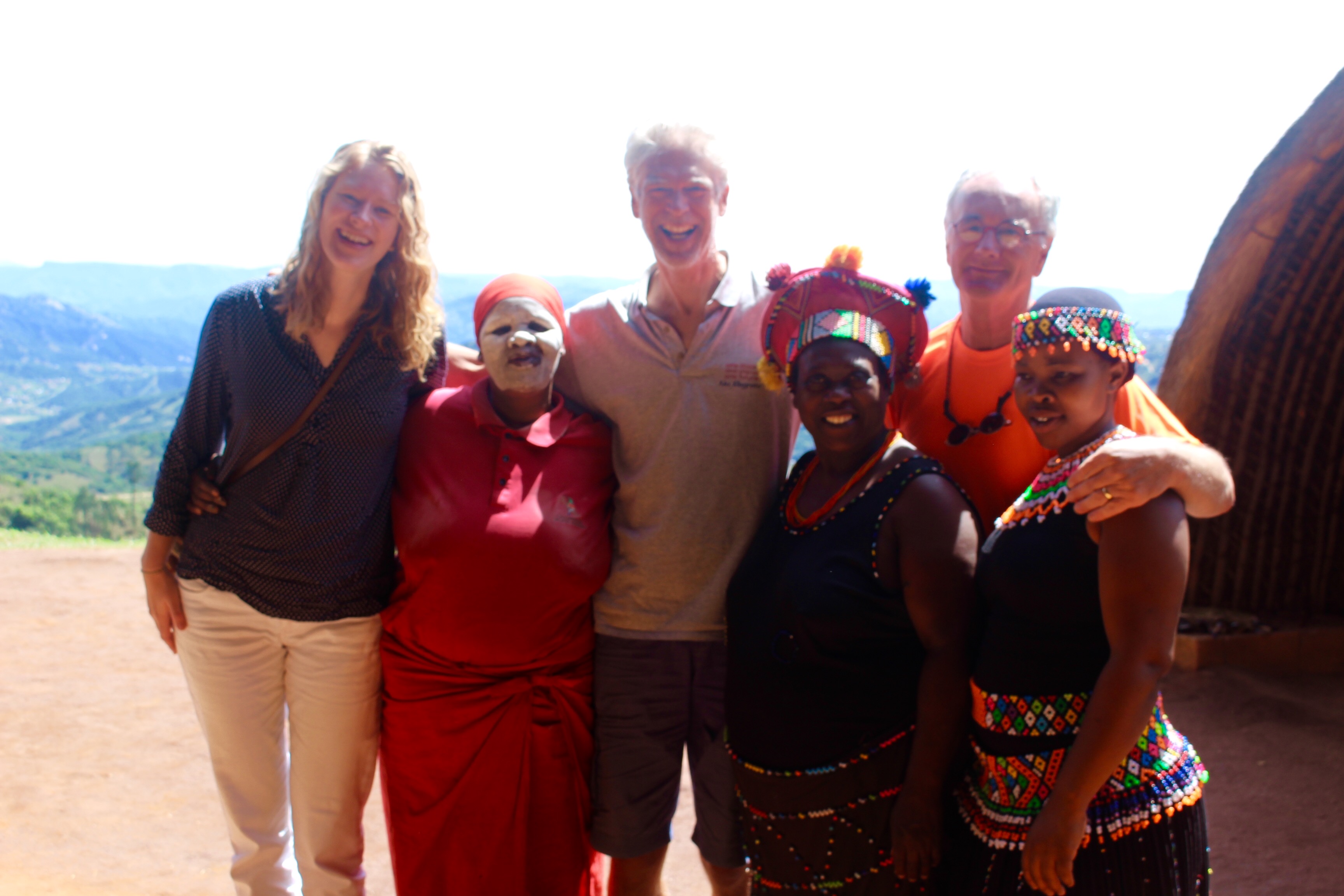
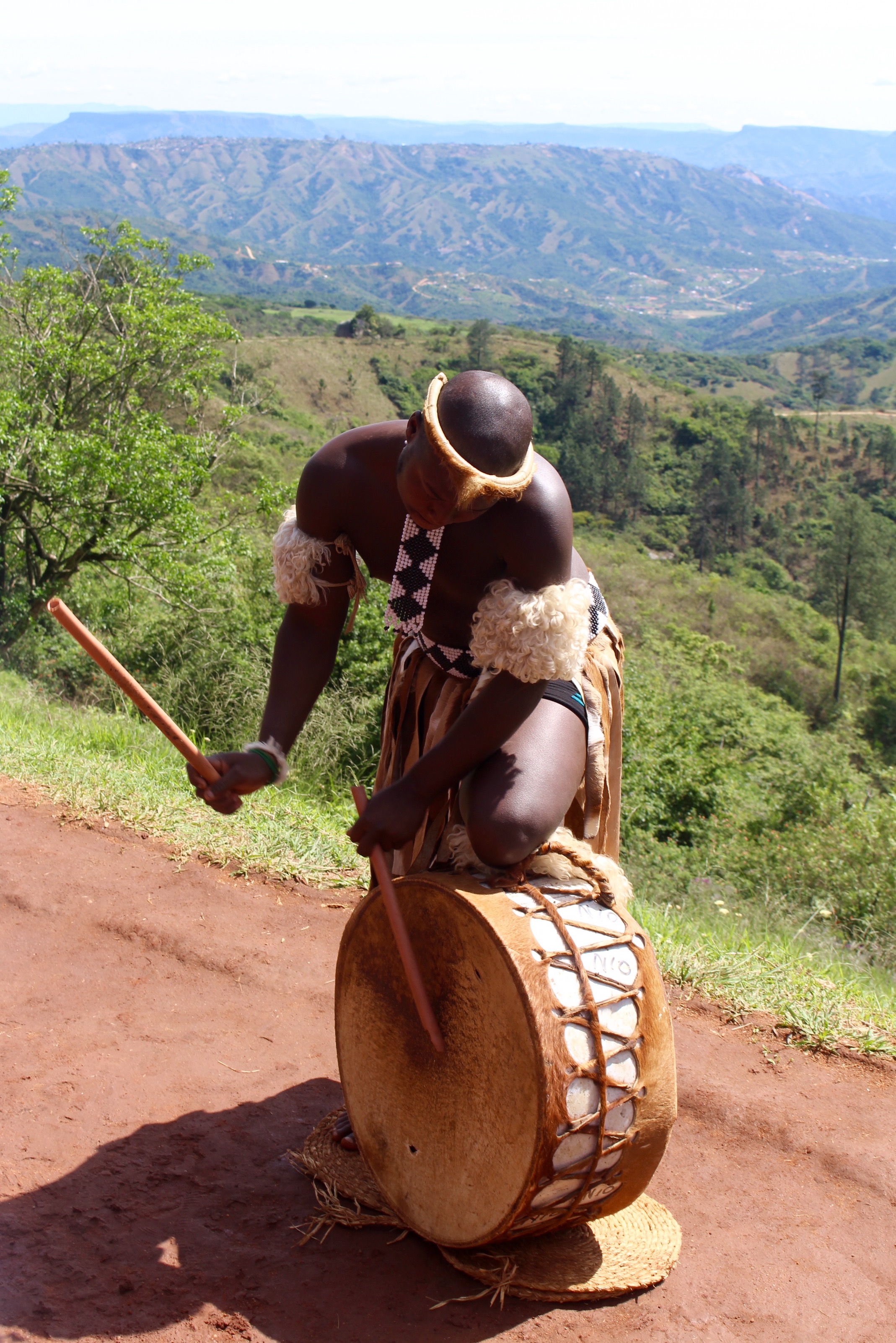
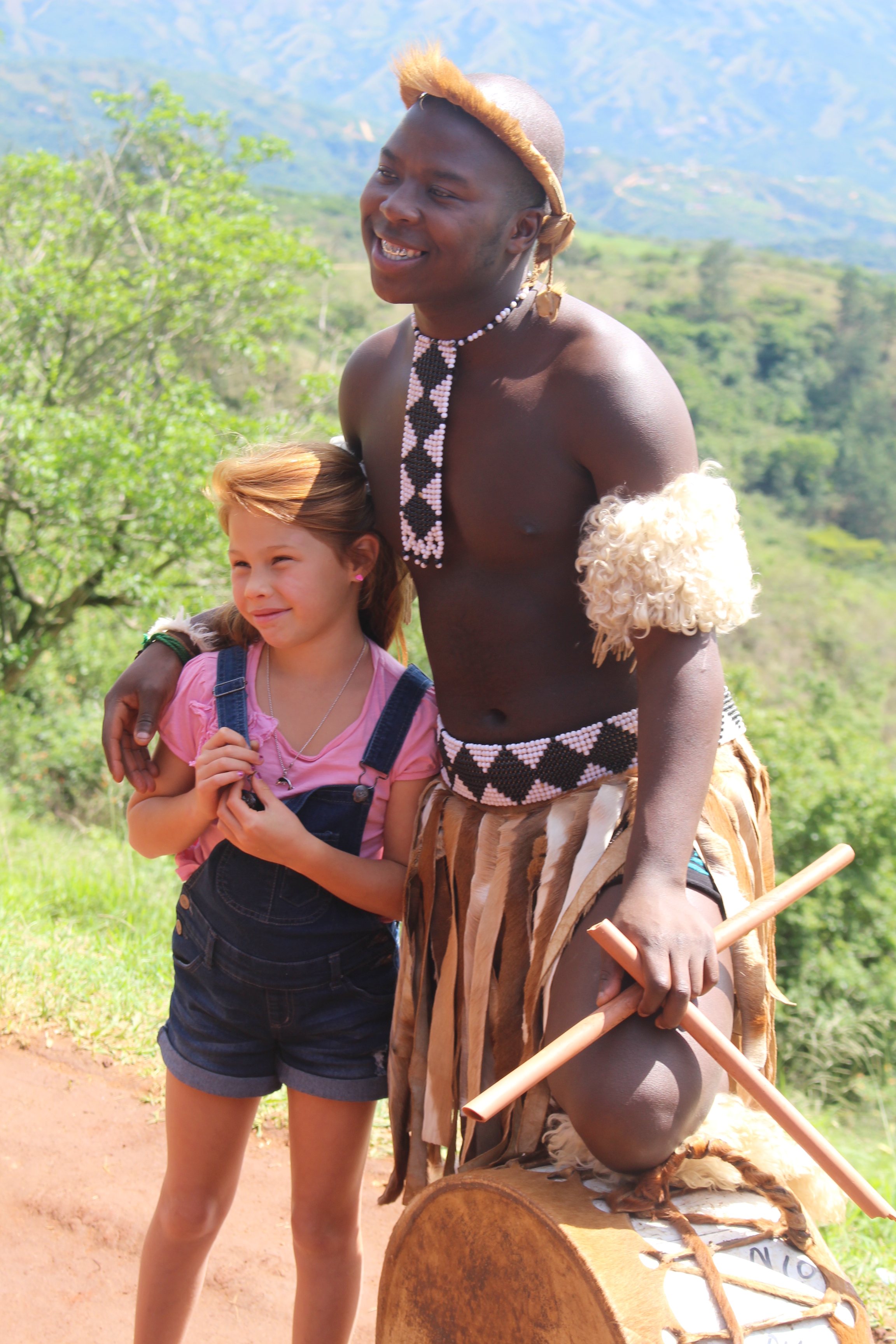
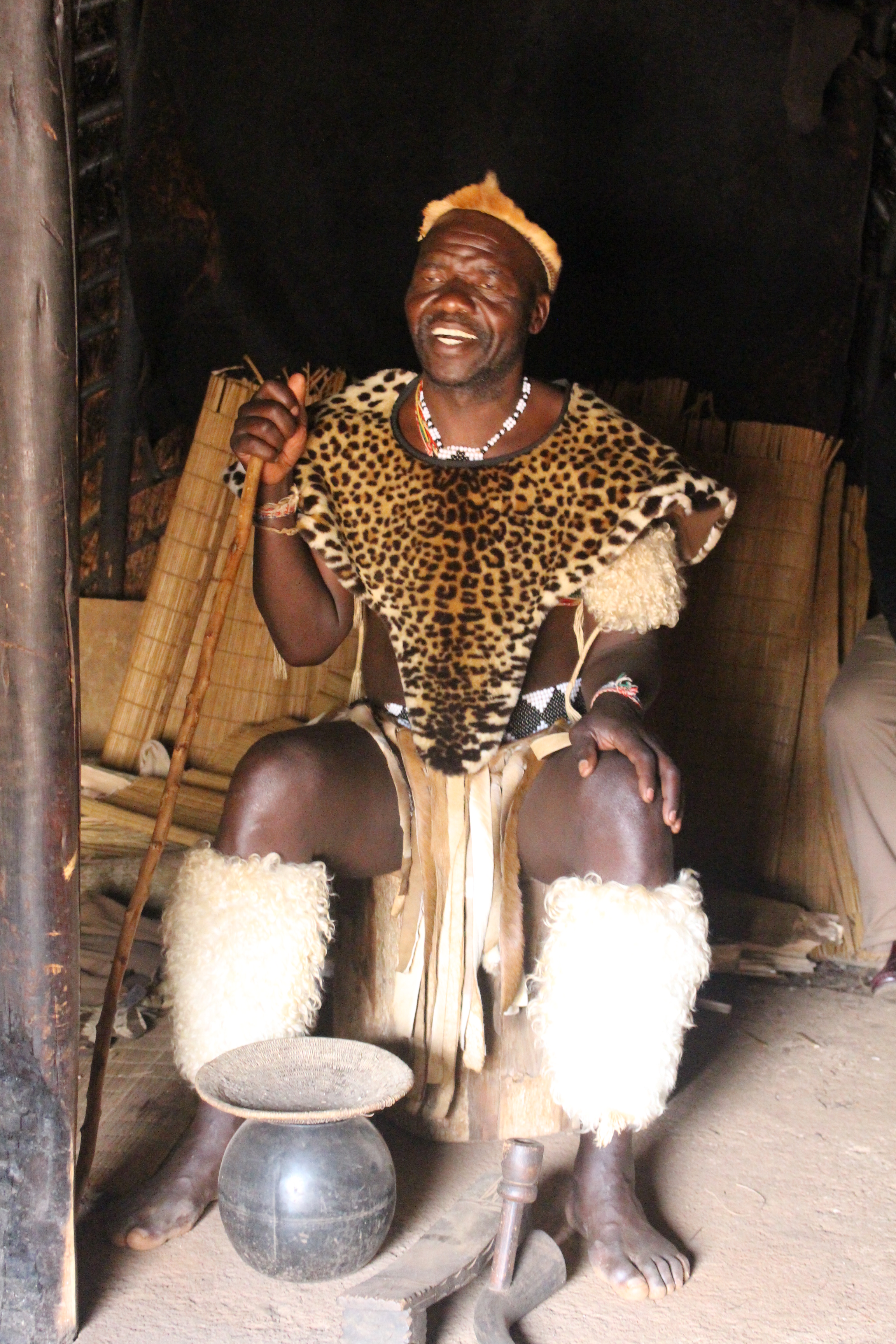
On our follow-up tour with Greg, to the Valley of 1000 Hills, for Zulu dancing. Greg says although this is a staged production, it is about as real as you can get.
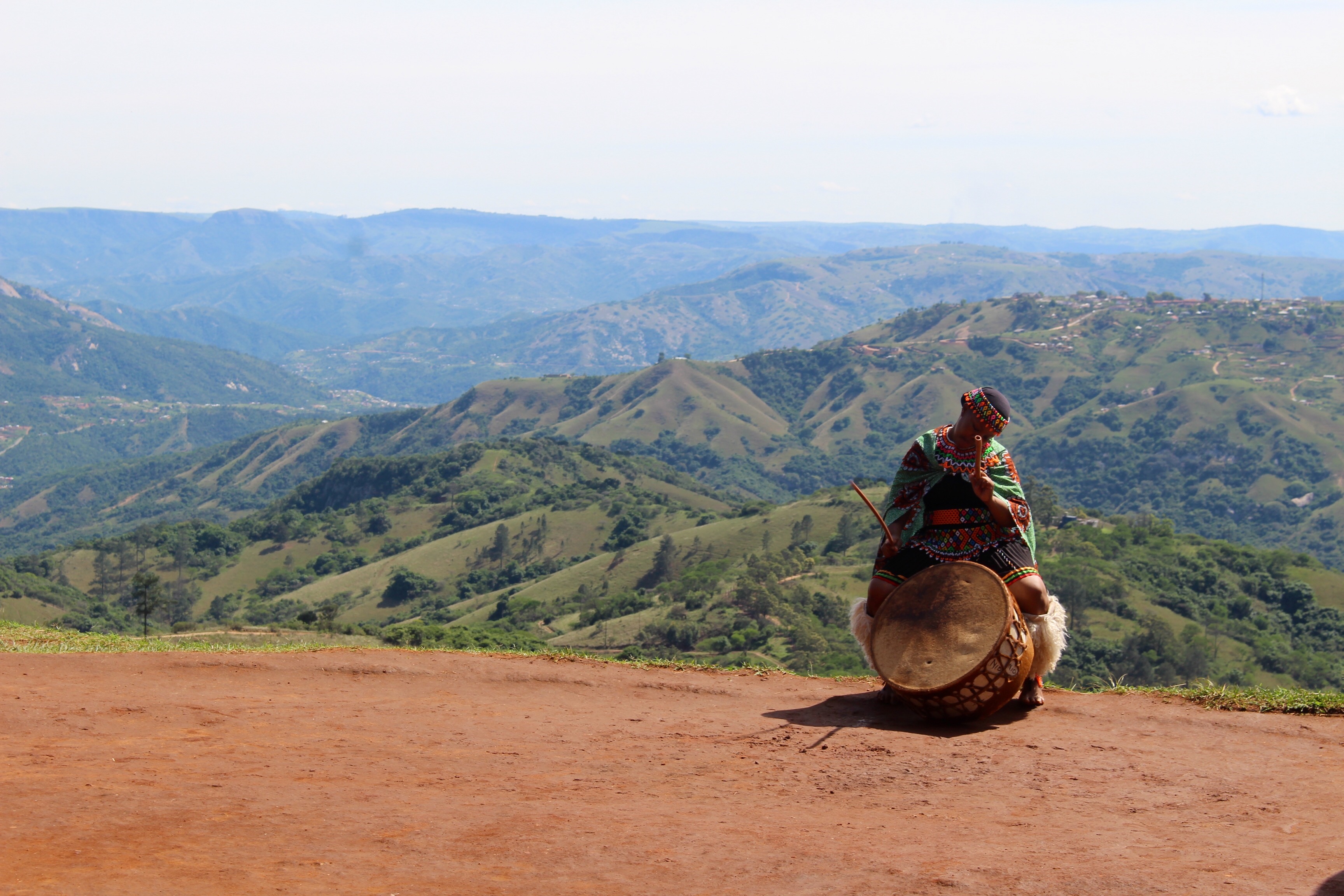
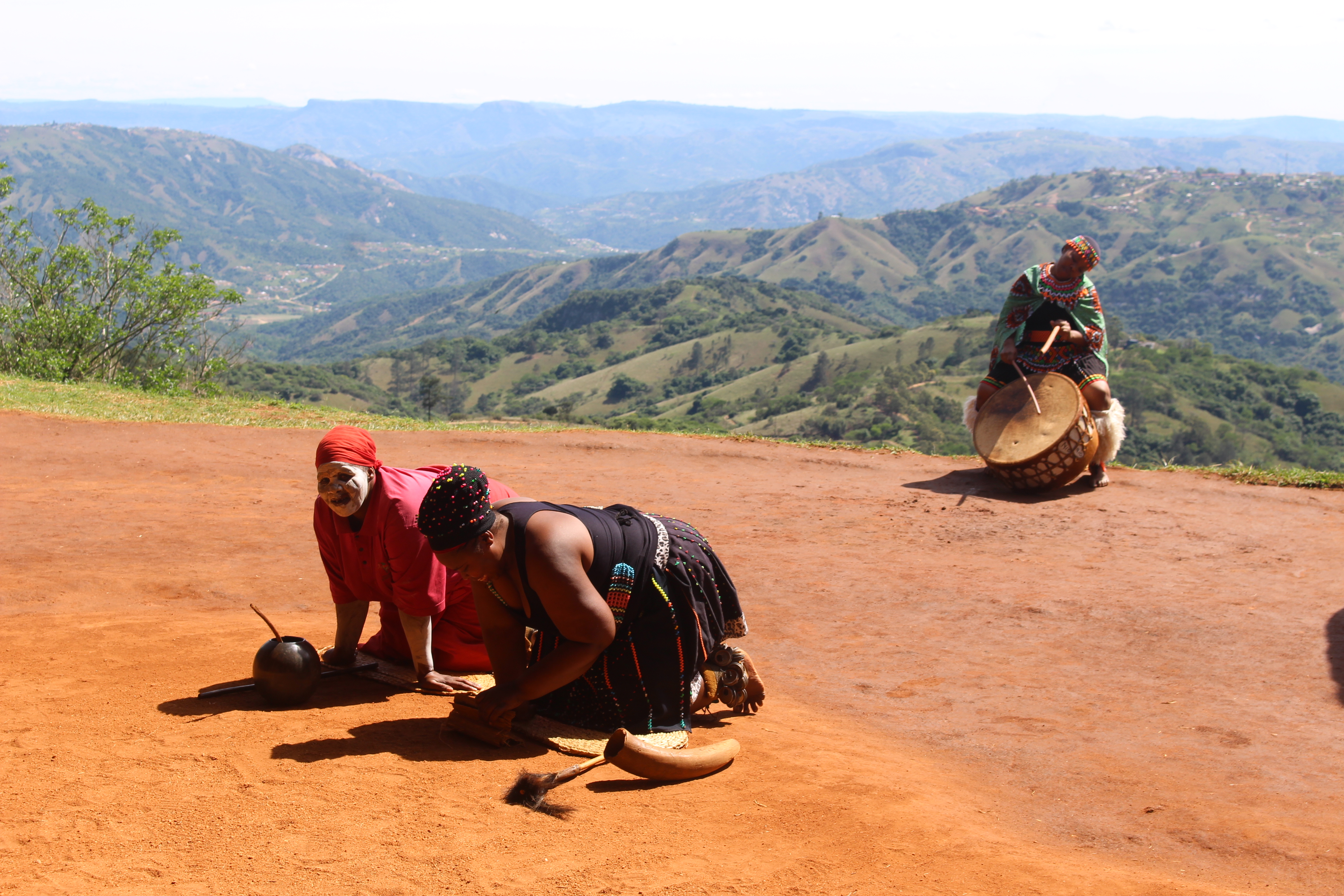
The drumming begins, adding to an amazing setting...
The drumming begins, adding to an amazing setting…
They enact a story about a young man courting a sceptical lady (does he really own the eleven cows expected to be paid as a bride price?).
They enact a story about a young man courting a skeptical lady (does he really own the eleven cows expected to be paid as a bride price?).
When she finally agrees, he is one happy warrior!
Next step is to consult with the shaman (in black; can be male or female). The woman in red and painted face/body is a shaman in training.
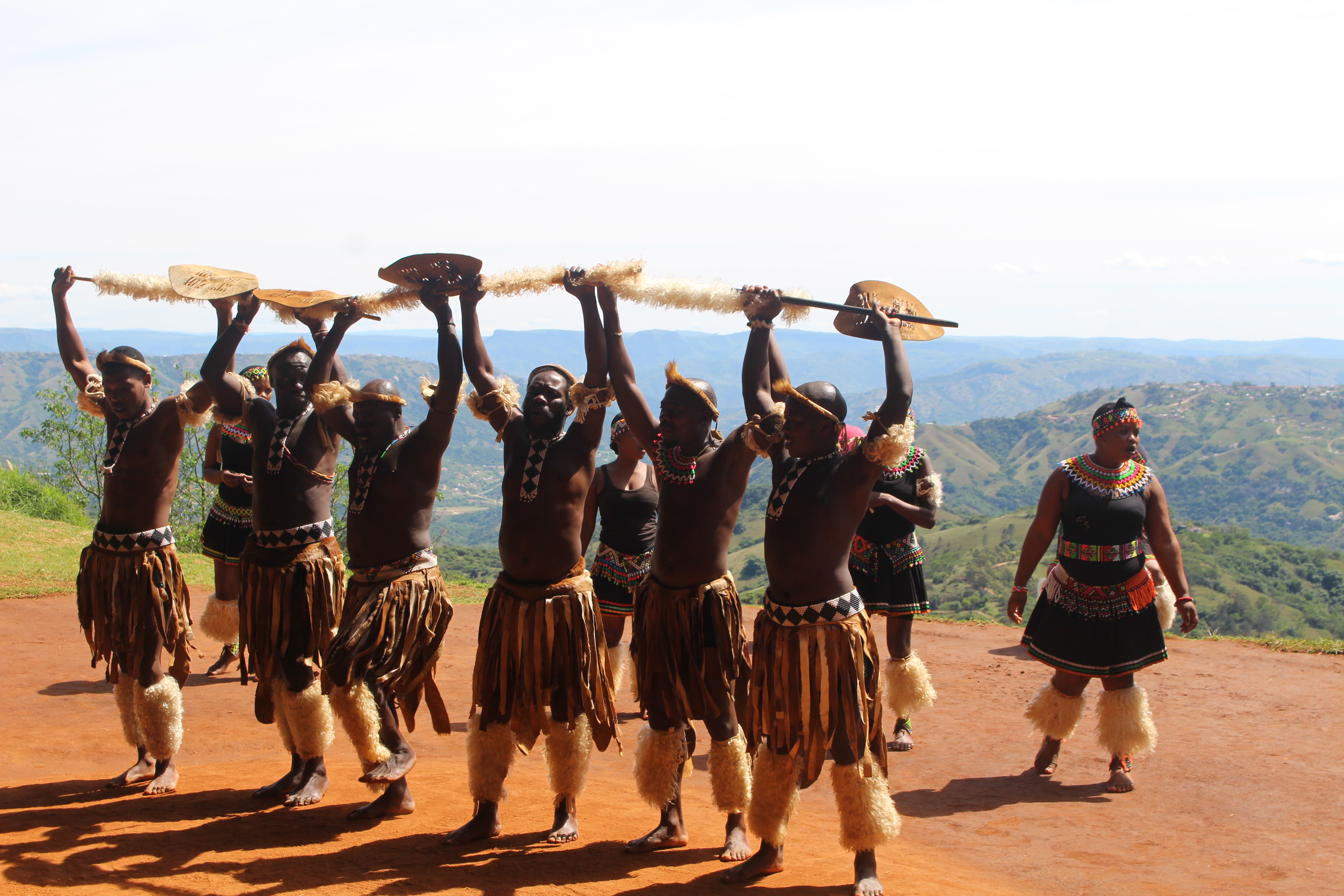
The pairing looks okay, so everybody celebrates.

image

image

Kicking/stomping is a central part of Zulu dancing. We saw this with the staff at the game reserve, and we saw young people in skirts and sneakers performing this kind of dance on the street corner.

image

Bad quality photo, sorry. But fun!

image

image

image

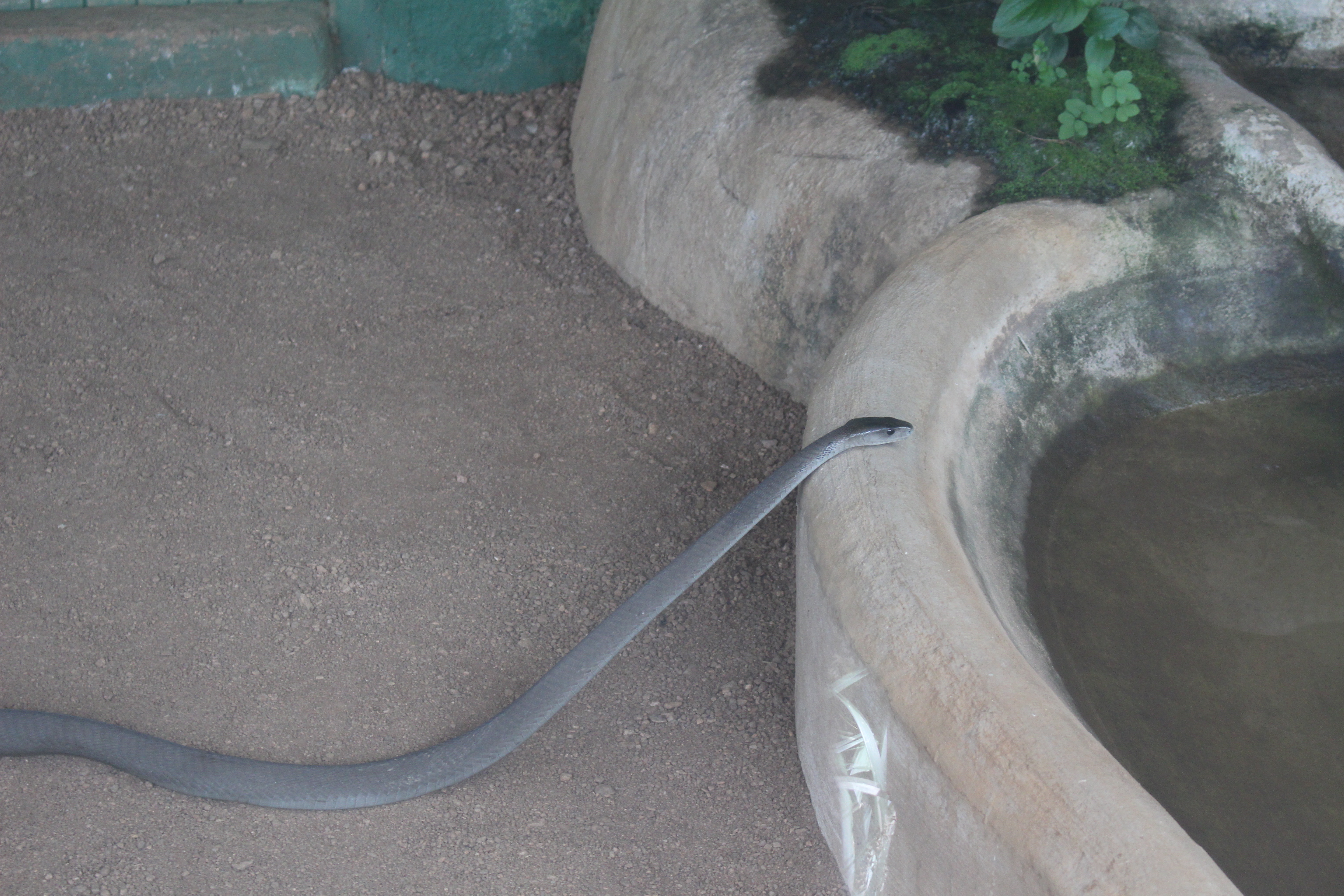
Black mamba snake. The Zulu dance place was also a small zoo.
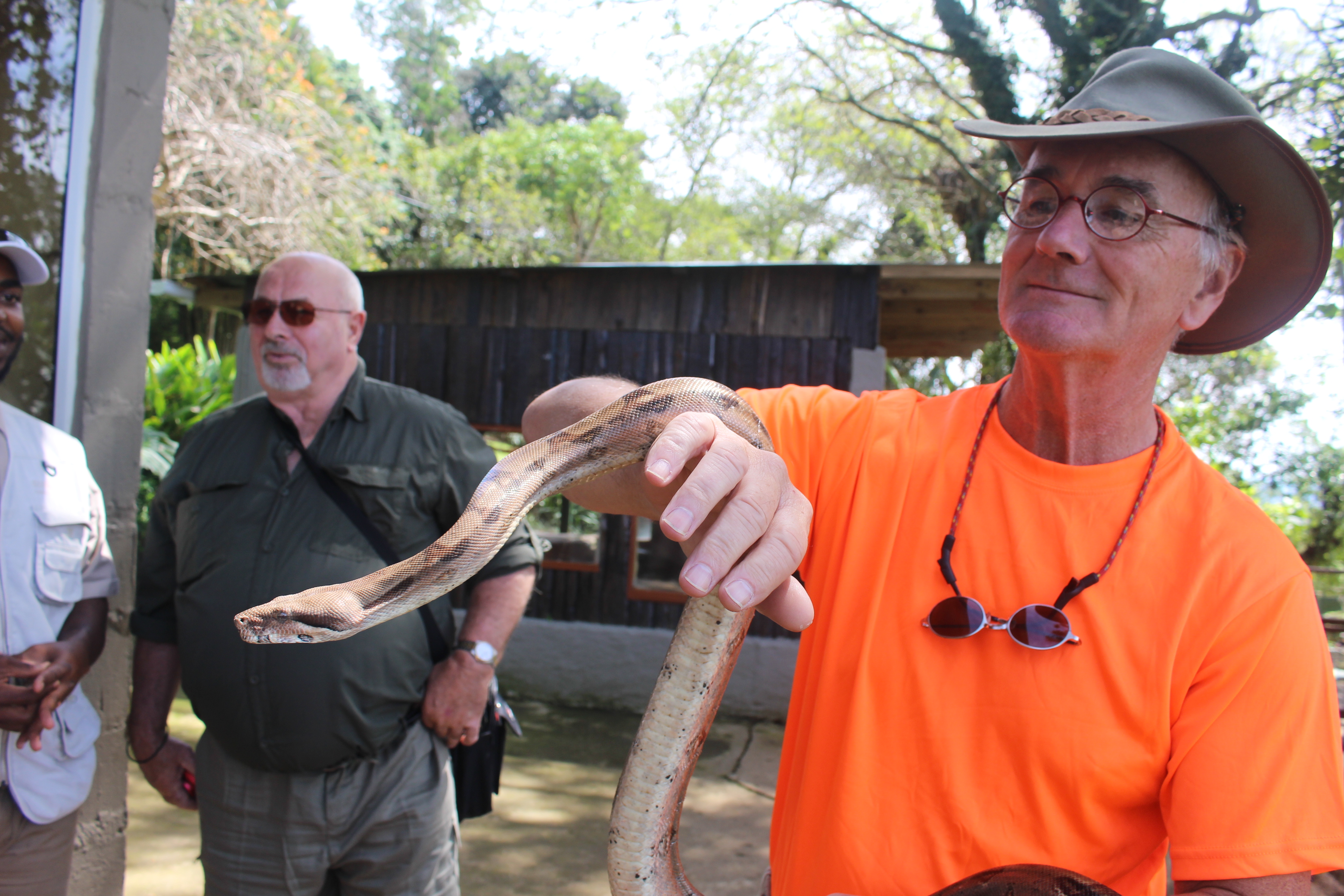
Liam meets snake (non-poisonous, they say).
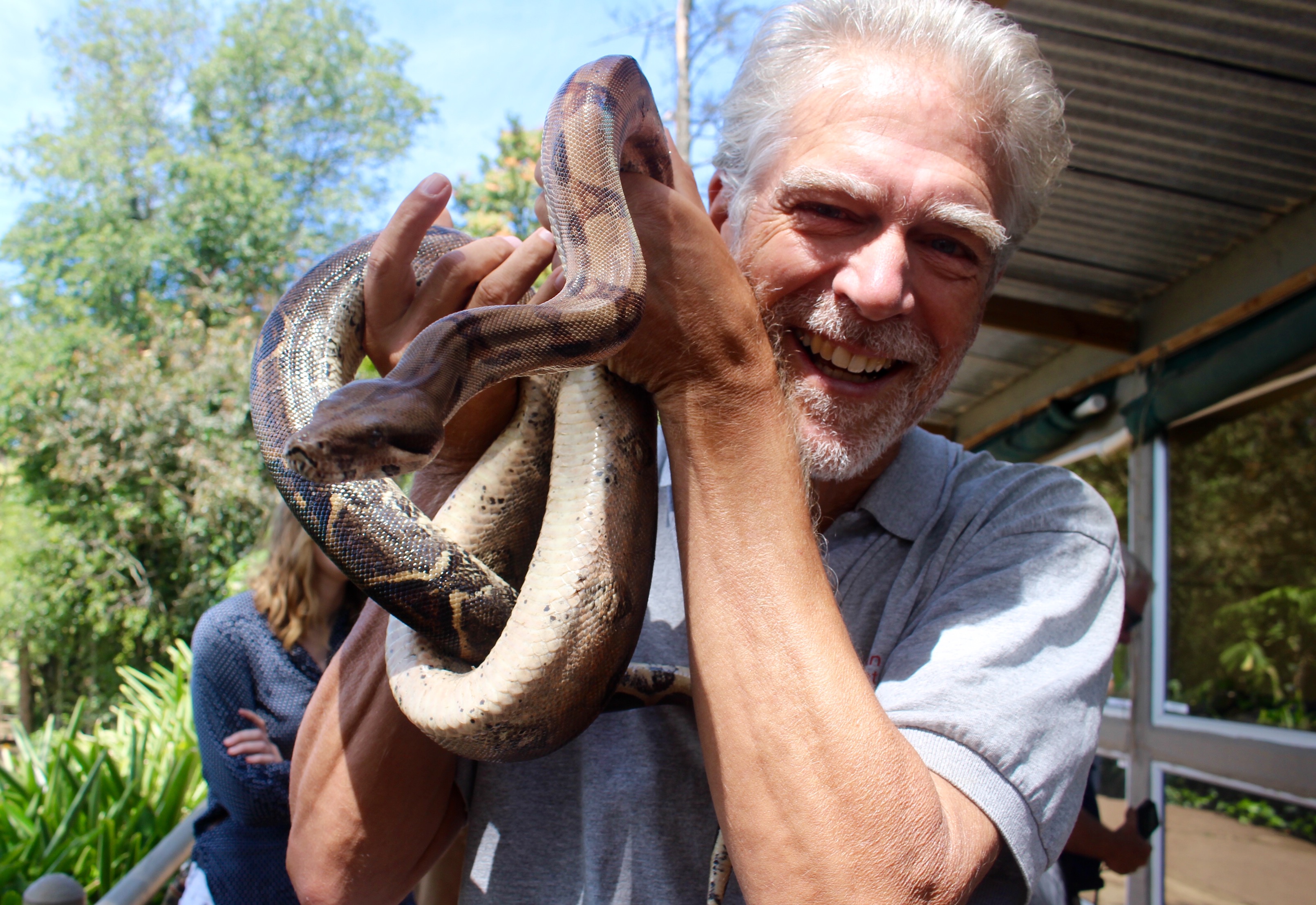
Zeke meets snake. (Nora declined this opportunity.)
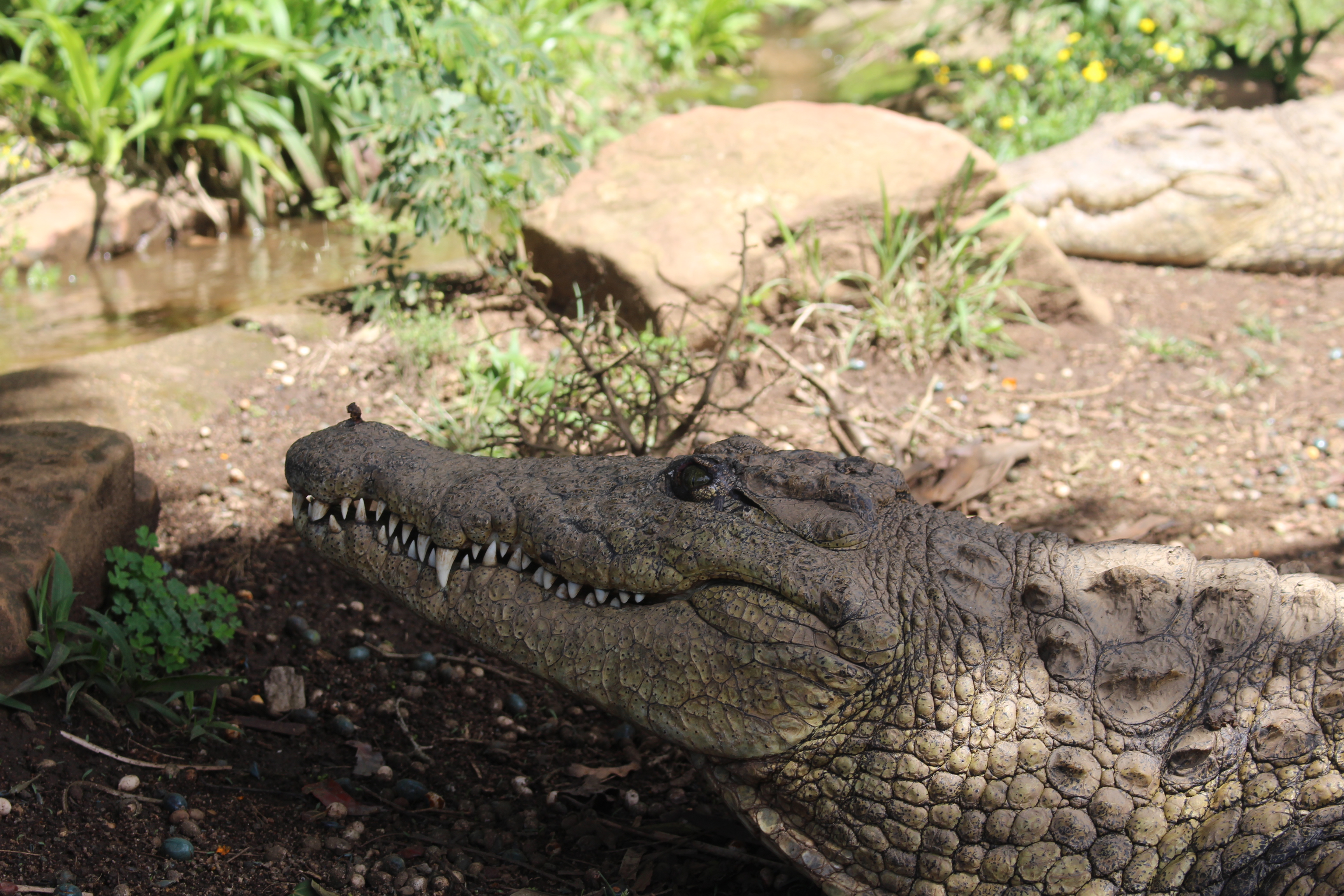
And they had crocs.
And they had crocs.
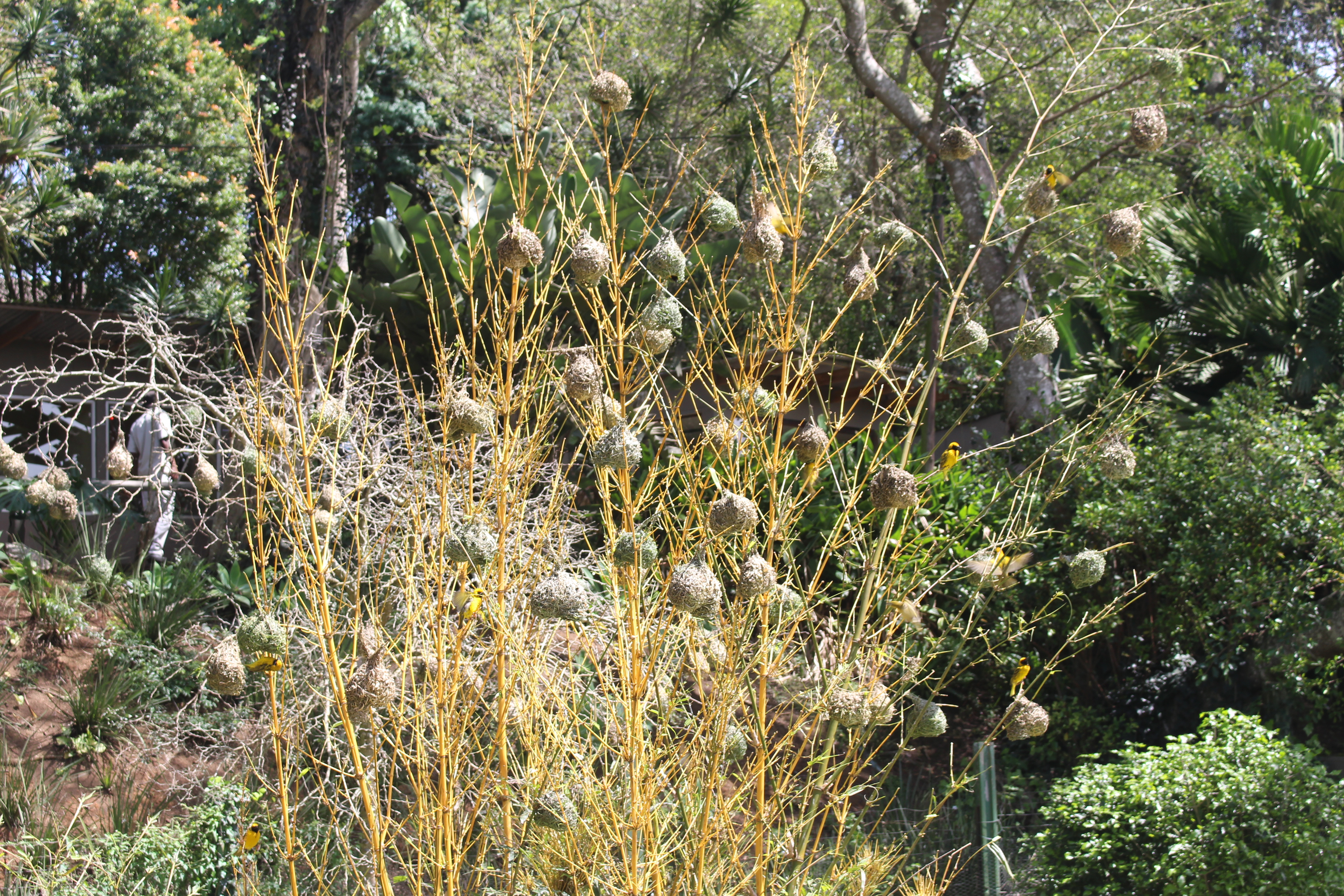
How many yellow weaver birds can you spot...?
How many yellow weaver birds can you spot…?
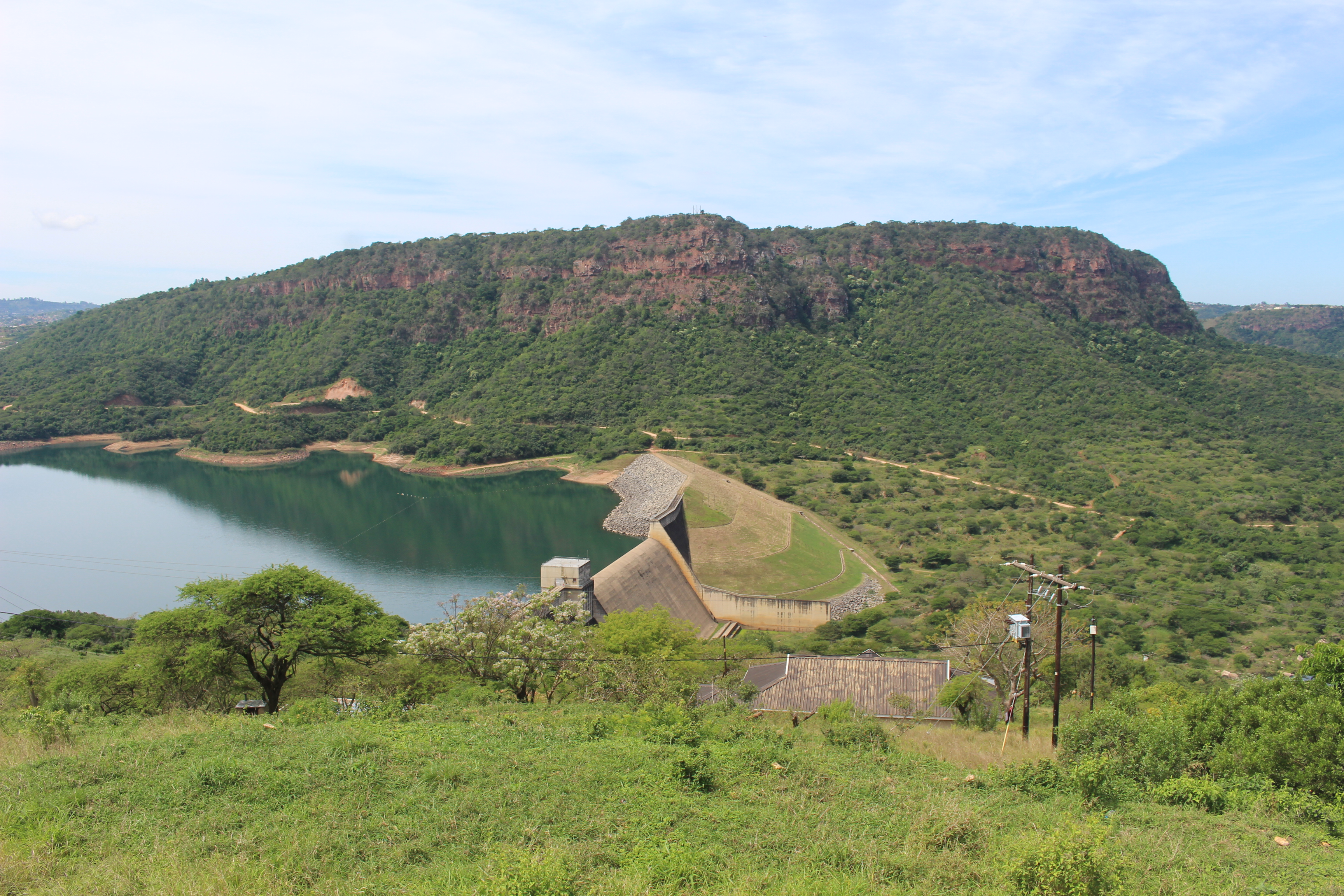
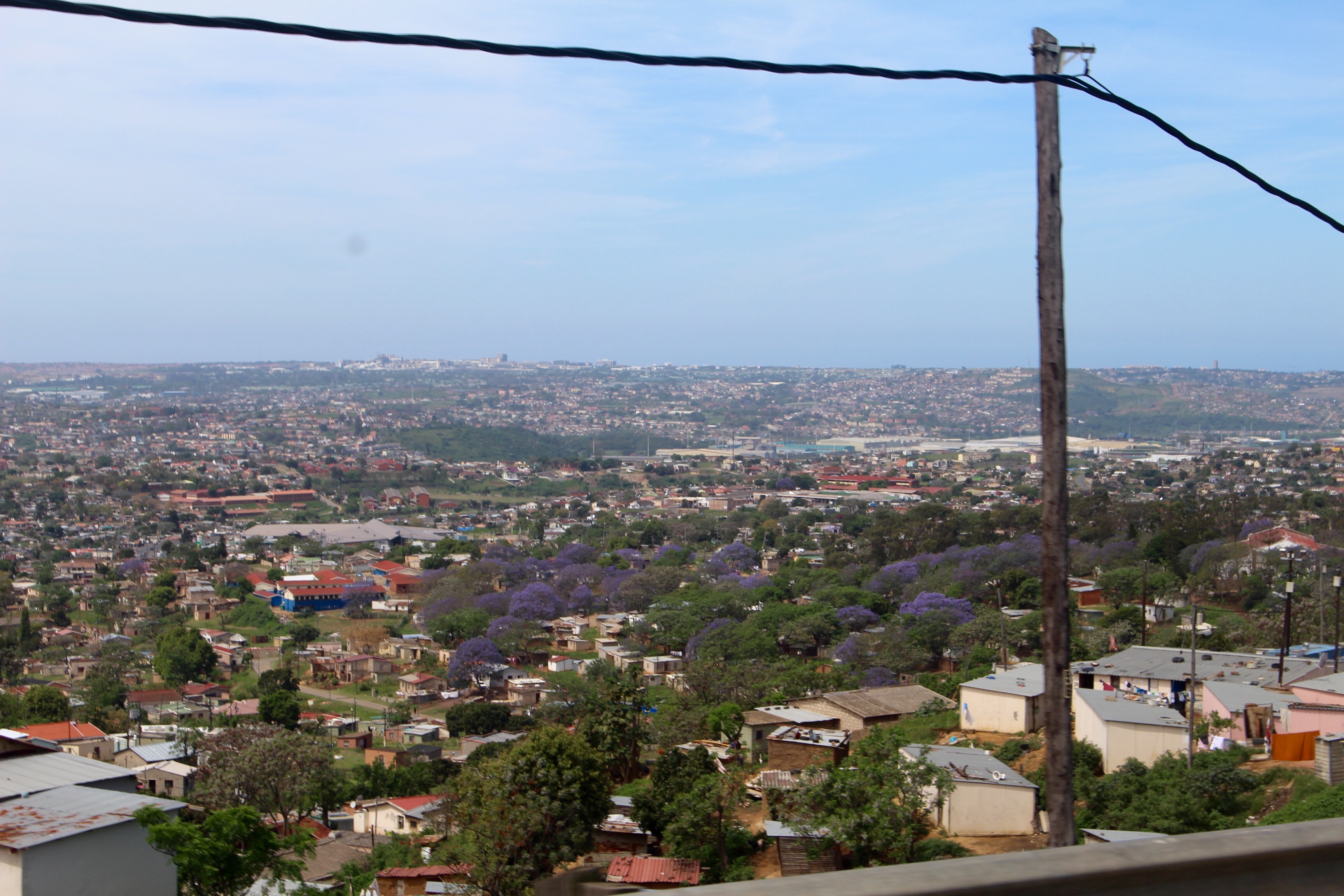
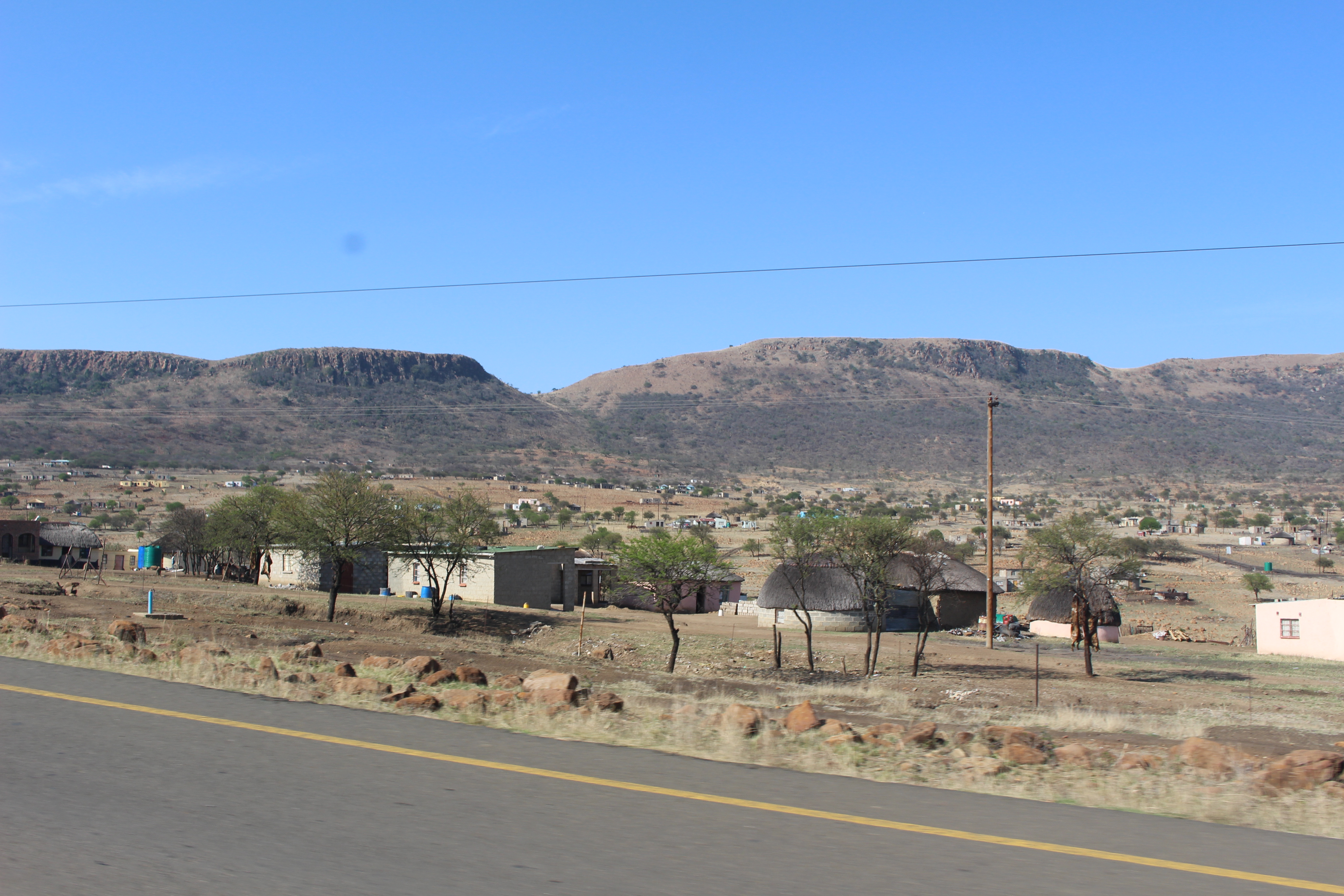
On the way back to Durban we drove through an all-Zulu township, and passed the Inanda Dam.
Spring is coming to the outskirts of Durban.
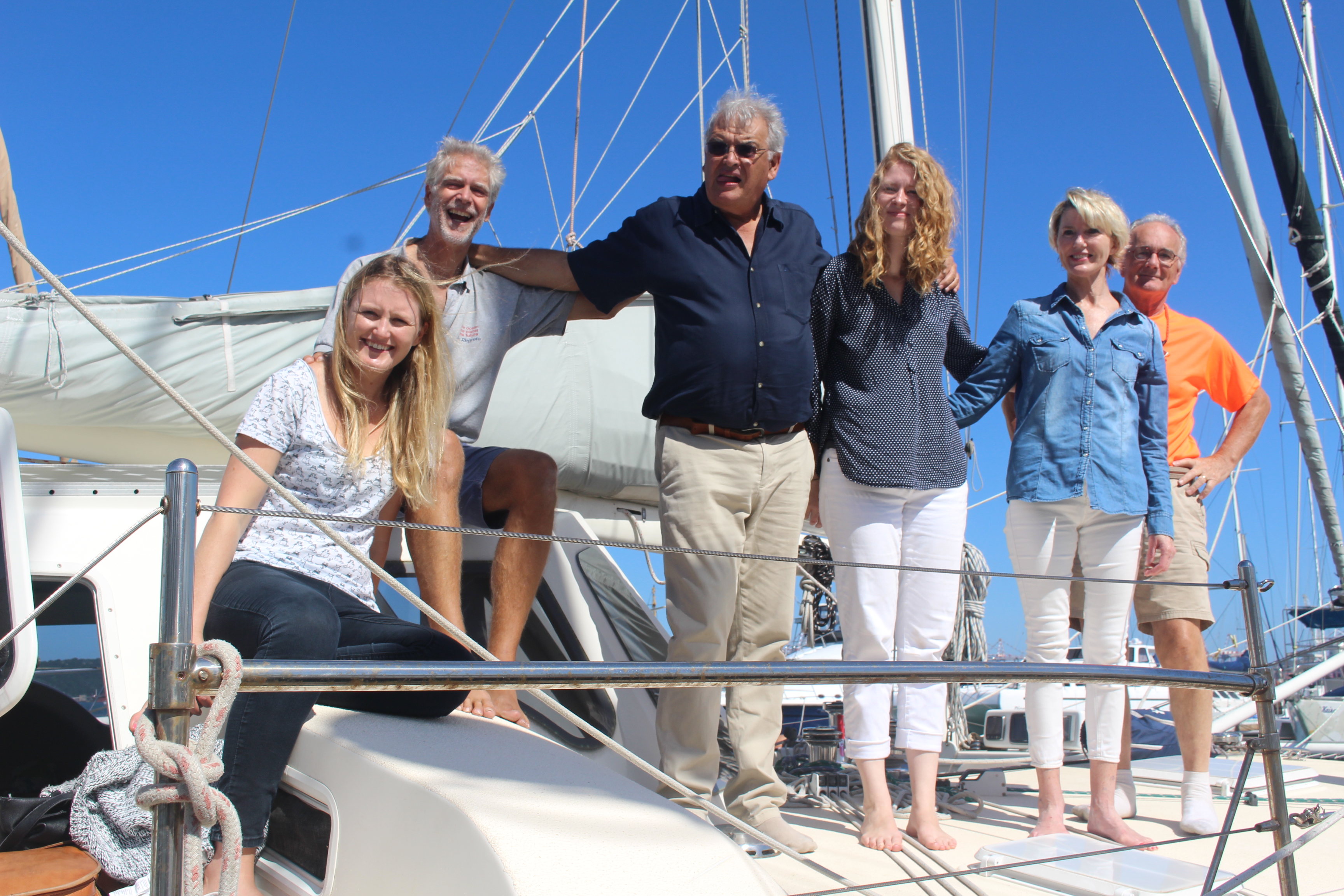
With our guide/guests back at the boat.

Midlands and Mountains

It was a little sad to leave the game reserve after two days, but Greg had much more that he wanted us to experience. So we headed inland toward the “battlegrounds” area. After a long drive…

image

…we spent the night in a 100+ year old inn, with a nice bar and a good dinner and a delightful owner.

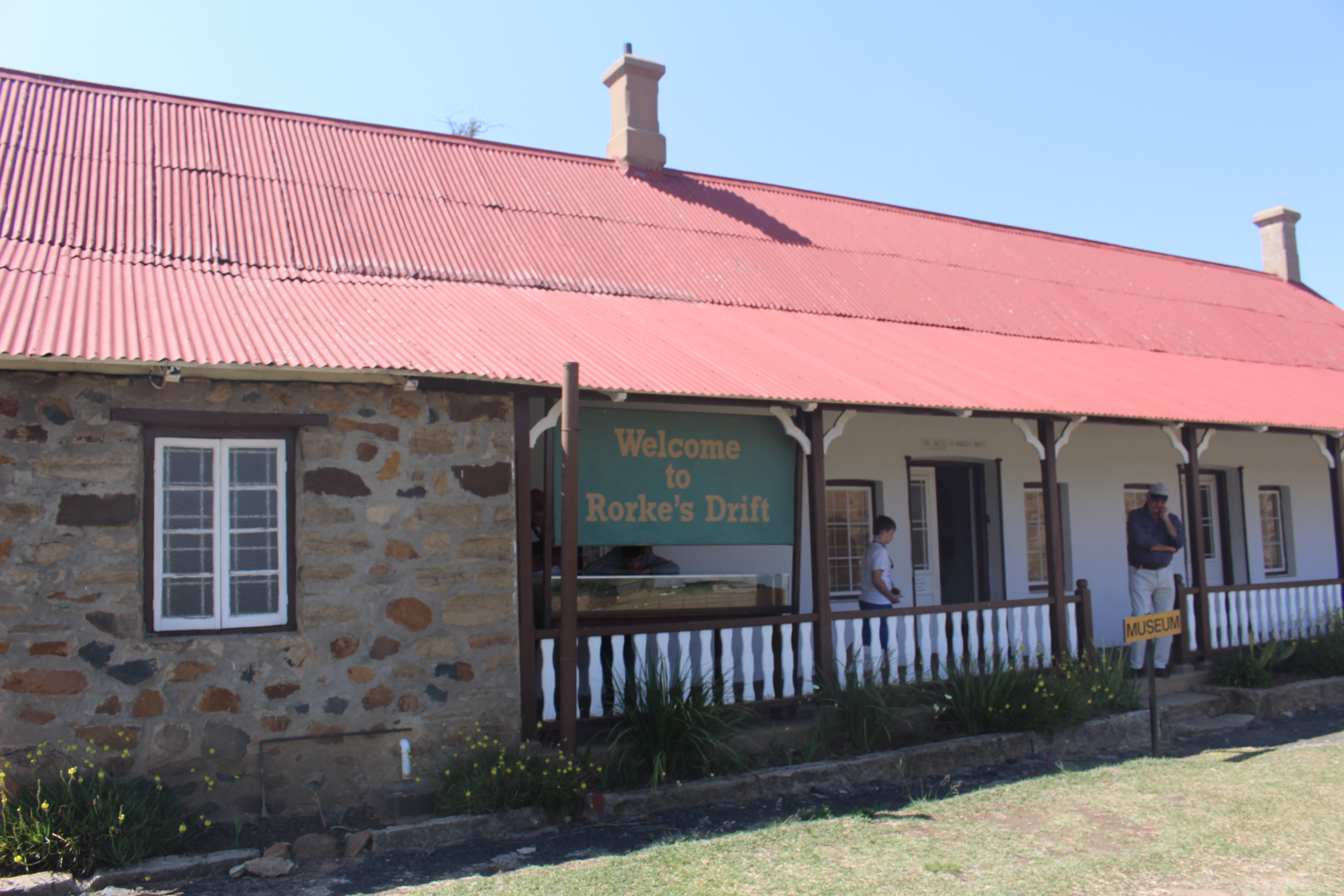
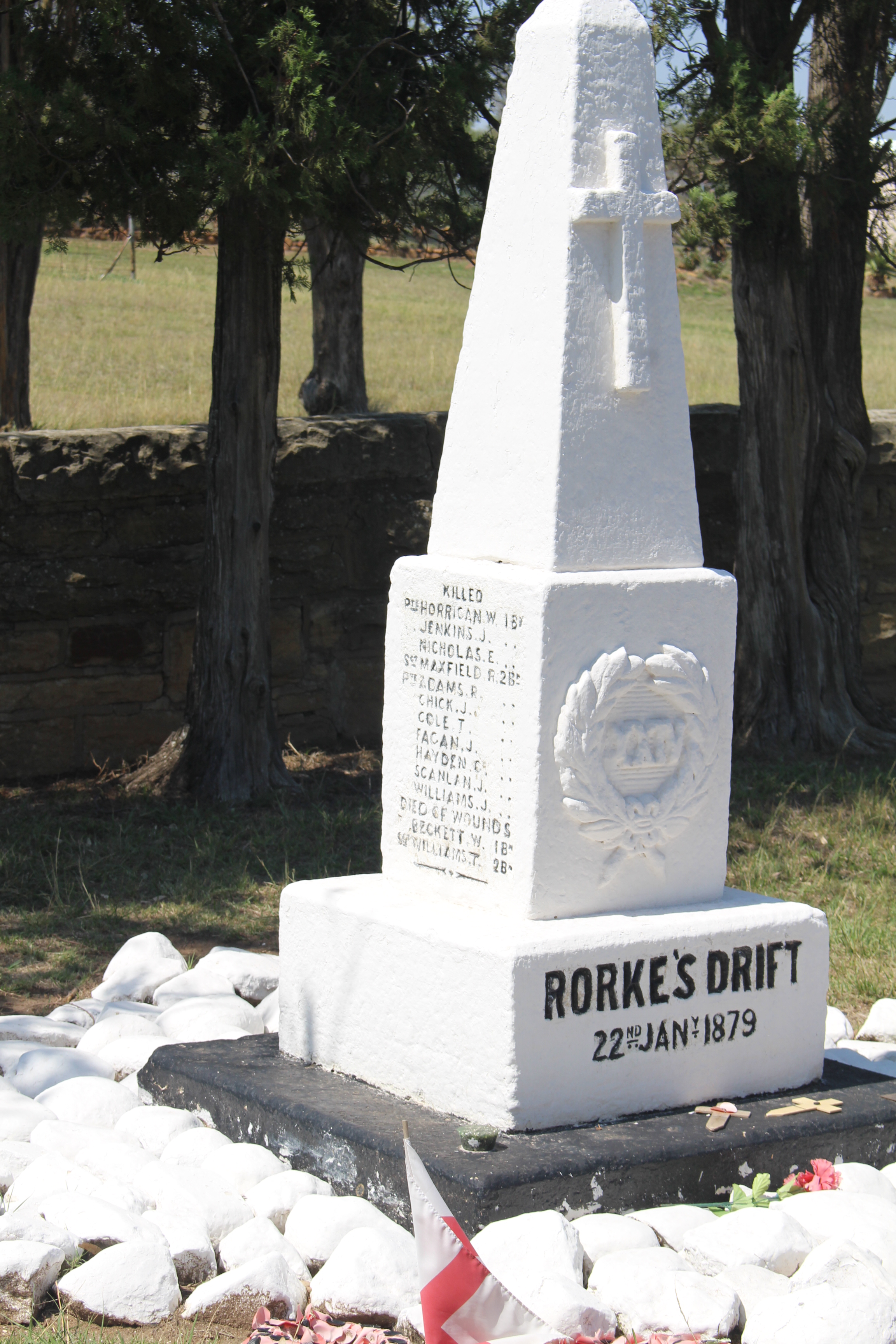
In the morning we drove to Rorke’s Drift. A “drift” is a place to ford a river, and Jim Rorke was a trader who had become an institution at this crossroads. I will attempt a little historical background before telling the story…

The British didn’t care a whole lot about southern Africa back in the 1800’s, except they wanted Cape Town as a stop-over for ships bound to/from India. They attacked the Dutch and took Cape Town by force, then later suffered some compunction and gave it back. And then they purchased it from the Dutch!

But around 1860 diamonds were discovered in the area, and suddenly Britain wanted to control South Africa. They suppressed most local tribes, but as you will recall from our previous history lesson, King Shaka had built an extremely powerful Zulu army. And so begins the Anglo-Zulu War in 1879.

The Brits marched toward the Zulu capital, didn’t get very far, and set up camp atop a large hill called Isandlwana, not far from Rorke’s place. An overly arrogant Lord Chelmsford believed the hill could be easily defended from the savages… Those “savages” then fooled a reconnaissance team into thinking that the Zulu force was to the SE, and Chelmsford marched half of his 3,000 men off in that direction. The Zulus then attacked from the NE. Of the 1750 men in camp, 1350 were killed. (Many of the rest ran.) It was such a crushing defeat of the all-powerful British forces, that many Brits went into denial about it, and made up various excuses and laid blame on officers that had been killed.

Just a few hours later, Zulus attacked what had been a Swedish mission, now a Brit military hospital, at Rorke’s Drift. There were only 139 men there, many of them sick or injured. The Zulu leader was apparently angry that his group had missed the action at Isandlwana, and he led his men in a direct assault of the hospital. In an ironic mirror-image of Lord Chelmsford’s misjudgment at Isandlwana, the Zulu leader did not follow the usual Zulu “horns of the buffalo” attack strategy, or any strategy other than go head on at the point where the defense was strongest. As a result a huge number of attackers were killed, and the small group of defenders held out until help arrived.

From the Zulu point of view what happened at Rorke’s Drift was of little consequence. But the Brits played it up as big as possible, to steer attention away from their debacle a few miles away.

Of course the Brits eventually prevailed in the war (only to then fight the Anglo-Boer War some years later).

image

image

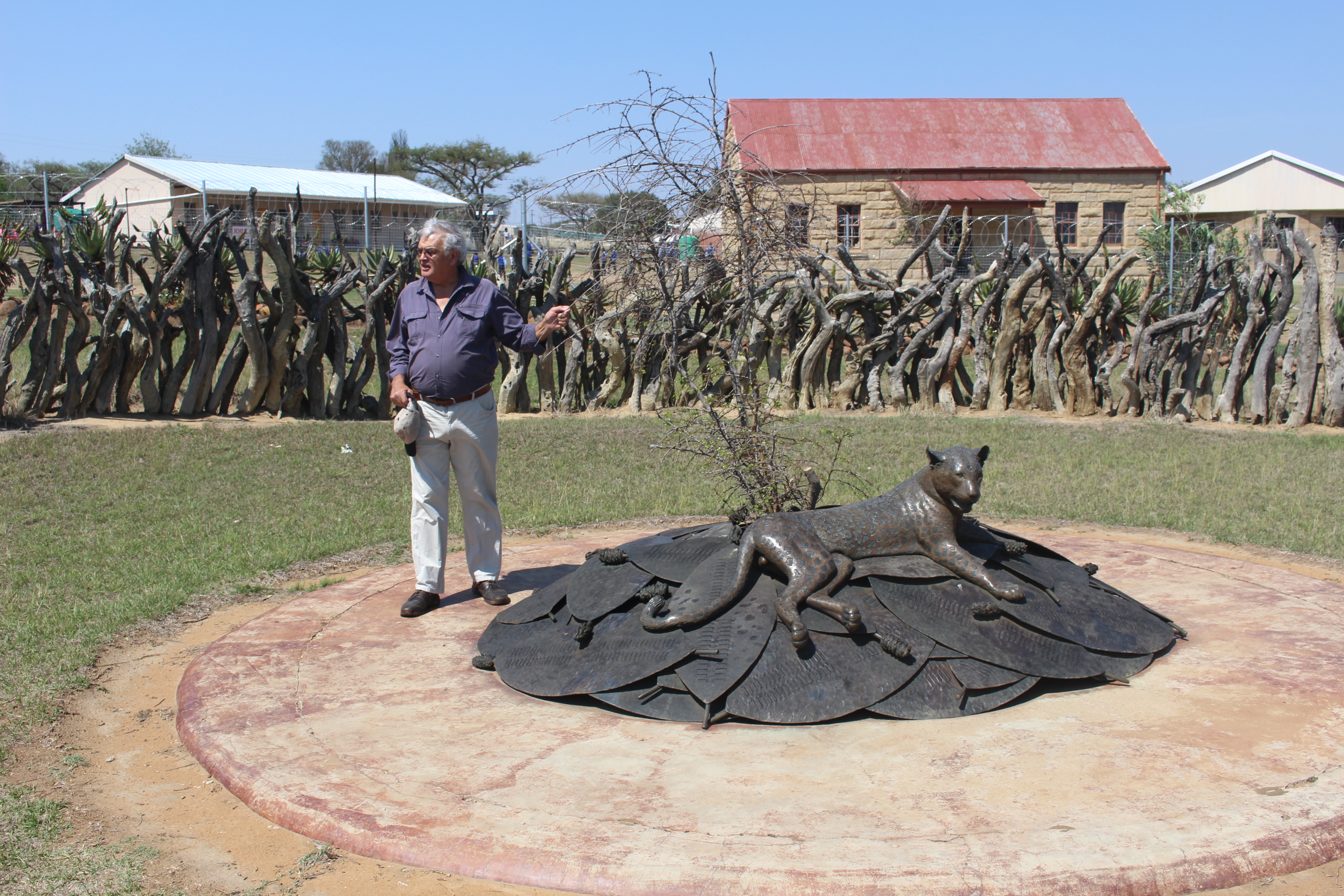
Greg explains the symbolism of a memorial to the many Zulus killed at Rorke's Drift.
Greg explains the symbolism of a memorial to the many Zulus killed at Rorke’s Drift.

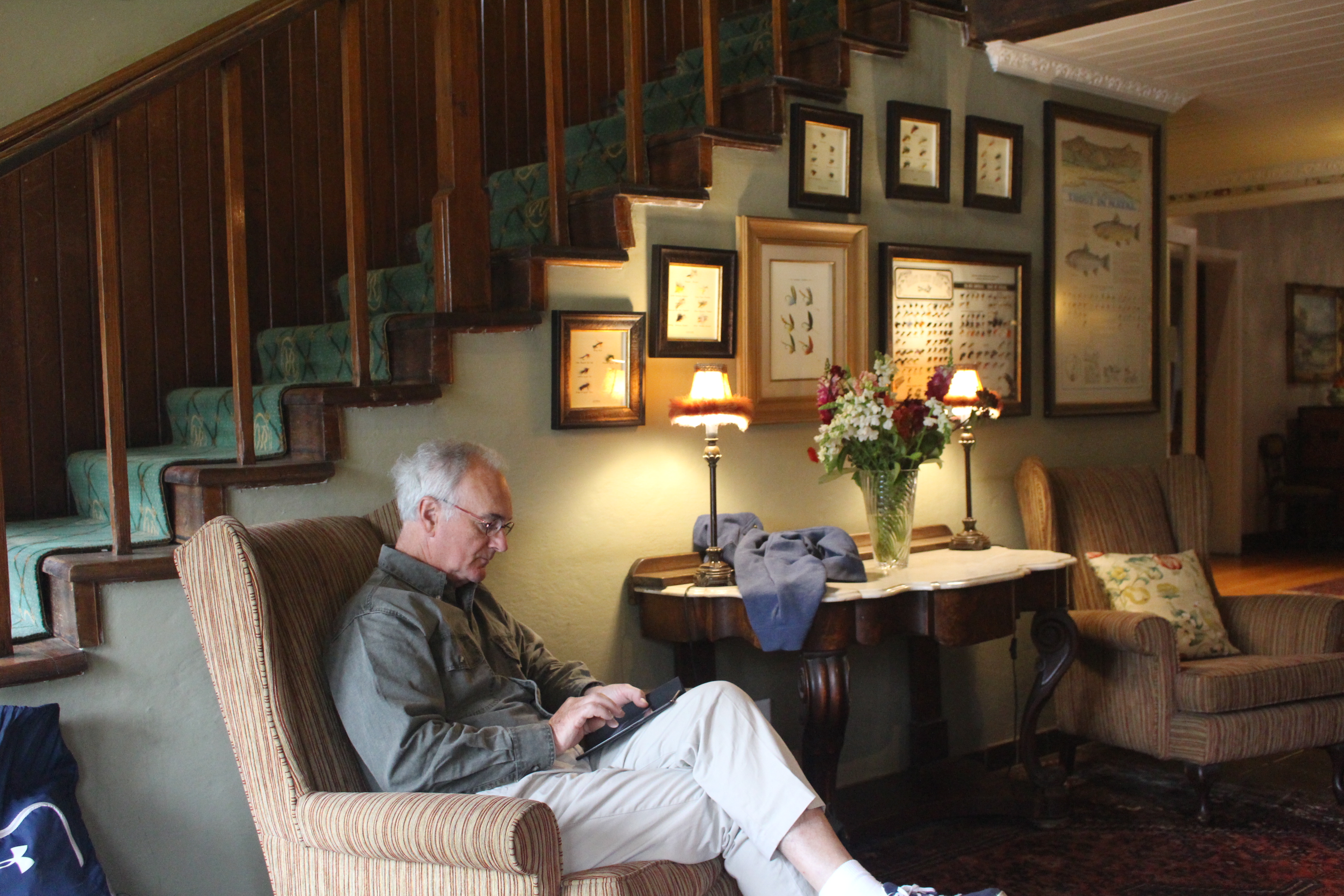
Lots more driving, from the Battlefields area to the Midlands, and a night at a wonderful manor that seemed to belong in the heart of England.

image

image

image

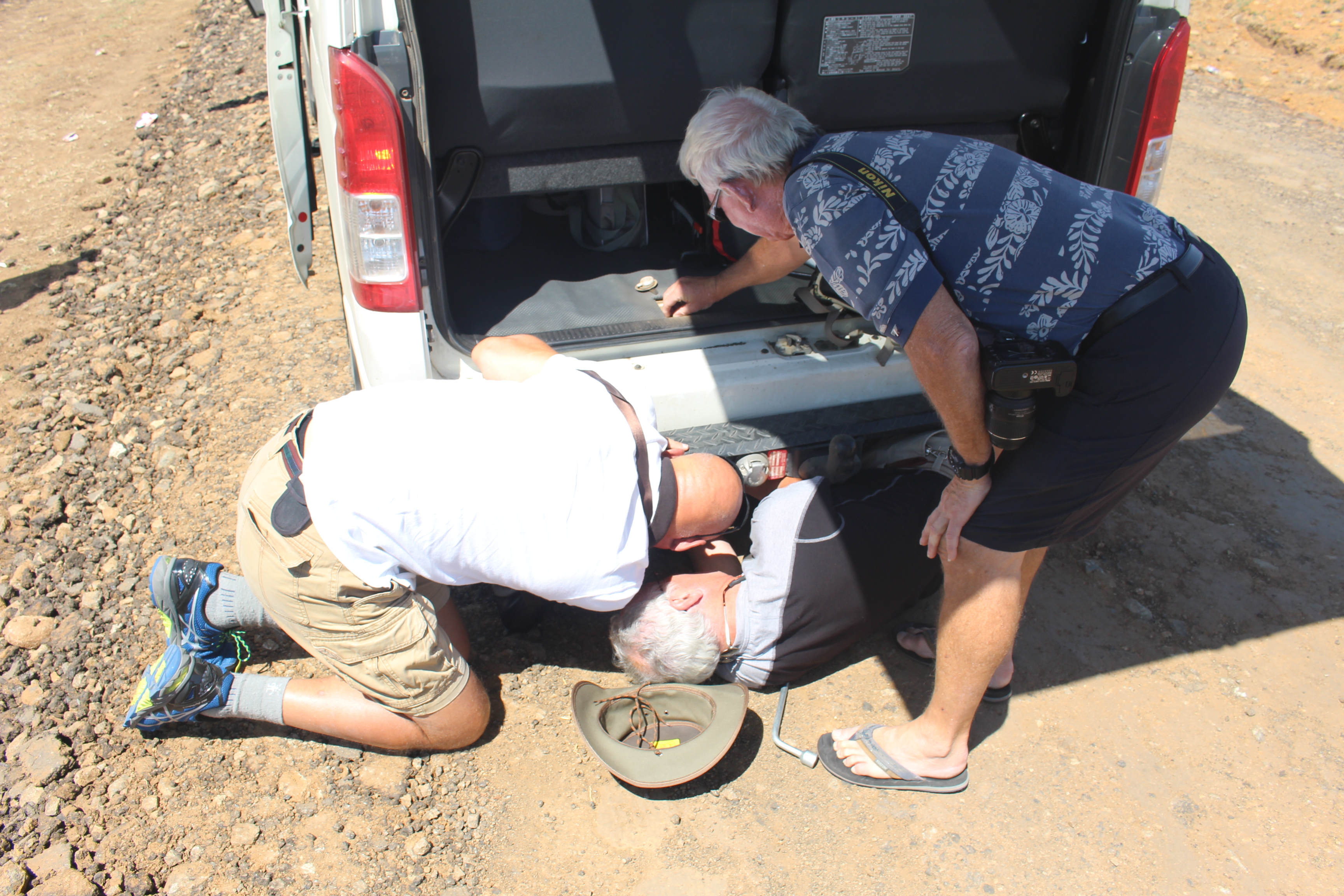
Touring: fixing your car in exotic places...? Nothing major.
Touring: fixing your car in exotic places…? Nothing major.
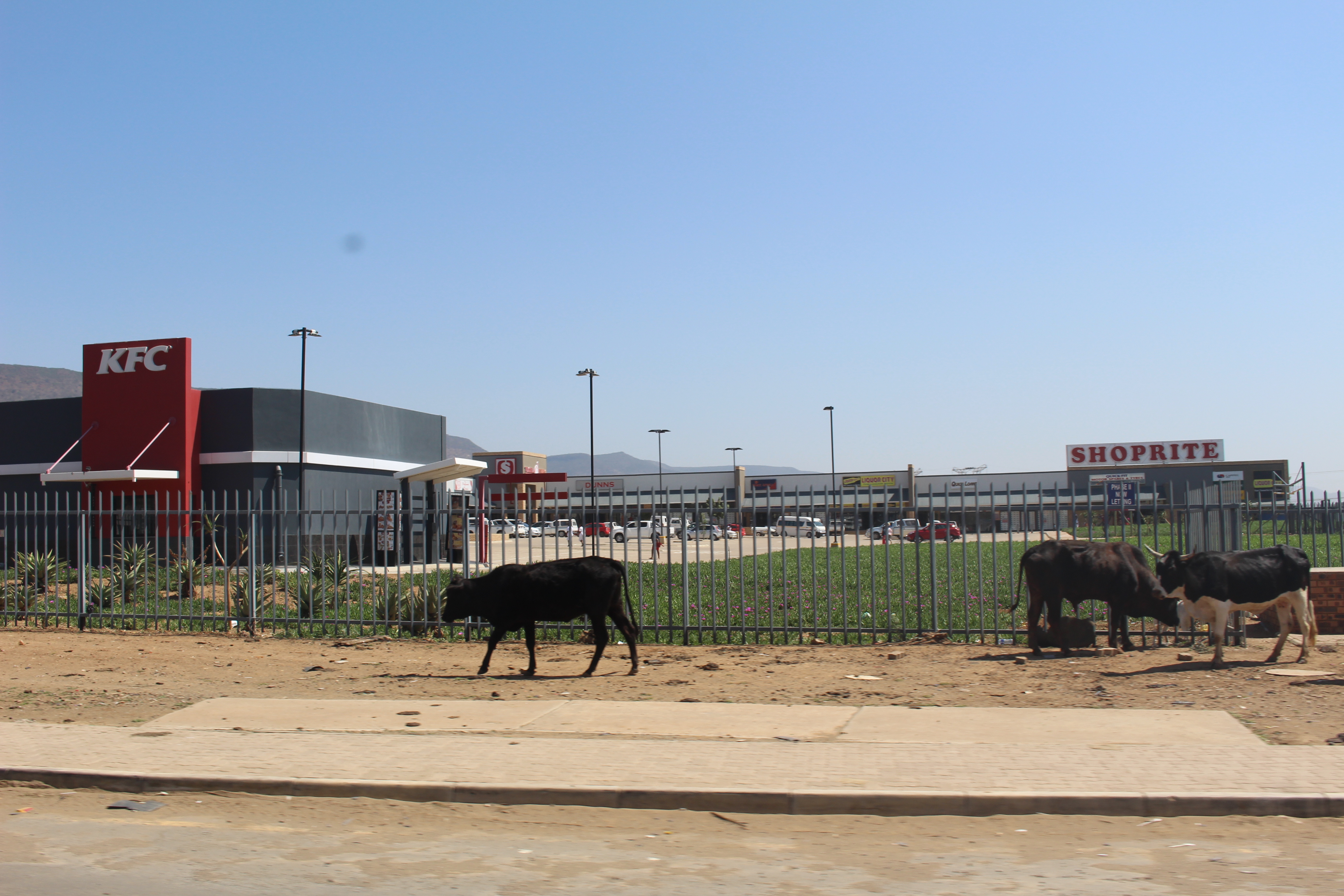
Reminds me of the "Eat Mor Chikin" commercials...
Reminds me of the “Eat Mor Chikin” commercials…
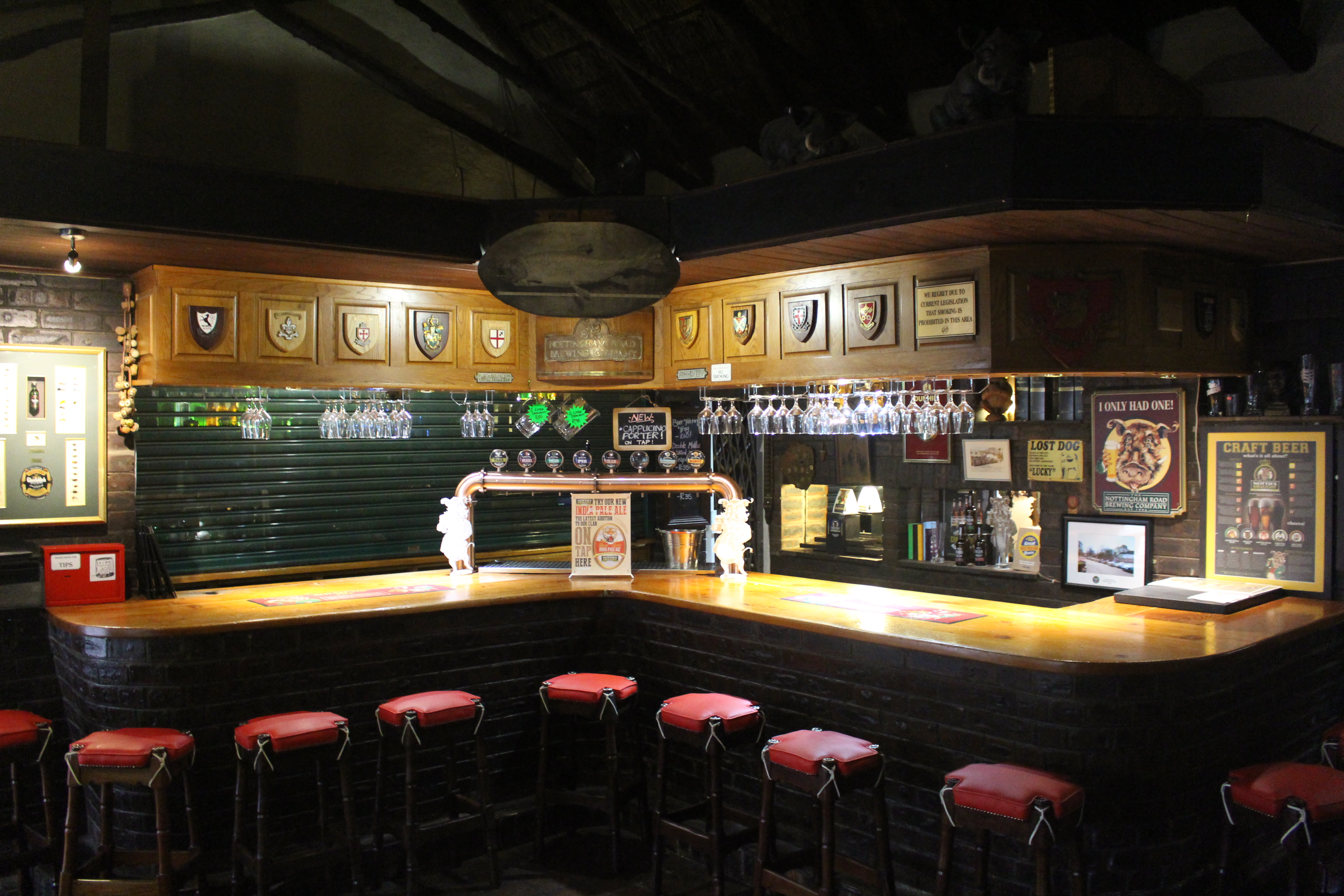
Rawdon's -- delightful!
Rawdon’s — delightful!
Liam was right at home
And we all enjoyed sampling their craft beers.

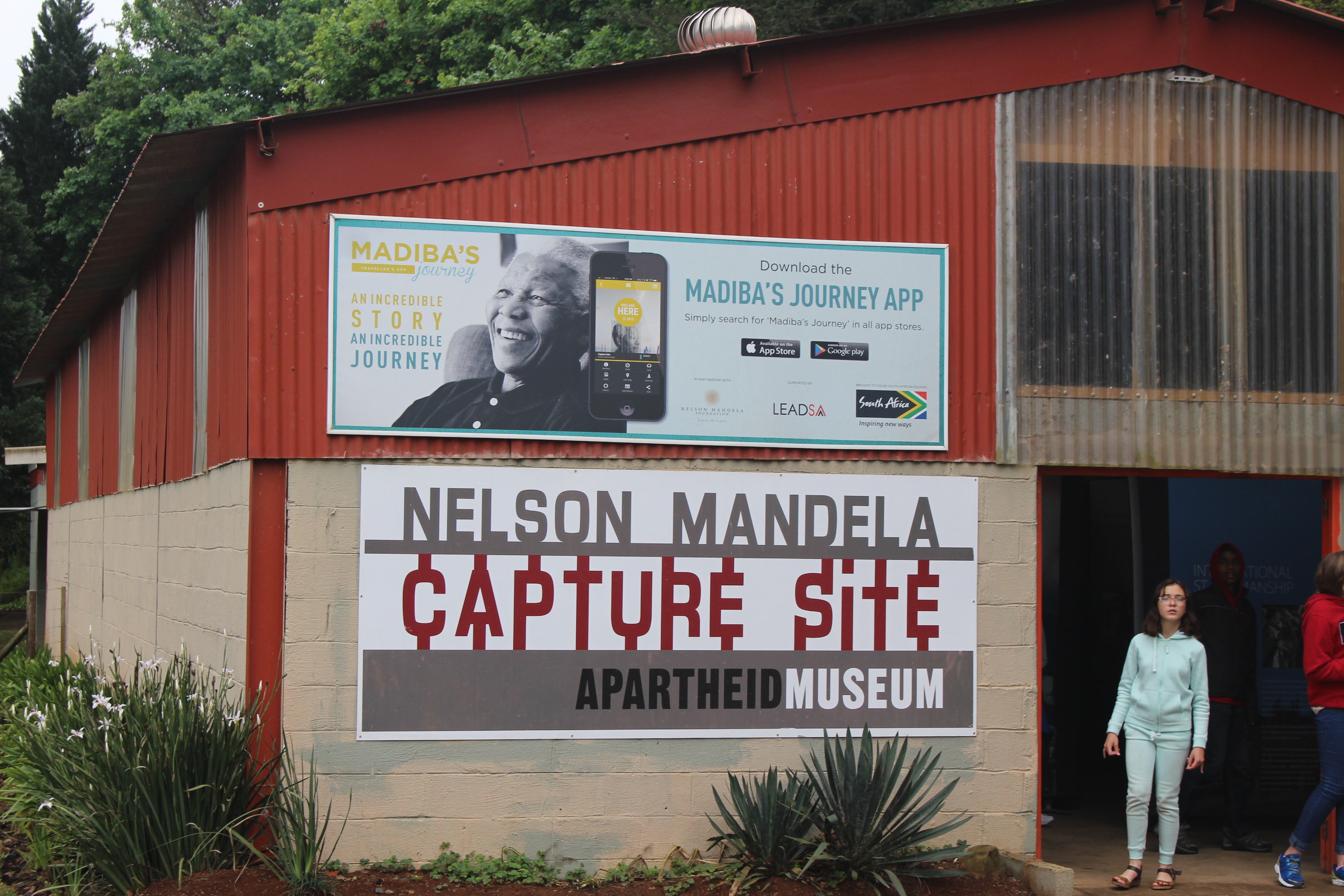
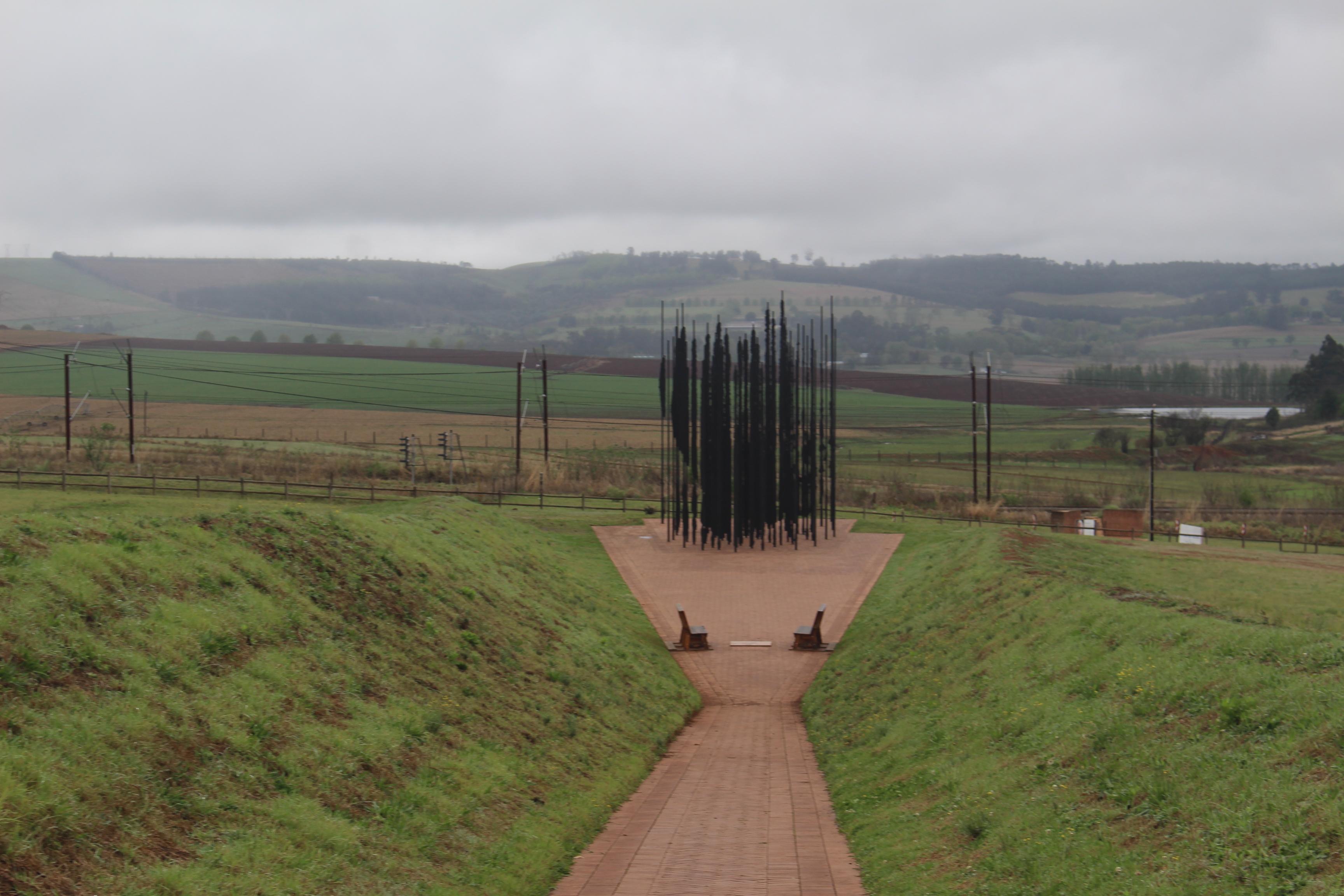
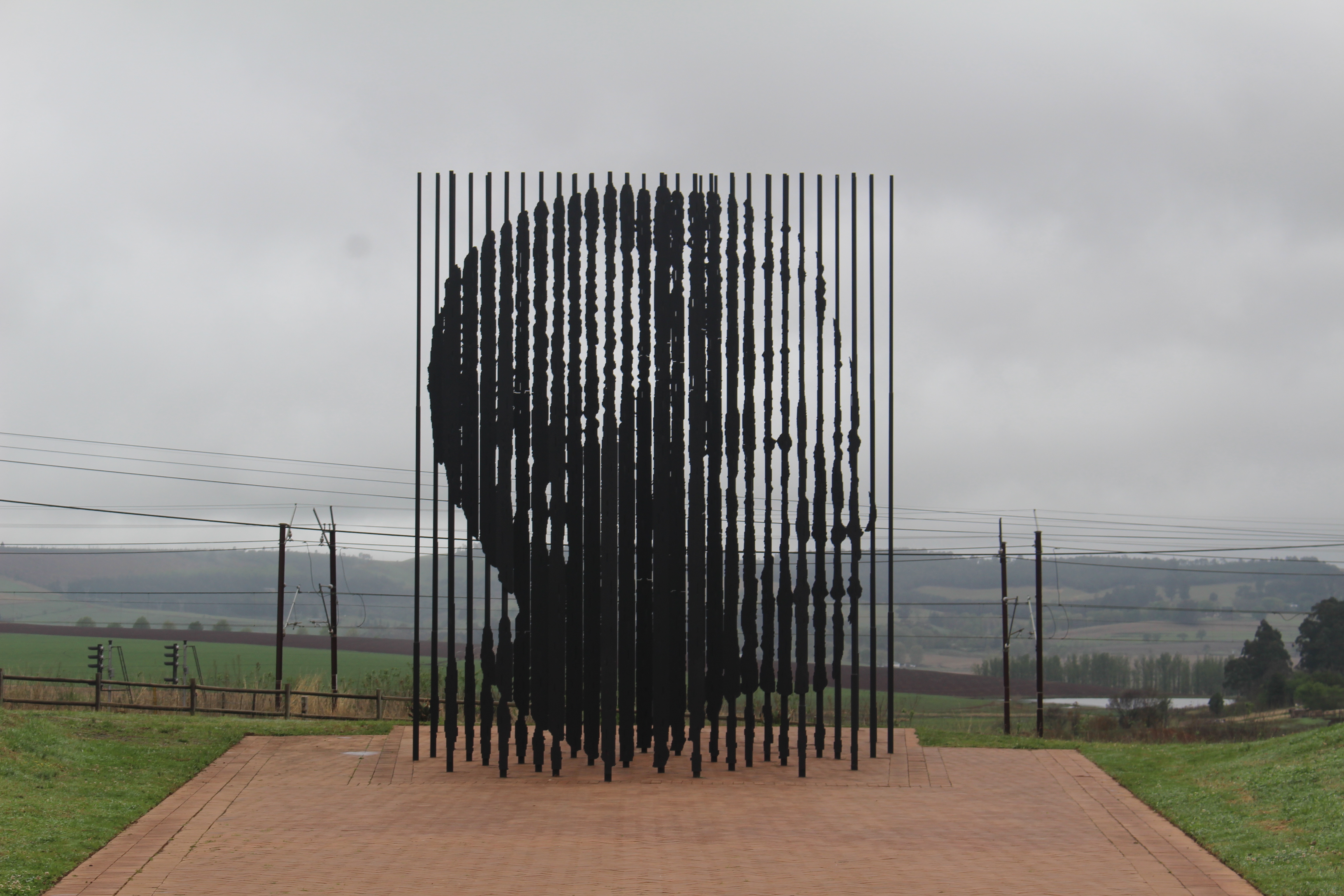
A day doing nothing at Rawdon’s sounded appealing, but we had places to go. Next stop: the site where Nelson Mandela was captured (and then imprisoned for 27 years). Mandela himself wanted no memorial of significance at the spot, but more recently an evocative sculpture was done and a museum built. The museum is fascinating, telling the story of the man and the fight against apartheid.

image

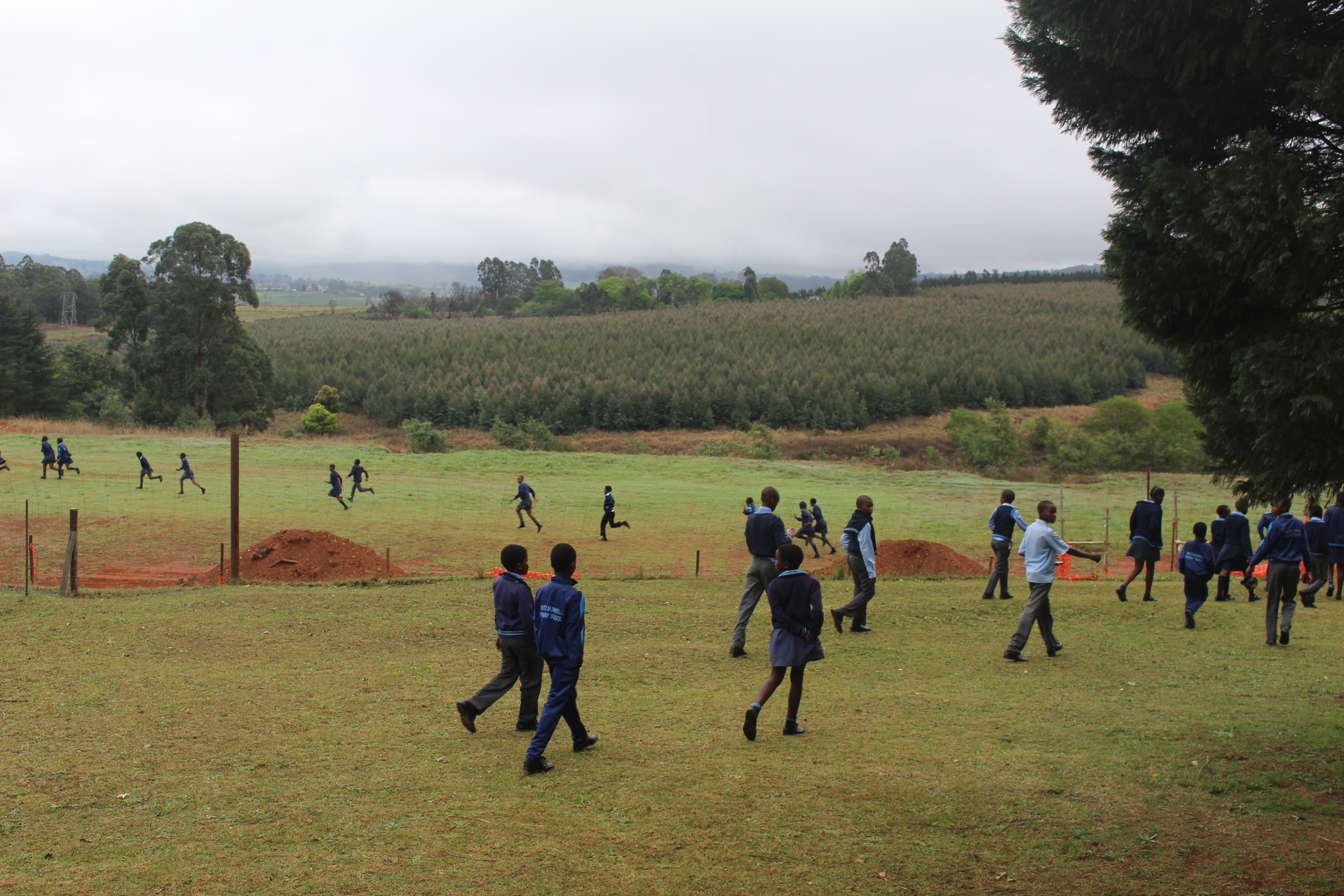
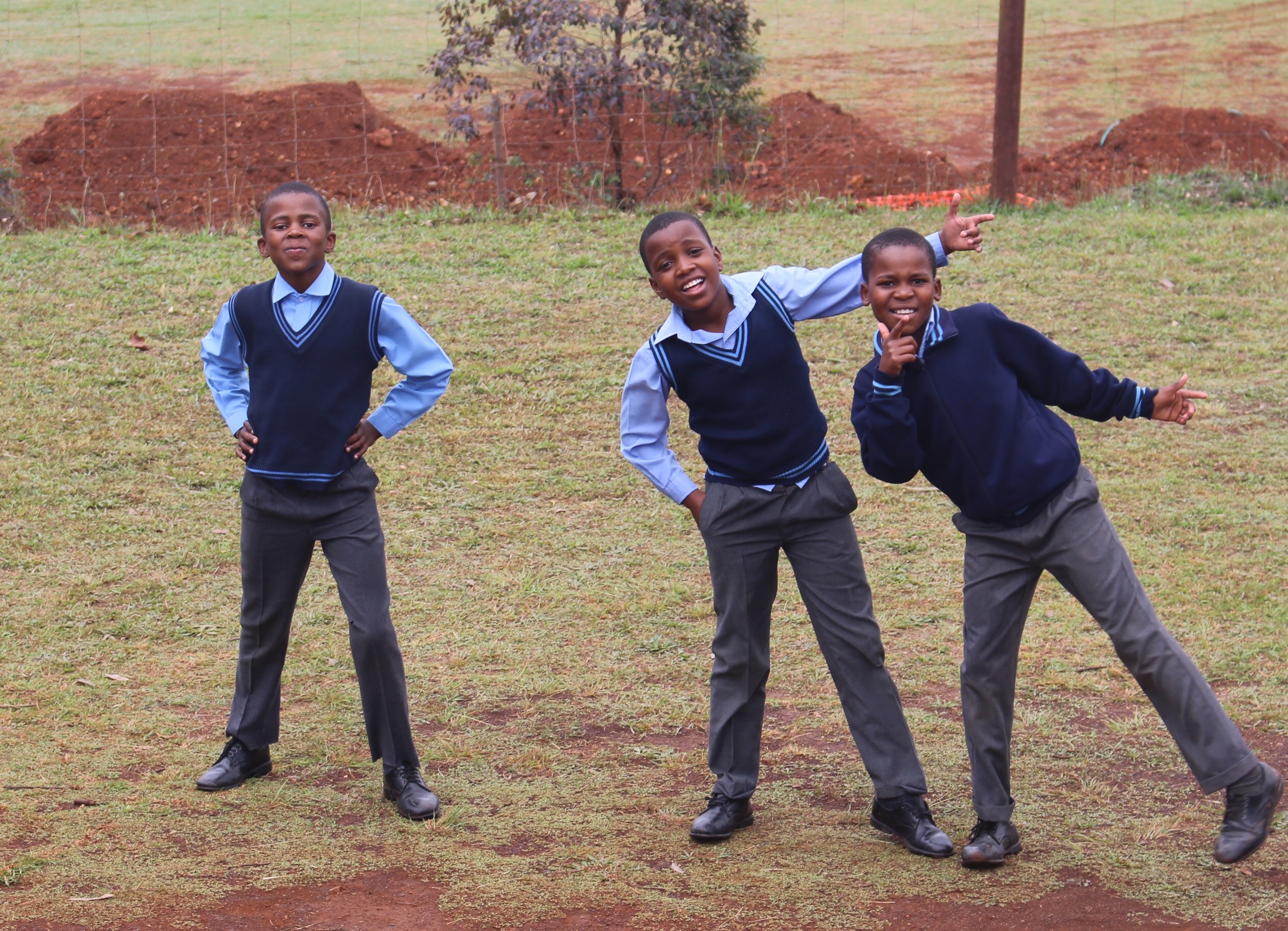
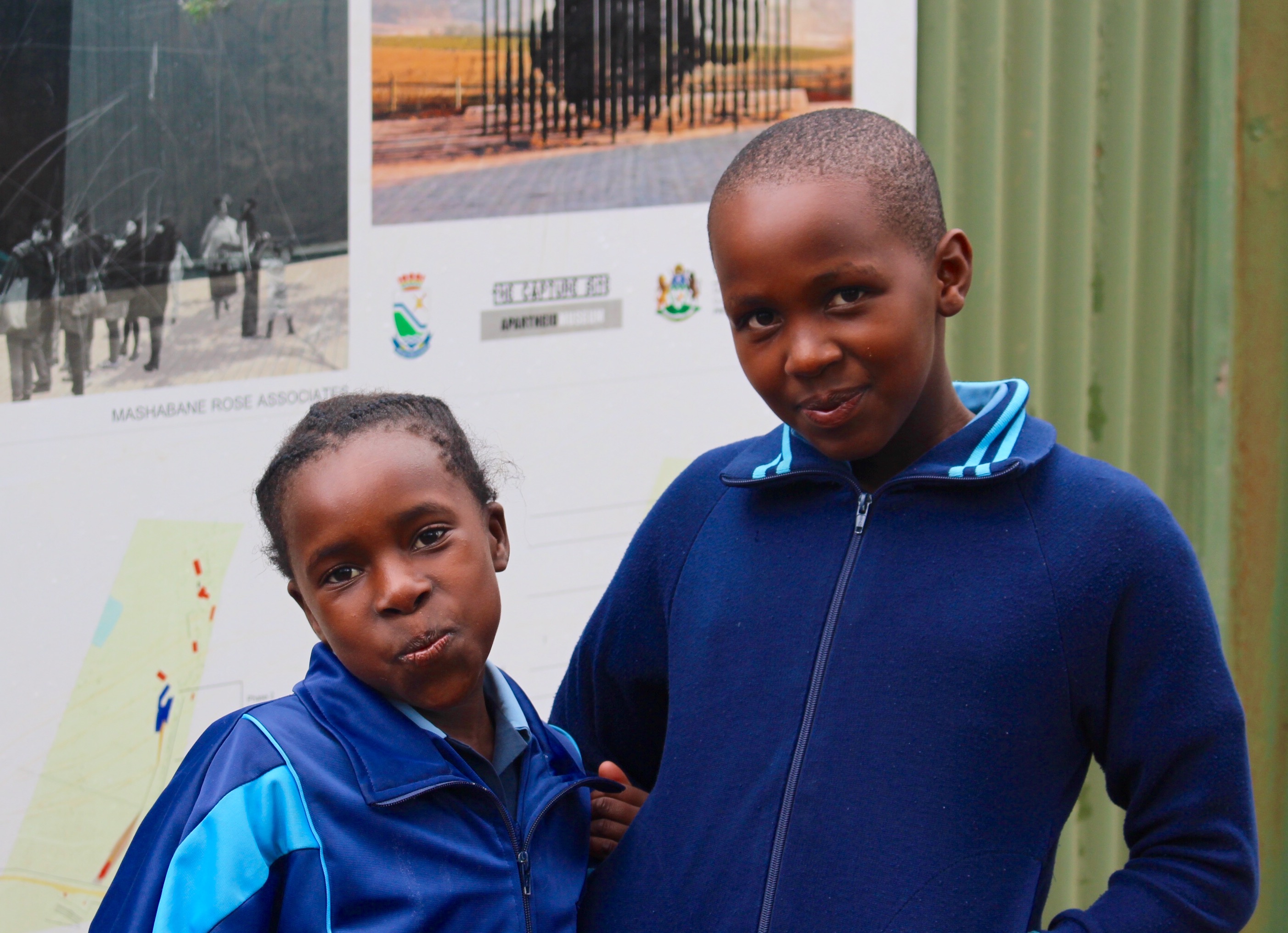
Many students were there on field trips, which was nice to see. Many of them wanted their picture taken. A little like Indonesia but without the “Hey Mister!”

image

image

image

image

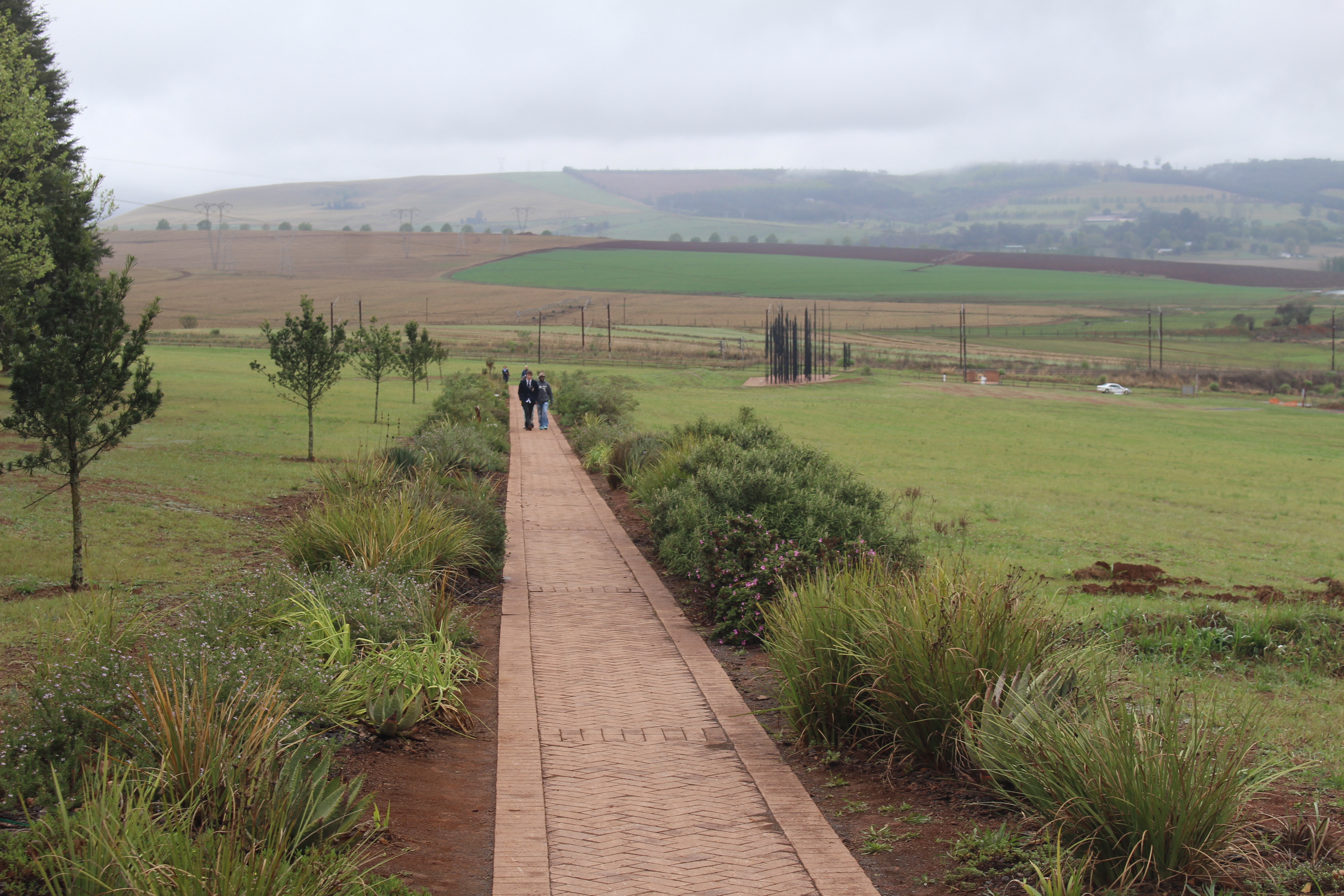
But the highlight was the walk to the sculpture. From a distance it is a bunch of funny-looking metal posts, but they morph as you approach…

image

image

image

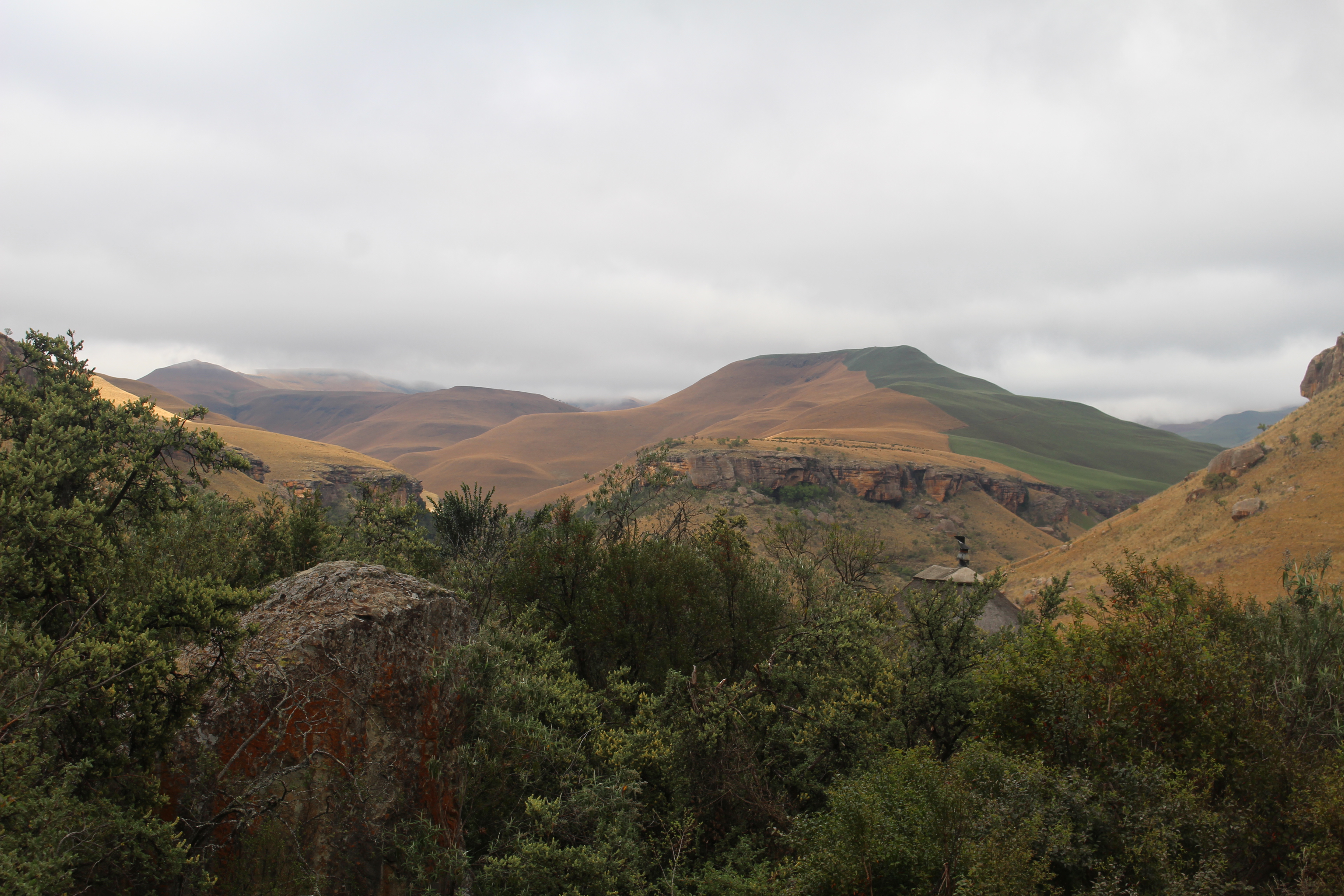
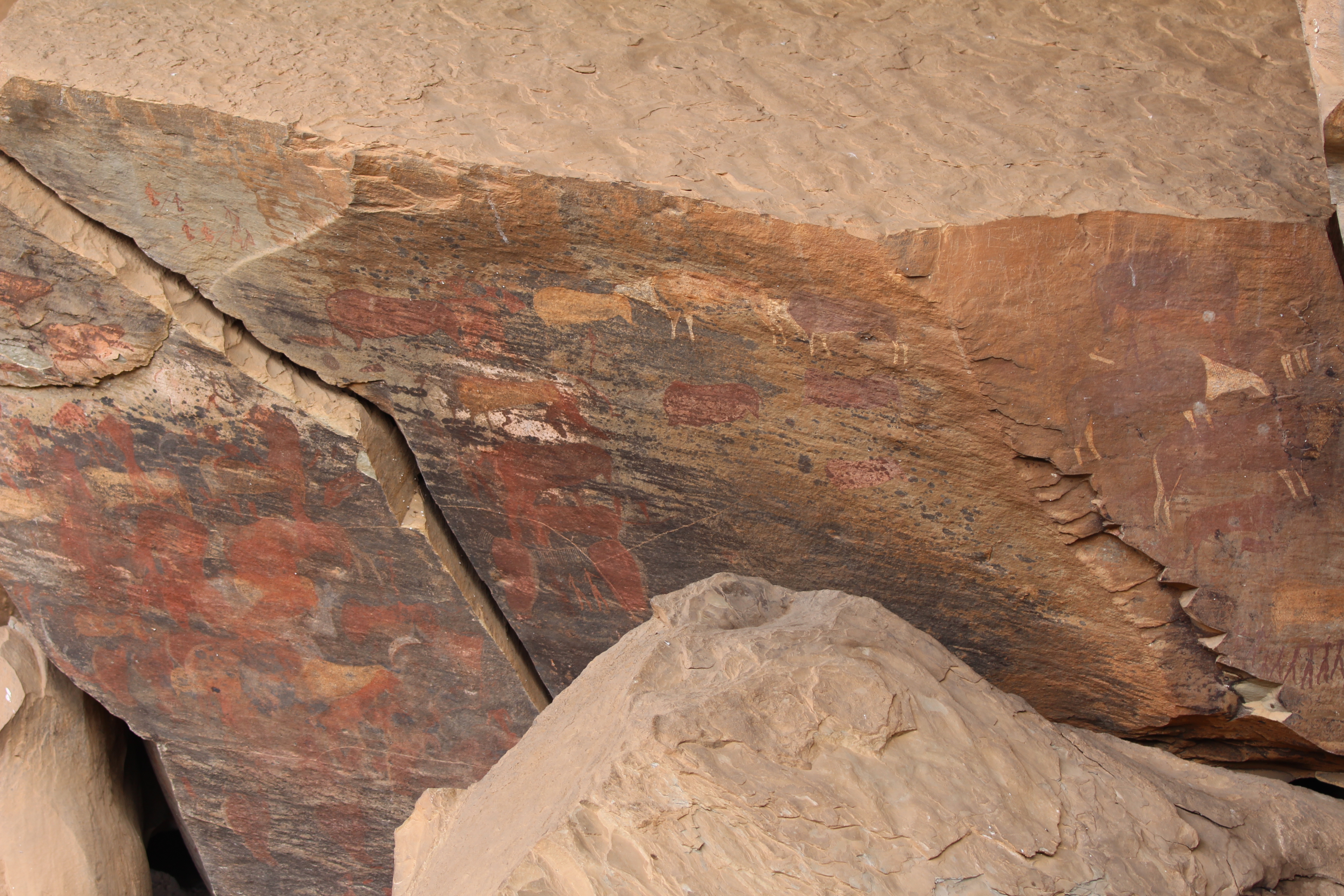
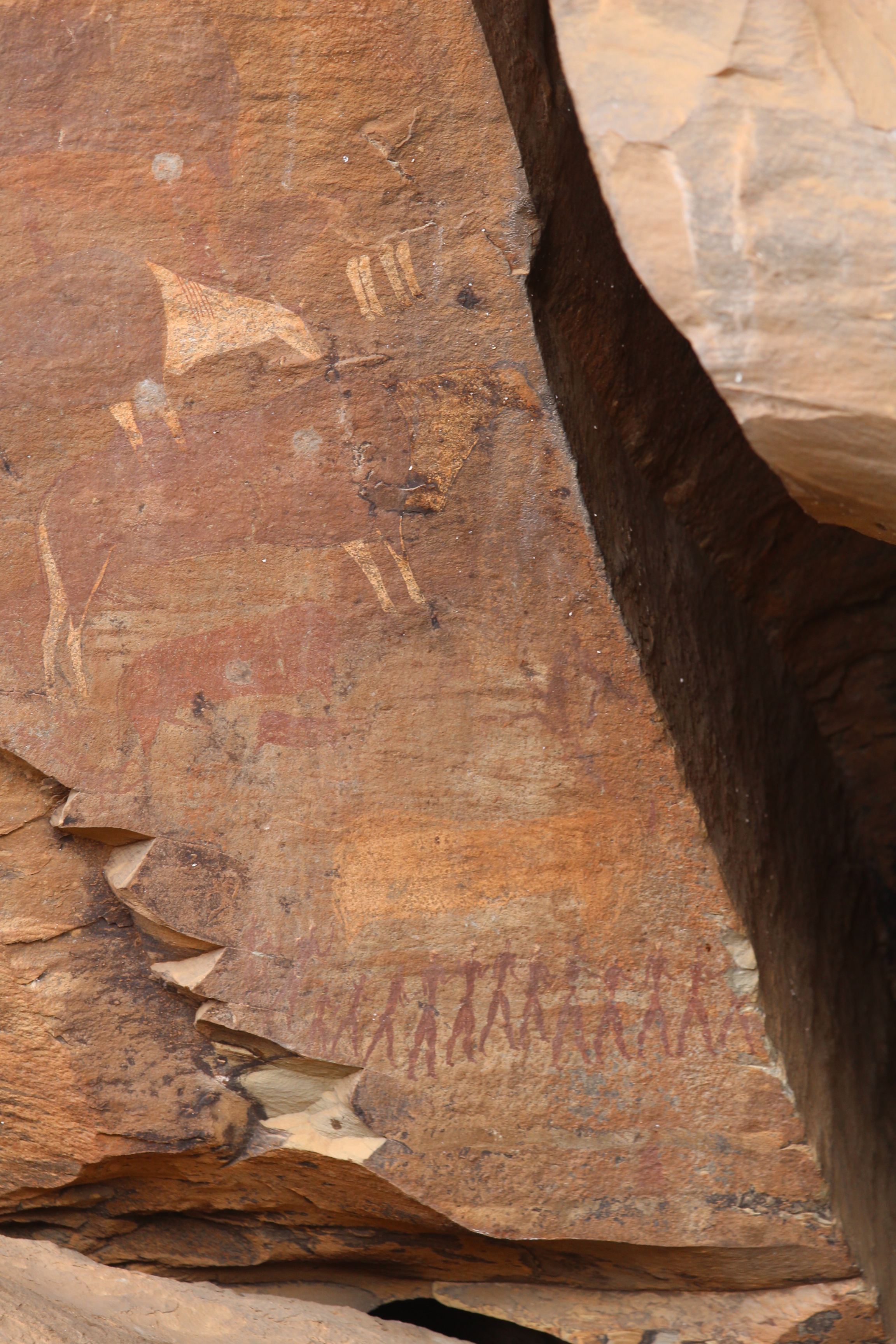
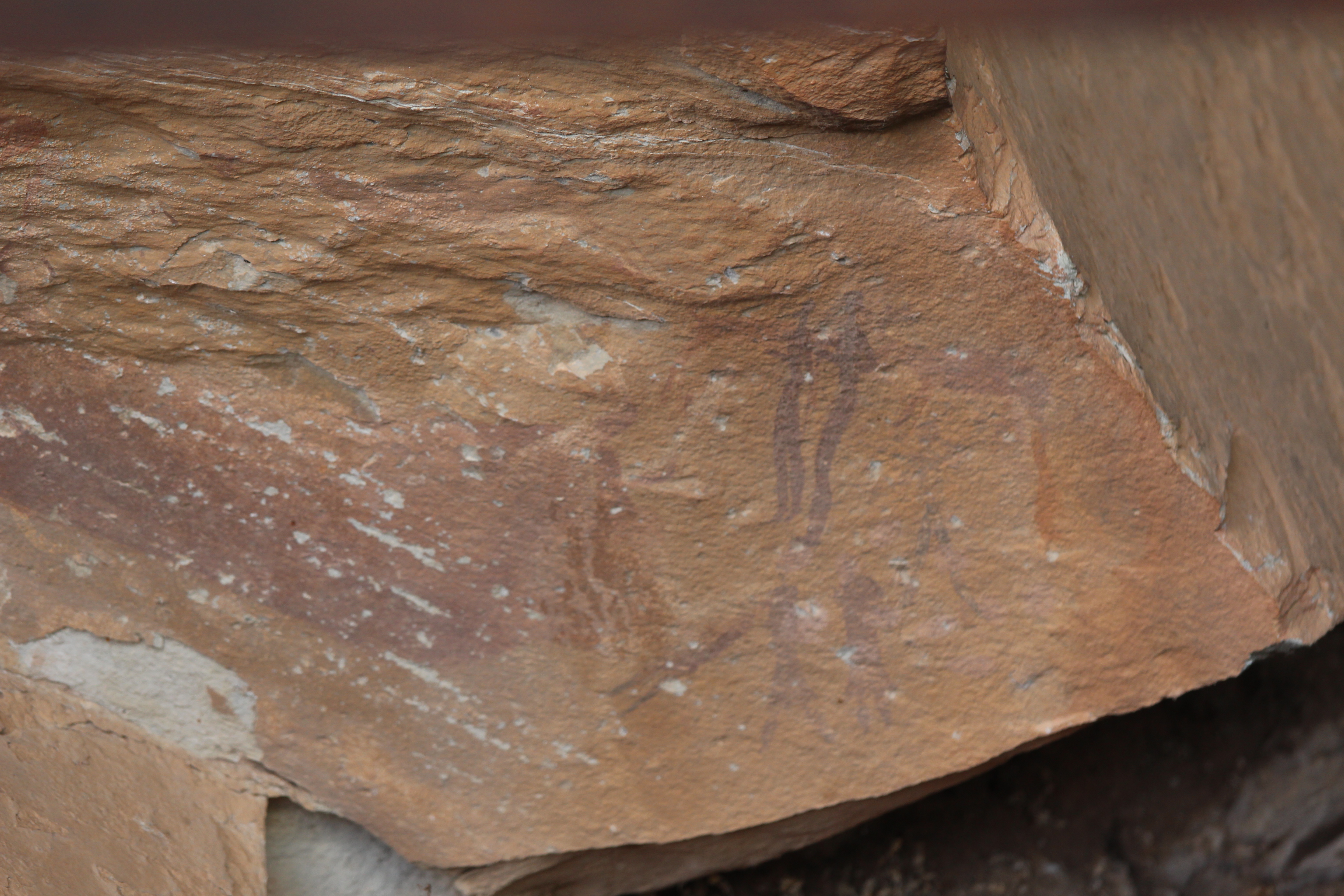
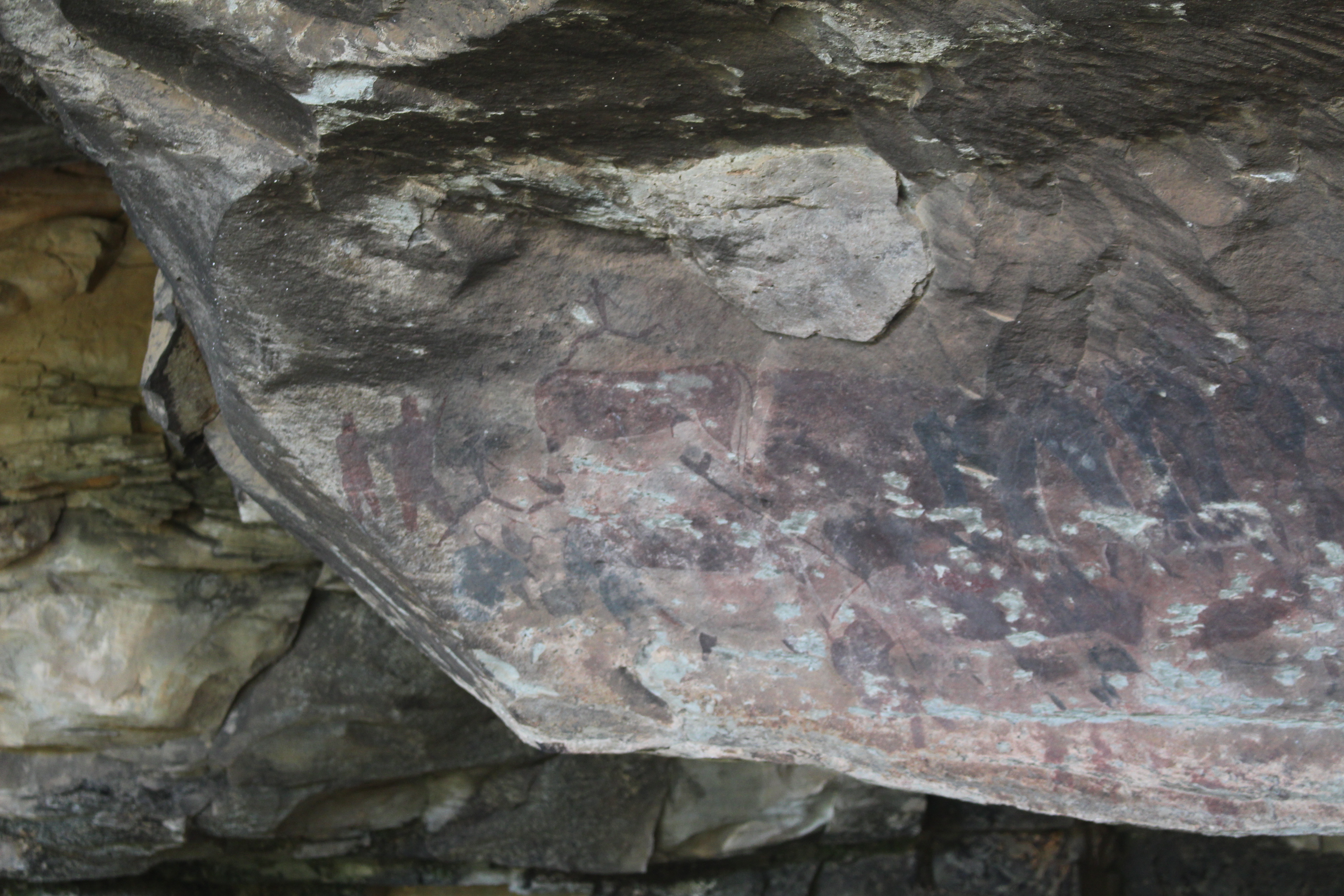
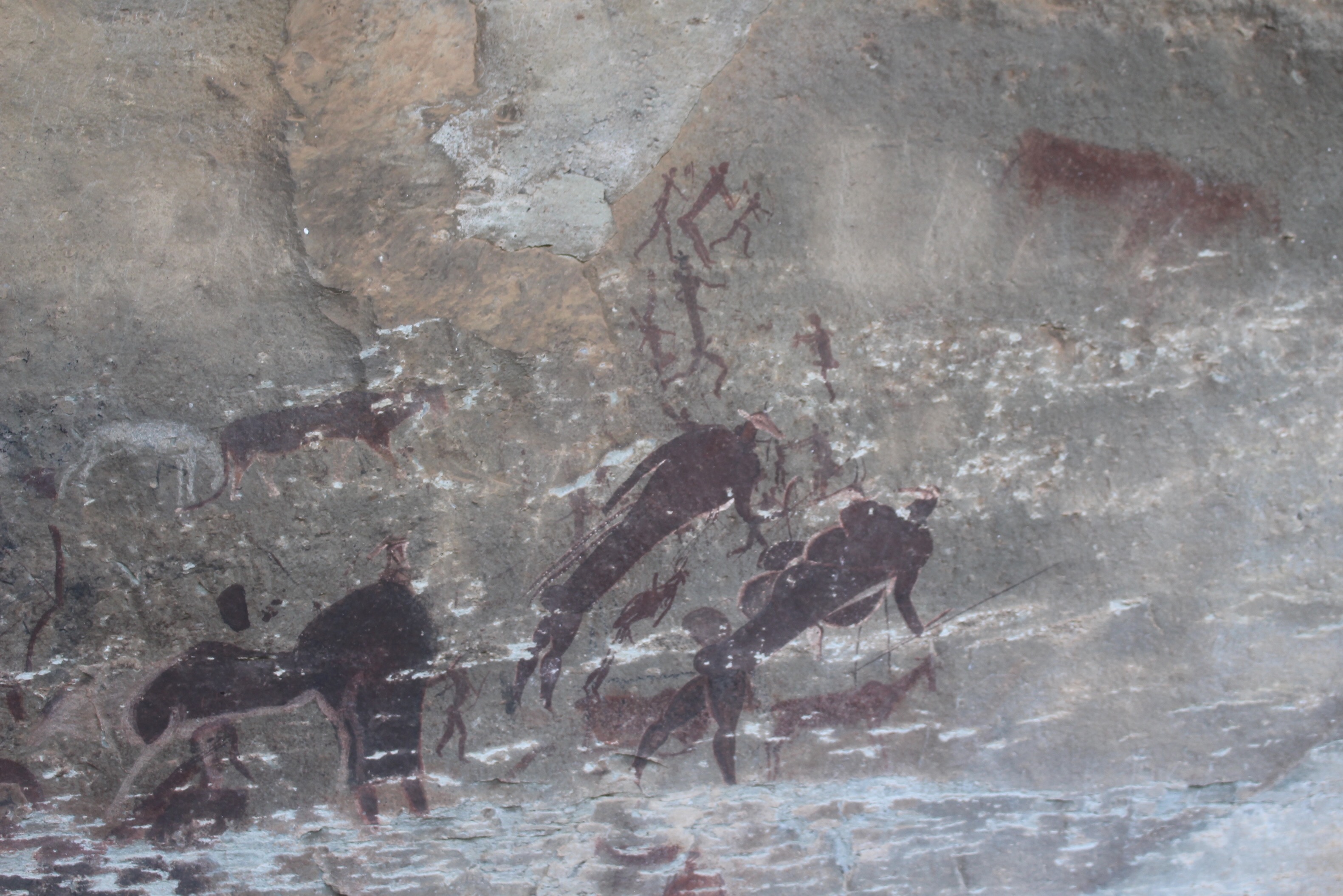
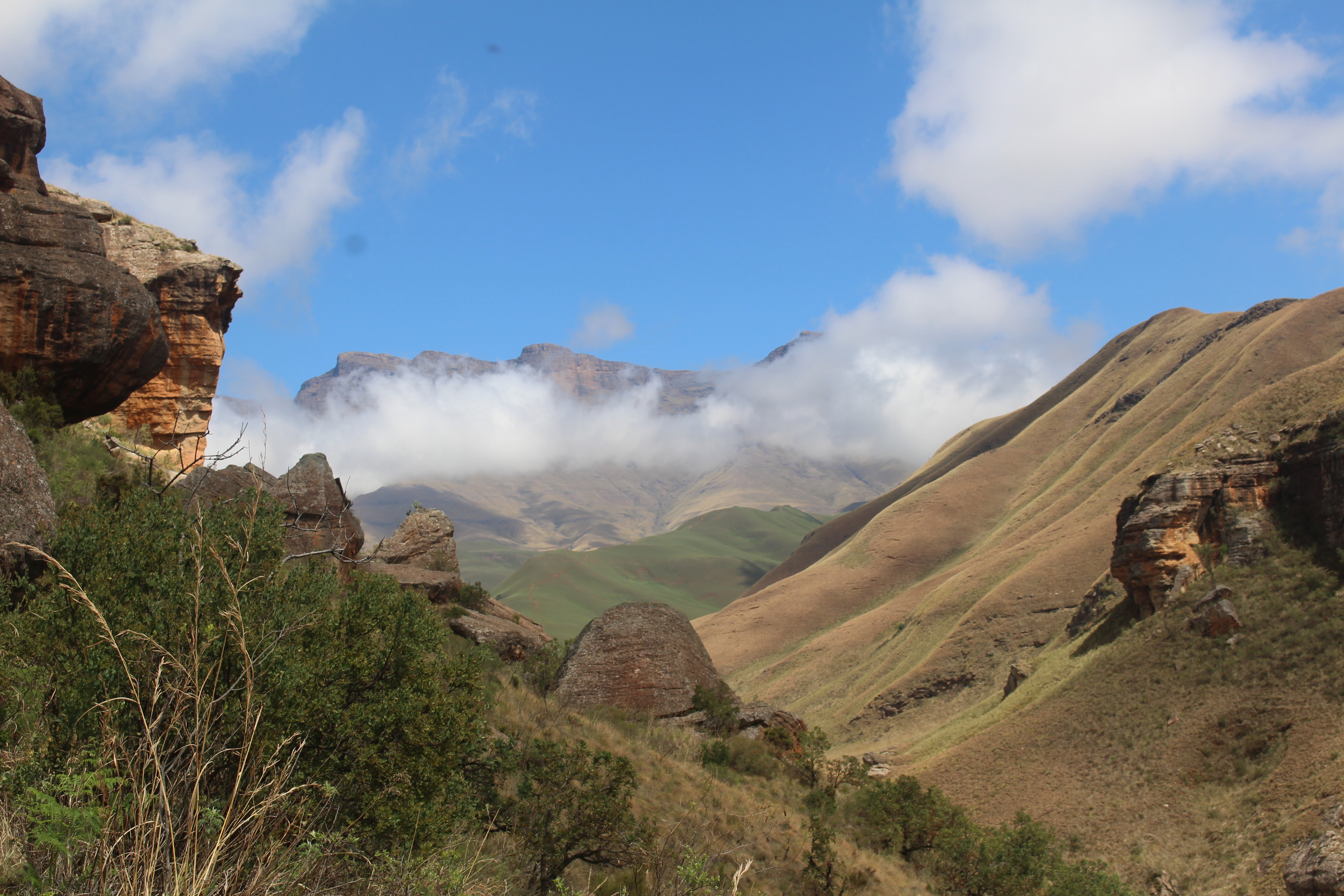
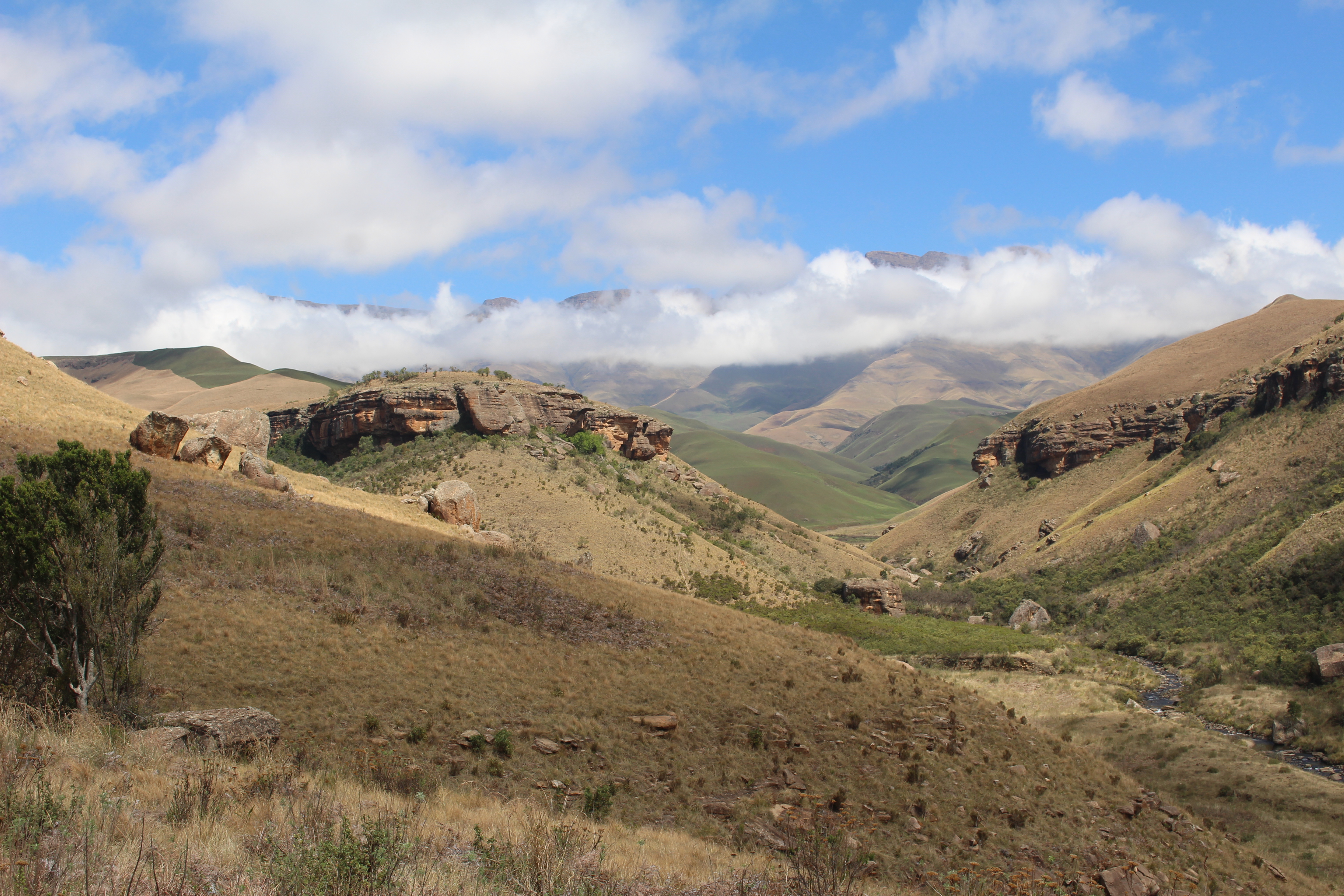
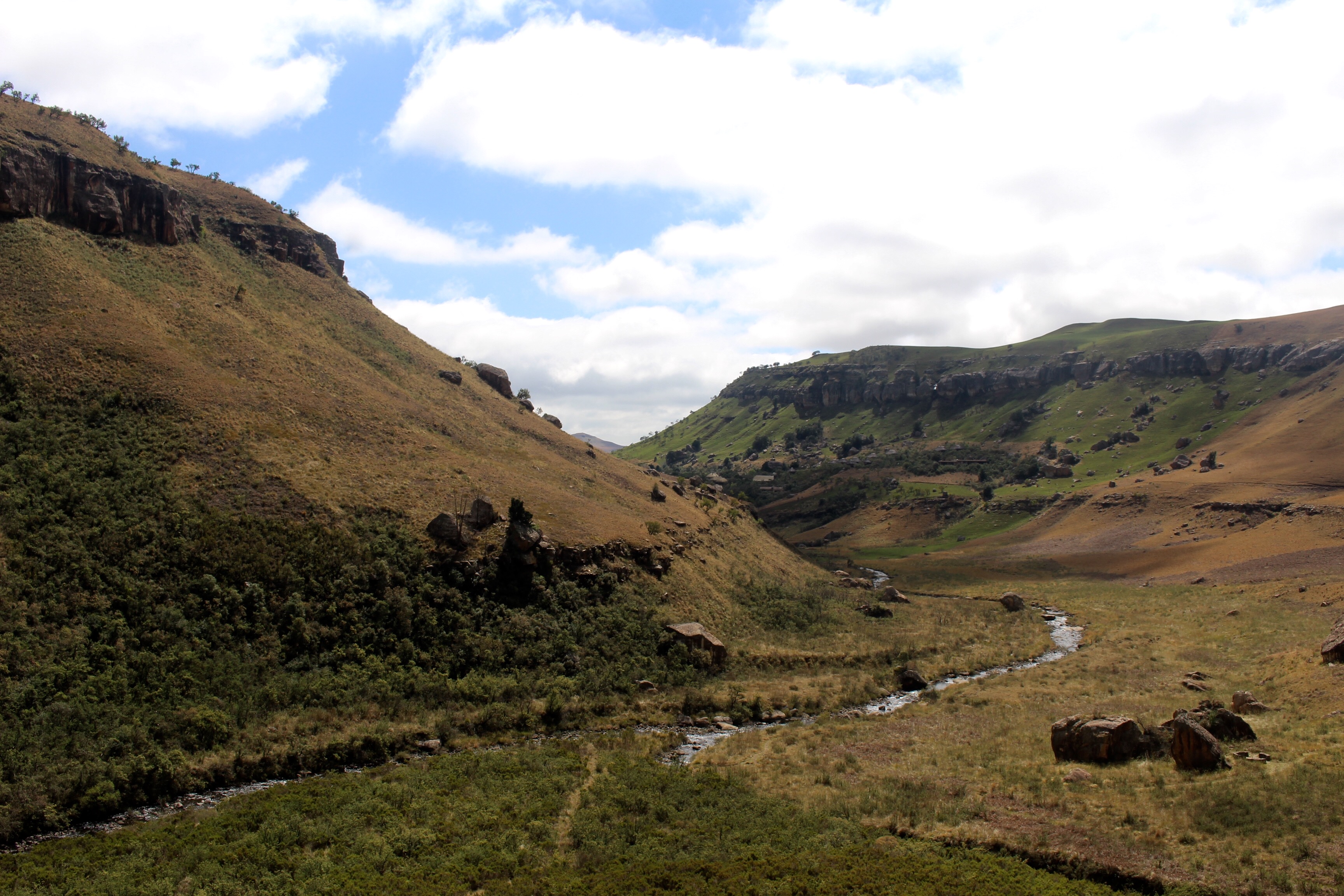
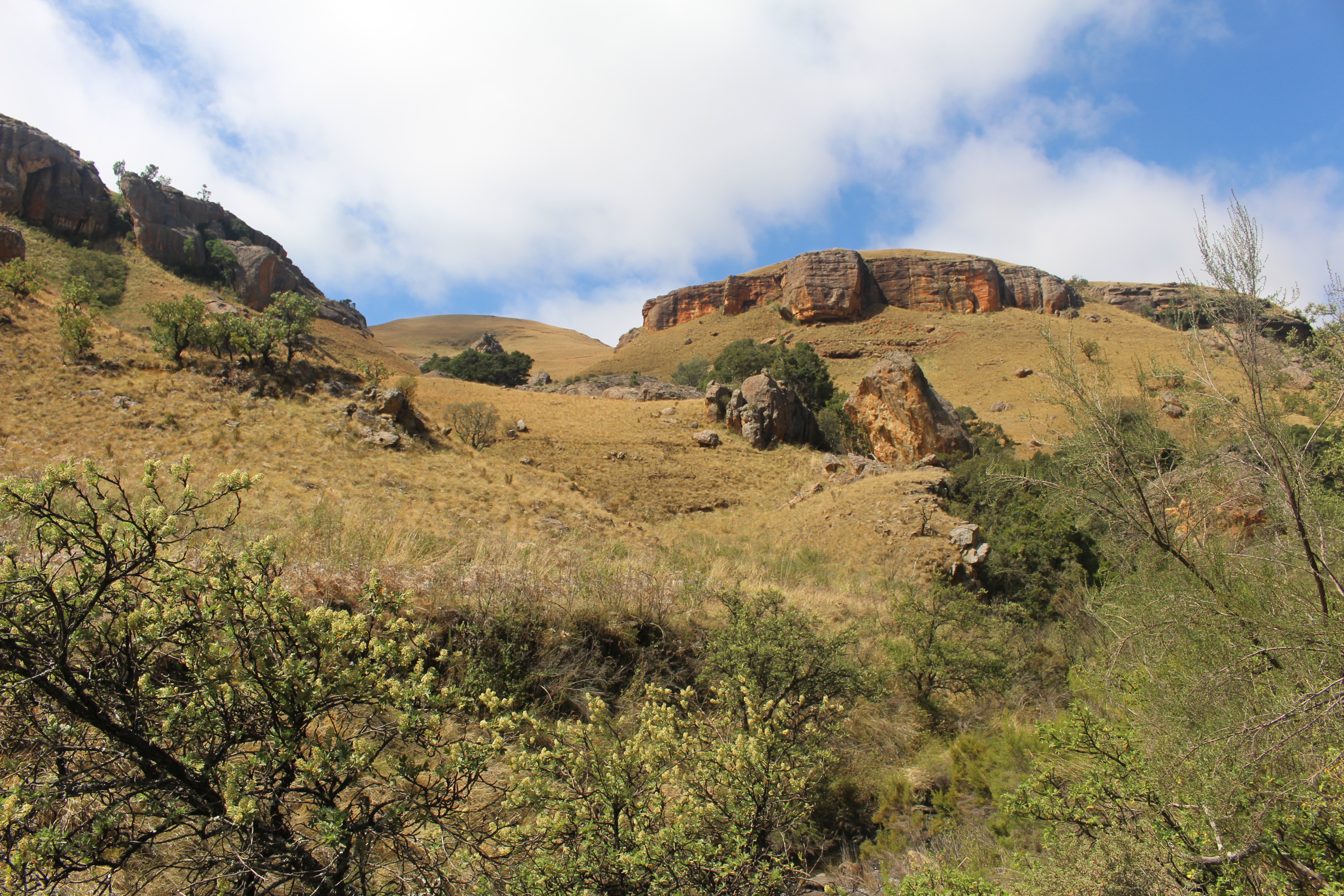
And then more driving into the Drakensberg Mountains. It was misty/cloudy in the afternoon when we arrived, but wow…air so clean…silence so deep…the place had a wonderful and spiritual feeling. This area used to be home to the Bushmen, aka San People. There are rock paintings done by them, some 5000 years old, some from 150 years ago.

View from our "chalet"
View from our “chalet”

image

image

Looking back at the lodge
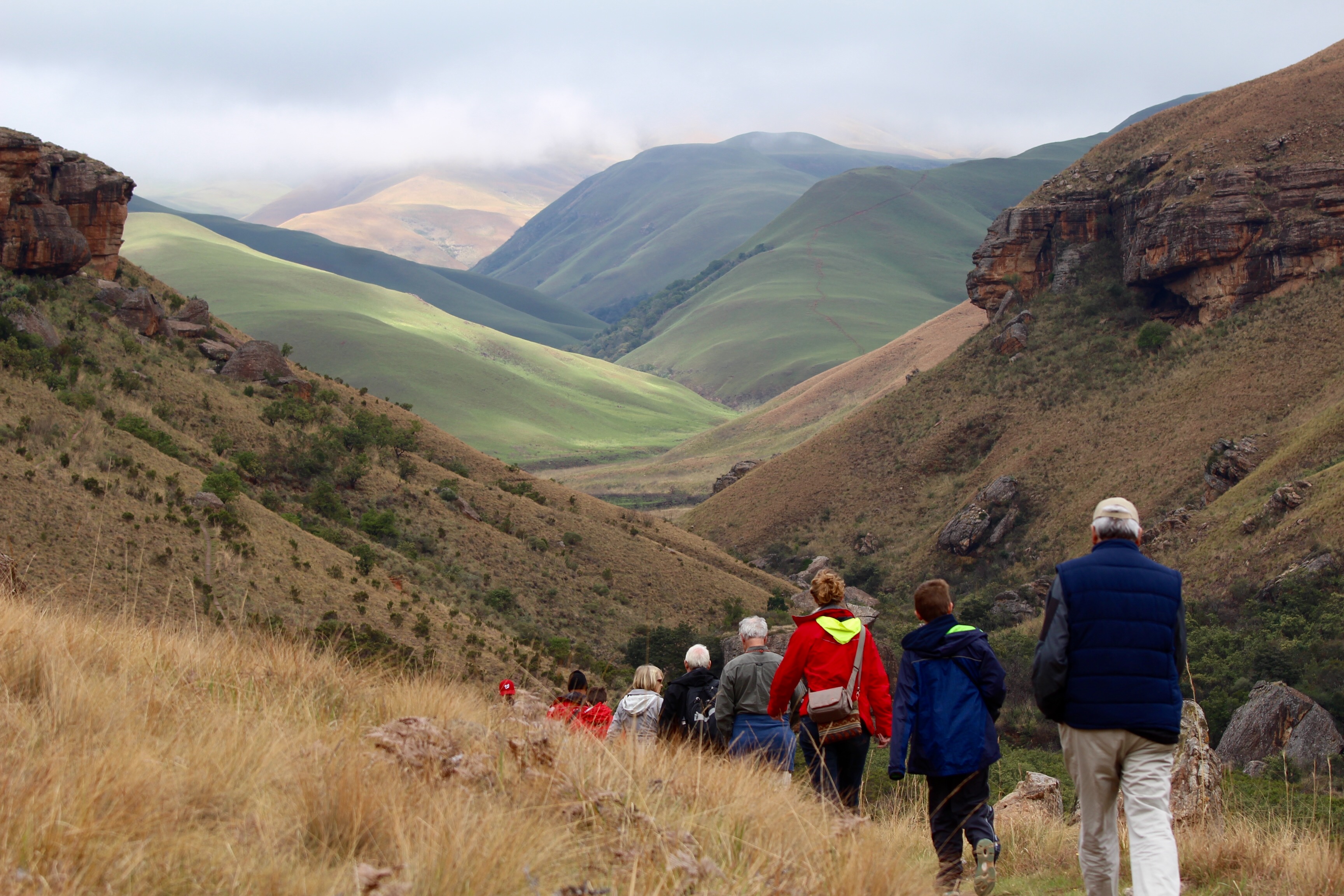
Nora goes for a walk. (No, really, she's right in the center of the photo.)
Nora goes for a walk. (No, really, she’s right in the center of the photo.)
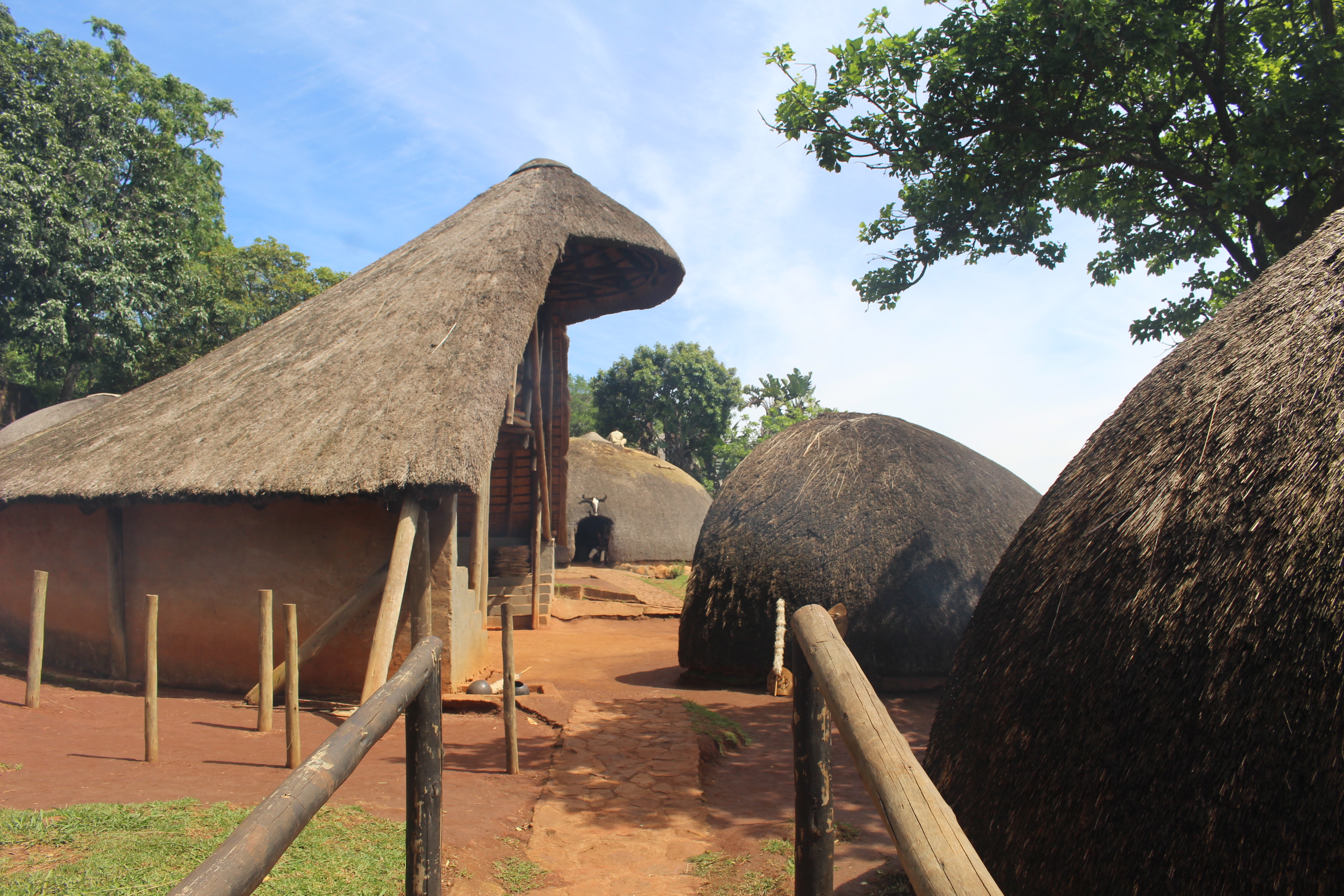
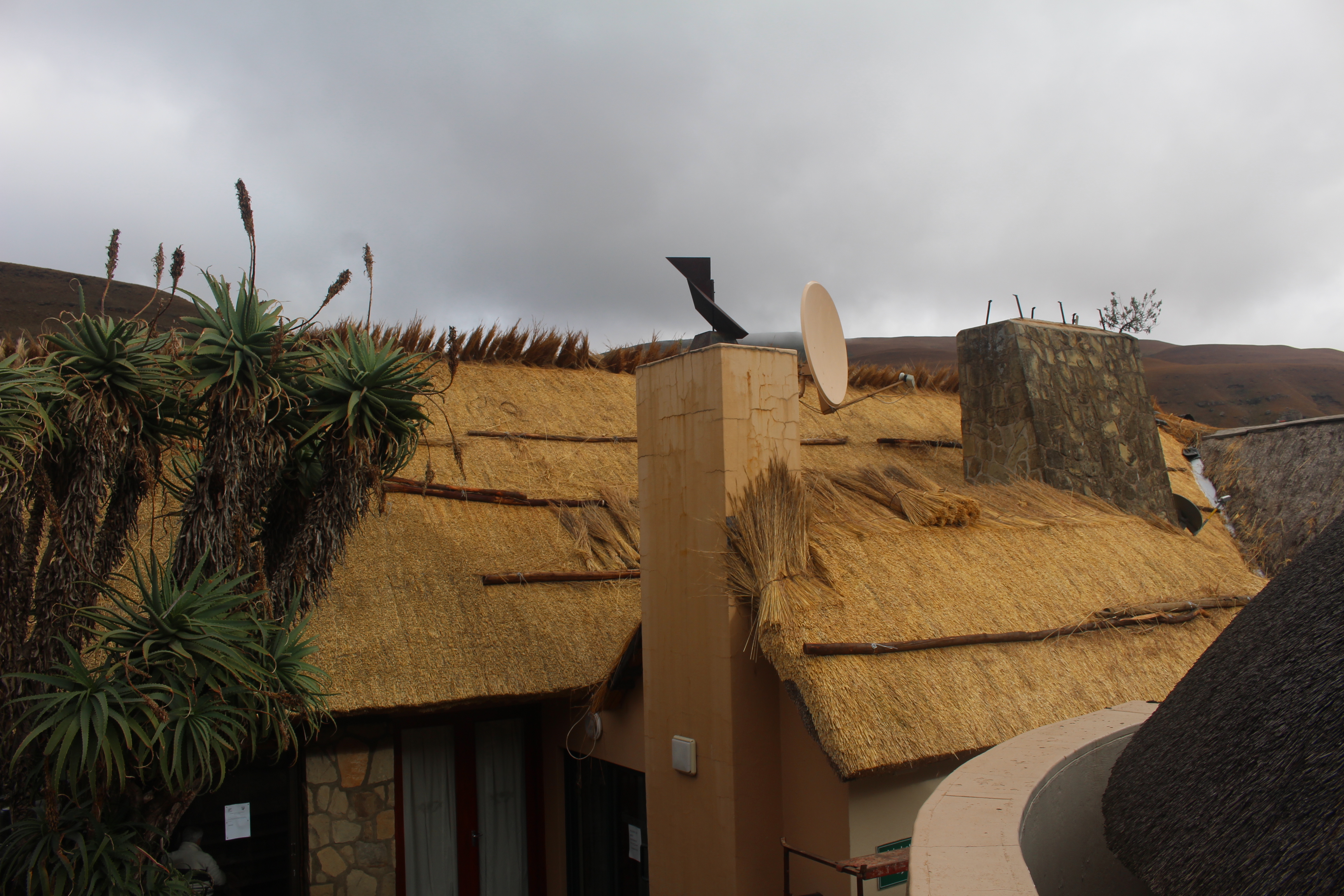
Everywhere we went the thatched roofs were beautiful and apparently completely watertight. Here they are replacing the thatch on the restaurant.

image

In the morning we walk to the site of the rock paintings. And we get some sunshine.
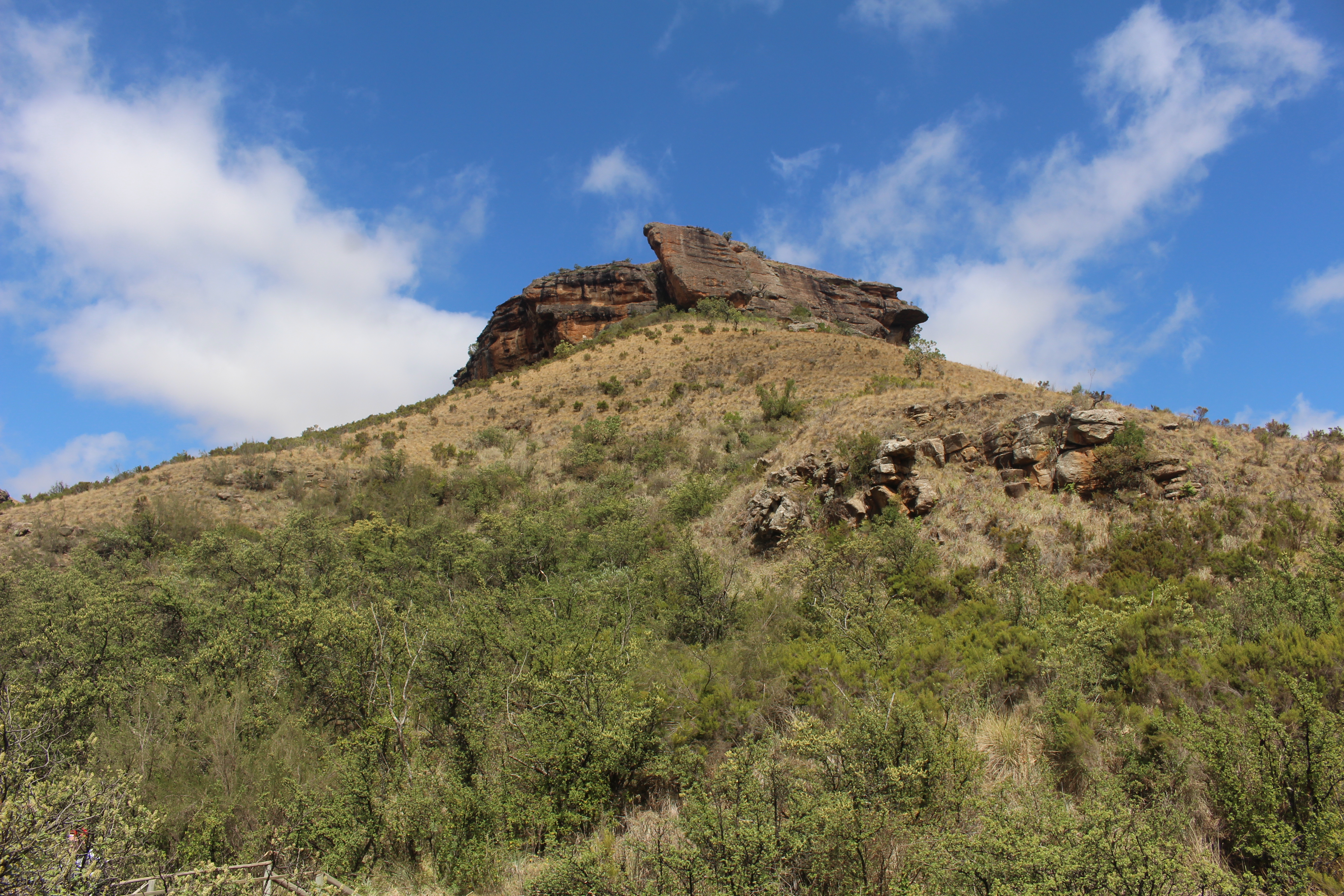
The rock paintings are up there...
The rock paintings are up there…
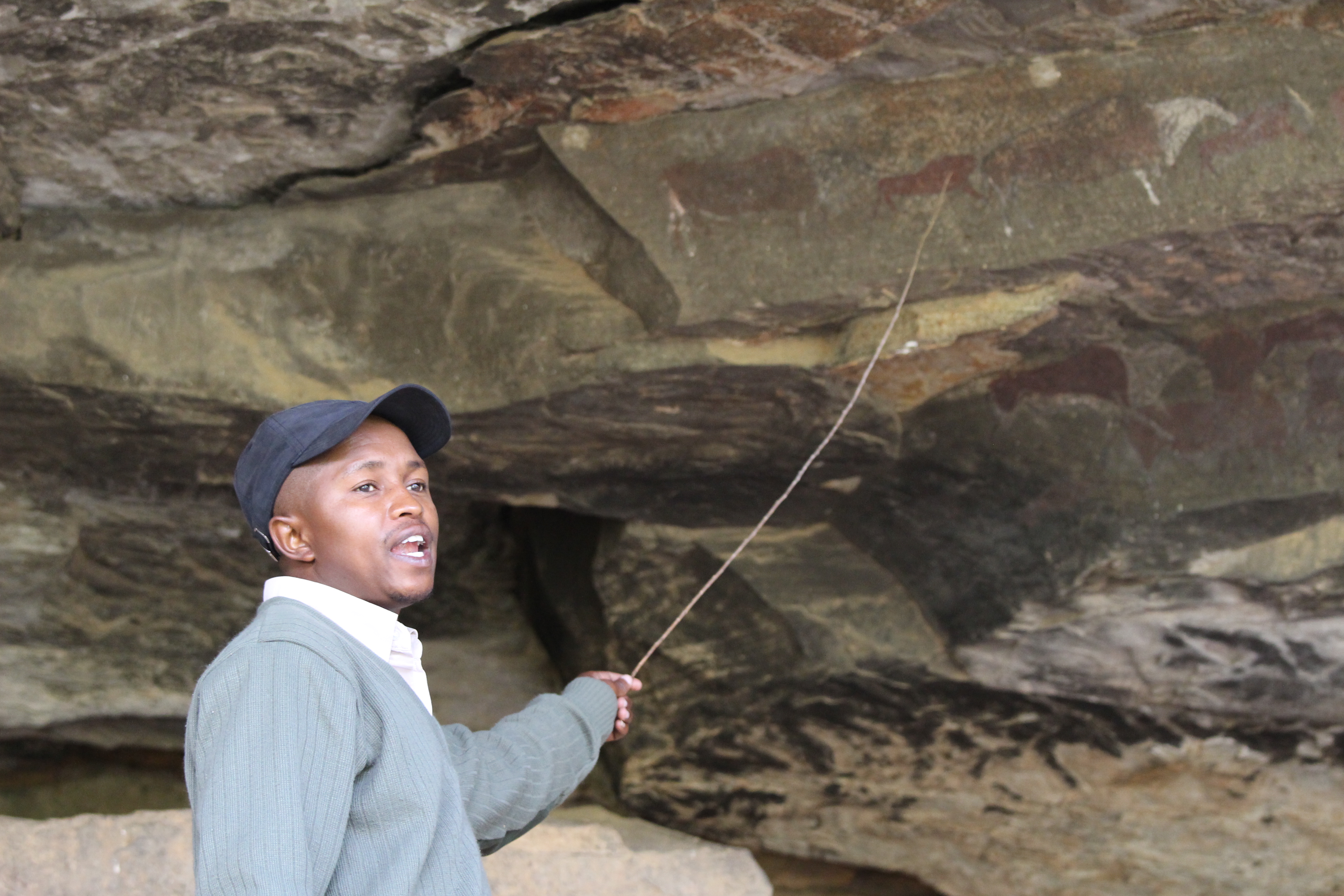
We get a guided tour/lesson

image

image

image

One thing we learn is that this painting was shot at by British solders. The Bushmen then painted two Brit redcoats to the left. This is a Stone Age culture painting "modern" solders 150 years ago!
One thing we learn is that this painting was shot at by British solders. The Bushmen then painted two Brit redcoats to the left. This is a Stone Age culture painting “modern” solders 150 years ago!
We also learn that (one theory says) this is a depiction done by the shamans after they use drugs to visit the spirit world, revealing what they see/experience. Intermixed human/animal bodies, one with 3 heads, one with 2 tails, but a happy human family suggesting that all is well...
We also learn that (one theory says) this is a depiction done by the shamans after they use drugs to visit the spirit world, revealing what they see/experience. Intermixed human/animal bodies, one with 3 heads, one with 2 tails, but a happy human family suggesting that all is well…

In the high distant mountains is the completely-surrounded-by-South-Africa country of Lesotho. When King Shaka vanquished his enemies and forced them to join his ranks, some chose instead to flee to the mountain tops. There they developed their own culture, and now their own high-altitude country.

image

image

Klaudia
Klaudia
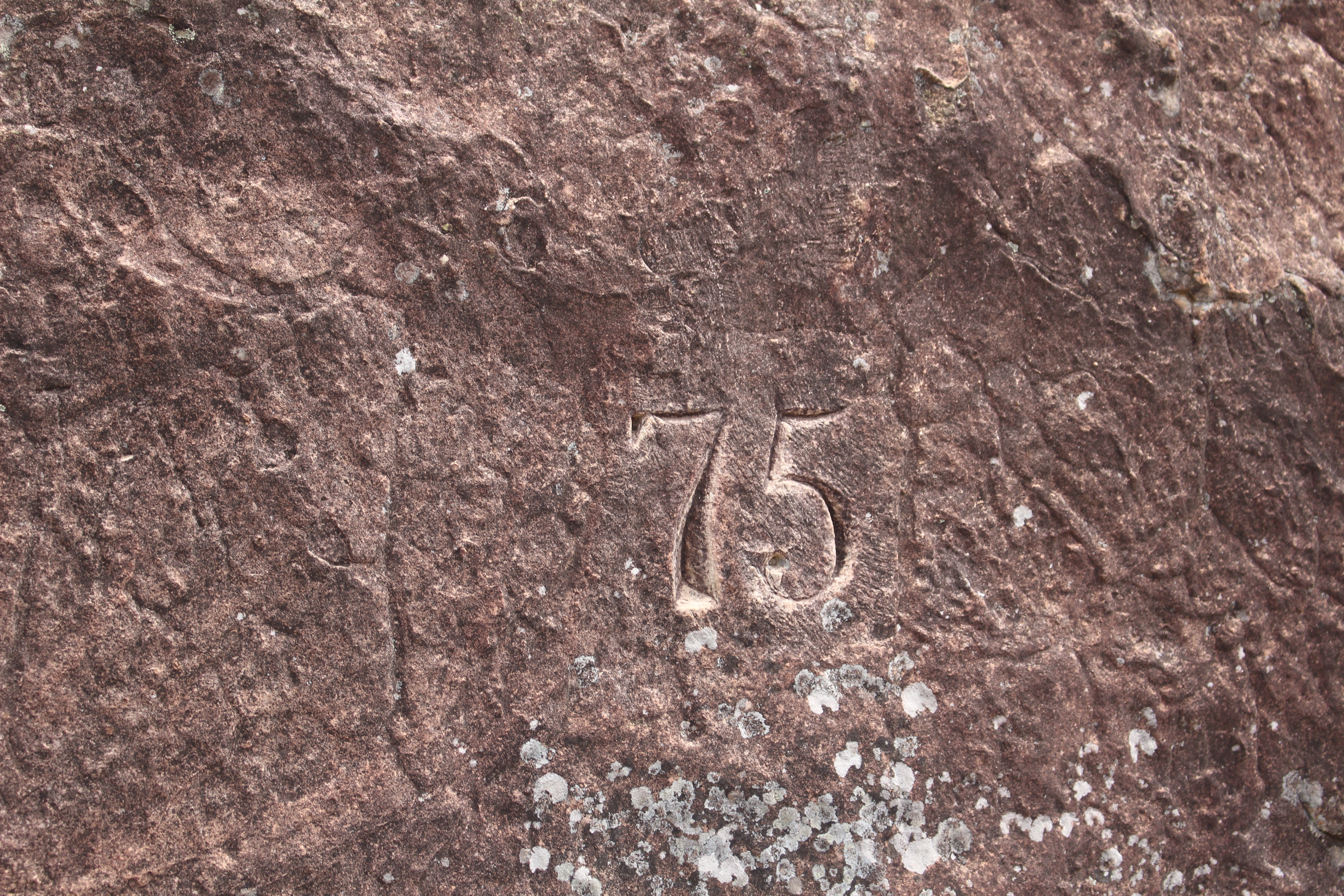
The 75th Regiment was encamped here, charged with blowing up passes used by the Bushmen and others with their cattle. The cook was apparently bored, and carved this 75 into the rock.

image

image

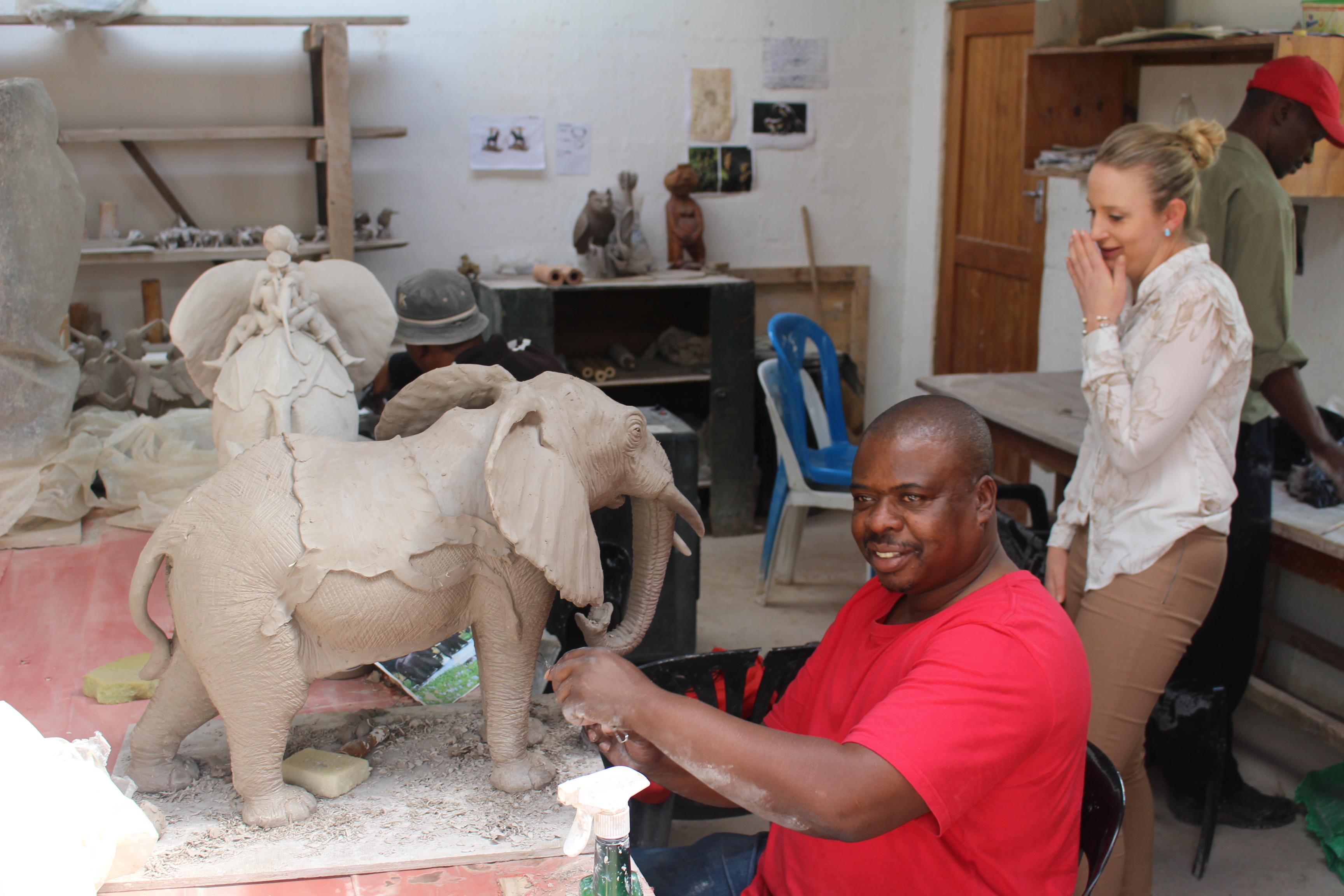
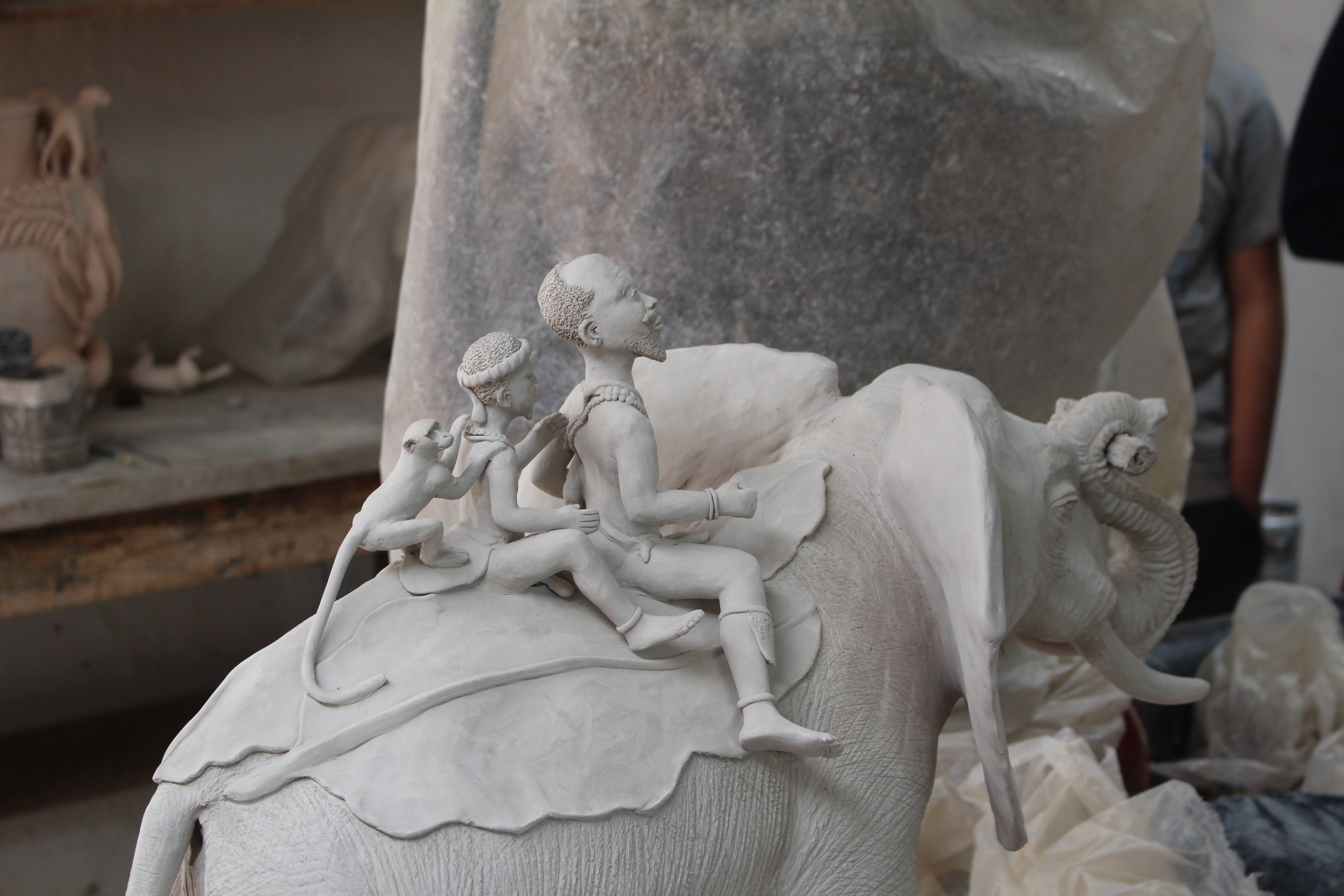
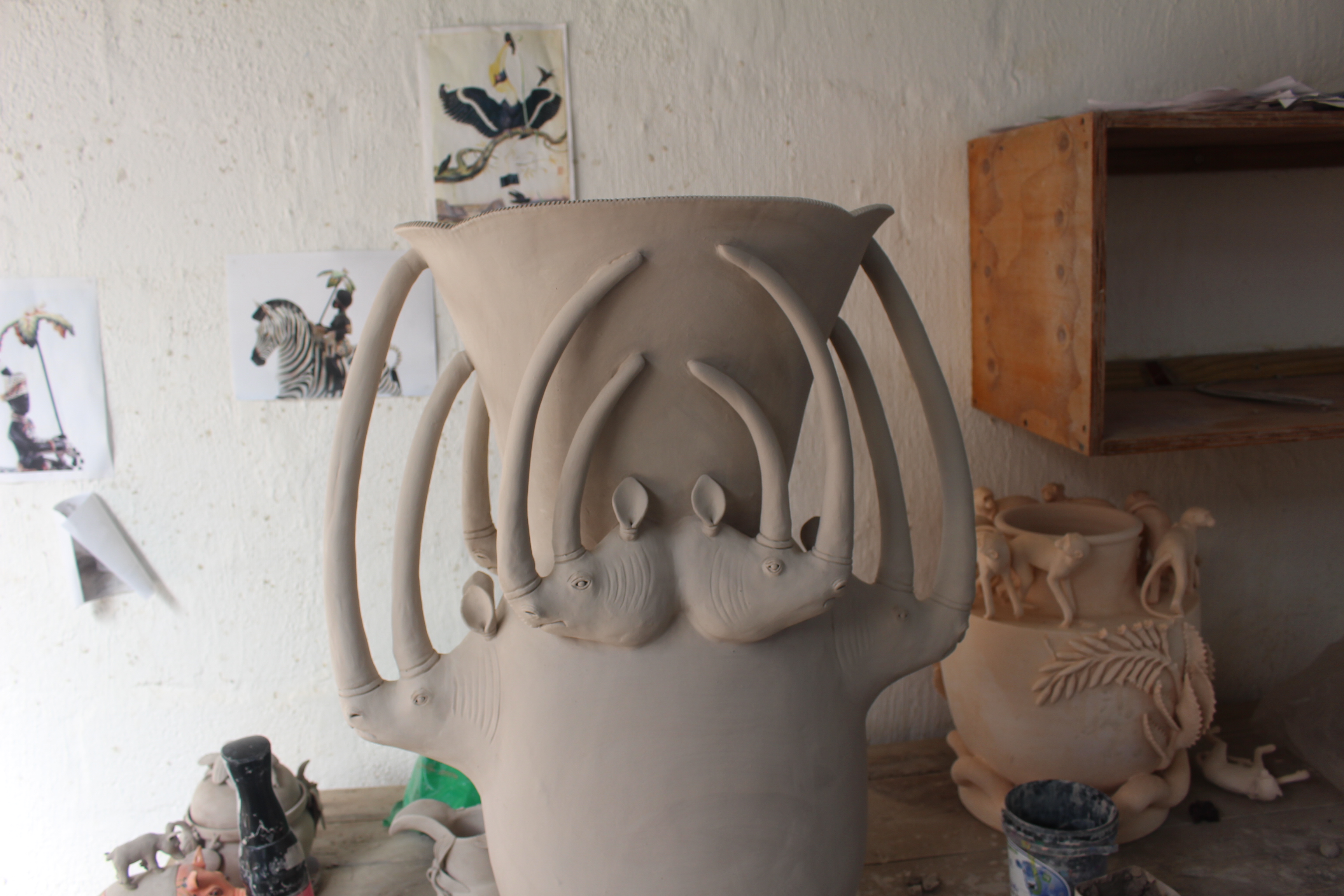
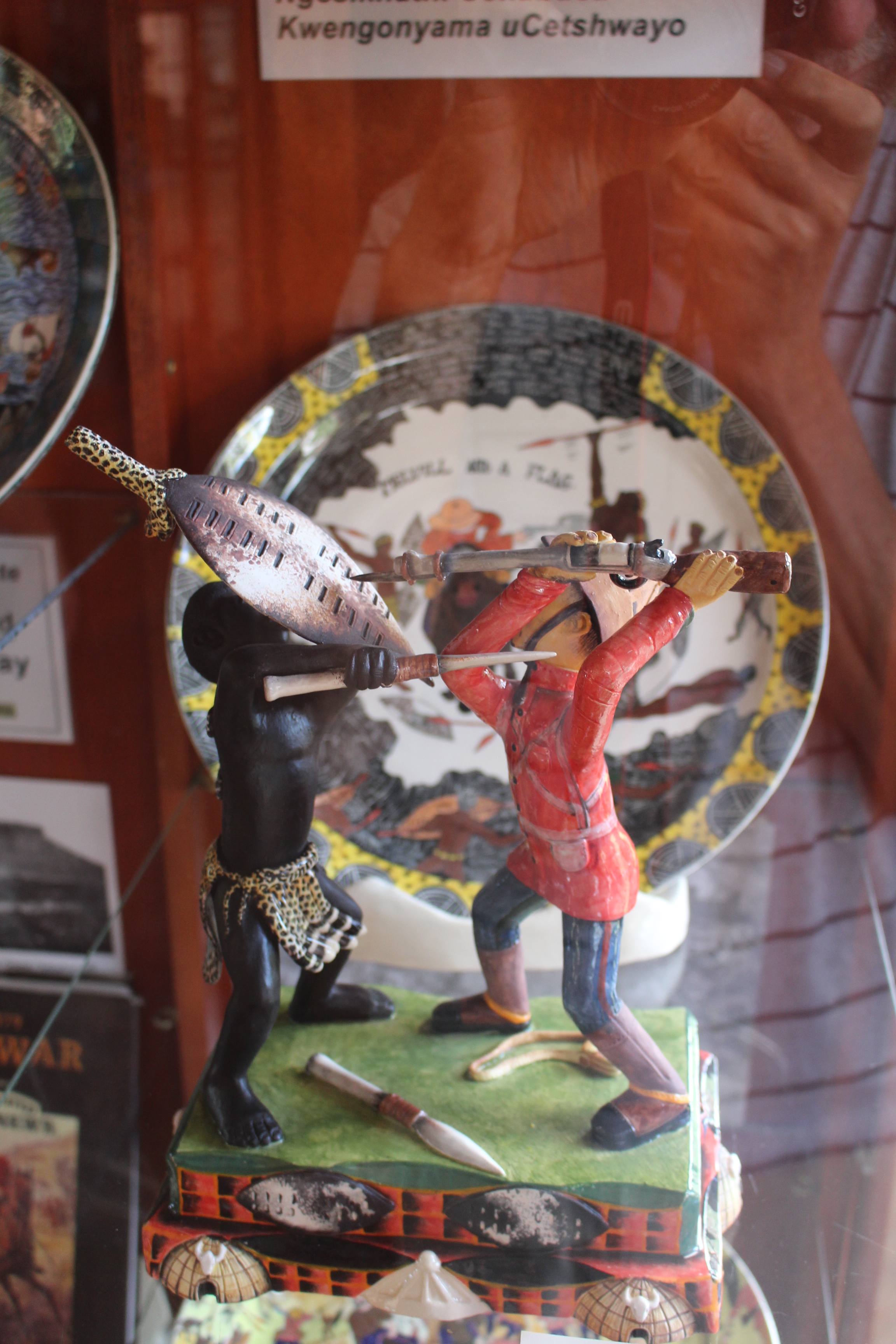
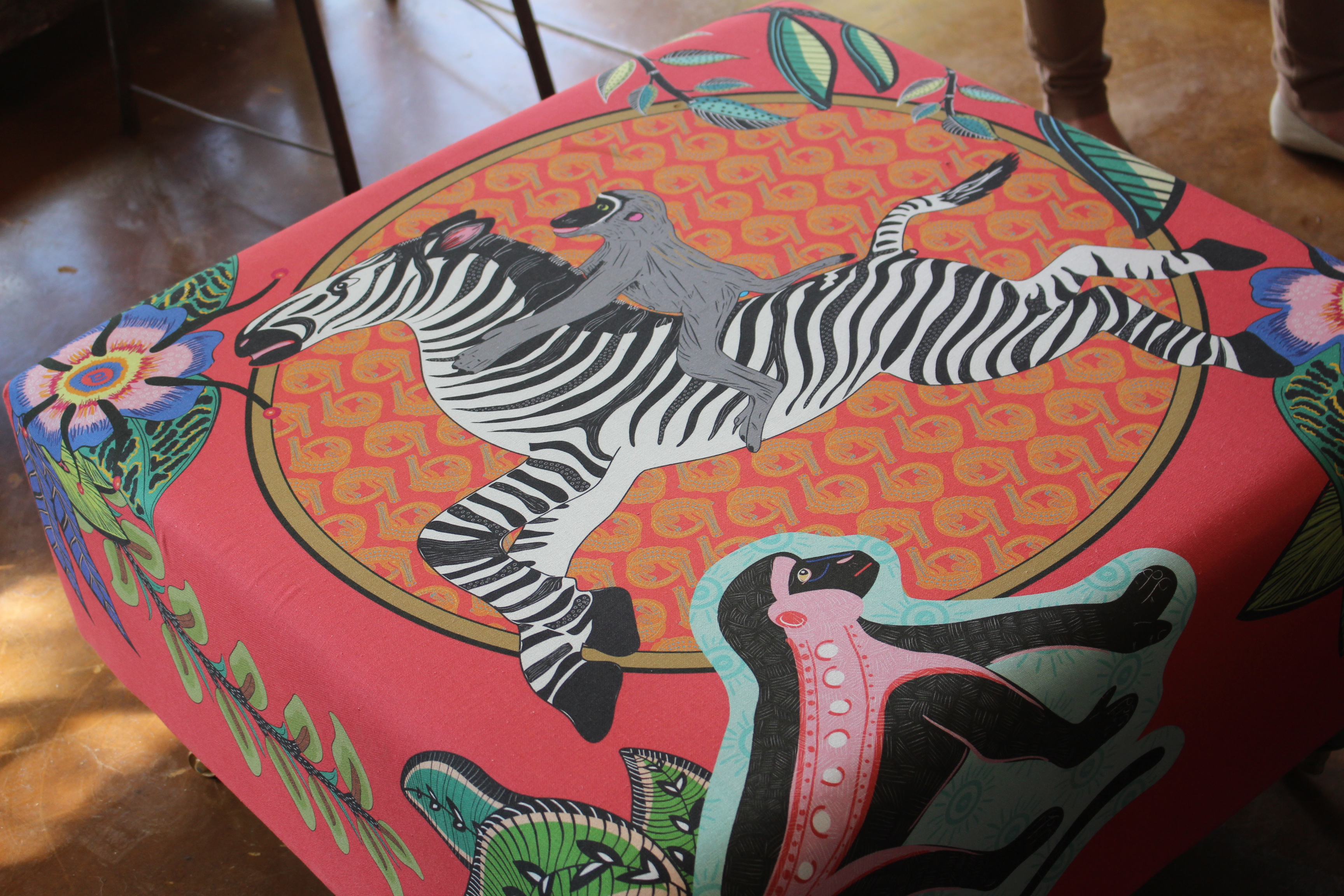
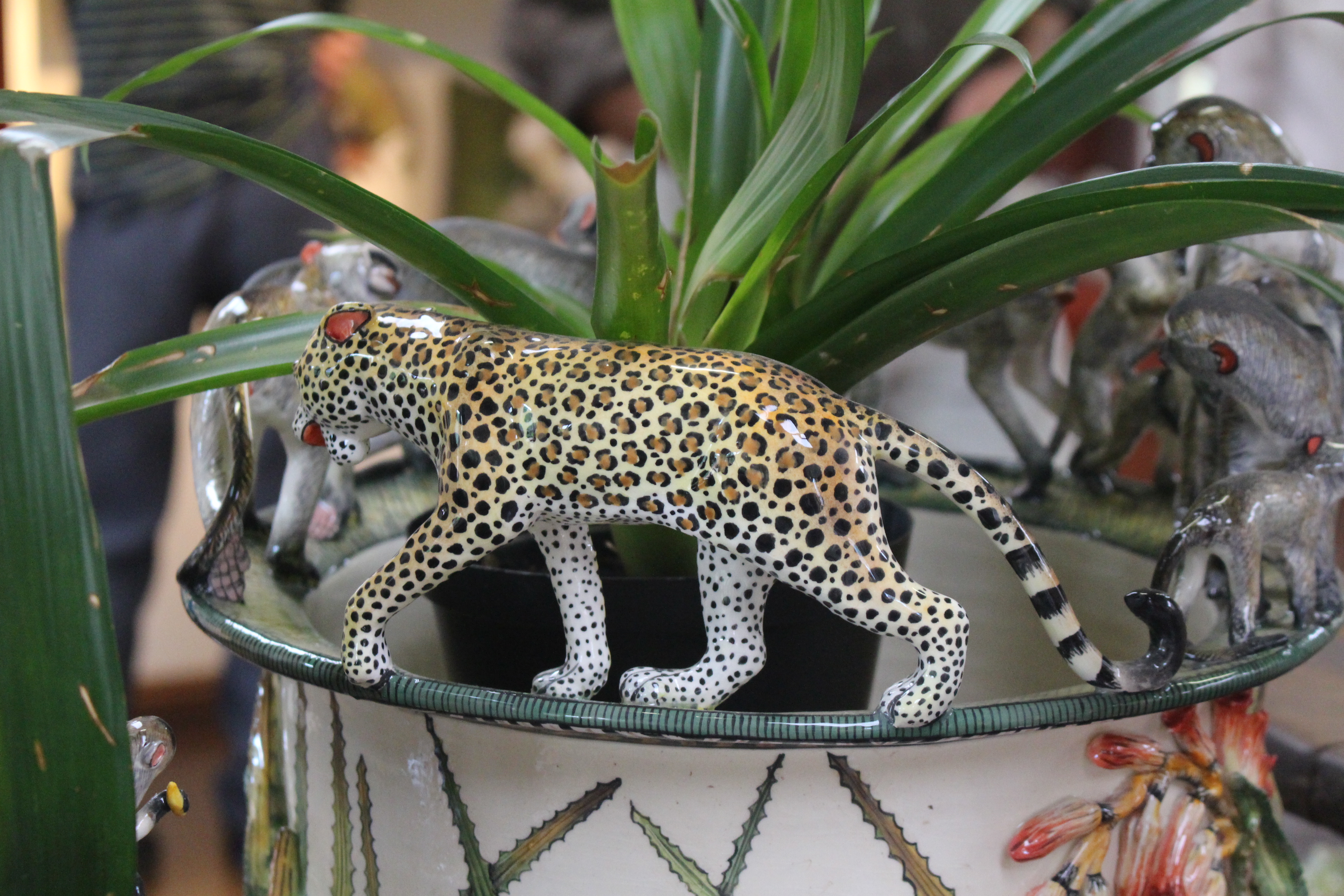
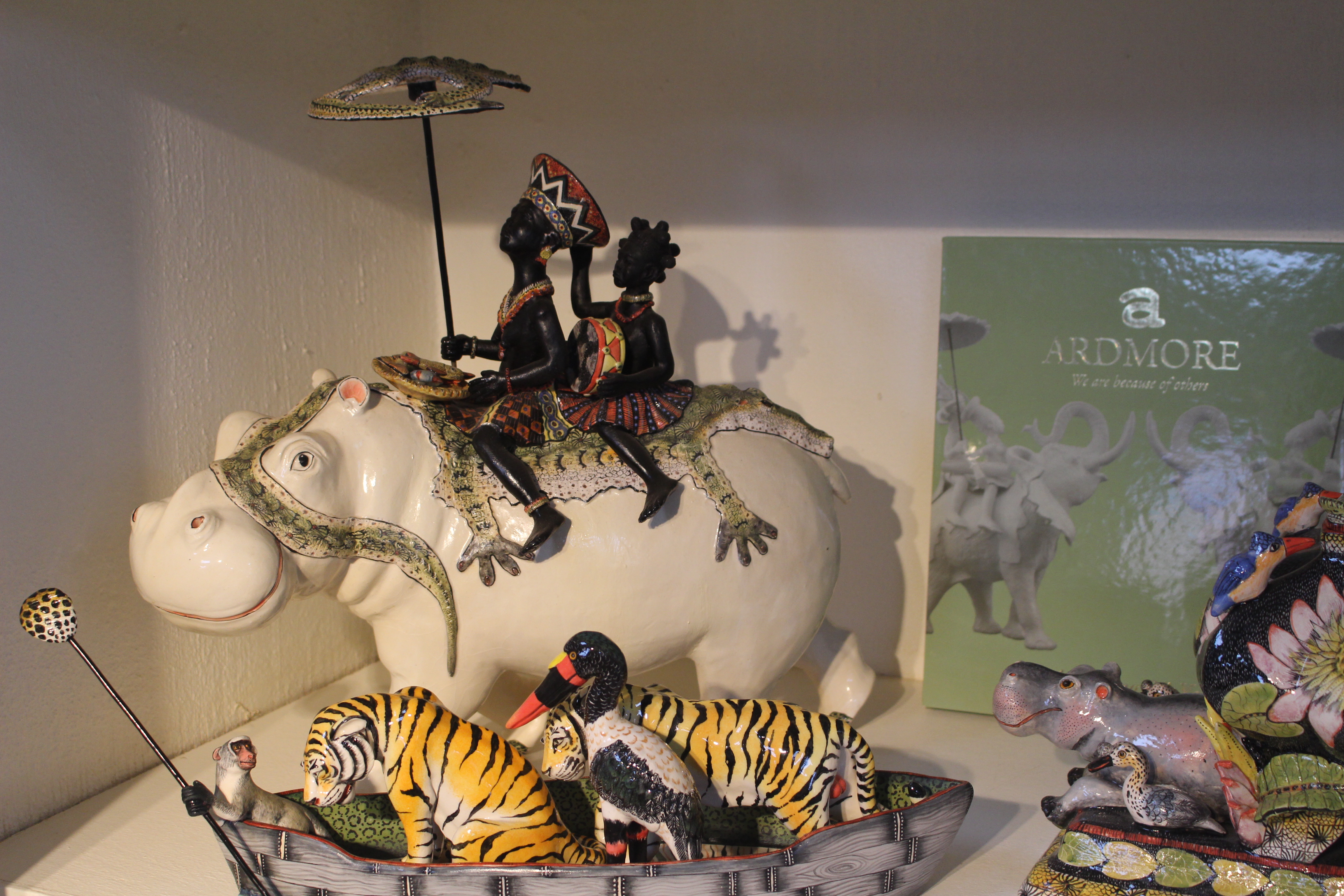
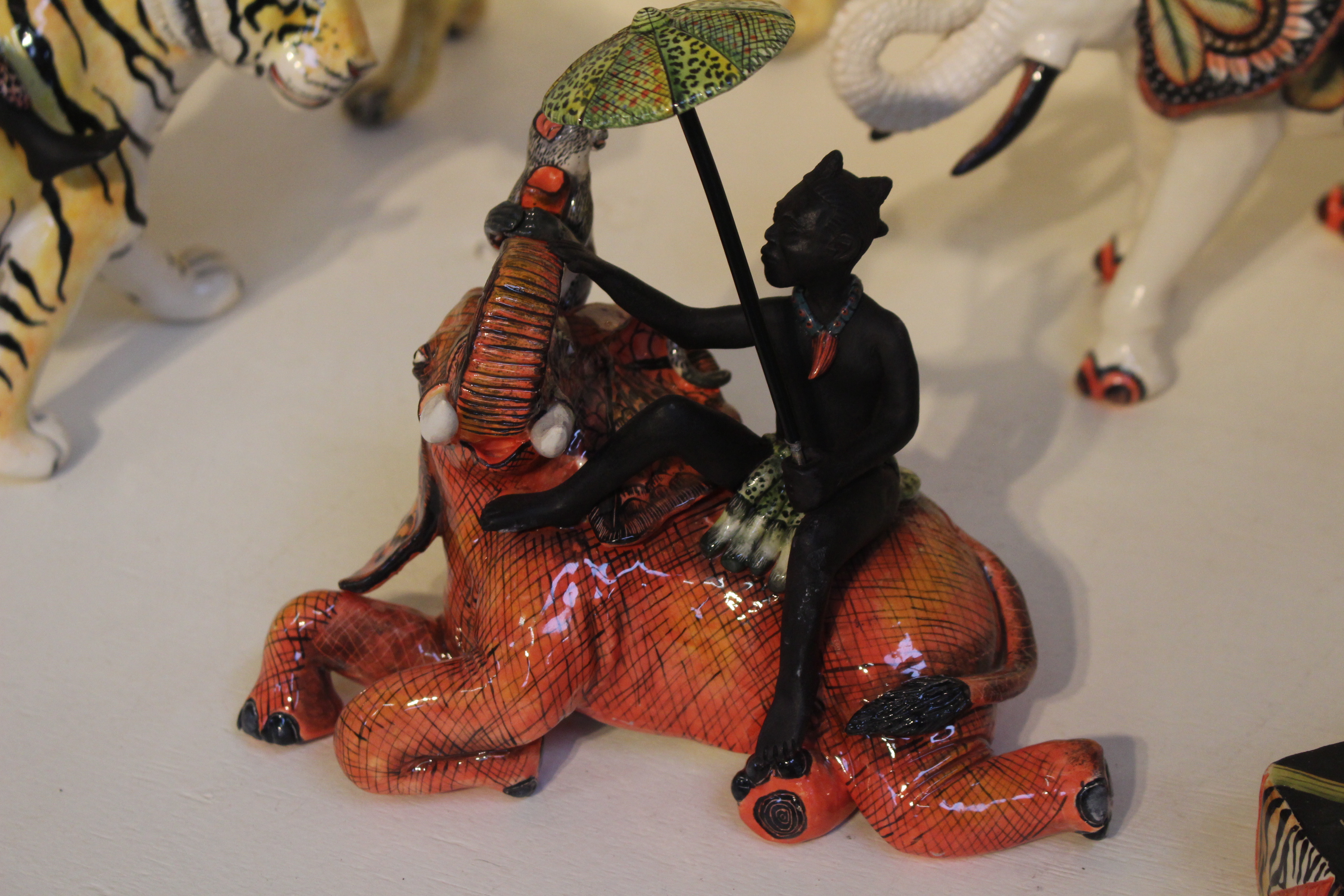
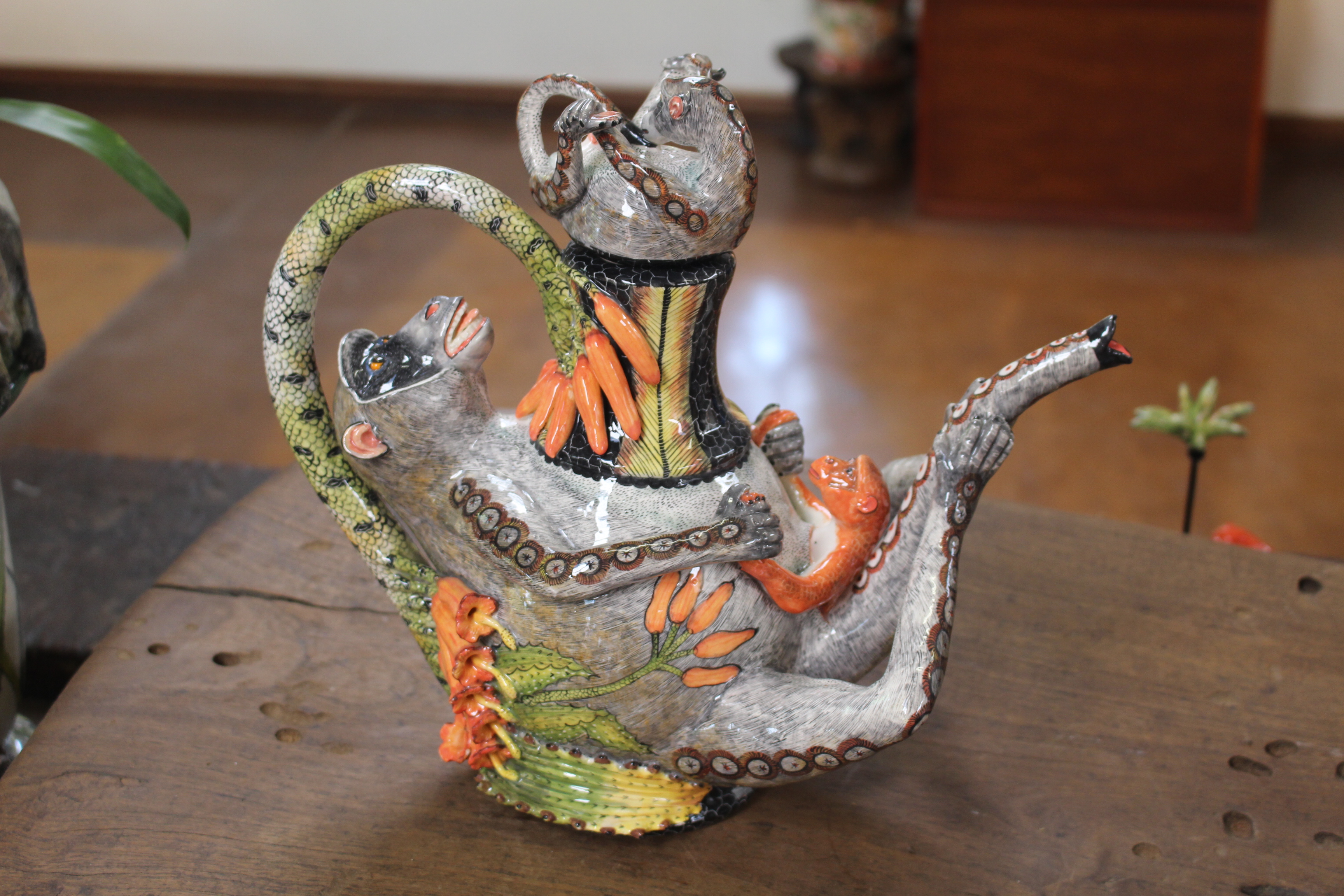
And then we headed “home.” But we made a stop at the Ardmore ceramics center. Here Zulus are trained in techniques, but then they are free to make their own creations. Ardmore works have become world-renowned. They say they have no problem finding capable artists, but they have lost many to the AIDS epidemic. Those fallen artists are commemorated on a wall of ceramic works showing their faces. A happy sign is that none of the current artists have AIDS.

image

image

image

A historical depiction of the Anglo-Zulu War
They do fabric, too.
One of my favorites, for the way the art works with the plant held by the piece.

image

image

image

So. Our tour is done. I think we were incredibly lucky to connect with Greg, and that he was available and could put the whole itinerary together on almost-no-notice! Time now to turn our attention to the weather forecast, and hope for a favorable weather window for sailing around the Cape of Good Hope to Cape Town…