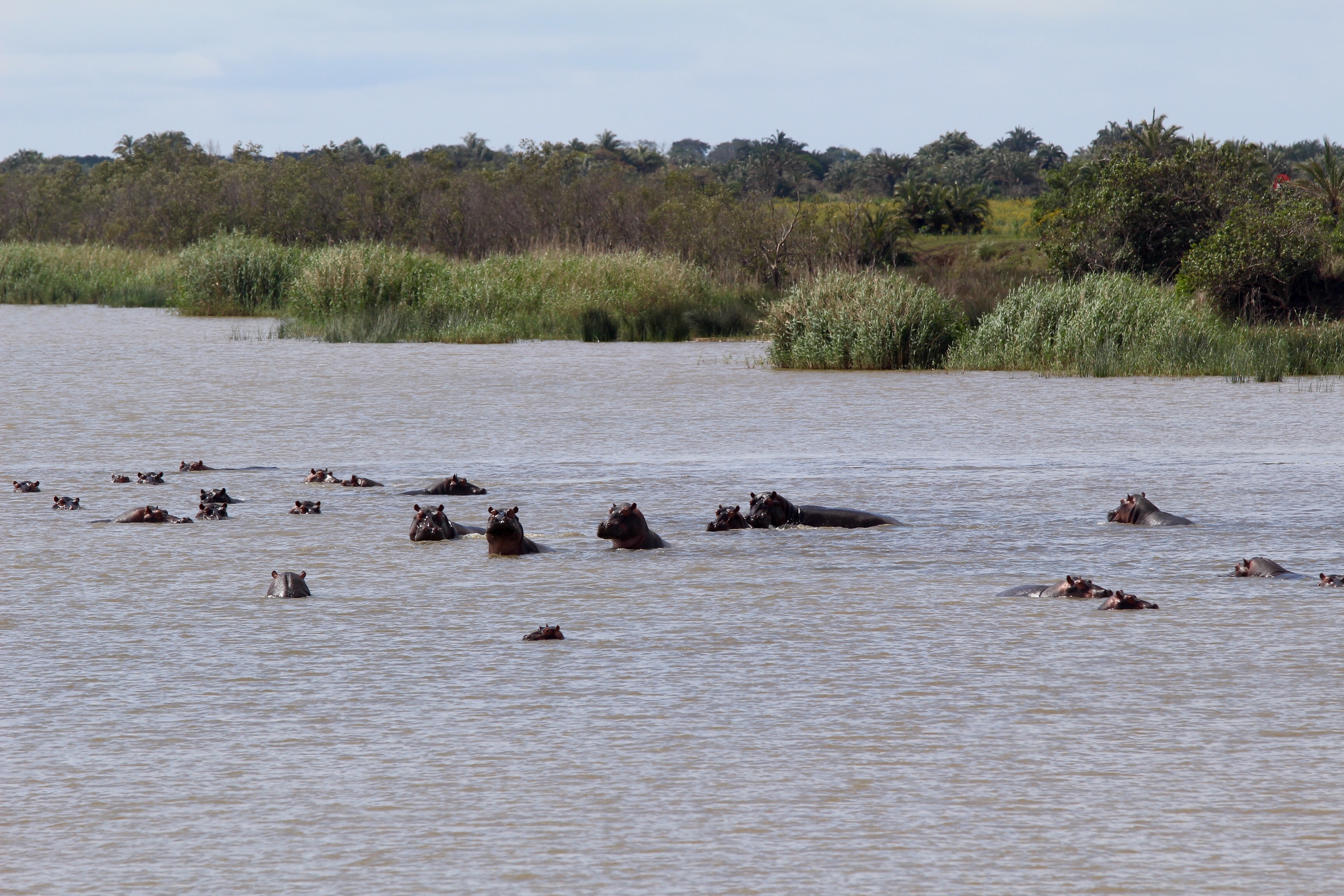
Embarking on our tour with master tour guide Greg Garson, we headed north up the coast to Saint Lucia, and went to the estuary (a world heritage site) where hippos and crocodiles are in abundance.
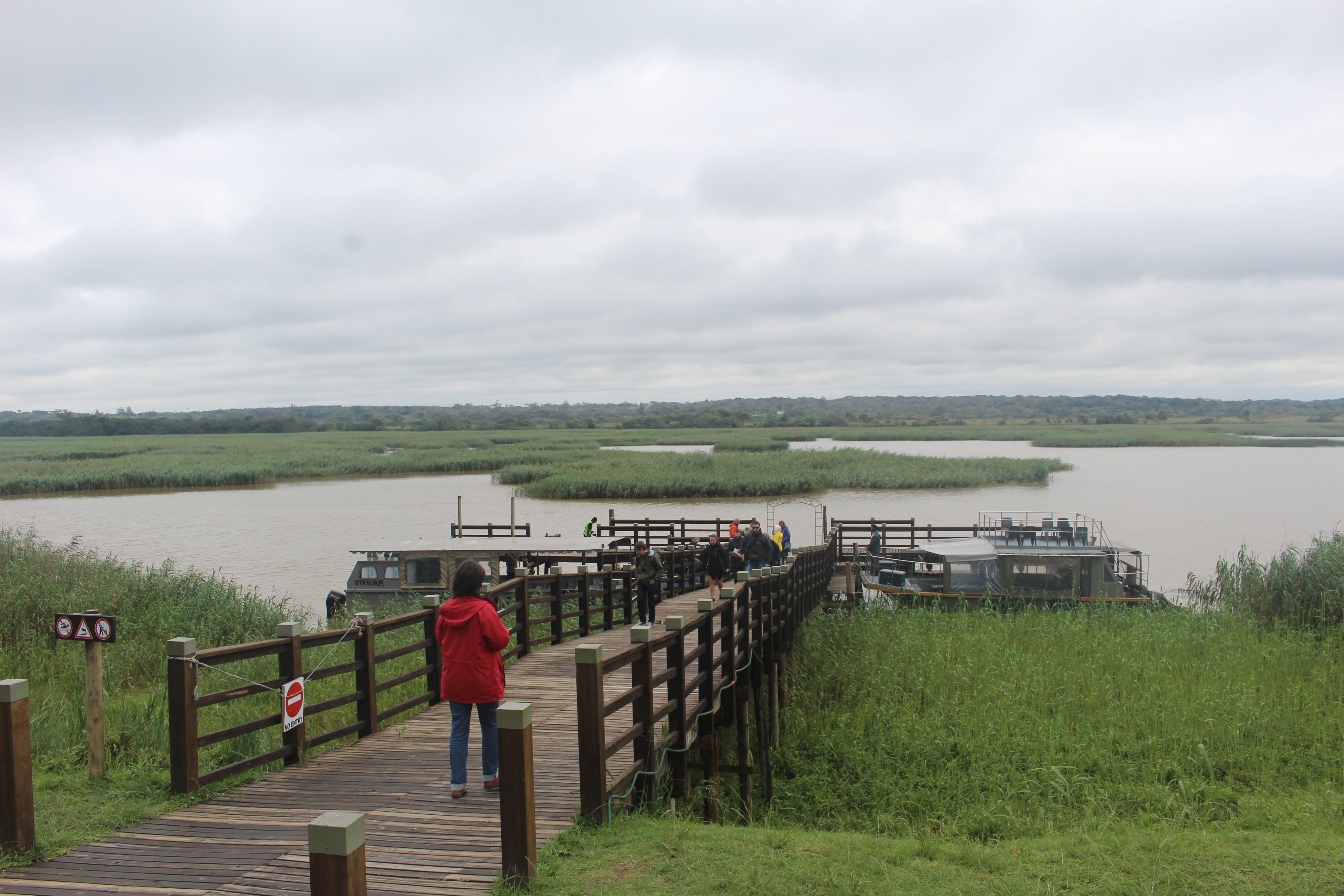
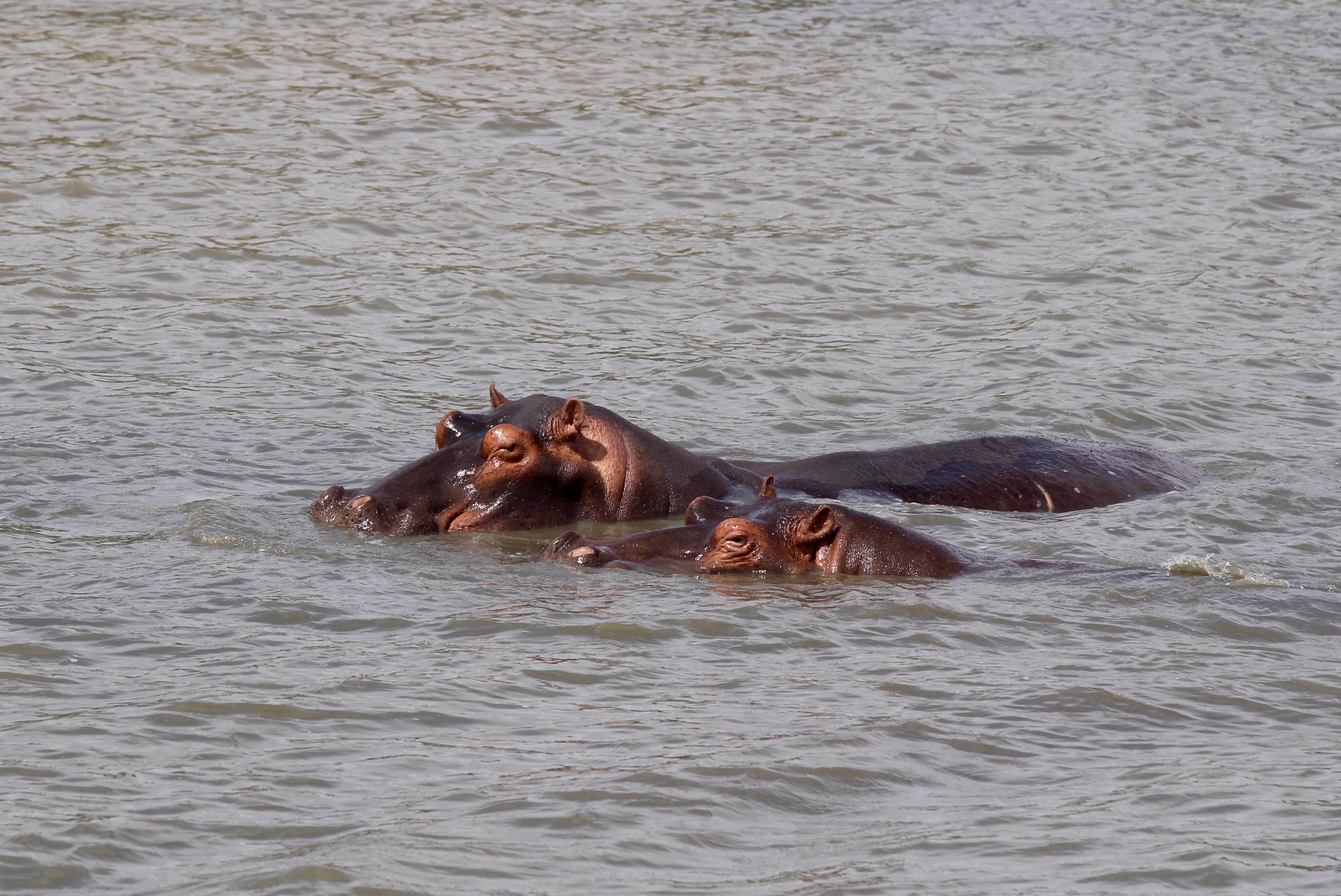
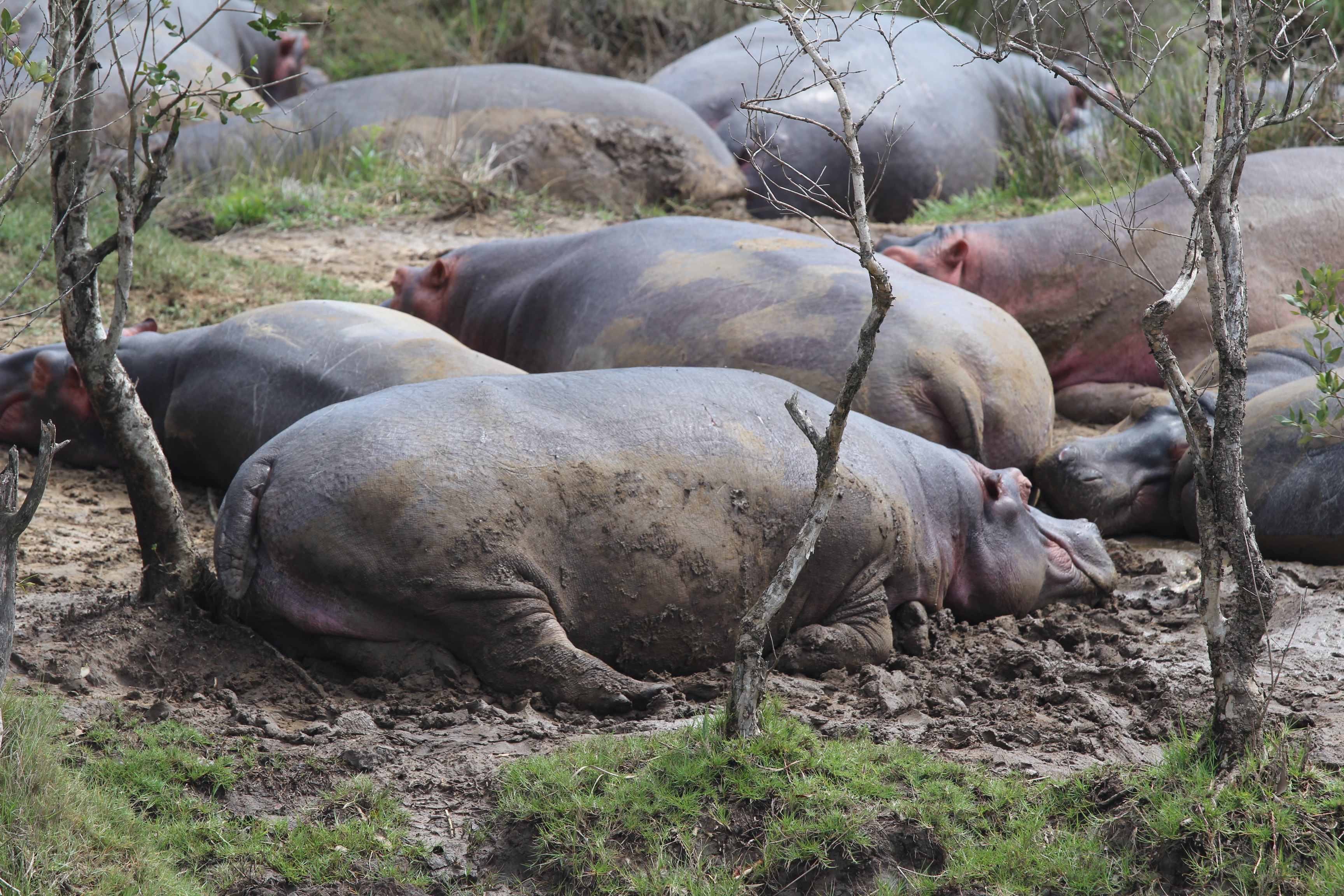
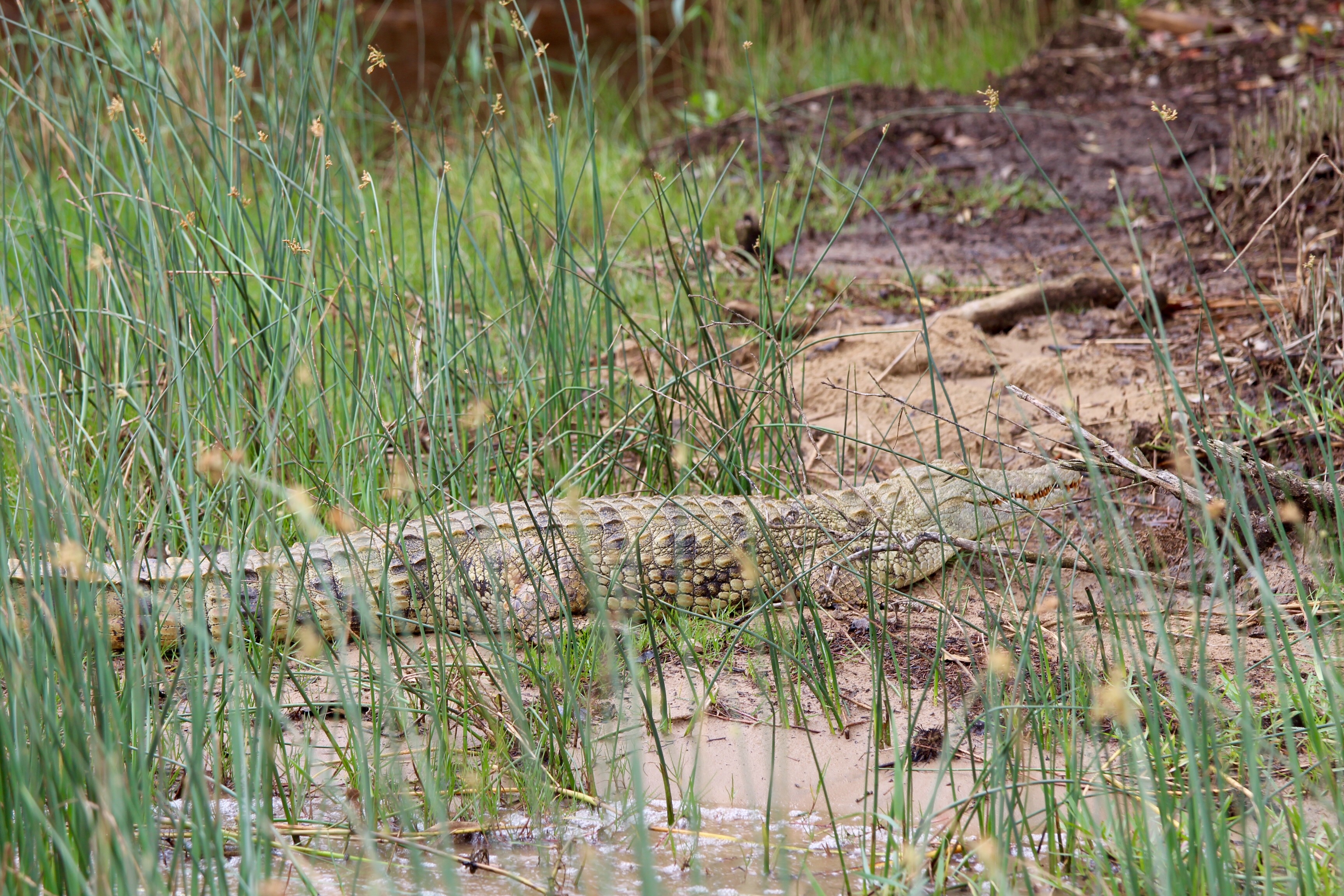
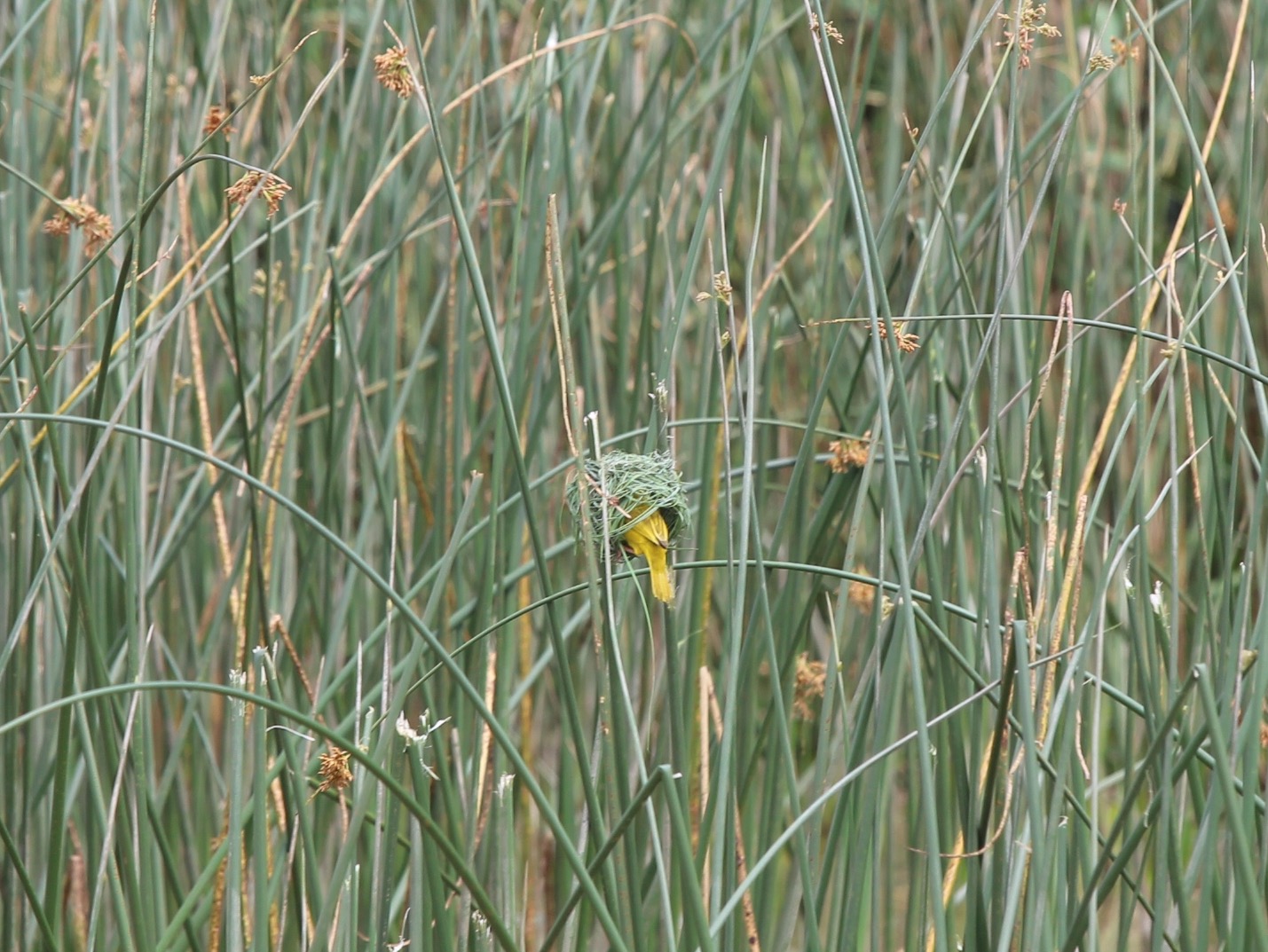
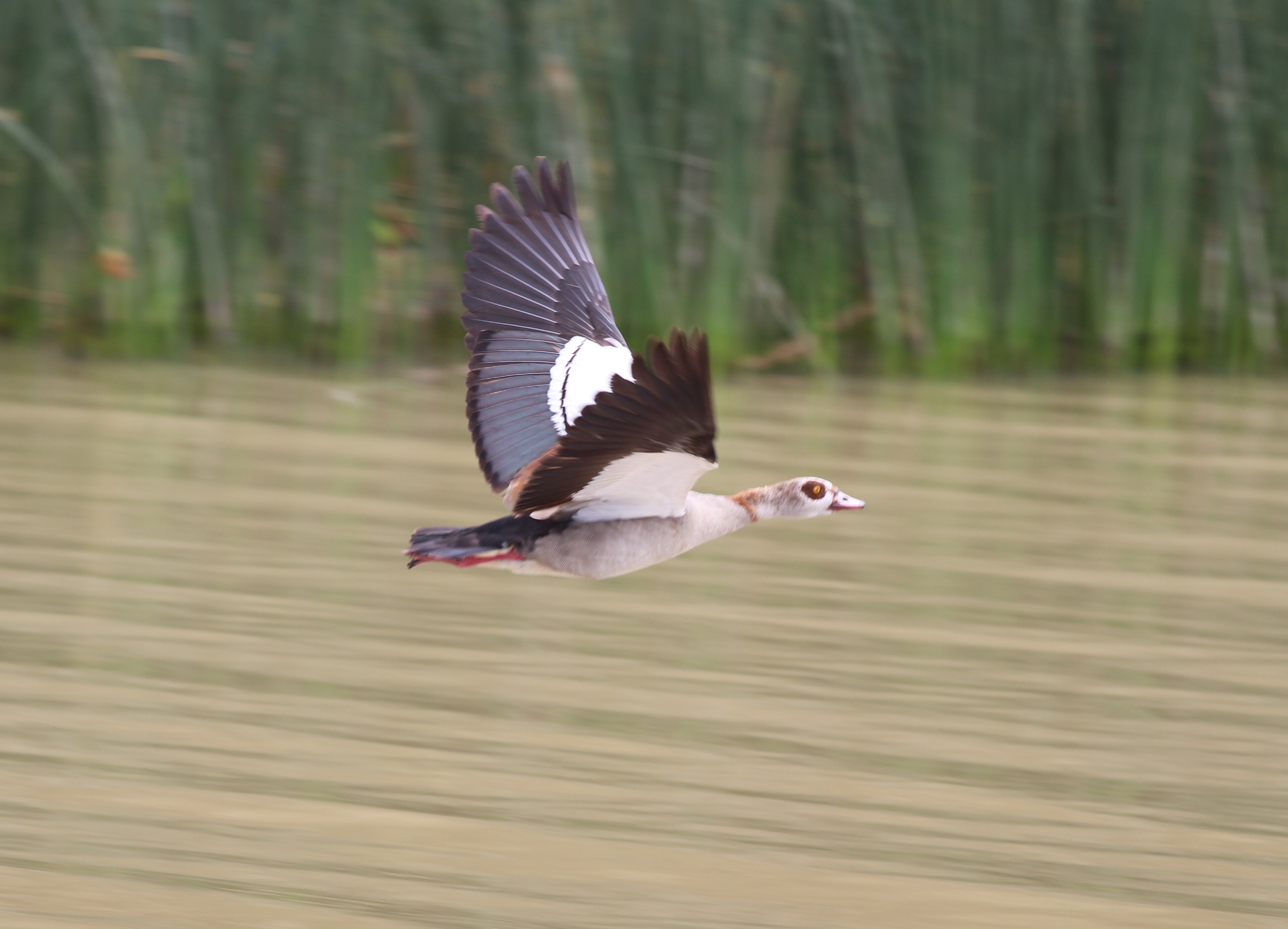
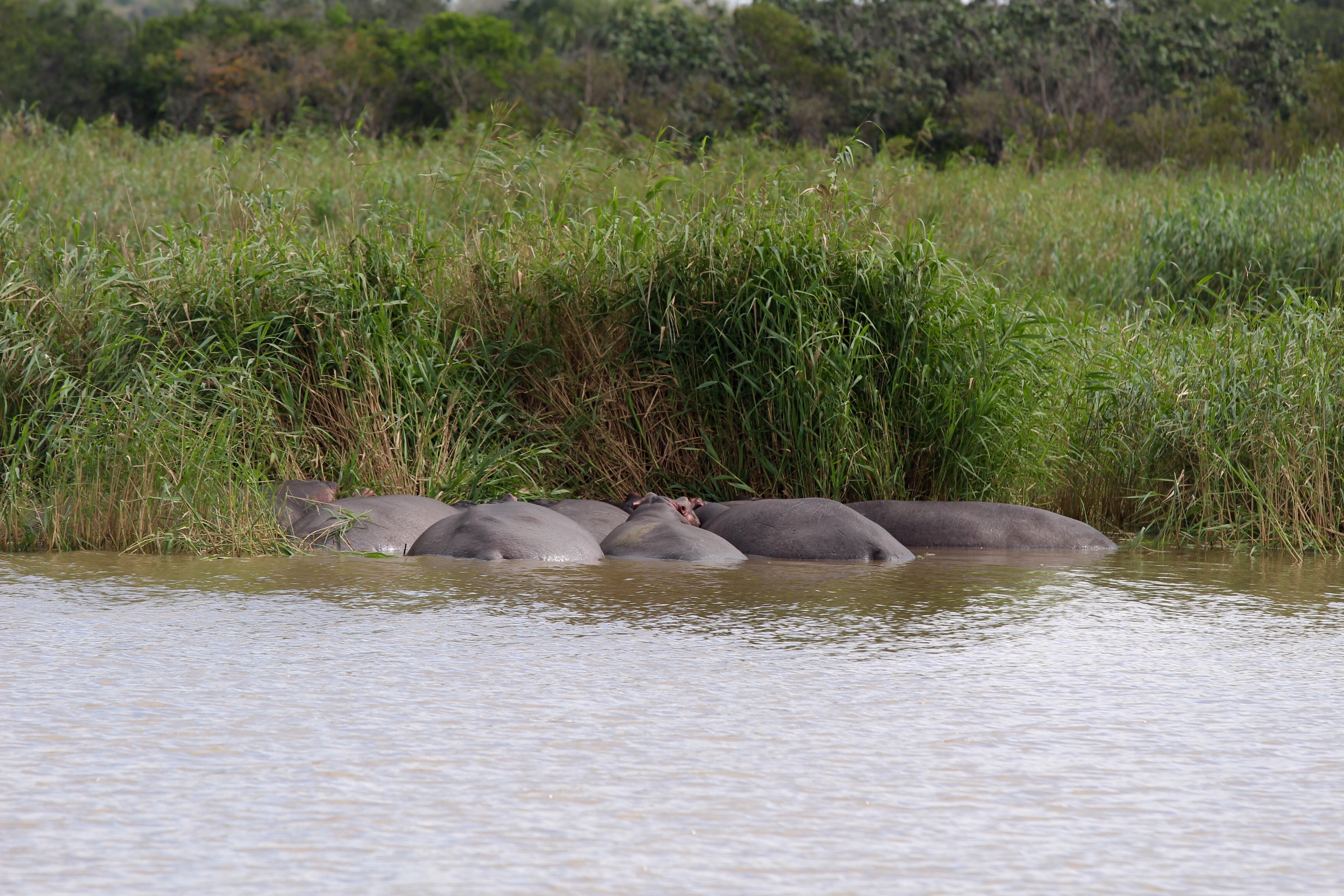
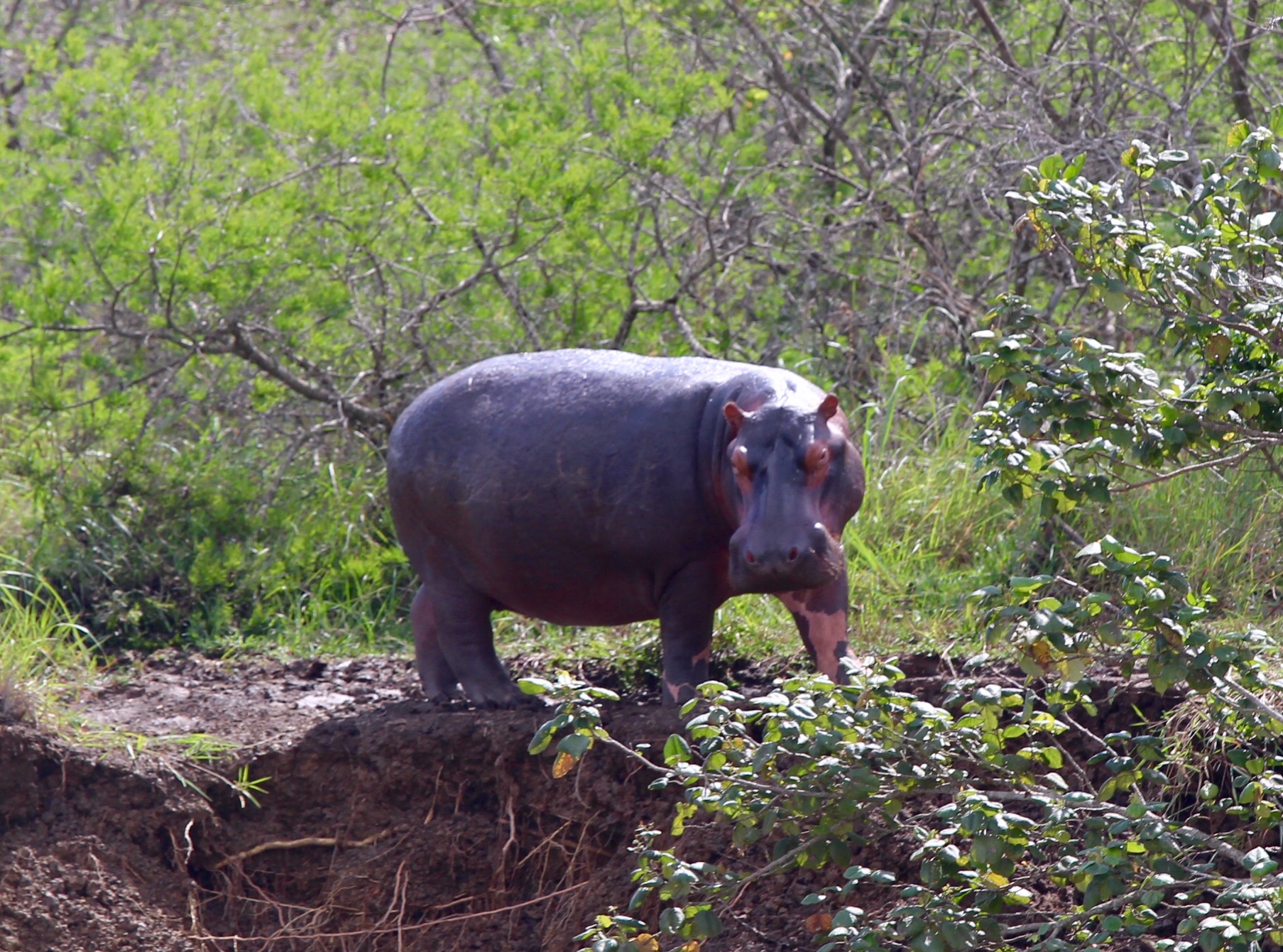
Switching transportation to boatHippoHipposHipposNile crocodile (somewhat smaller than the Australian variety, but still formidable)Yellow Weaver birdI forget what kind of gooseHippos!Hippos (they are all standing in the water; they don’t swim)In all of Africa some 2500+ people are killed by hippos annually; in most cases they walk between the hippo and the water — like walking between Mom and baby this can be deadly.
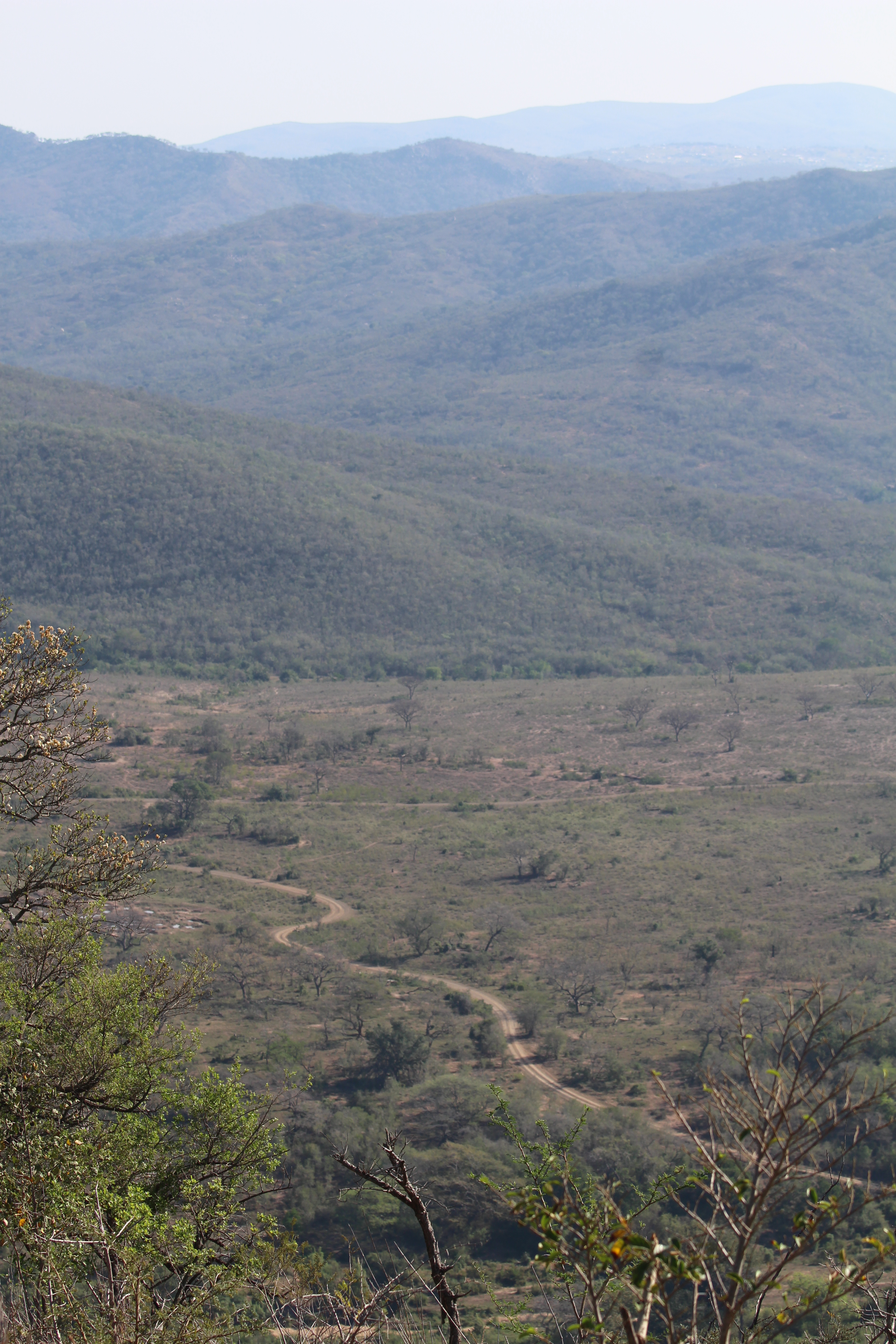
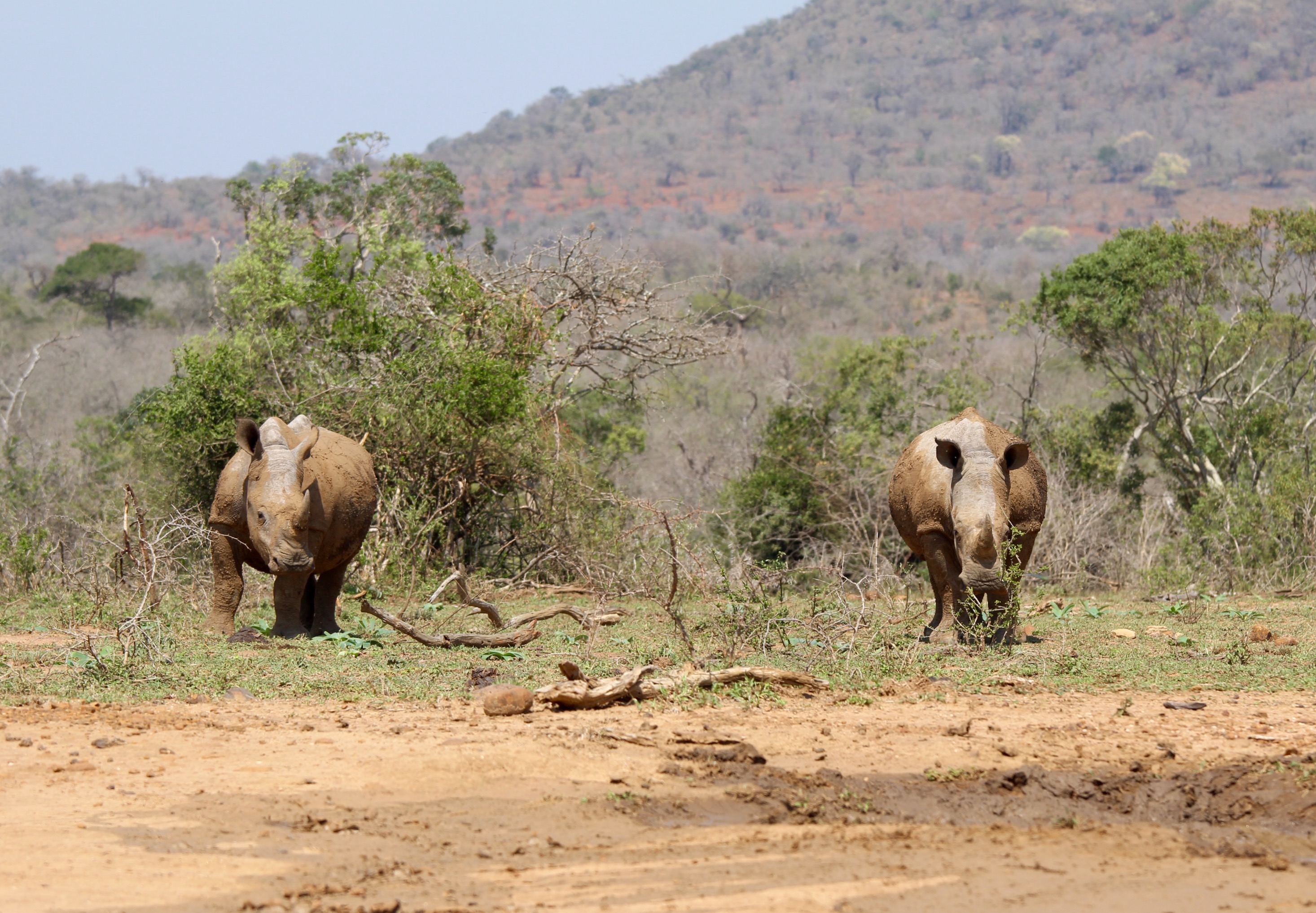
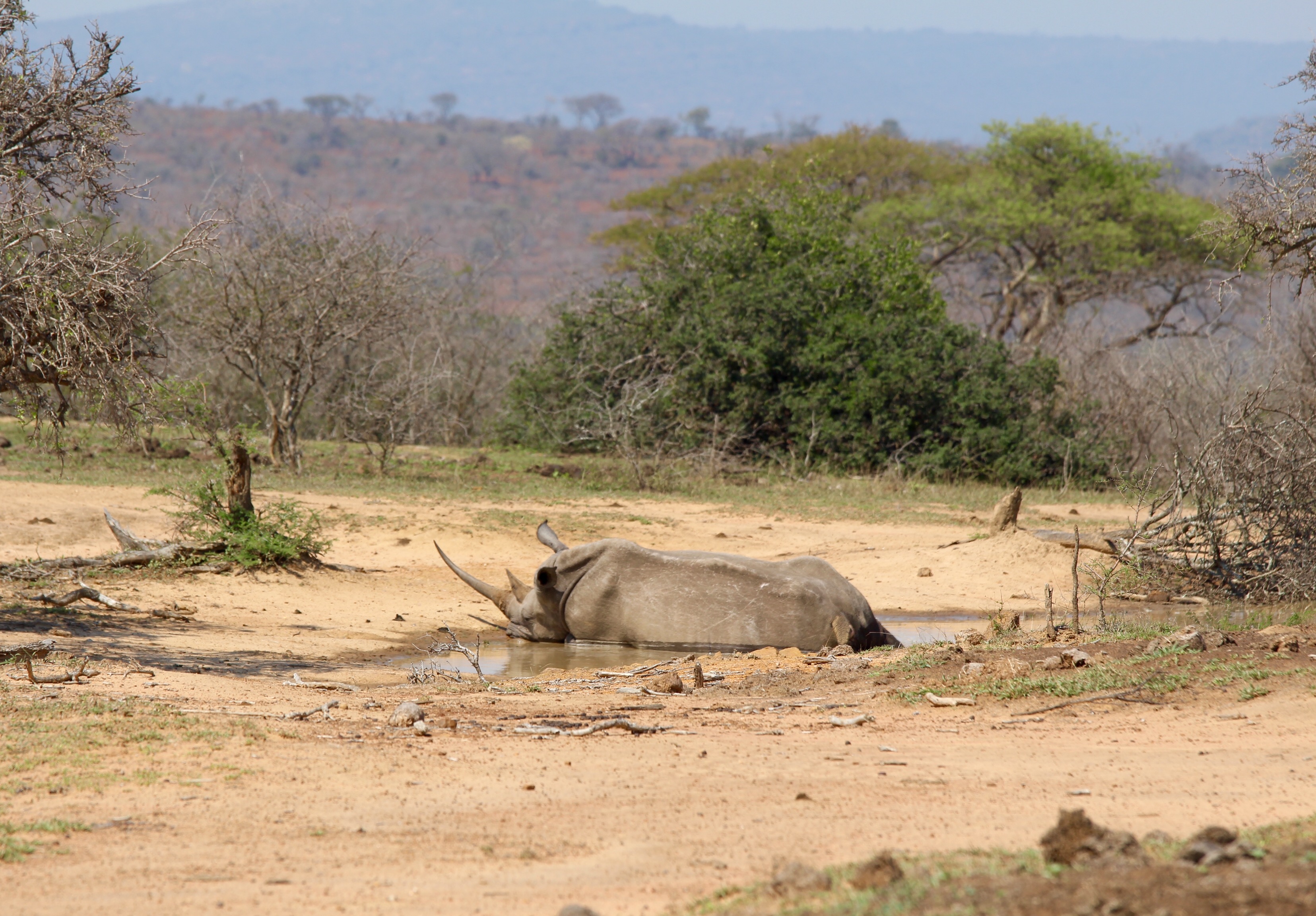
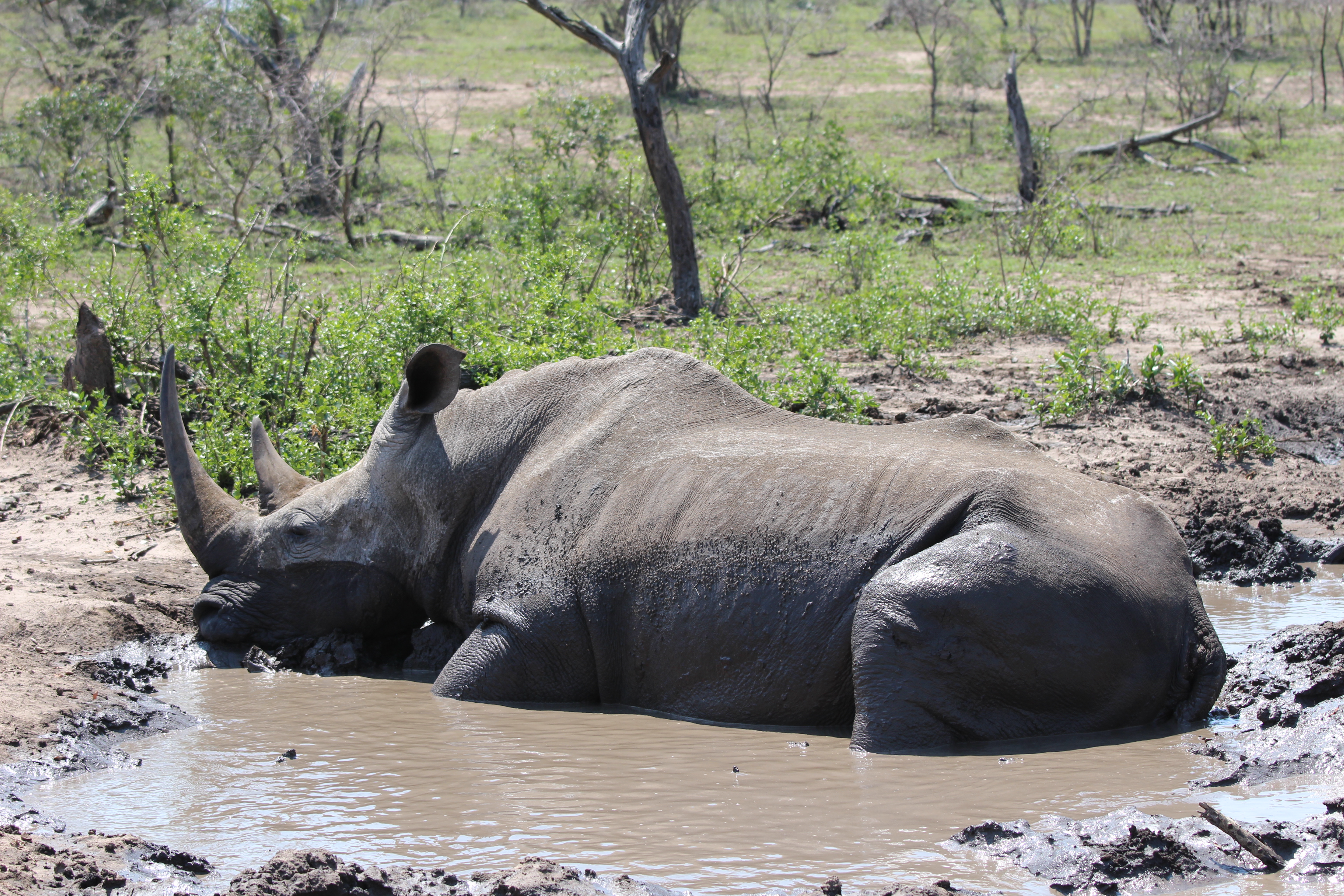
Then on northward to the Hluhluwe Game Reserve. In an approximation of the Zulu pronunciation, you can get away with shu.SHLU.wee. Tough for foreigners to put the spelling and the sound together! This is the oldest game reserve in South Africa, dating back to the late 1800’s. It is about 370 square miles. It has been instrumental in restoring the greatly endangered (once fewer than 100 animals) white rhino.
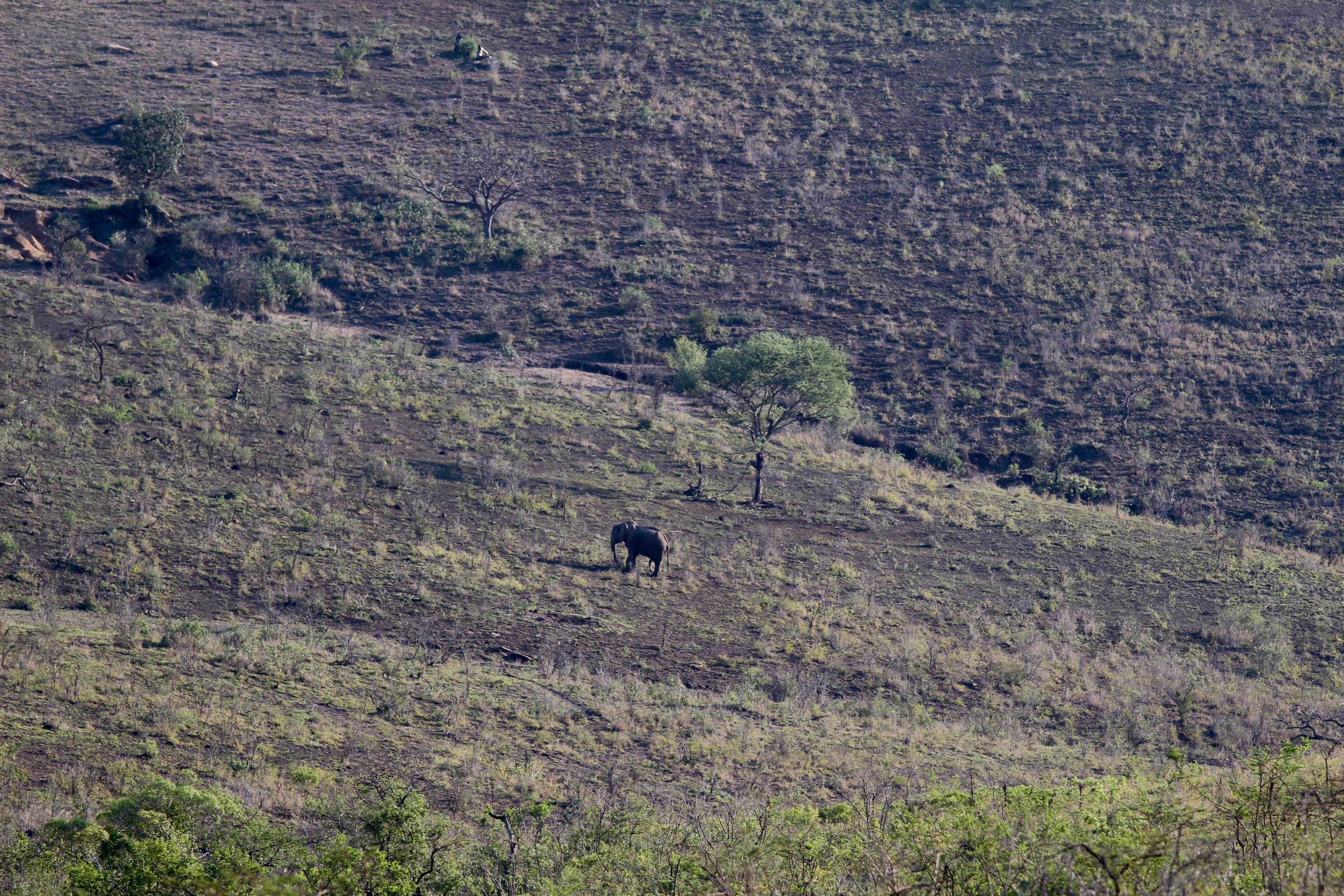
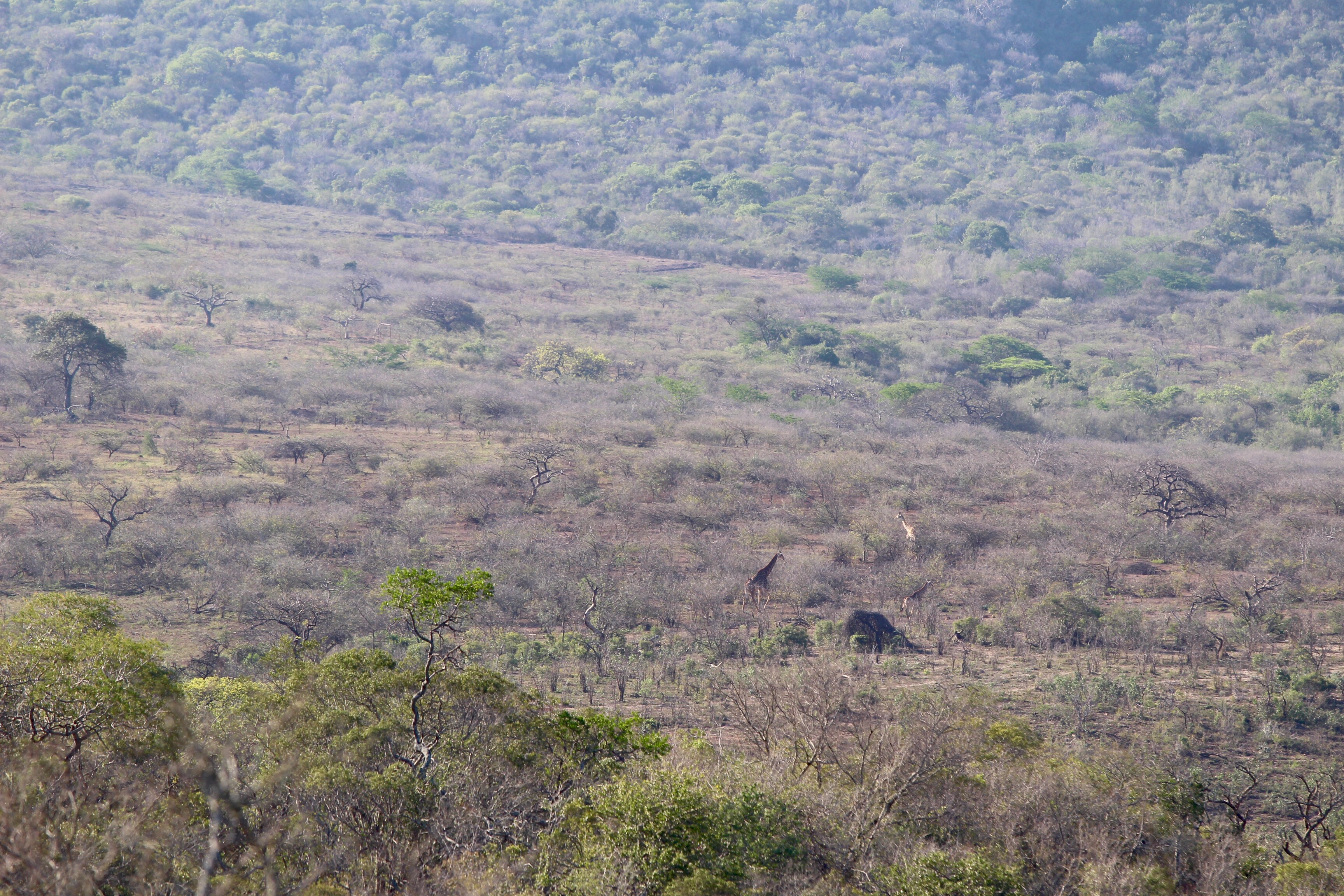
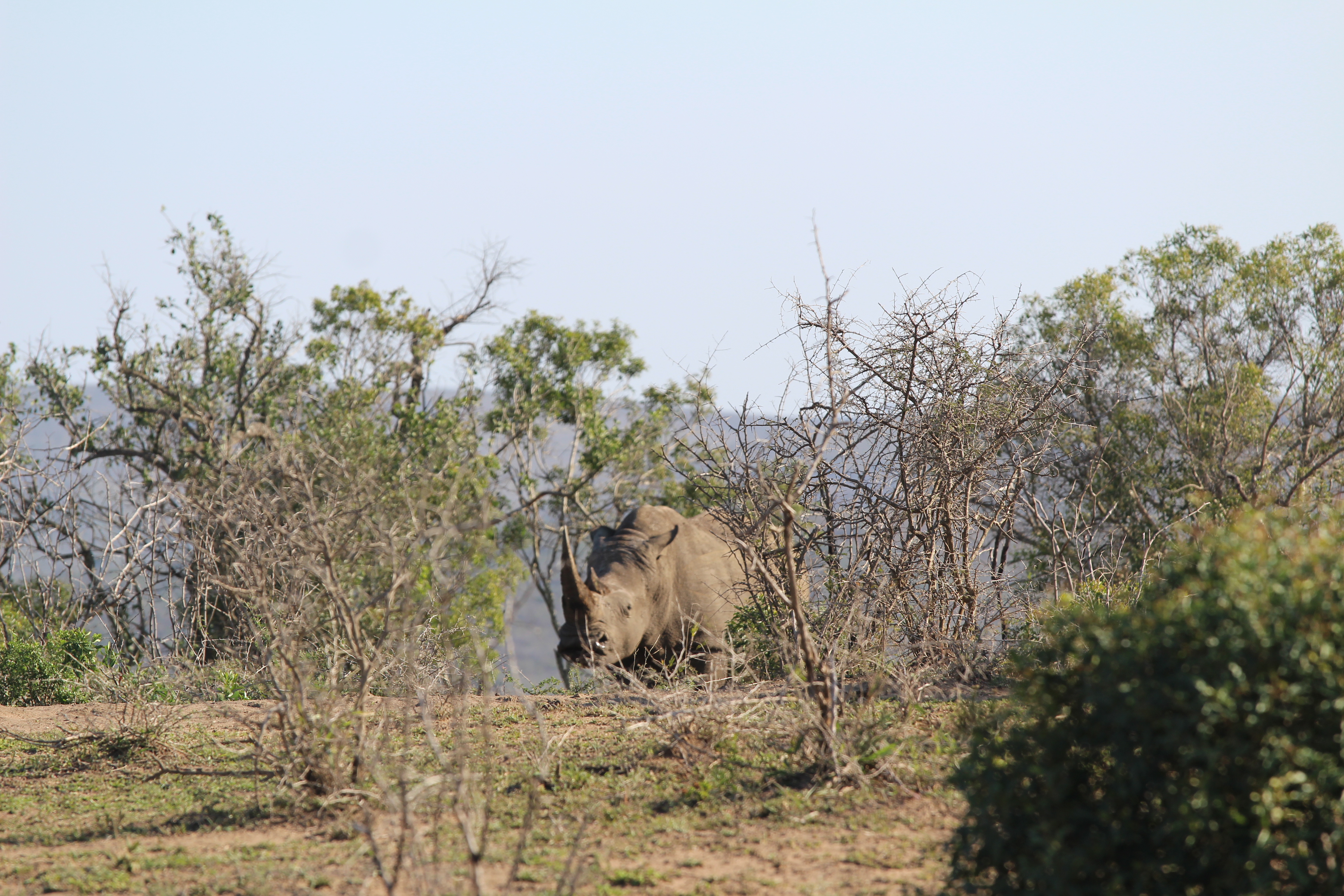
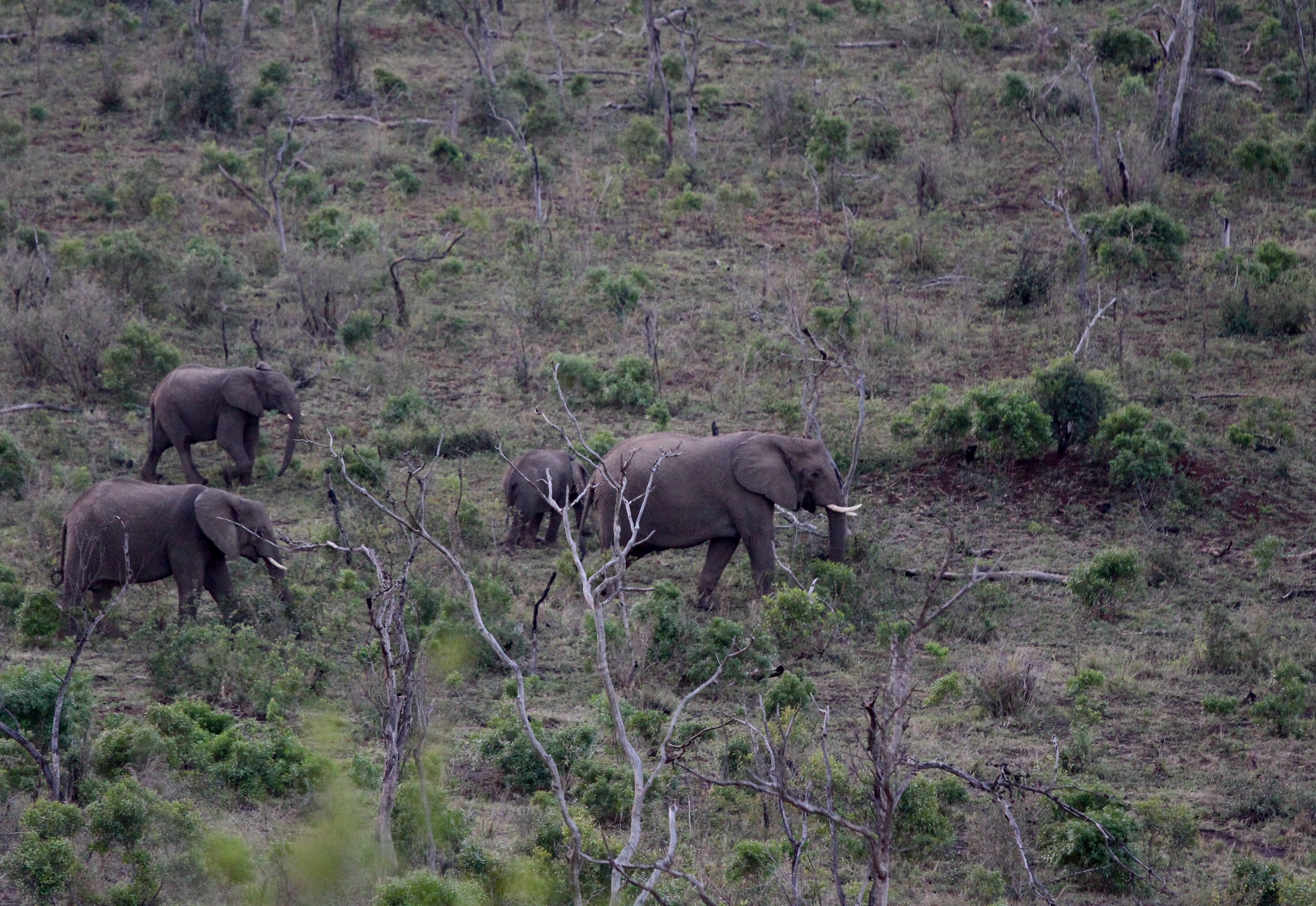
In SA you cannot drive off the road to approach animals. In Zimbabwe and Kenya, when an animal is spotted it is often surrounded by Land Rovers. Here you may have to watch from a distance, and thus see scenes like this…
Elephant in the distanceGiraffes in the distance
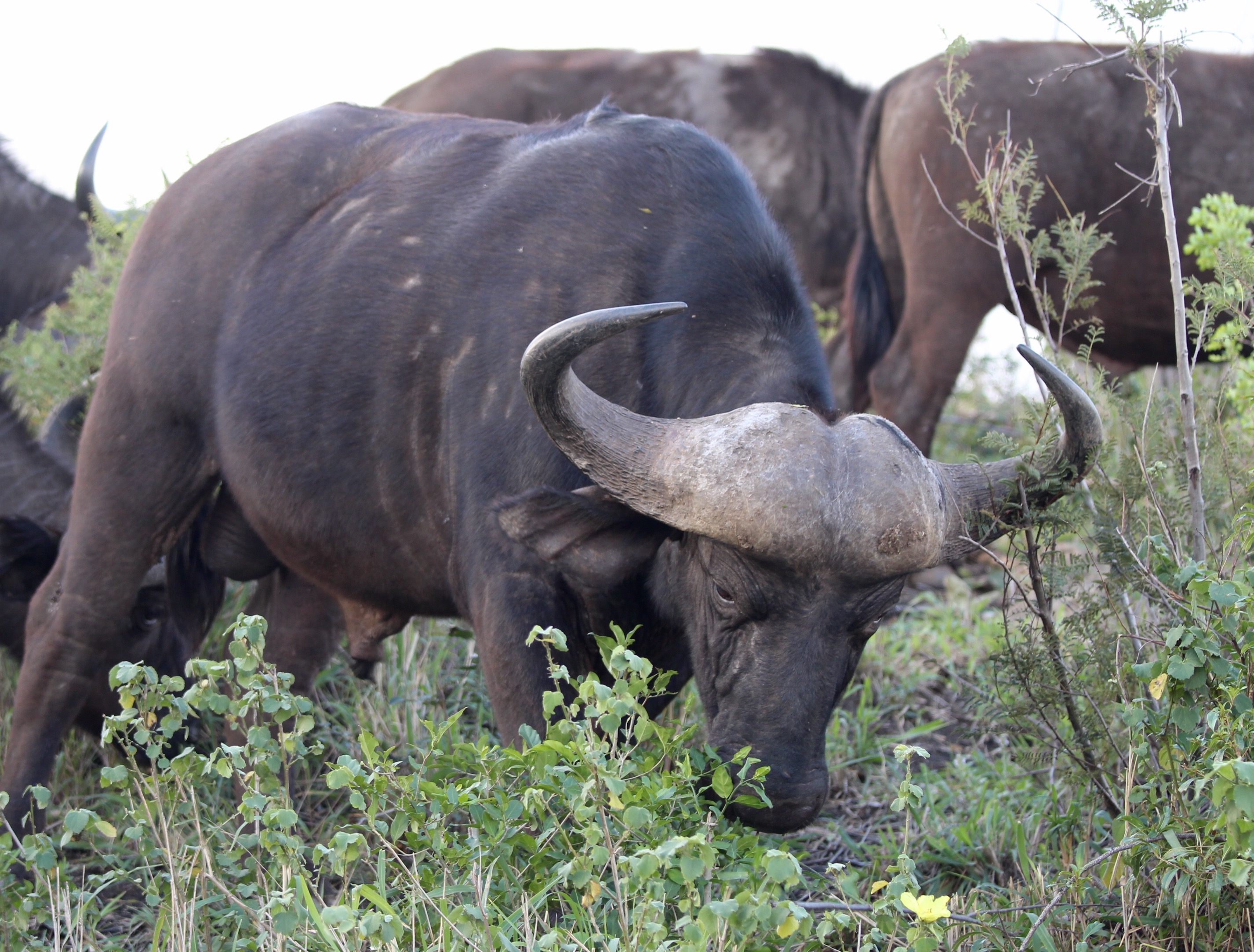
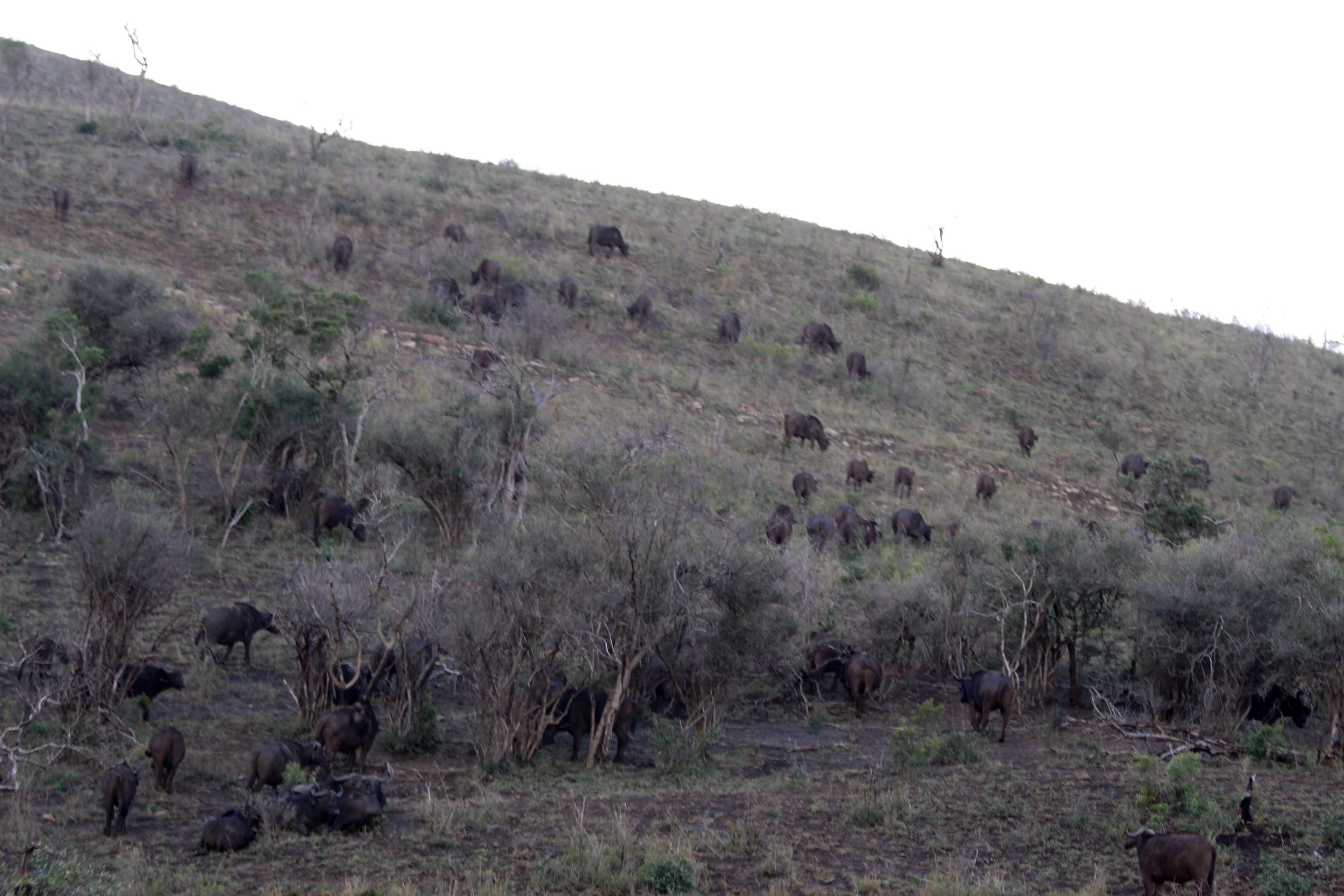
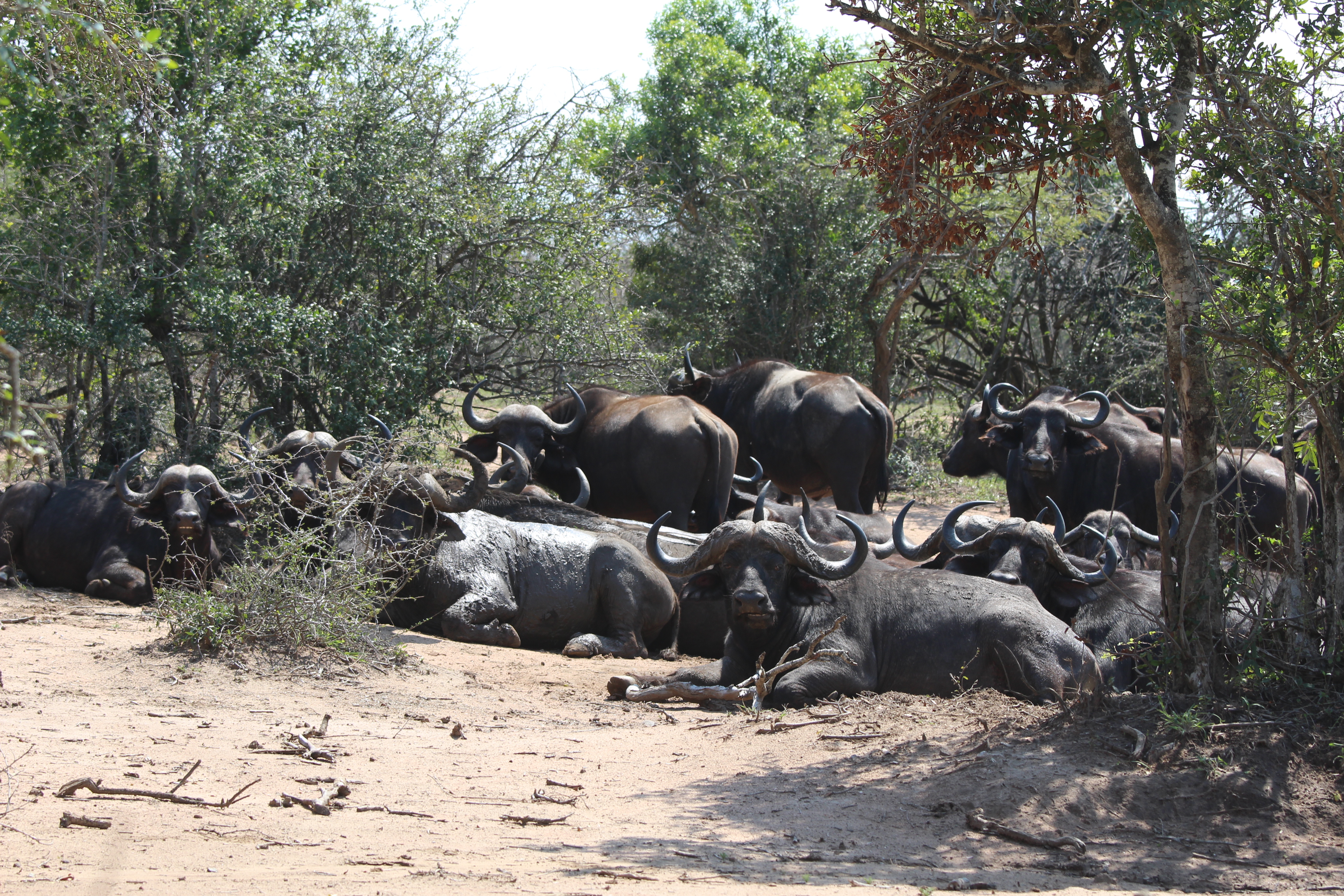
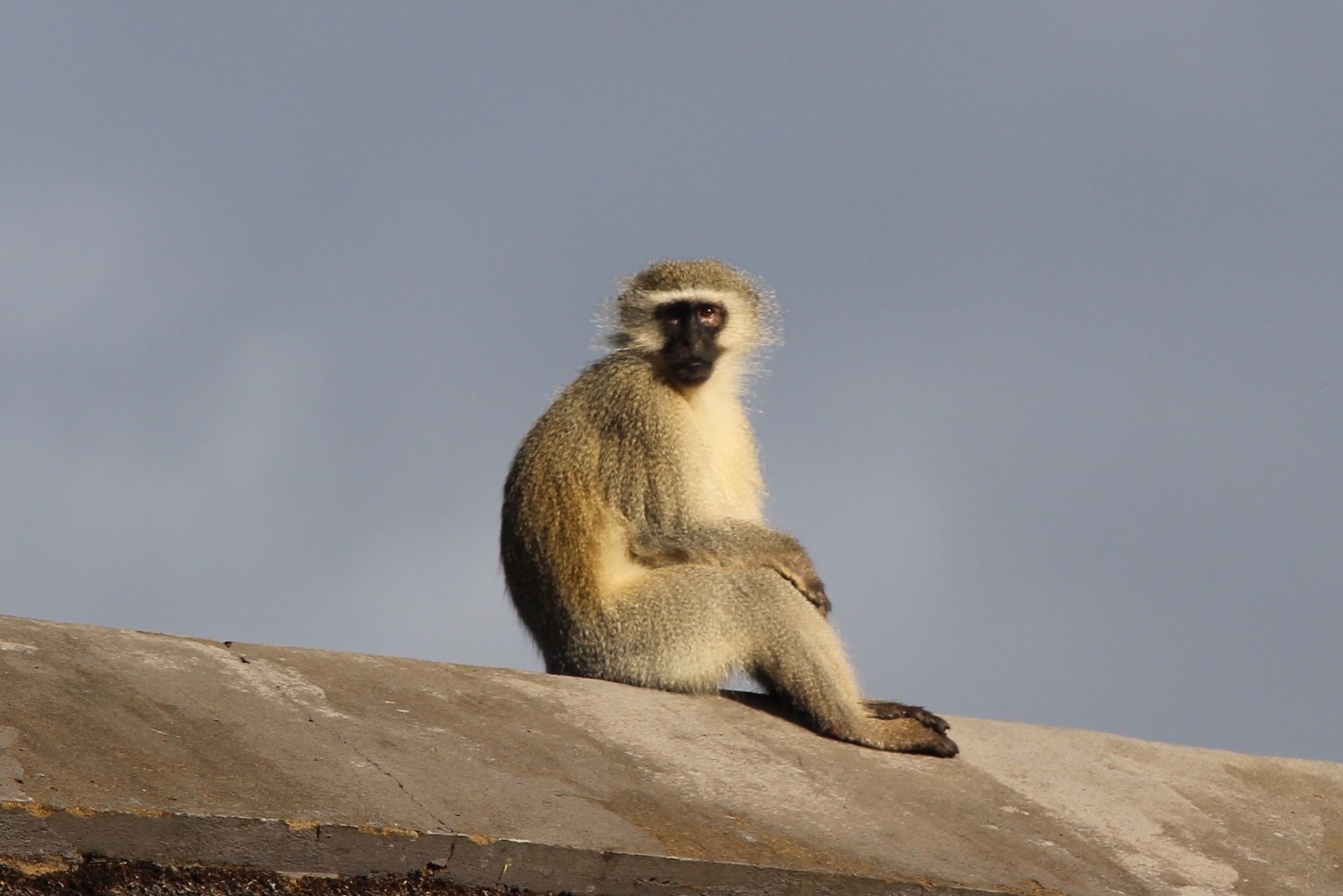
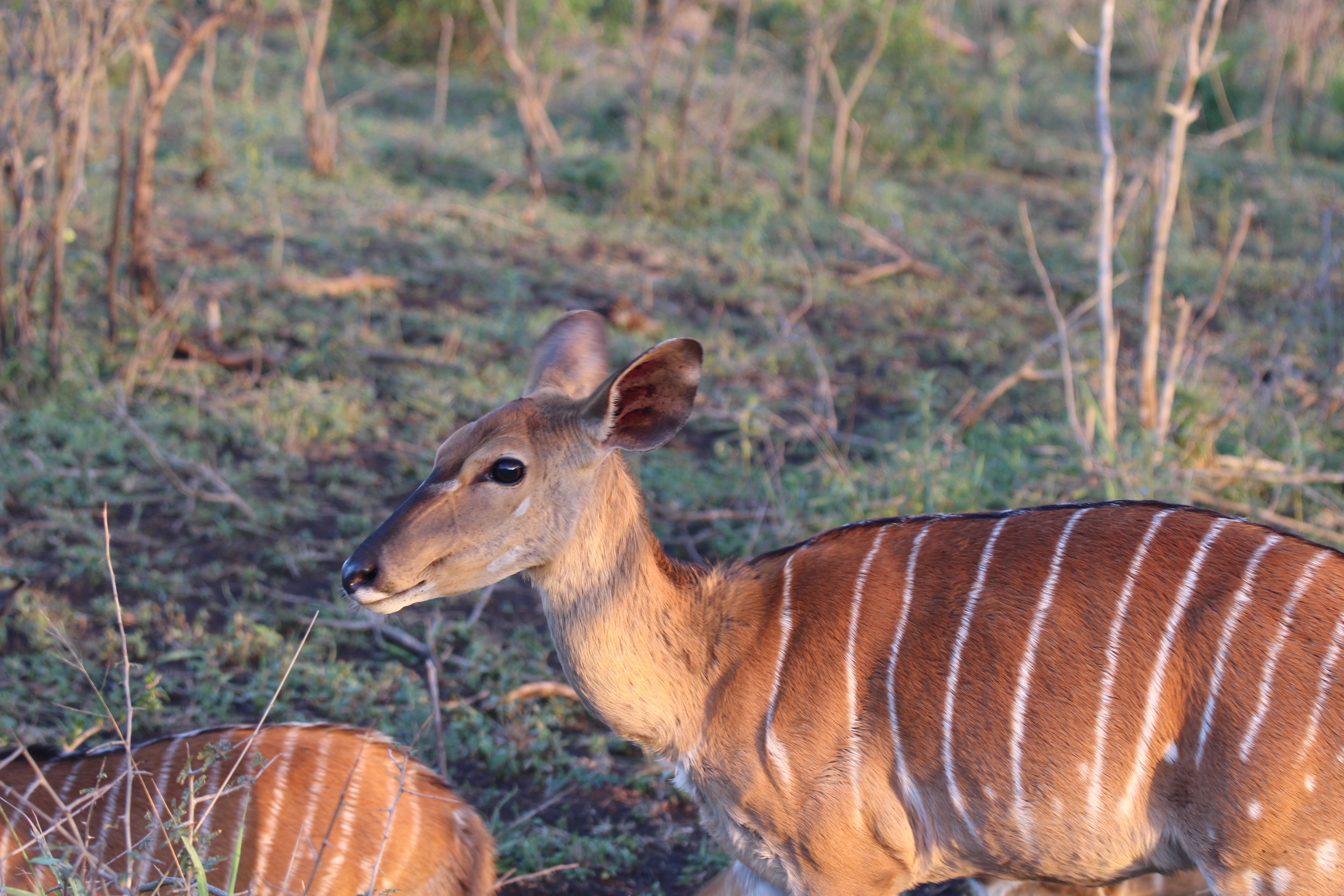
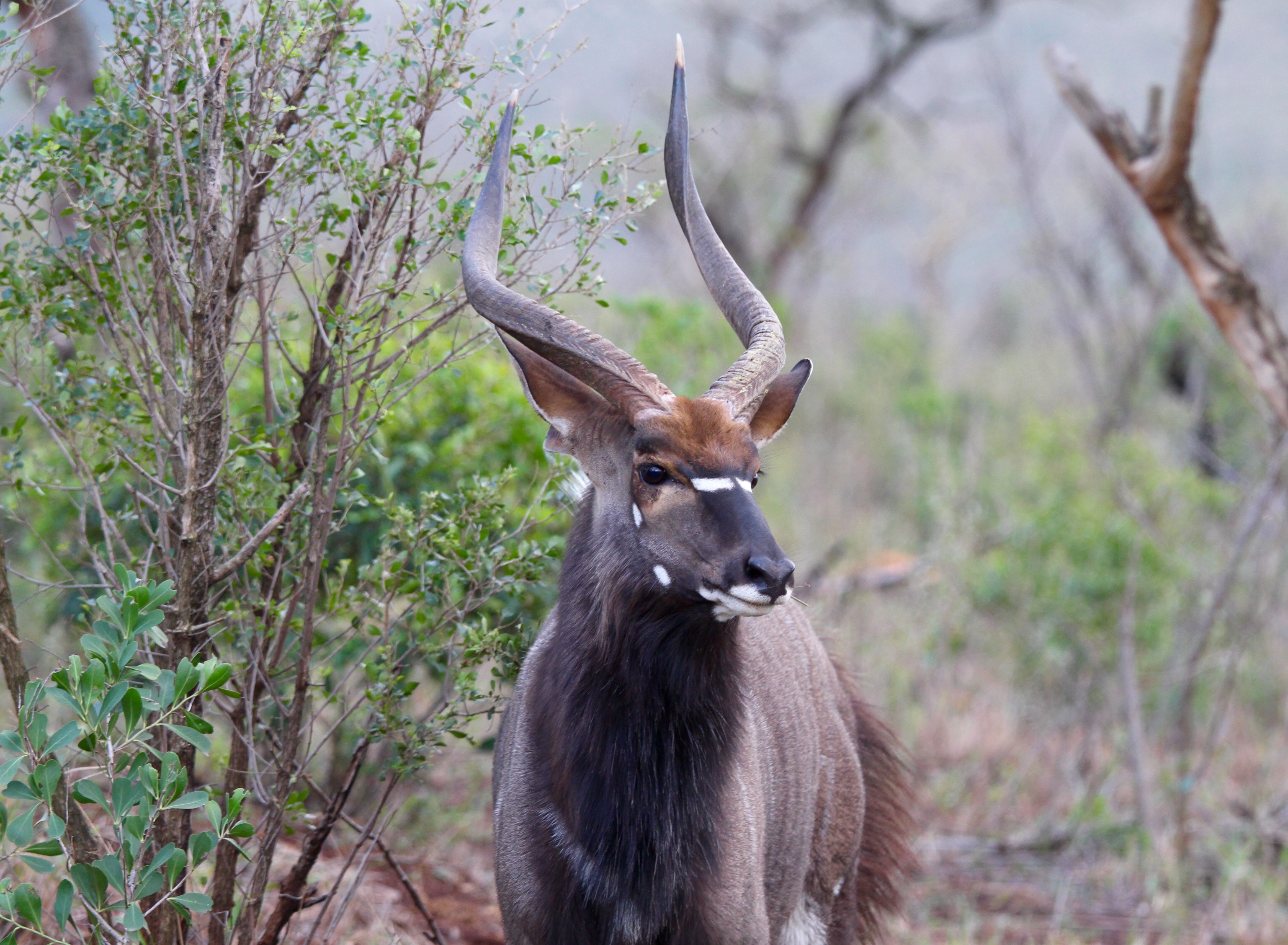
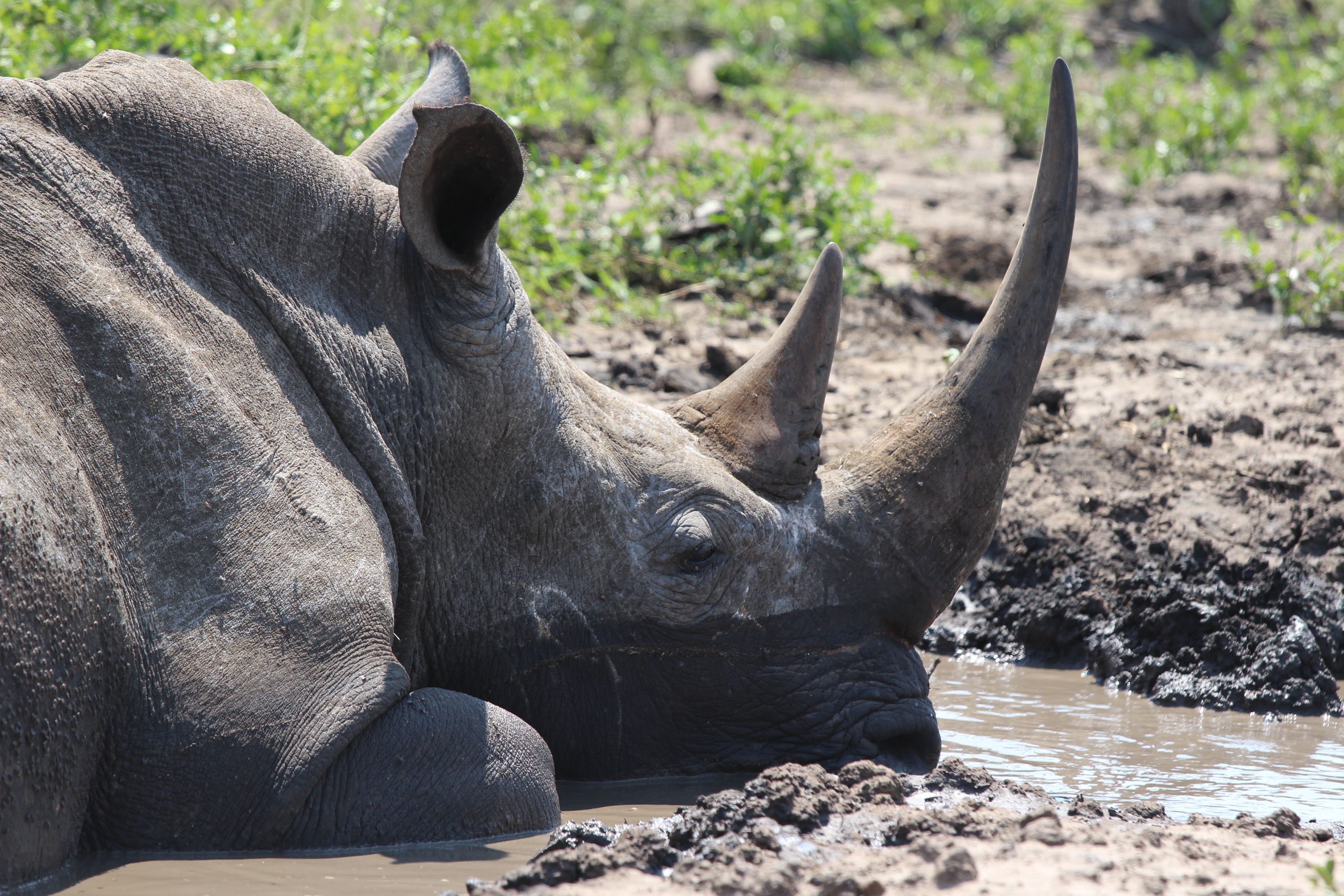
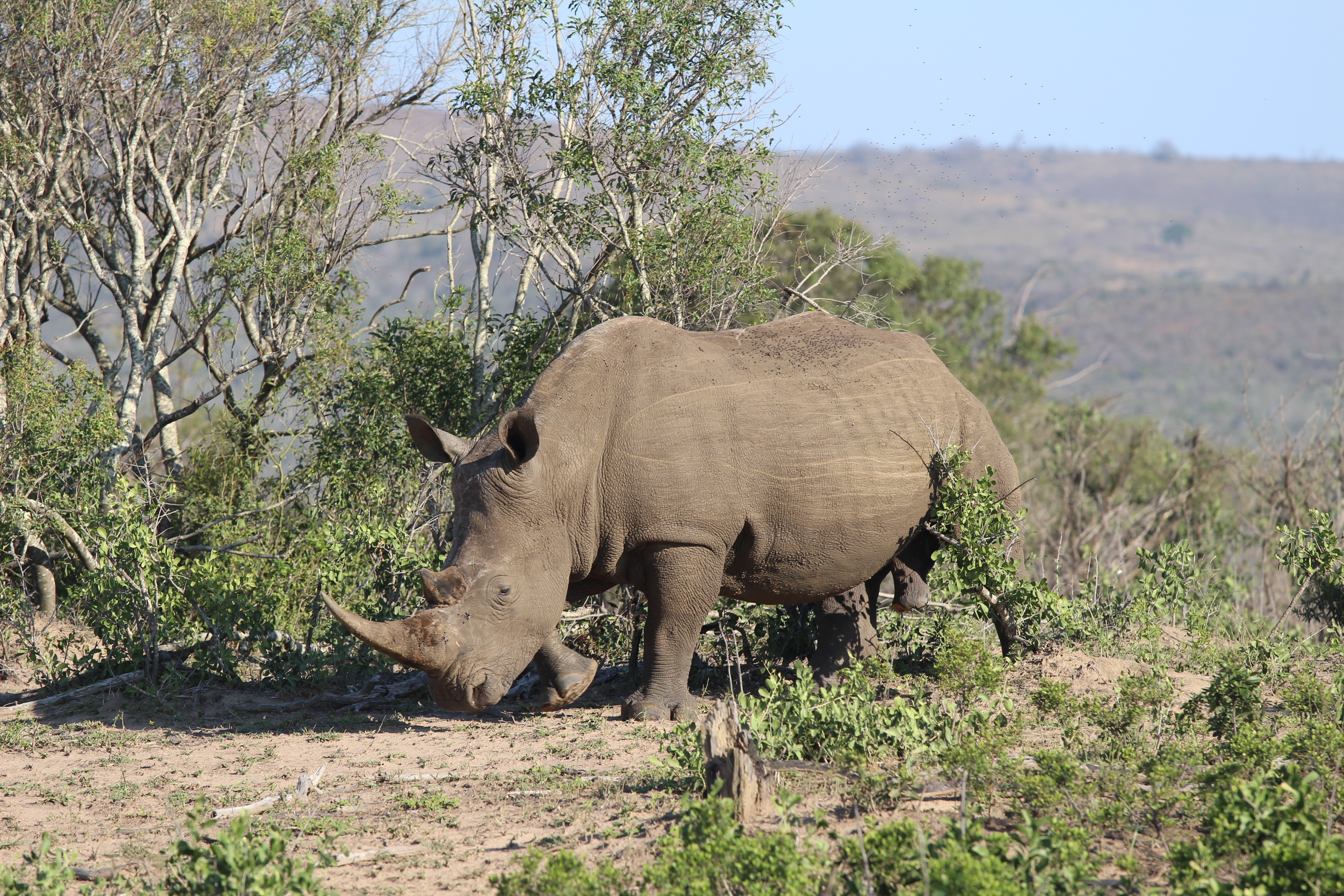
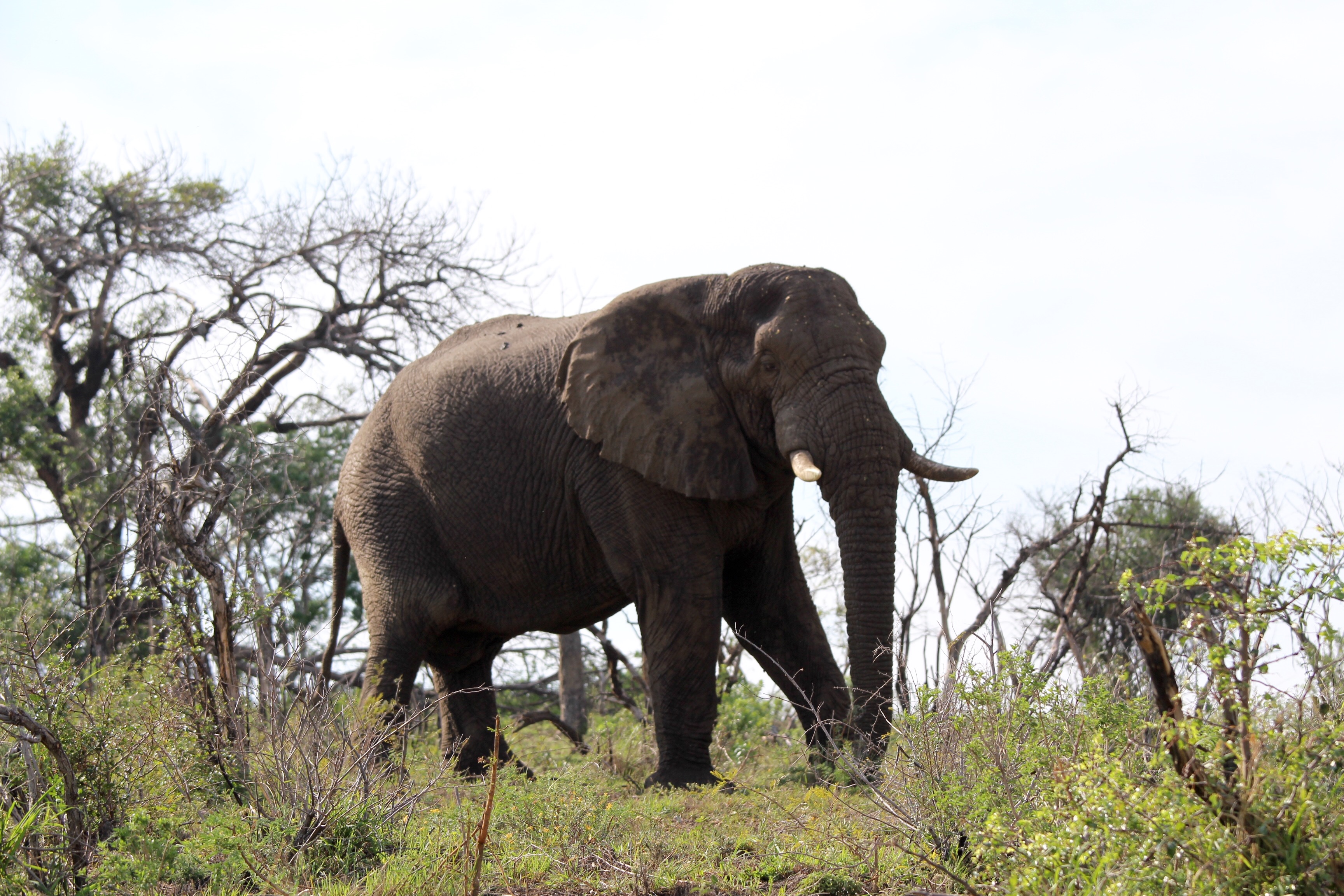
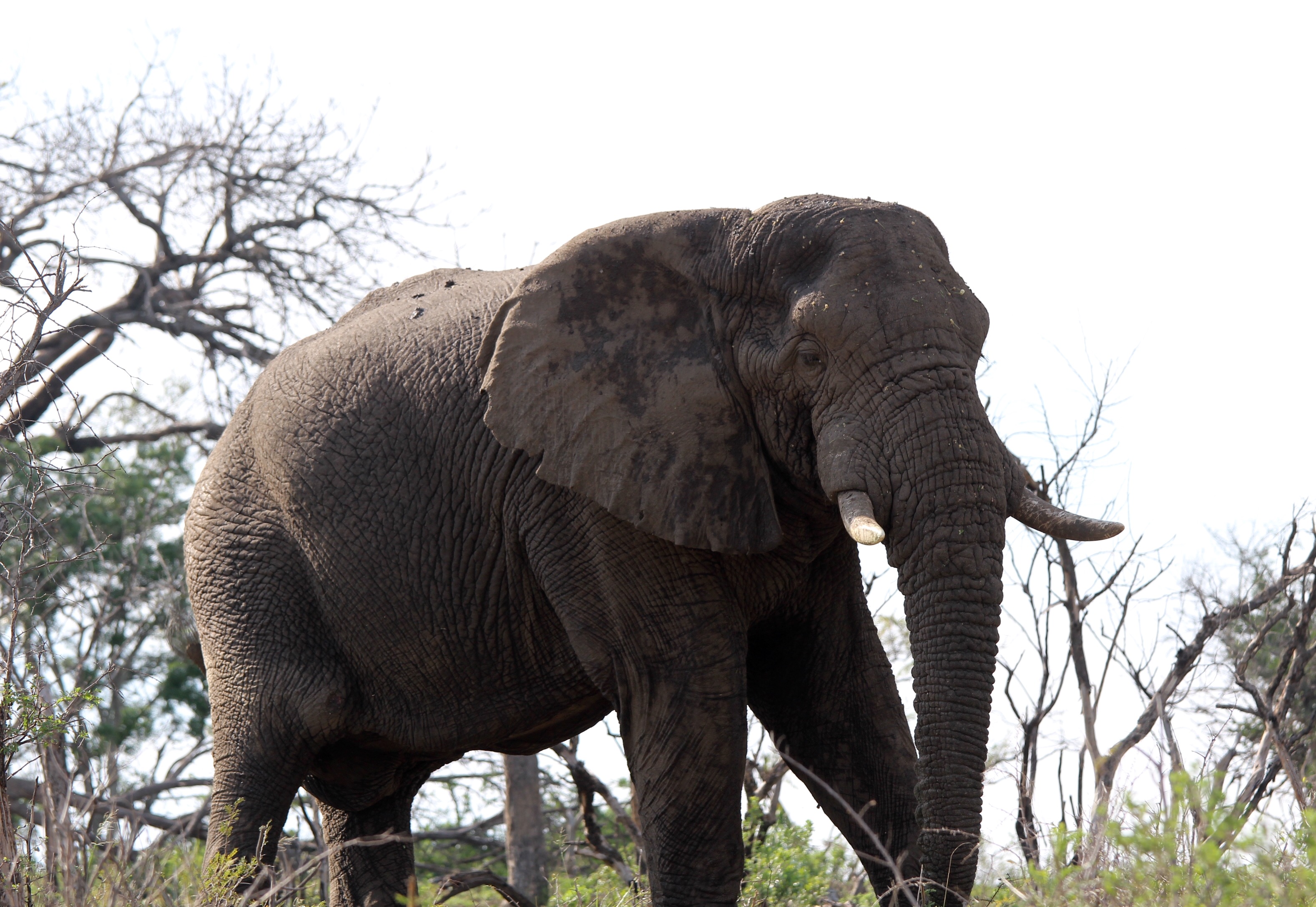
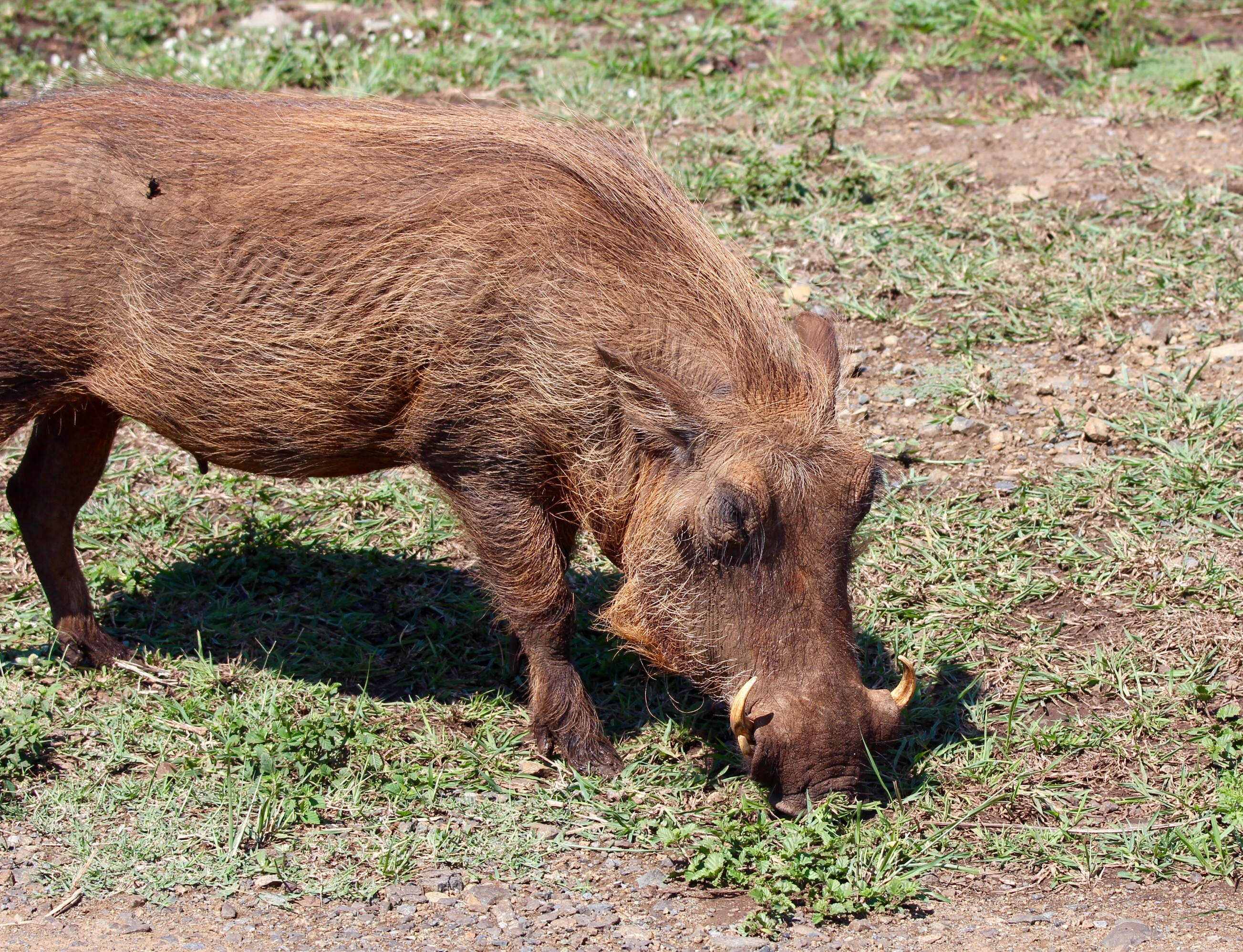
But we were pretty lucky in our “hunting” over two days, so here are some of the trophies…
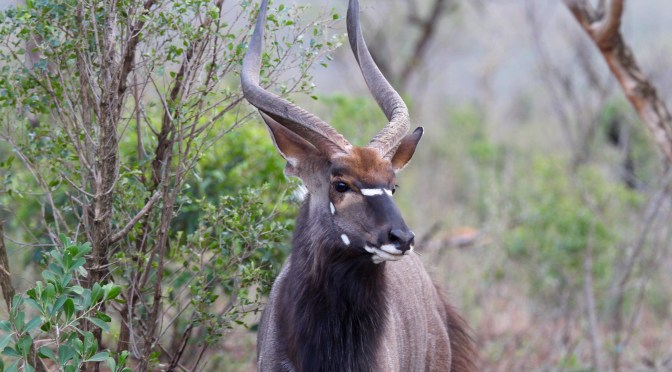
Cape buffaloThe Cape buffalo is considered one of the most dangerous animals, because it is unpredictable; especially lone males can be very aggressive.Buffalo herdBuff herdOn the roof of the inn where we stayedNyala (female)Nyala (male)
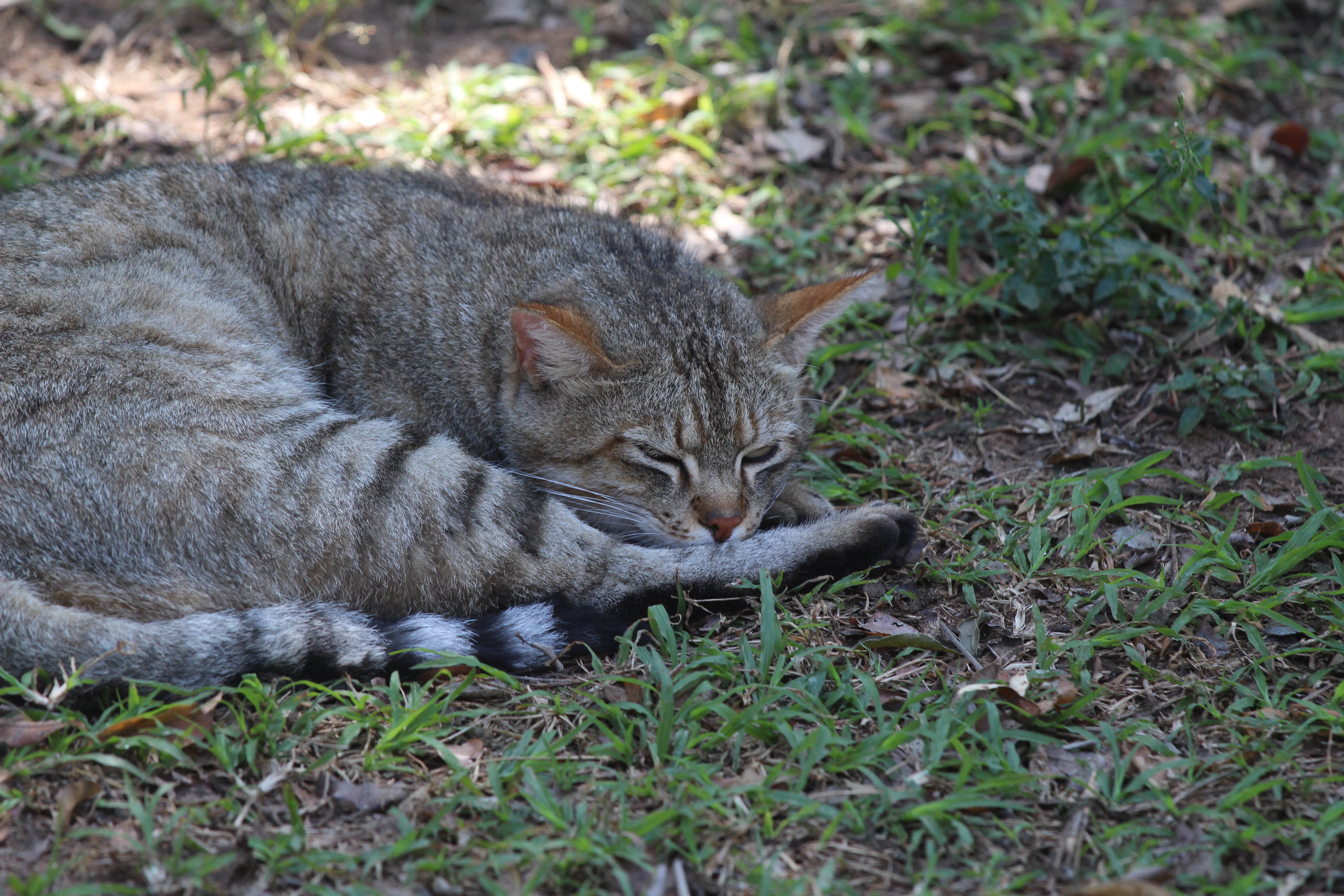
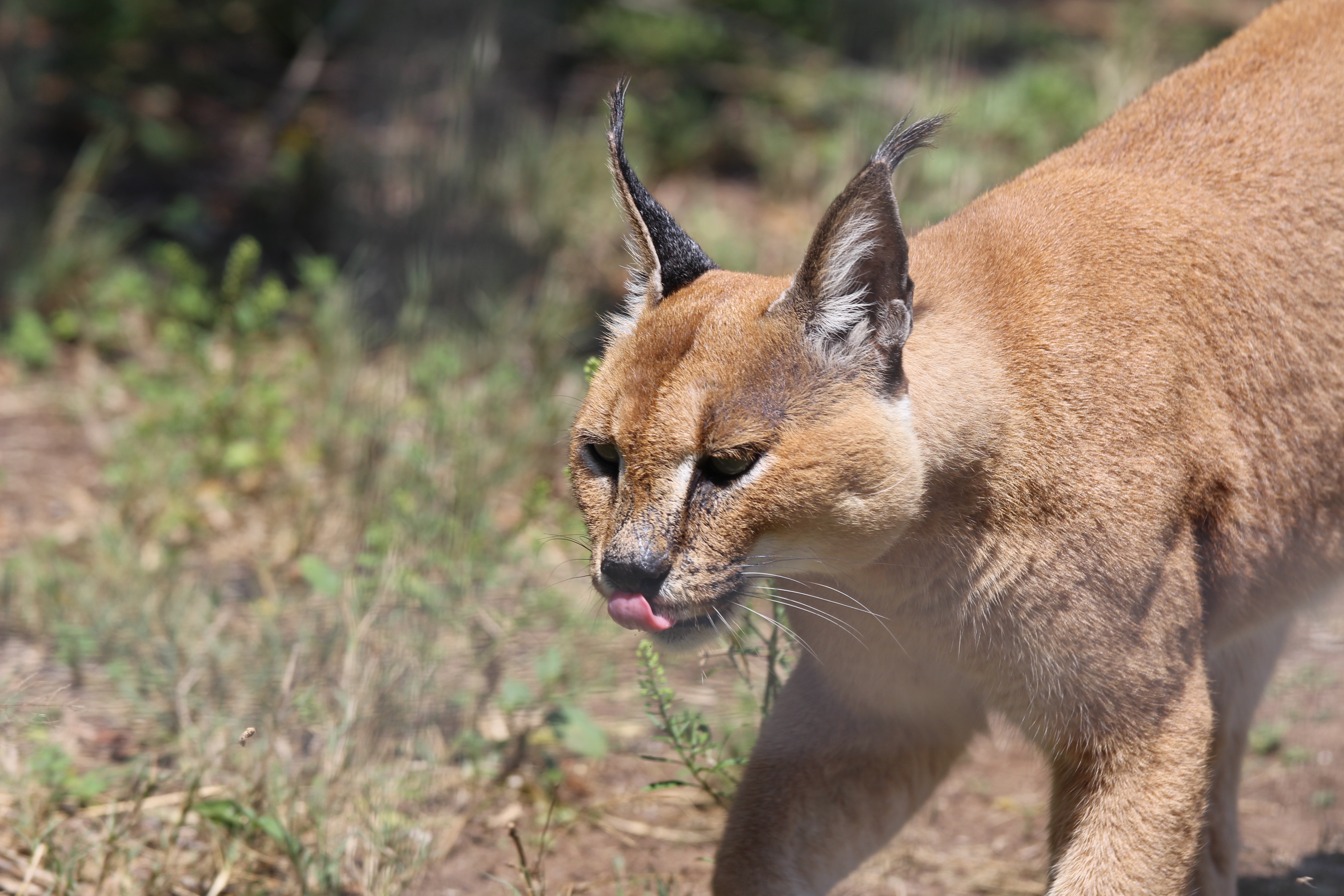
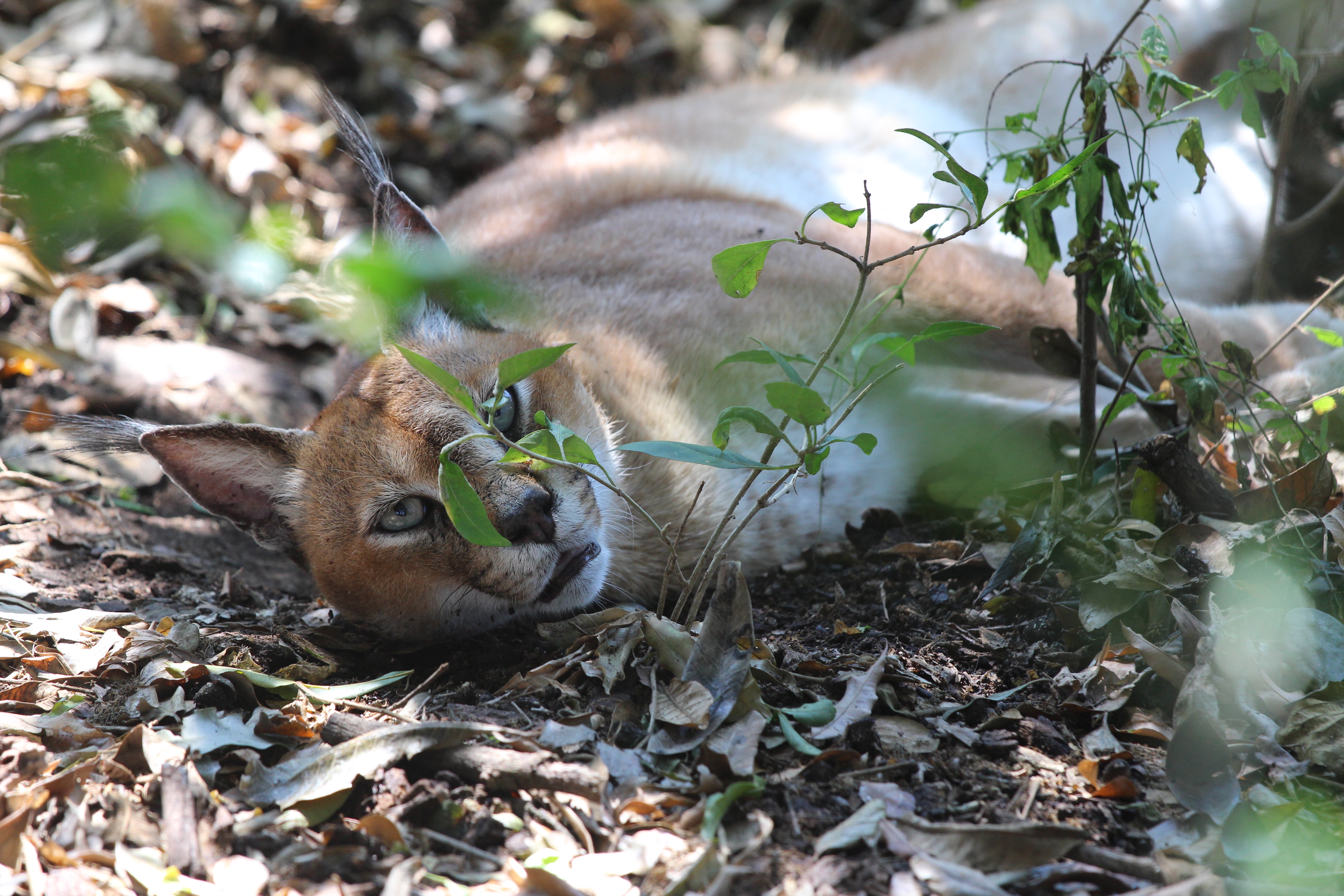
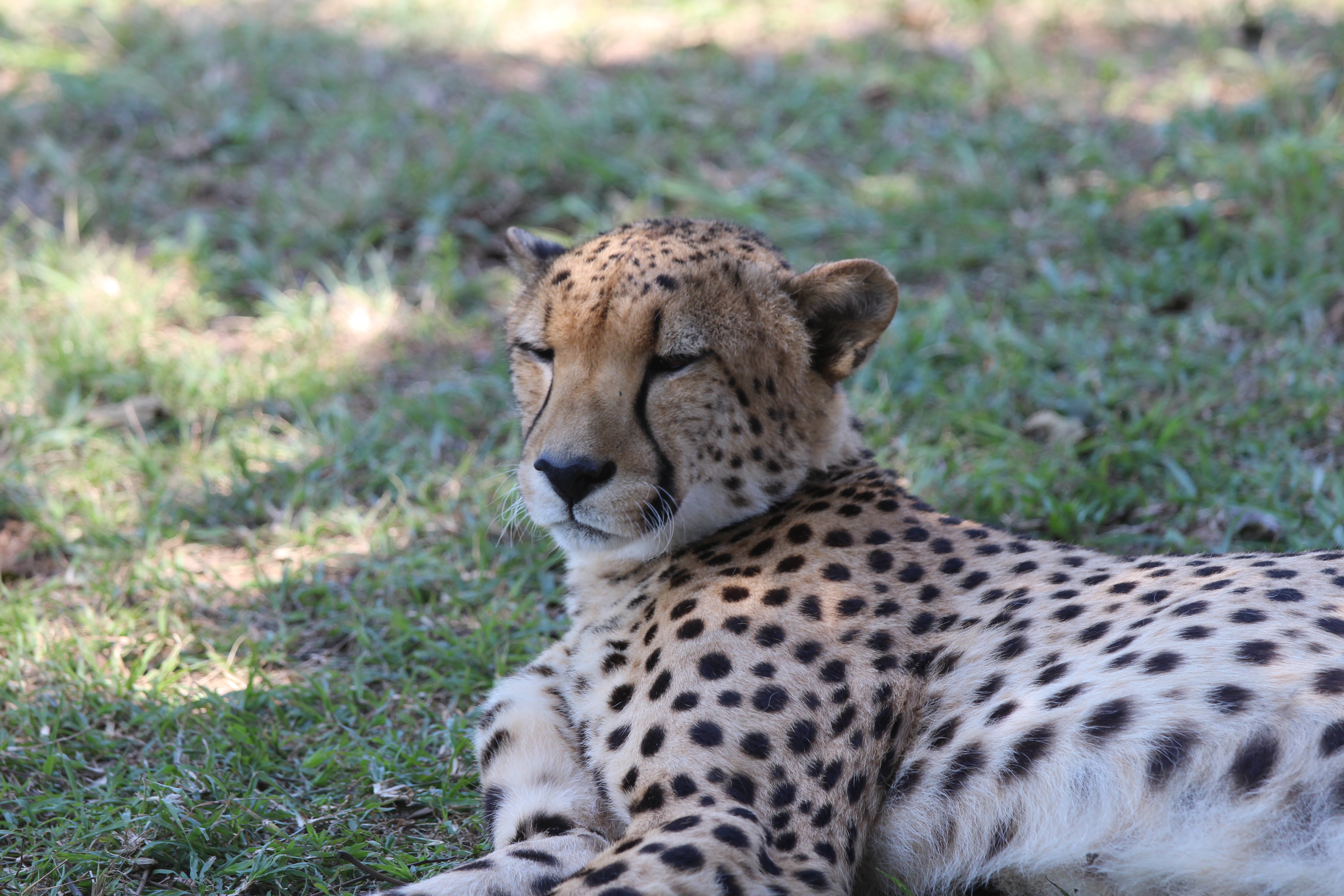
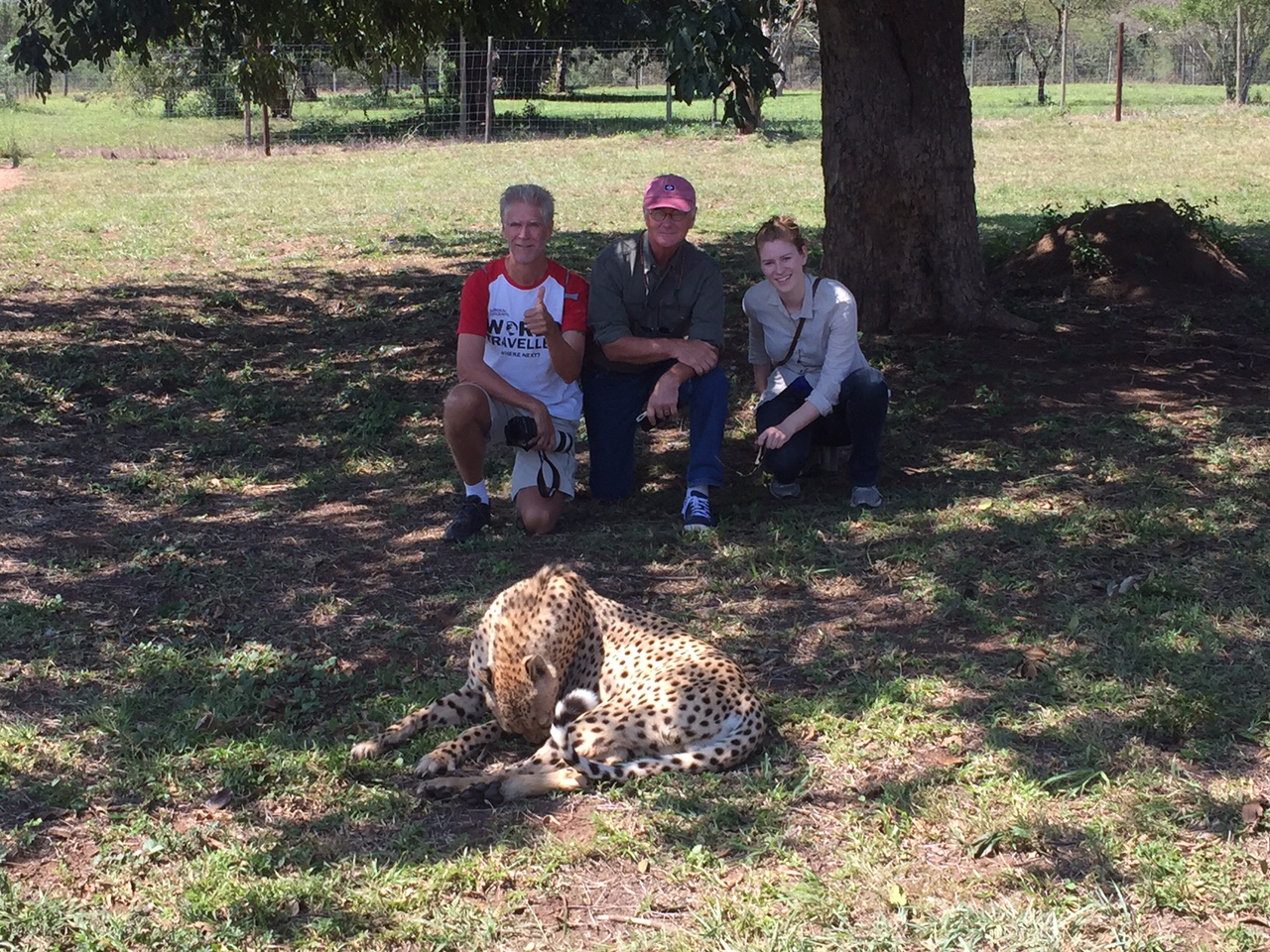
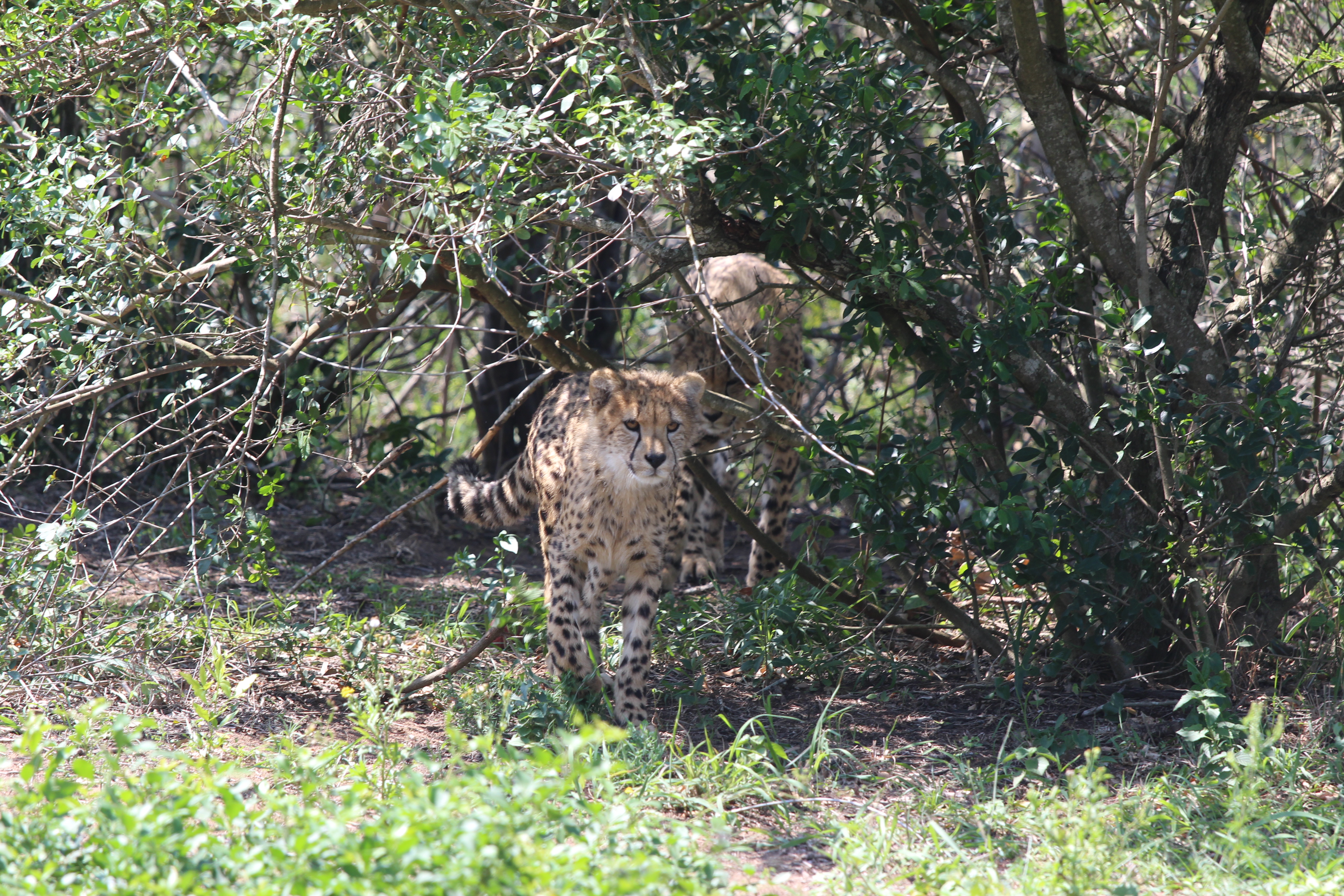
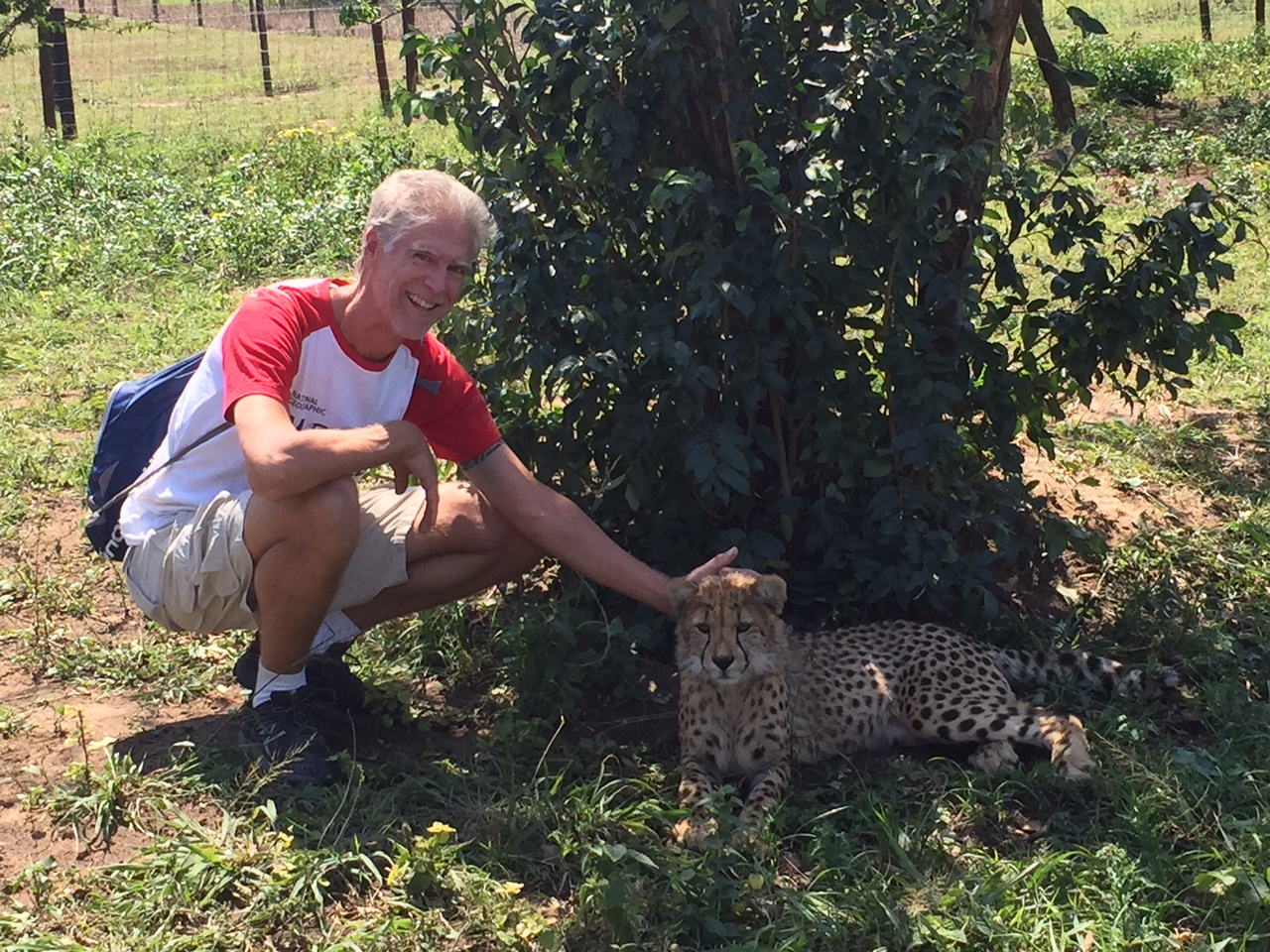
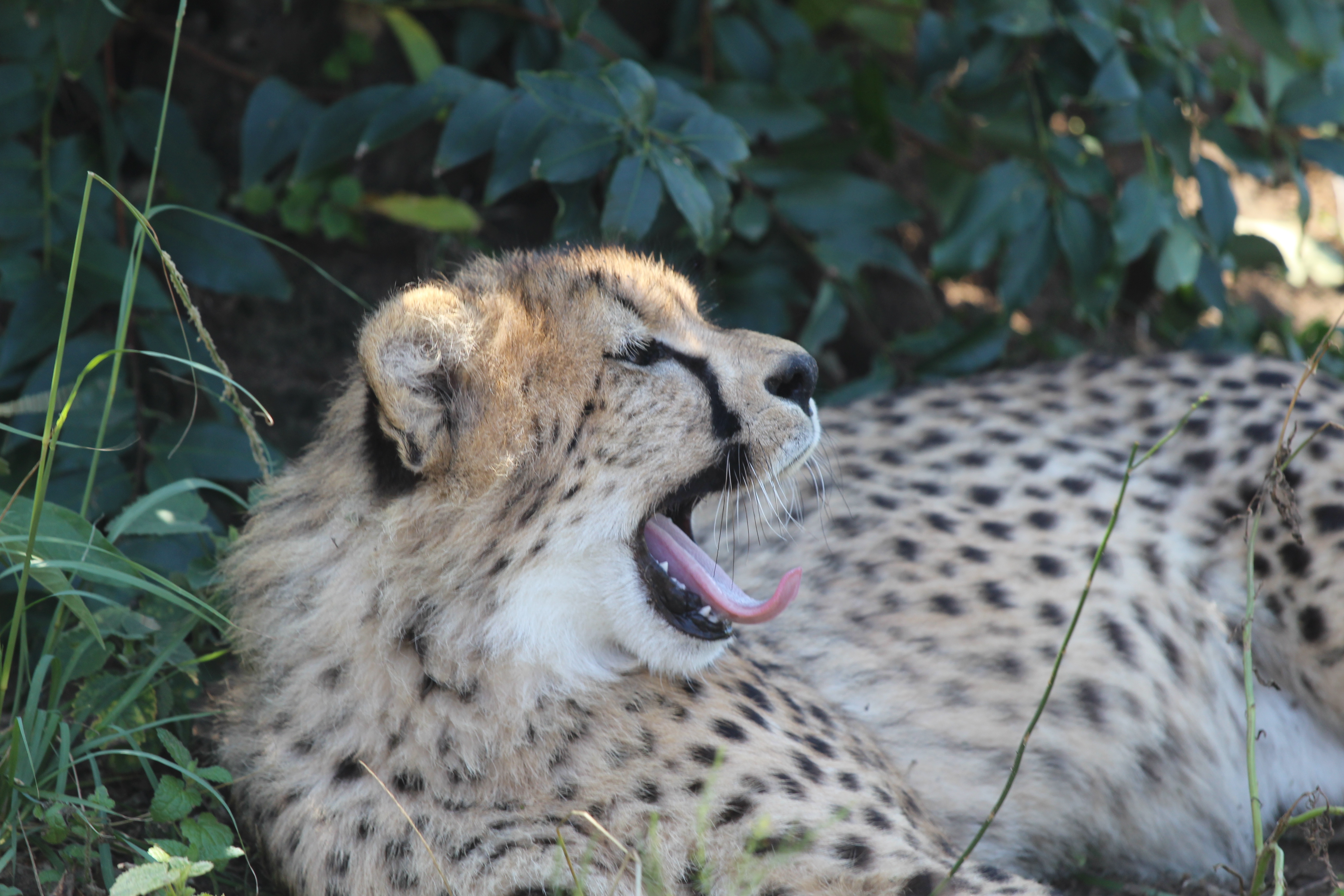
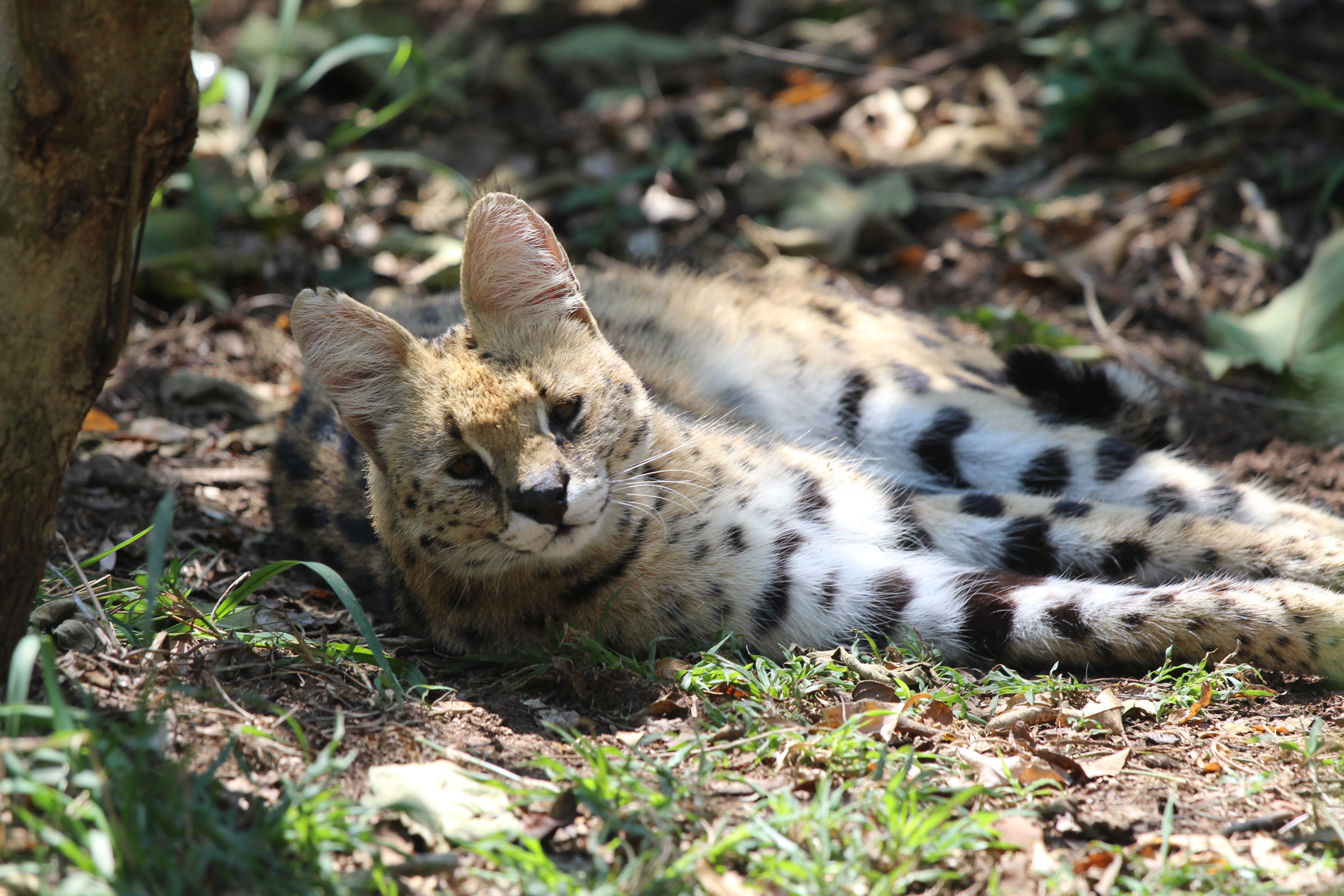
We visited a place where four species of endangered cats are bred and reintroduced to the wild. In particular the cheetah, which is between a rock and a hard place. They need the game reserves to have protected habitat, but unlike many cats (such as the leopard), they don’t climb trees and thus they cannot escape the reserve. As a result they become inbred with the limited gene pool within the borders. So controlled breeding is important for the survival of this amazing creature.
African wild cat. If it looks a lot like a house cat, they have common ancestors and lots of cross breeding. Here the keep the breed pure, notably with longer legs than our house cats.Caracal. The hairs atop the ears sense the wind direction, and when snoozing they detect the vibration of an approaching threat. They can also leap 3-4 meters vertically from a standstill!CaracalCheetahCheetah and friendsCheetah cubsCheetah cubCheetah cubServal
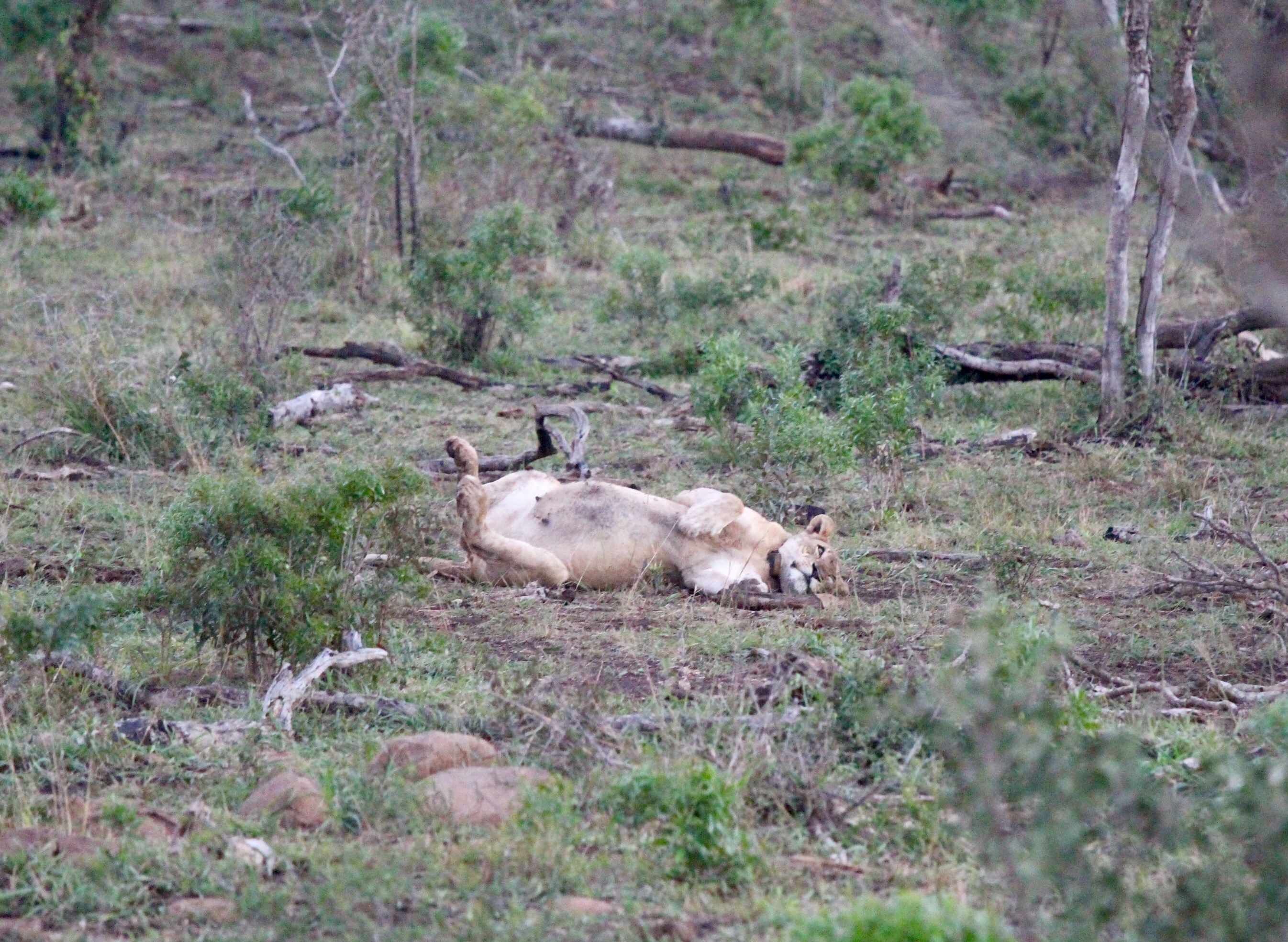
Back in the wild, we saw just one cat…a lion…
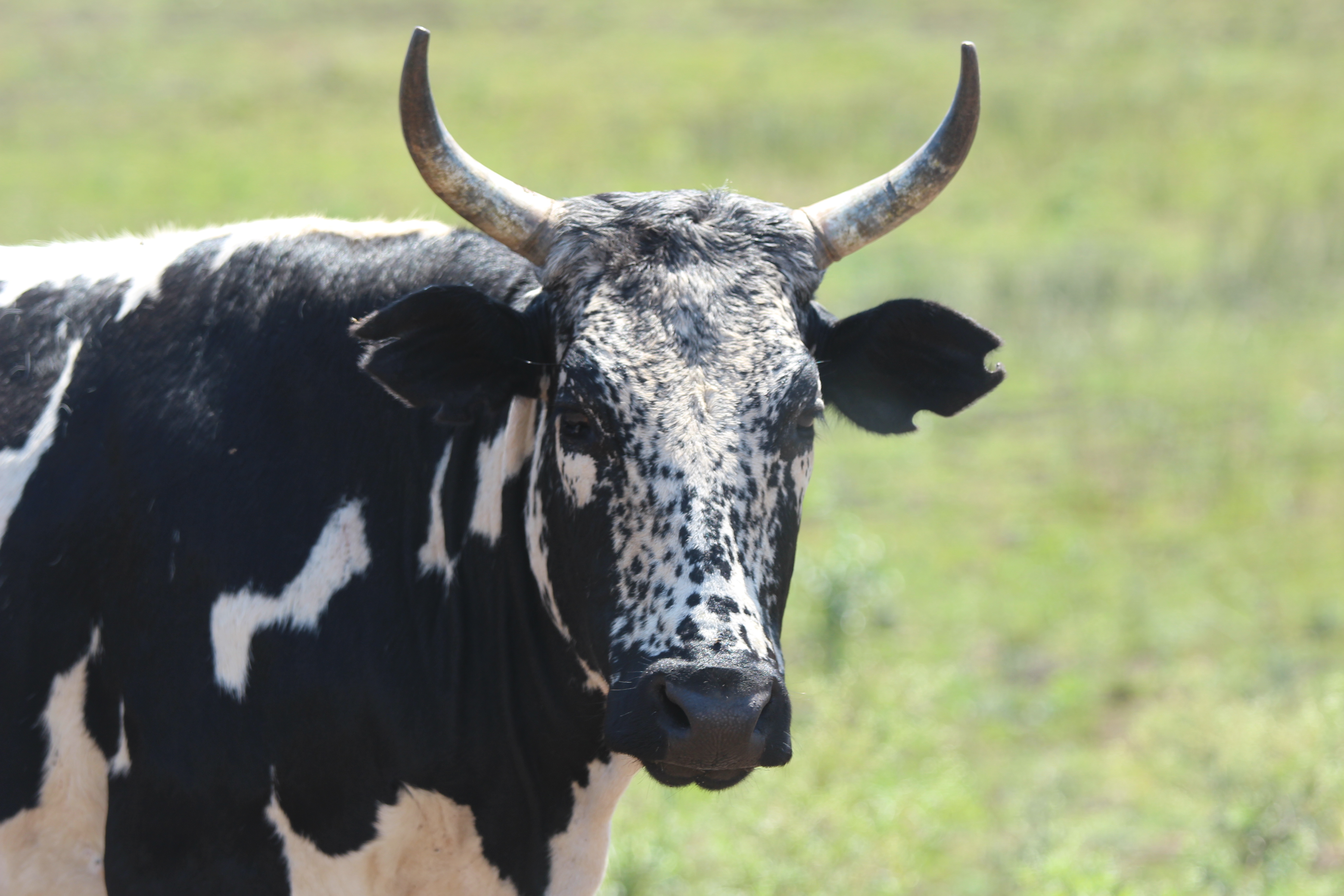
LionOkay, this isn’t a wild animal. It is a Nguni cow, the hide of which has become in high demand recently.
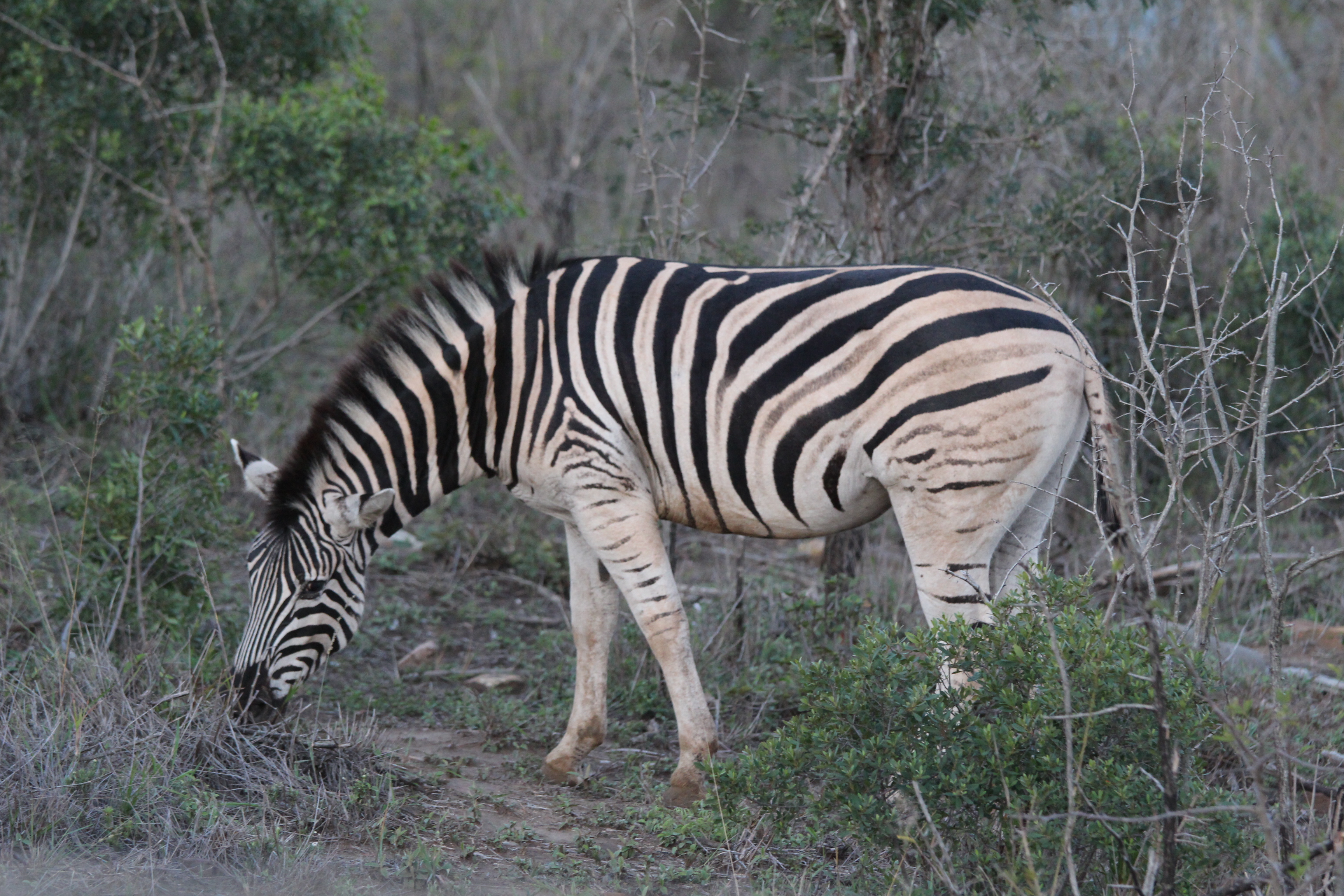
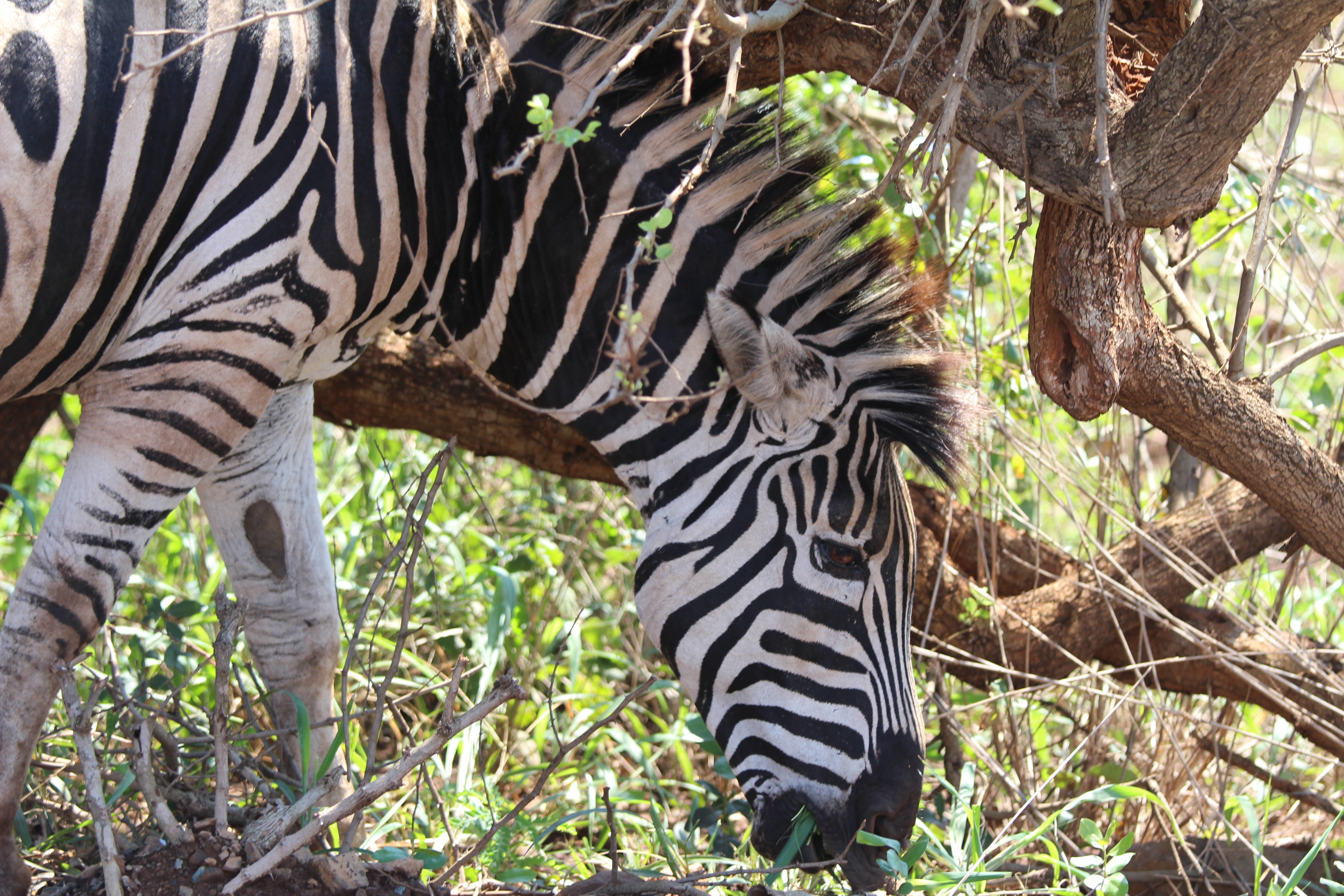
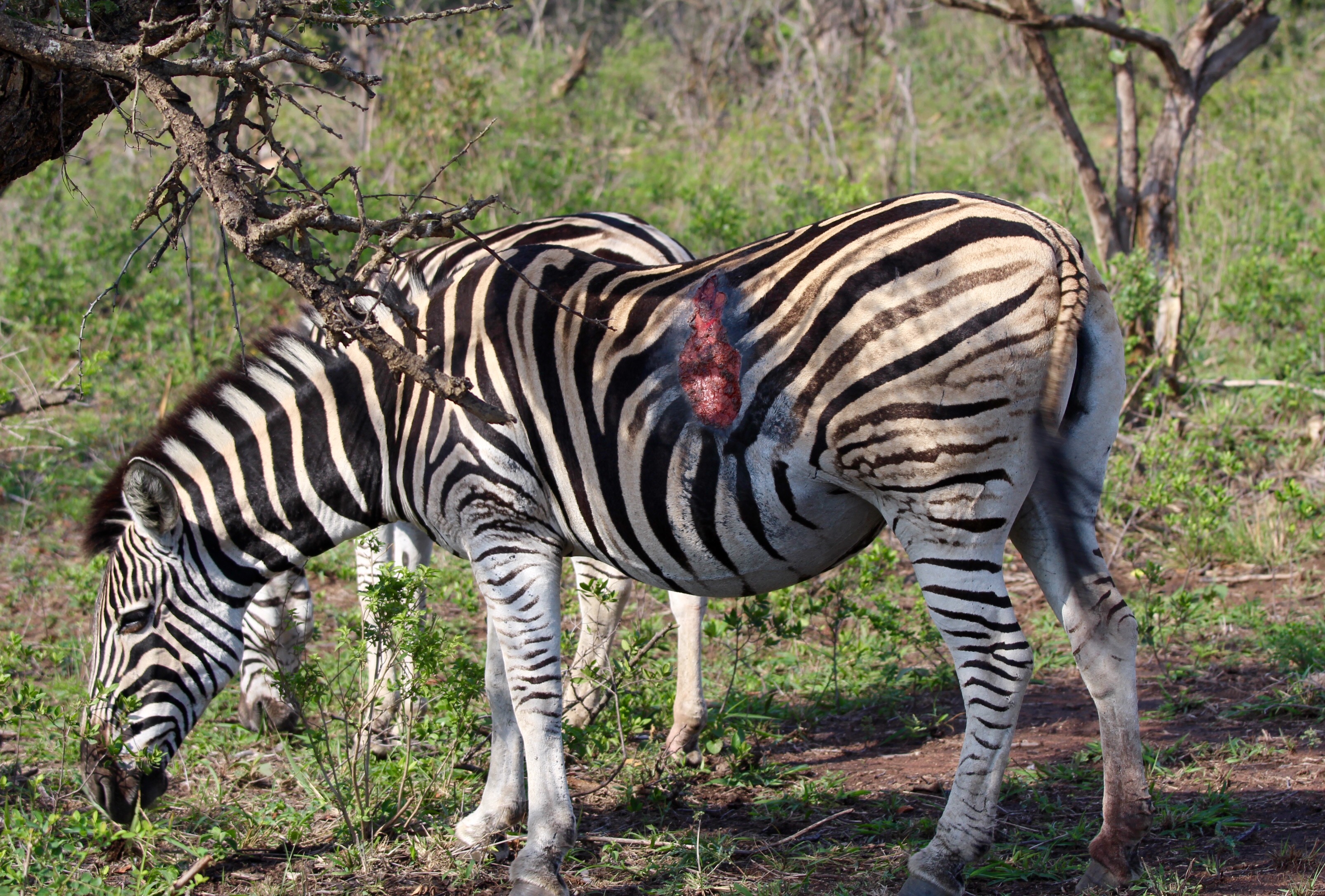
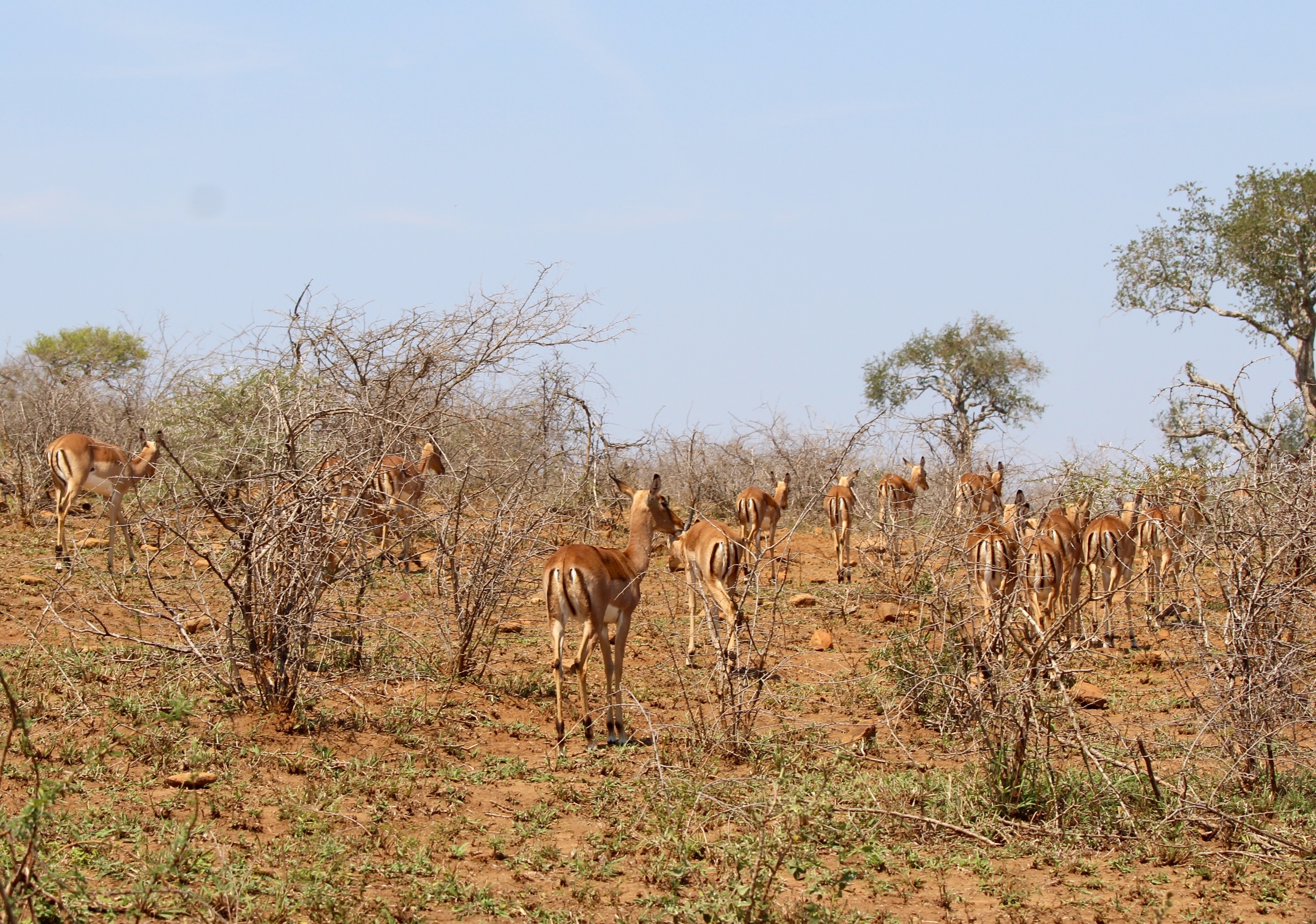
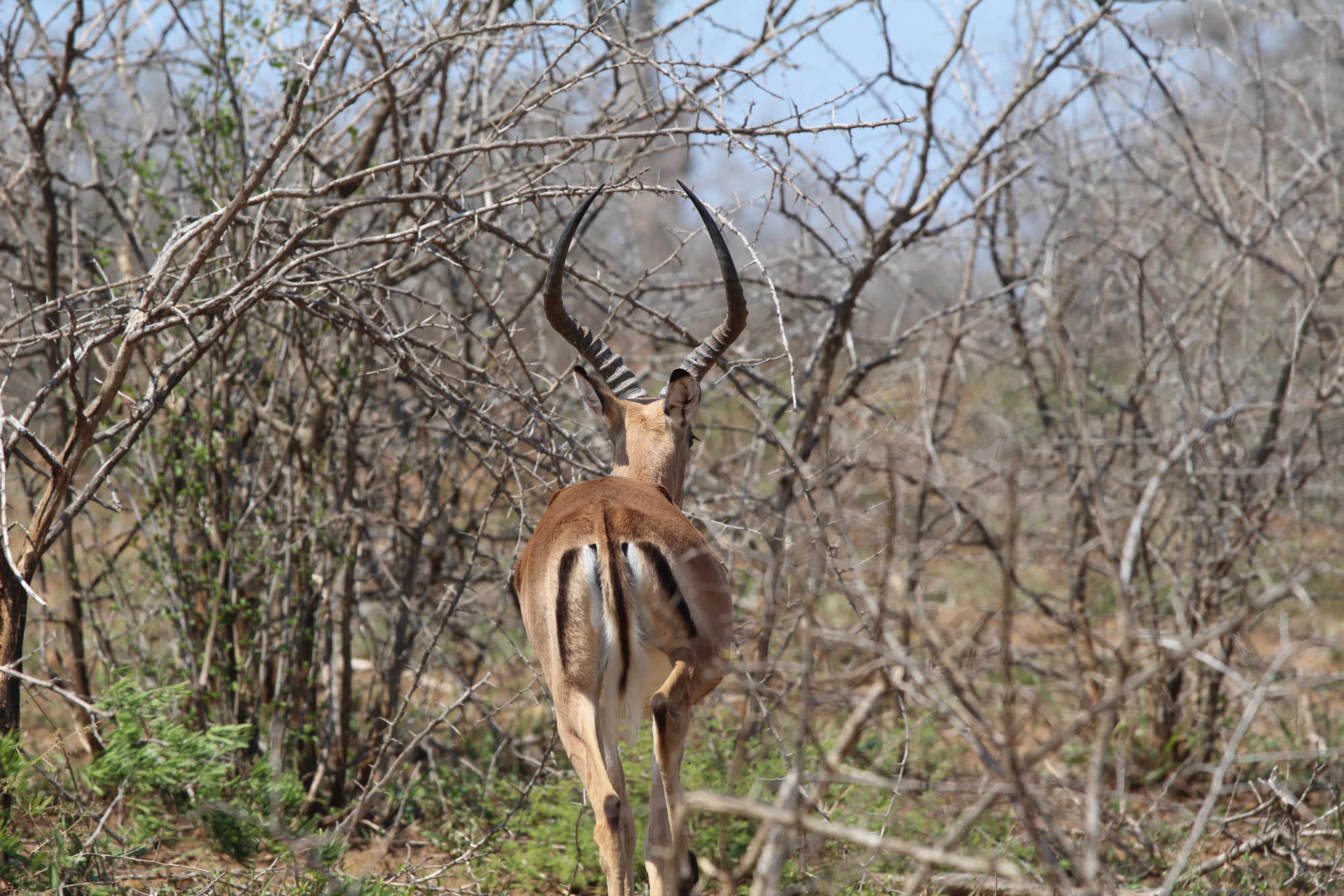
ZebraZebraThis zebra appears to have been attacked by a lion last night, and remarkably has survived…ImpalaImpala
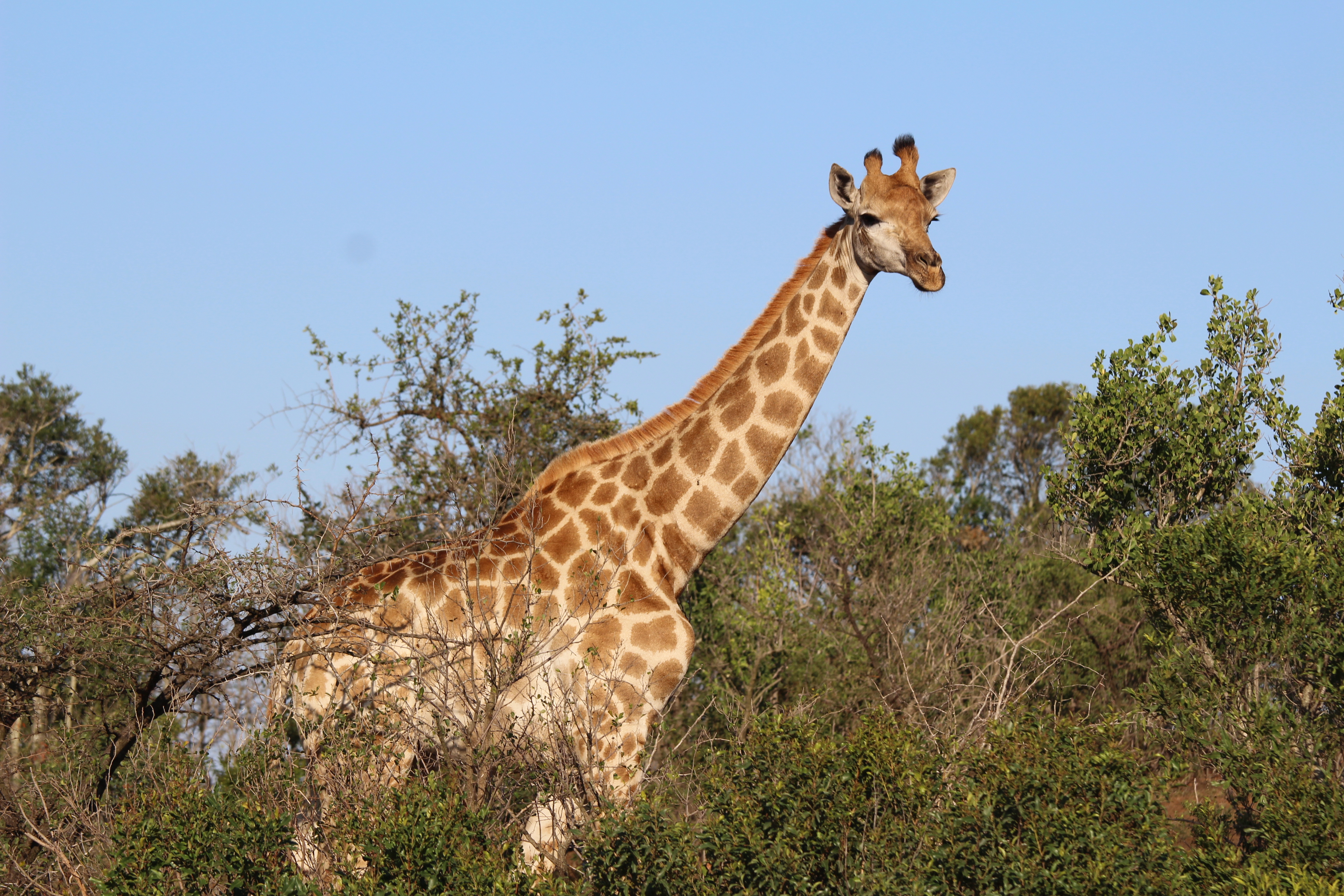
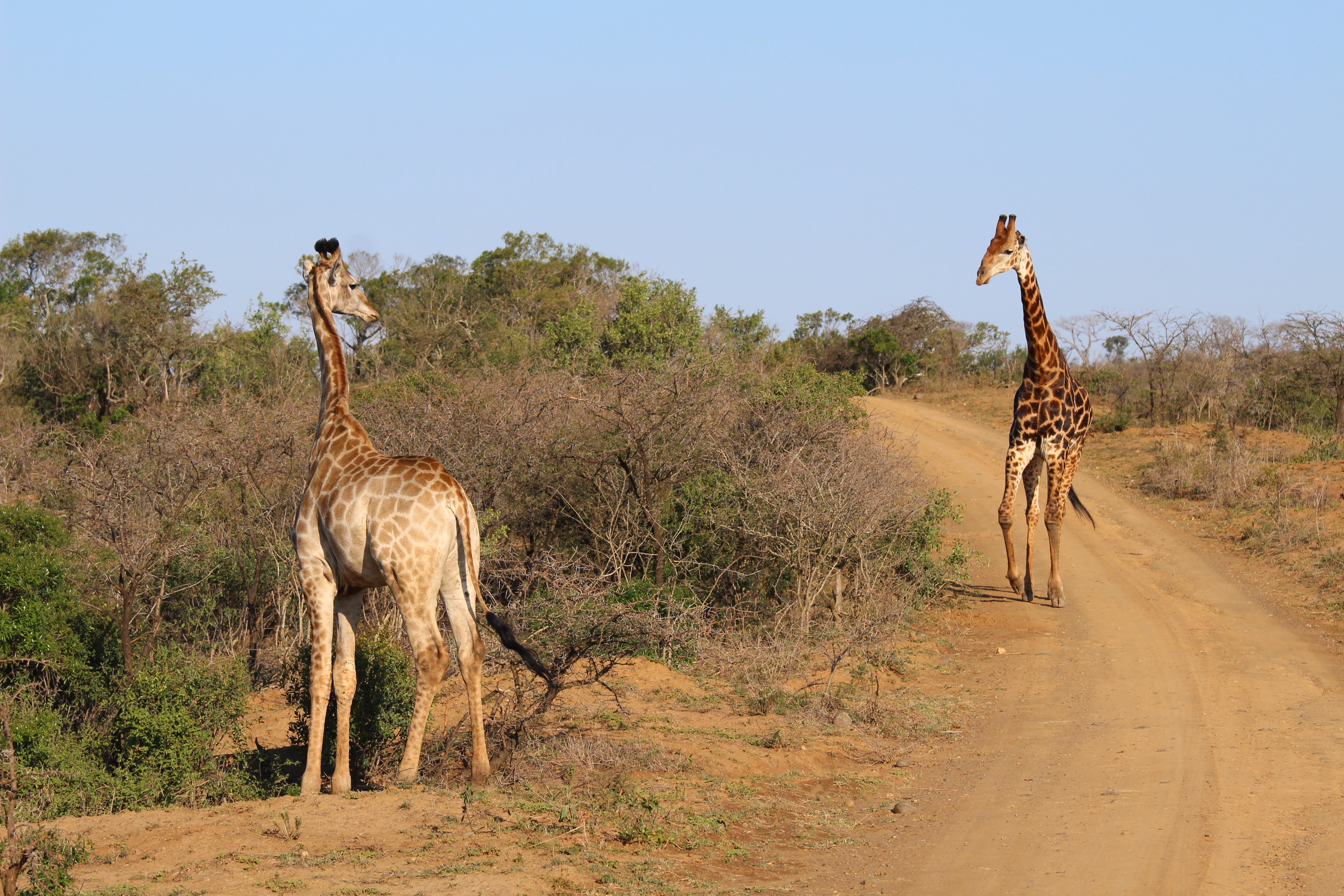
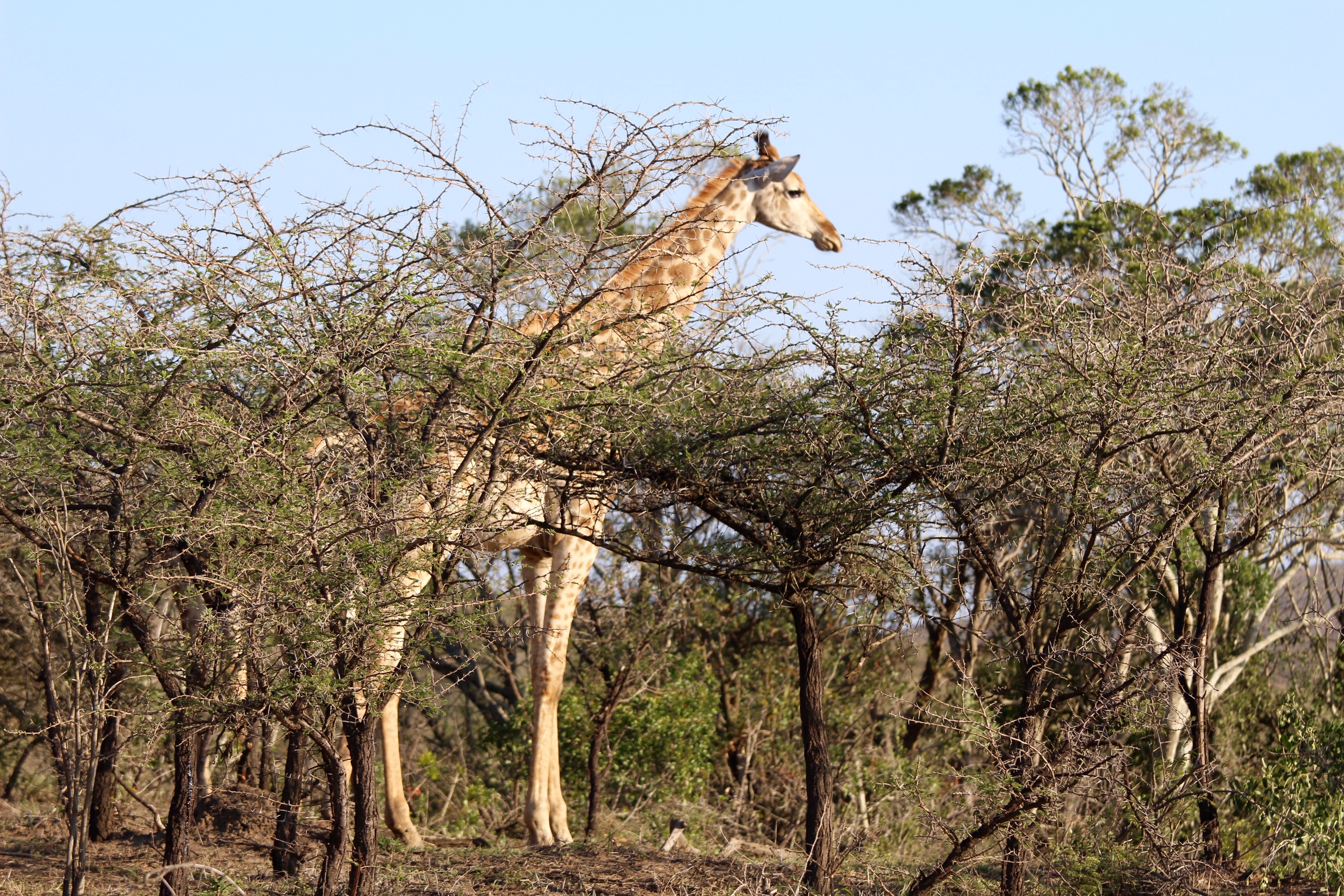
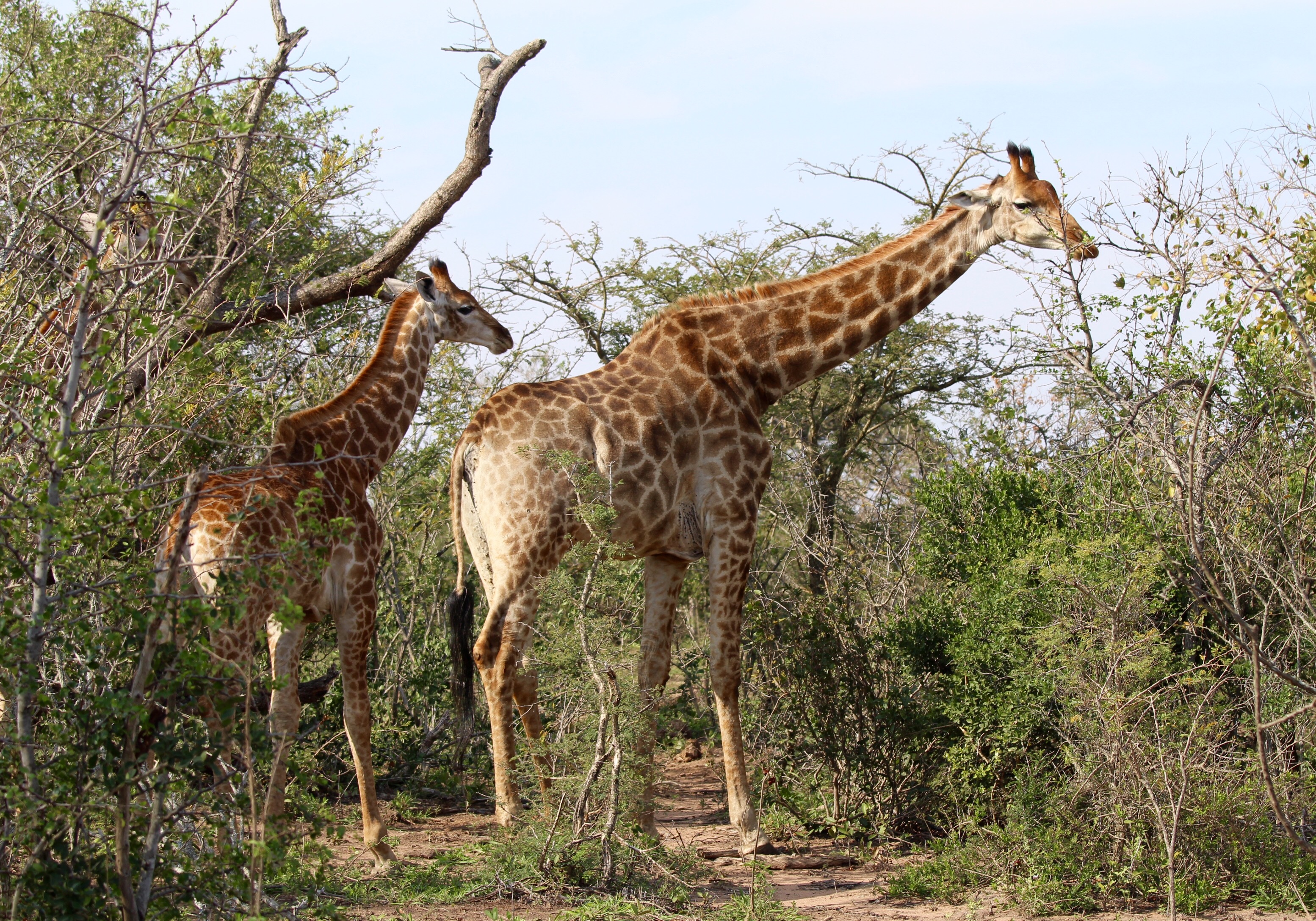
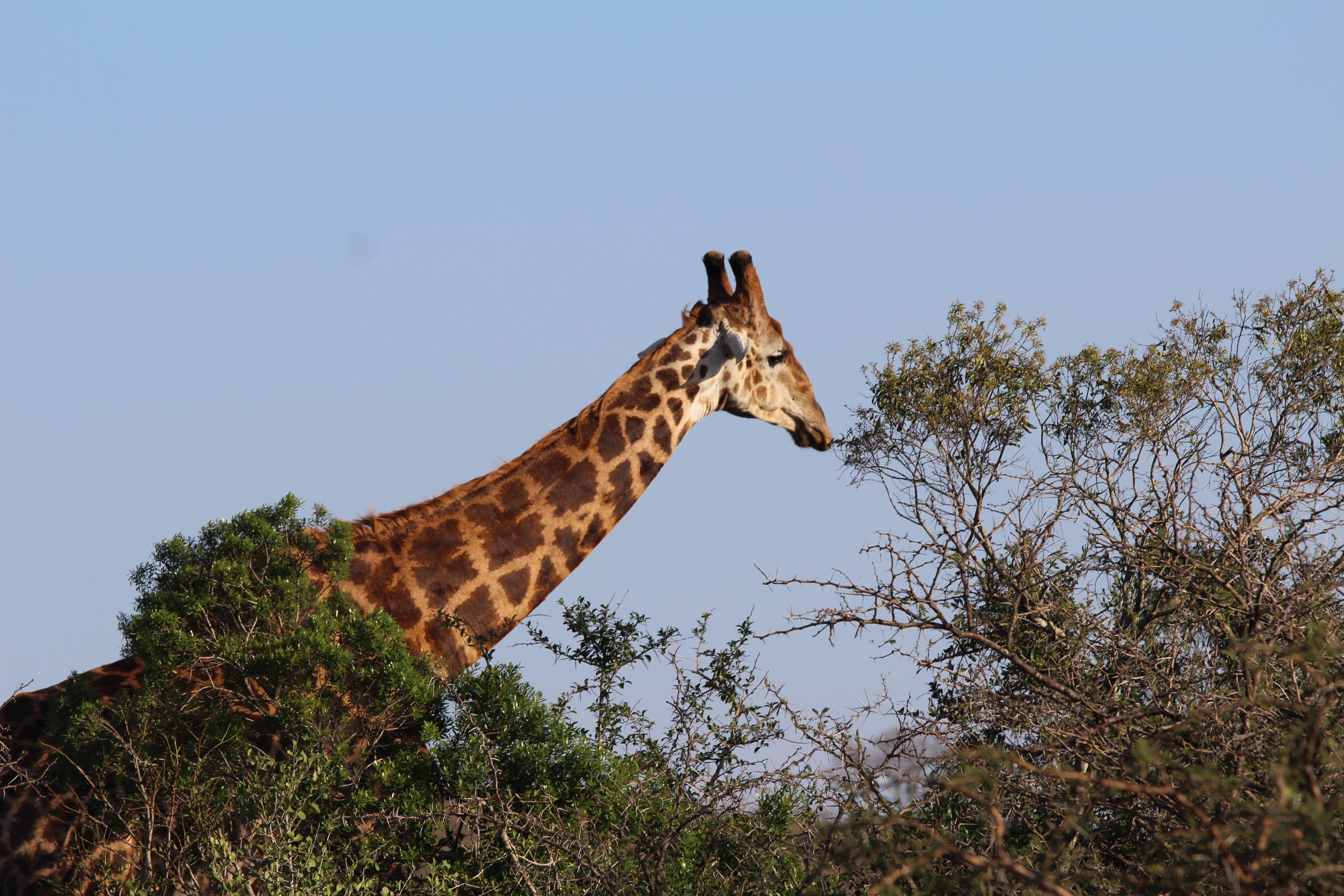
All the big animals are fantastic, but for me the most amazing is this one…out of proportion…yet elegant and graceful…curious about us…and hard for me to believe it exists for real on the same planet I do!
It took a couple days, even with our BPO rep’s help, to clear inTo Durban. We had it easy compared to Tahawus, though. They needed proof that their boys belonged with them…notarized birth certificates…divorce/custody papers…things you don’t expect to need while cruising! With various documents emailed from home, they were cleared, too.
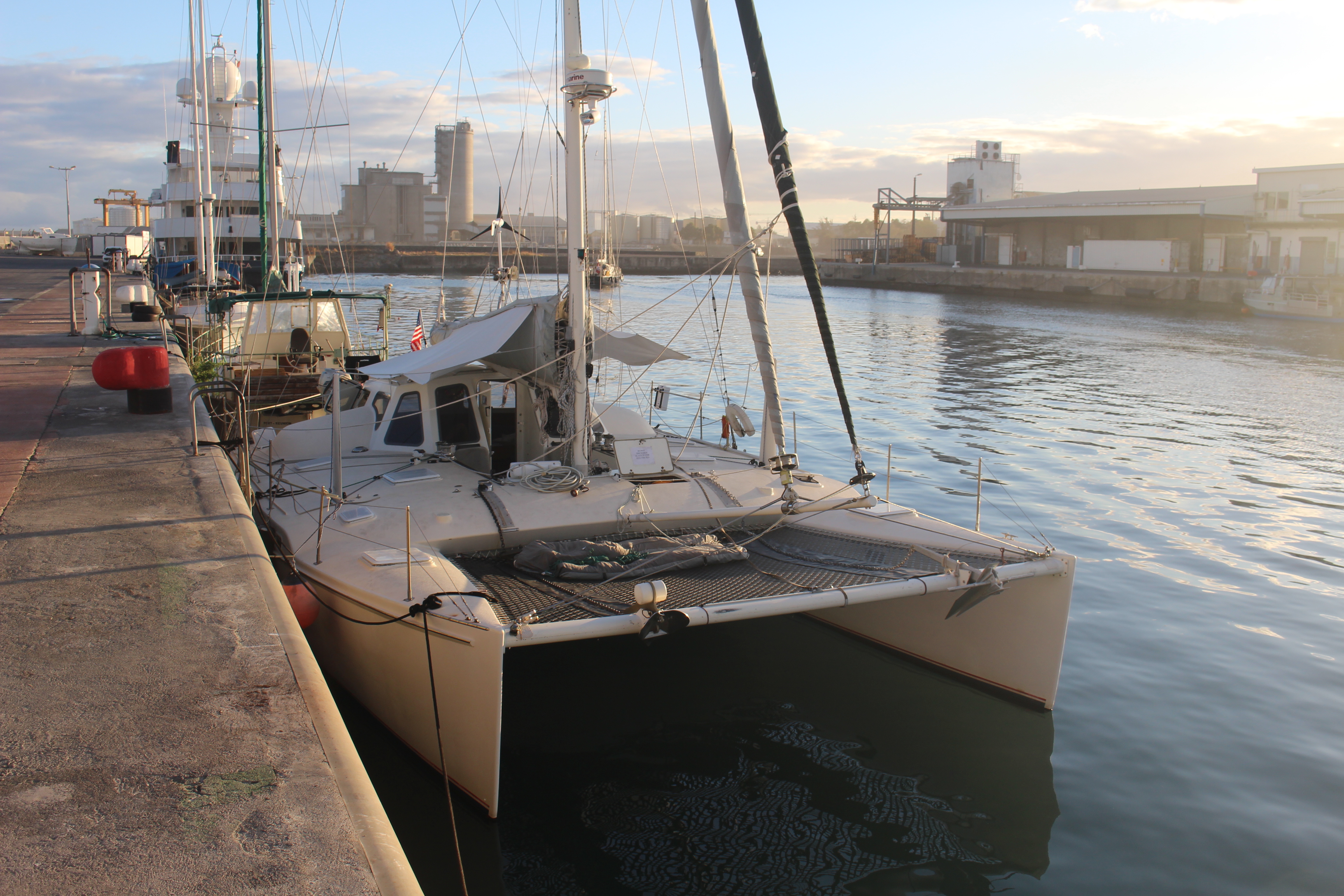
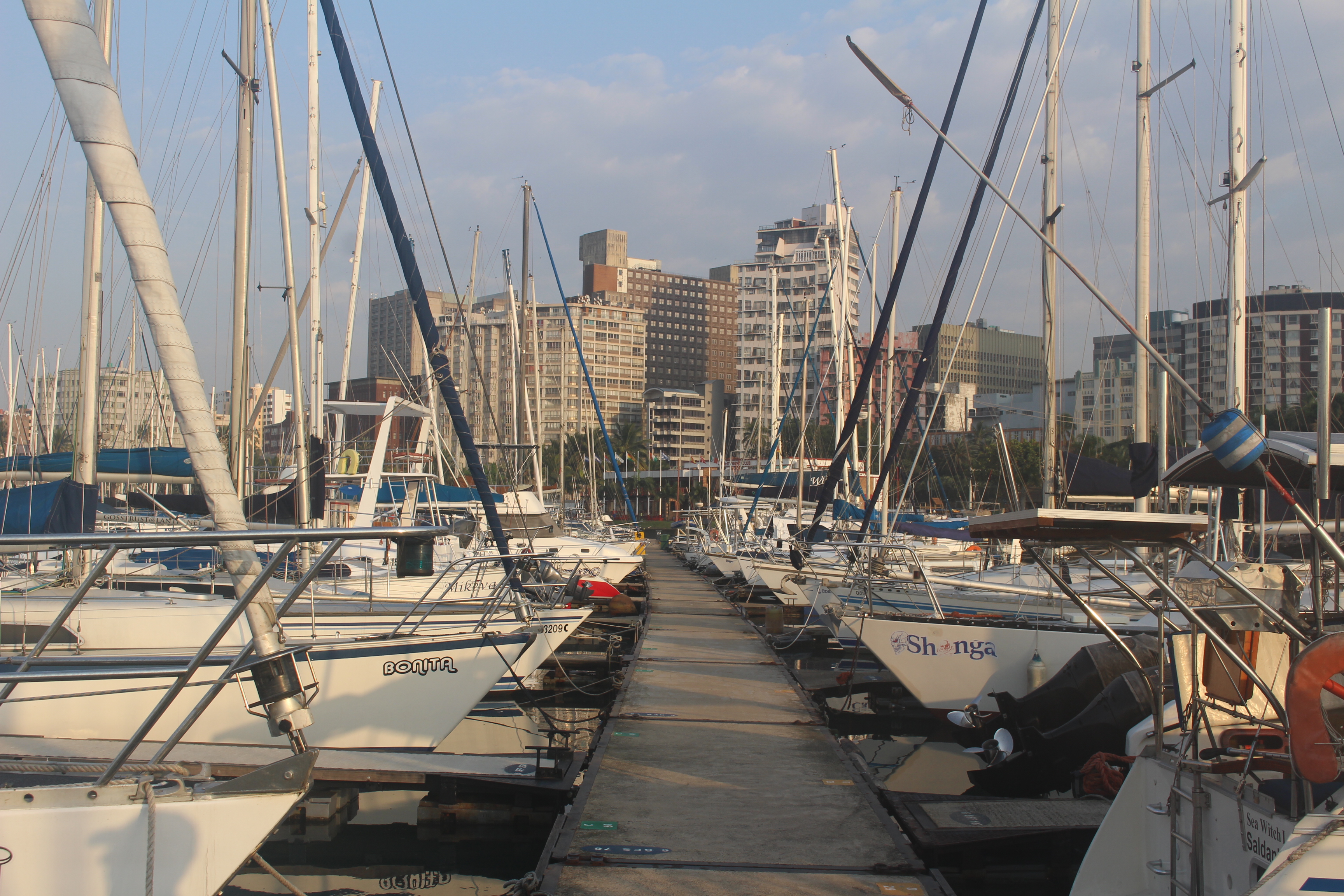
There is a very welcoming Point Yacht Club here at the Durban Marina, with food and wifi and hot showers. But it was getting frustrating to be in Africa and see nothing but a yacht club, and do nothing but check email and wait to meet with authorities. Yesterday when all three boats were cleared in, we finally got out for a local lunch of “bunny chow.” No one seems to know for sure where this term originated, but it is Indian curry in a hollowed out loaf of bread, and it is a Durban specialty. I’m told ours was rather mild, but it was at my limit — I don’t think I could have tolerated a more powerful curry. Liam is hungering for more, though.
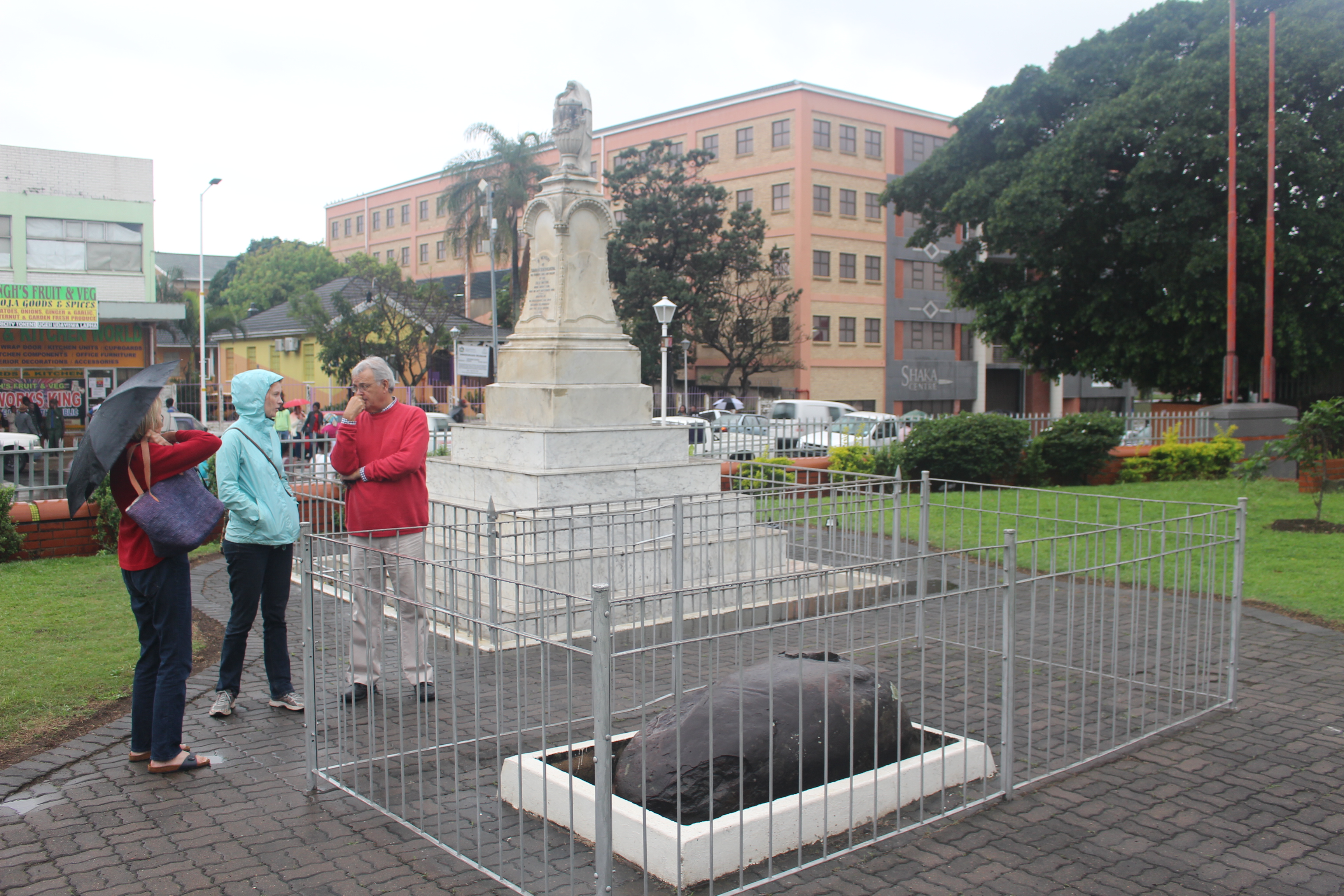
For today we had arranged a day tour of notable sites within driving distance. Greg is our tour guide, and he loves this country and seems to know everything about it, and he loves to talk. Our tour had a drinking from the firehose quality at times, but it was great. We went to four sites linked to four important historical figures, and the miles in between were filled with historical tales. First up was the gravesite of the Zulu chief Shaka, who in the early 1800’s built the Zulus from a collection of small tribes to a powerful warrior nation. His personal story, and the Zulu story, are very interesting, but it is too much for me to retell, and I would get 50% wrong anyway. Although Shaka eventually went a bit off the deep end and was killed by his brothers, the Zulus remain a major force in this area. At Shaka’s gravesite there is a western style monument and a small museum, but there is also a single stone to mark the grave in the Zulu tradition. There were no other visitors there today, but we are told in two weeks on the anniversary of his death, there will be throngs filling the streets of the town.
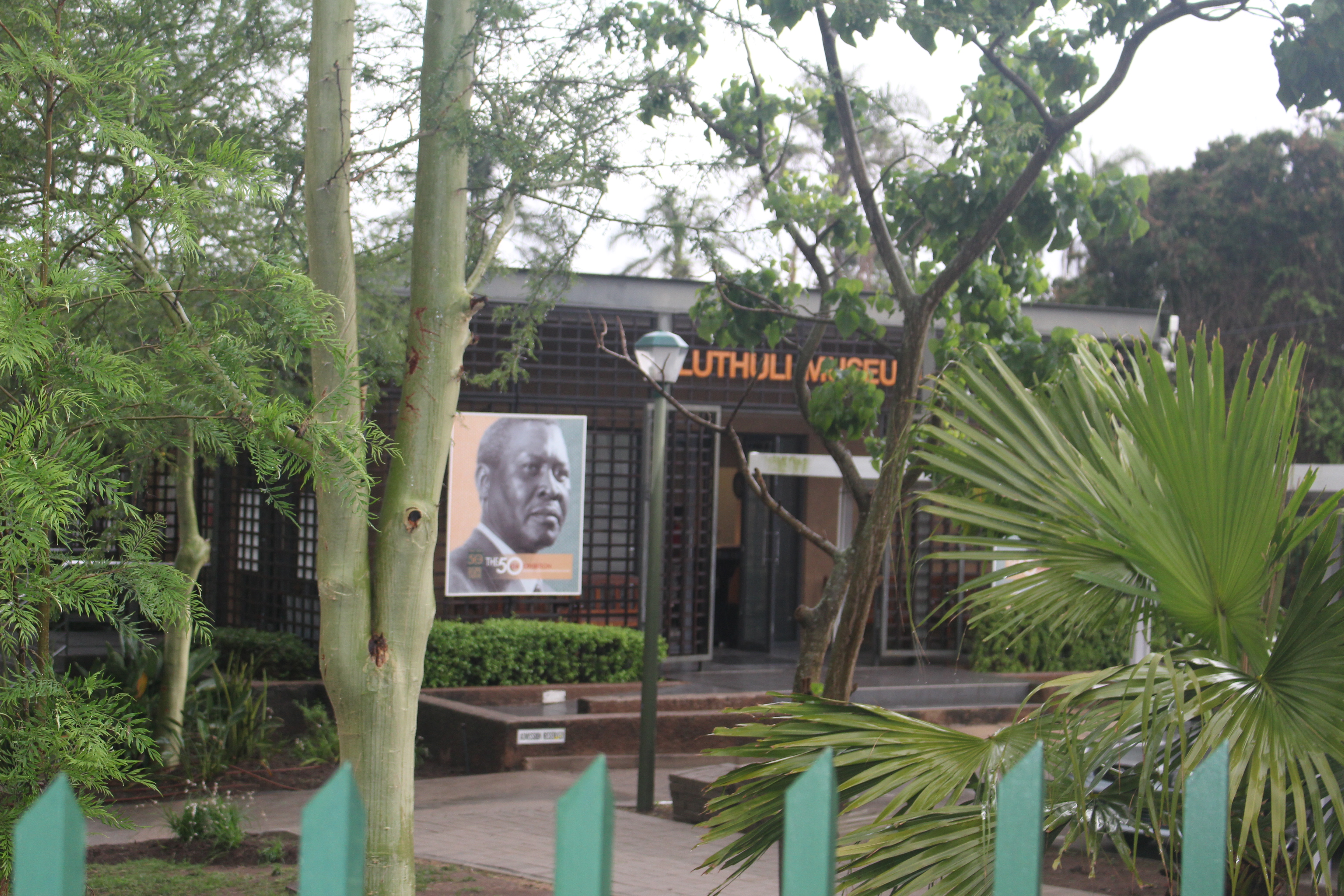
Stop 2 was the home of Chief Albert Luthuli. Luthuli was president of the African National Congress, and recipient of the Nobel Peace Prize in 1960. The (white, apartheid) government refused to issue him a passport to travel to receive the prize. An outpouring of foreign support led to Luthuli being allowed to go to Oslo the following year (for 10 days only) to receive his award and receive the accolades of most of the world. In 1966 (with the US in the midst of its own racial/social upheaval), Robert and Ethyl Kennedy flew by helicopter from Durban to Luthuli’s home. The photos of Kennedy with Luthuli, in this simple remote place, without entourage, seem very “real.” Real as in two men committed to common ideals, speaking with each other, not to reporters.
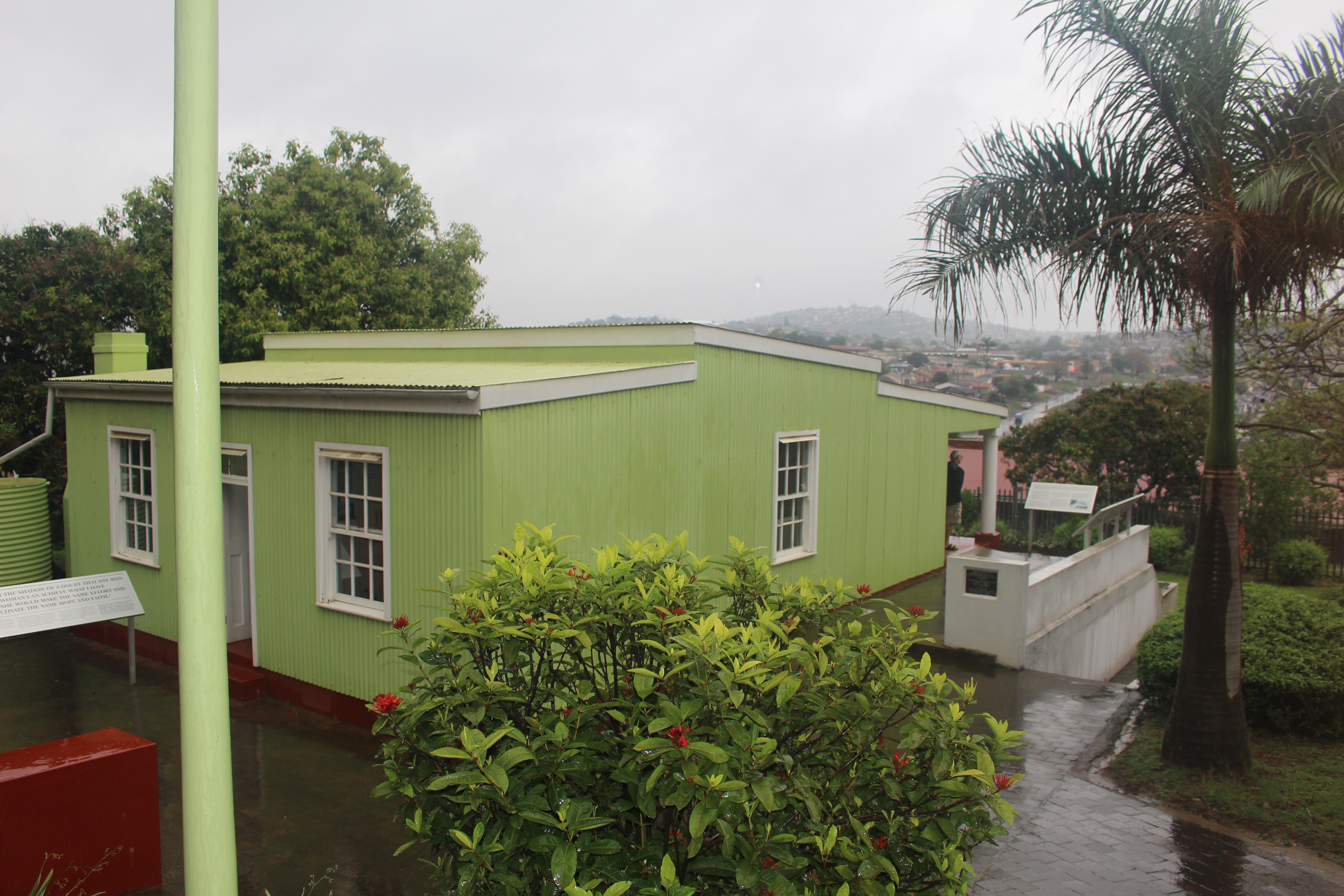
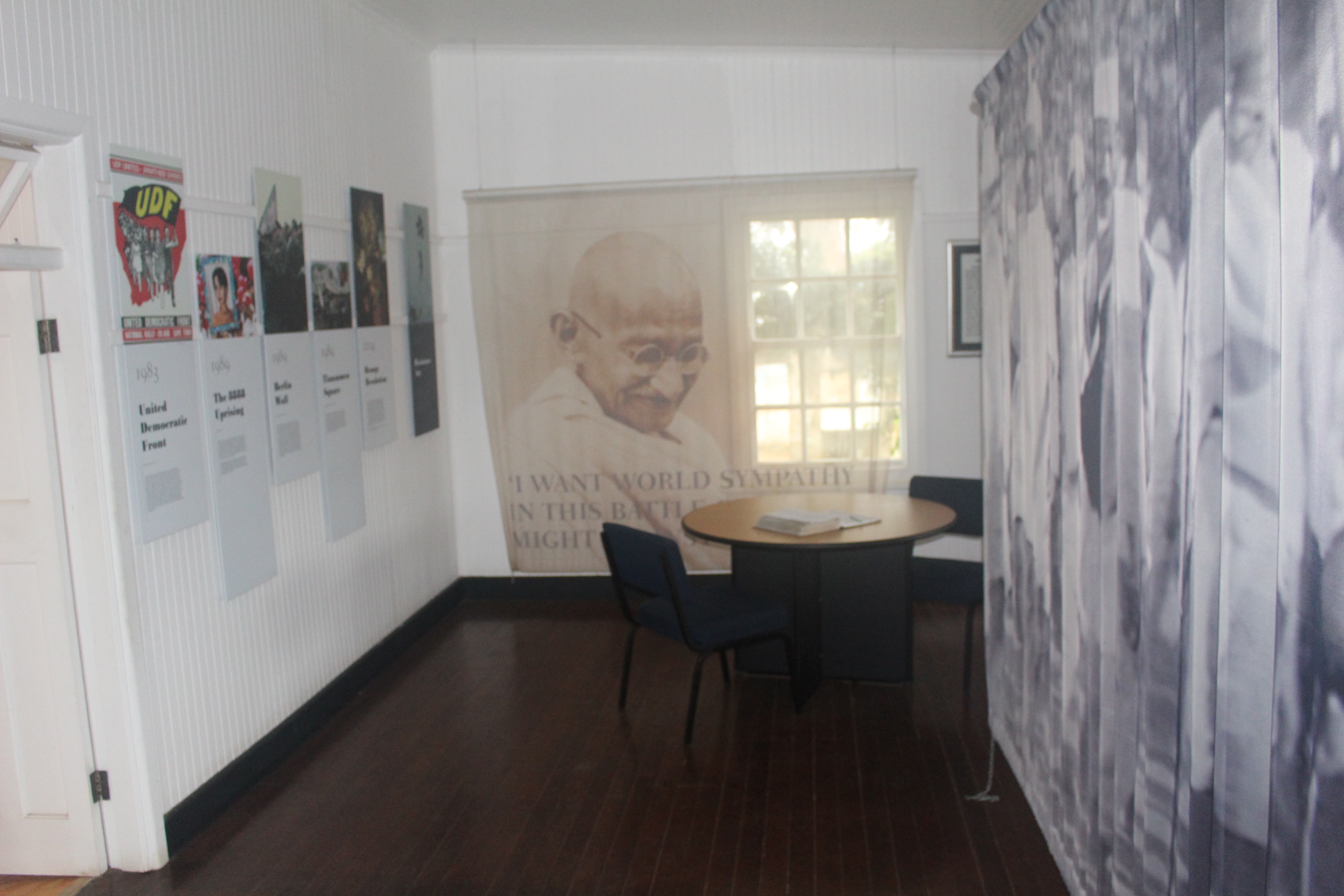
Each stop seemed to hit “closer to home.” Number 3 was the home of Gandhi. I’ll attempt a little background here. The Brits decided that this area was ideal for growing sugar cane — warm sunny weather (despite today’s pouring rain), availability of water, and availability of cheap/black labor. Except they found that the Zulus would not work for them. They needed slaves, but they had abolished slavery. The solution was to bring indentured servants (not-quite-slaves) from India. LOTS of them. Hence the very large Indian population in the Durban area (largest Indian expat community in the world, at least until very recently). But they of course were not treated well, and Gandhi came as a young lawyer to help with some of their legal issues. Though the plan was for him to come for 6 months, he remained in South Africa for 21 years. Although he was a wealthy and well educated man, in SA he was “colored,” and thus second class. This experience changed him, forming his views about overcoming oppression through nonviolent action.
Gandhi’s house is in the middle of the second largest “dormitory township” in SA. That is, where the non-whites were to sleep, even though they came to Durban to work for the whites. This remains an area that most tourists shy away from. We were the only ones on this rainy day. Being there hits a nerve, and the absence of tourists deepens the impact. We were standing in Gandhi’s little house! This is where his beliefs took root. What an honor to stand here and read about the man! To sign the guest book. To compare his day to our day. What stand would he take against injustice today…?
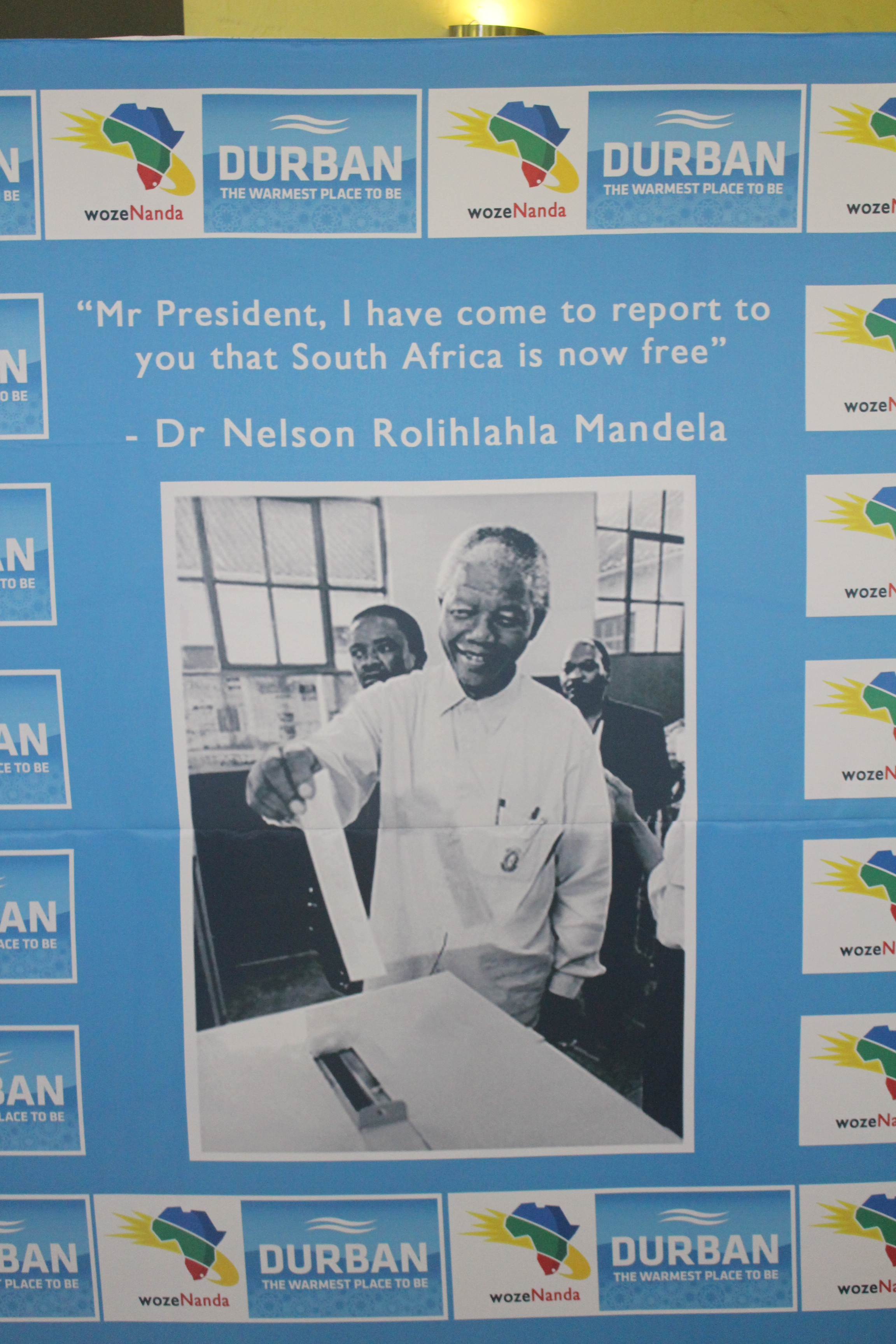
And then we went to the site where Nelson Mandela, at age 75, after a lifetime of struggle against oppression, cast his vote in SA’s first democratic election. In his words: I voted at Ohlange High School in Inanda, a green and hilly township just north of Durban, for it was there that John Dube, the first president of the ANC, was buried. This African patriot had helped found the organization in 1912, and casting my vote near his graveside brought history full circle, for the mission he began eighty-two years before was about to be achieved.
After voting Mandela is said to have walked to Dube’s grave and said: Mr President, I have come to report to you that South Africa is now free.
South Africa remains a complex tangle of competing interests, of course, still in flux. As at home, the economic injustice remains, despite the end of apartheid. Land ownership by blacks is disproportionately small. Unemployment overall is at 24%, but for young blacks it is 50%. Still, so much has changed in a few decades. I used to think that “history” was old news and had little to do with “now.” Somehow my education failed to instill the idea that history is an ongoing process, happening today; that the events of the past have set a direction to the flow of events to come, and it is by collectively taking a stand that we have some ability to redirect the course of those events.
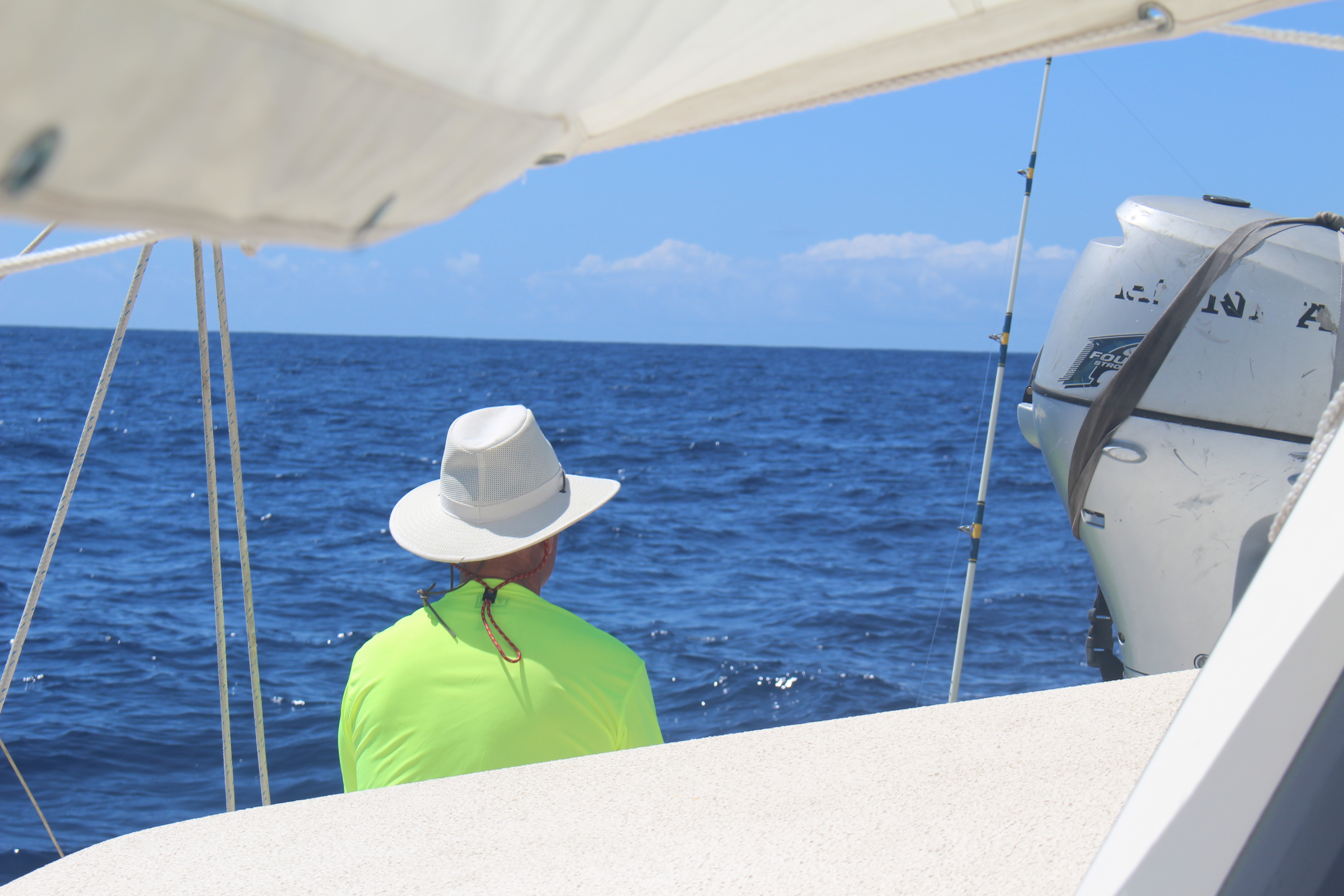
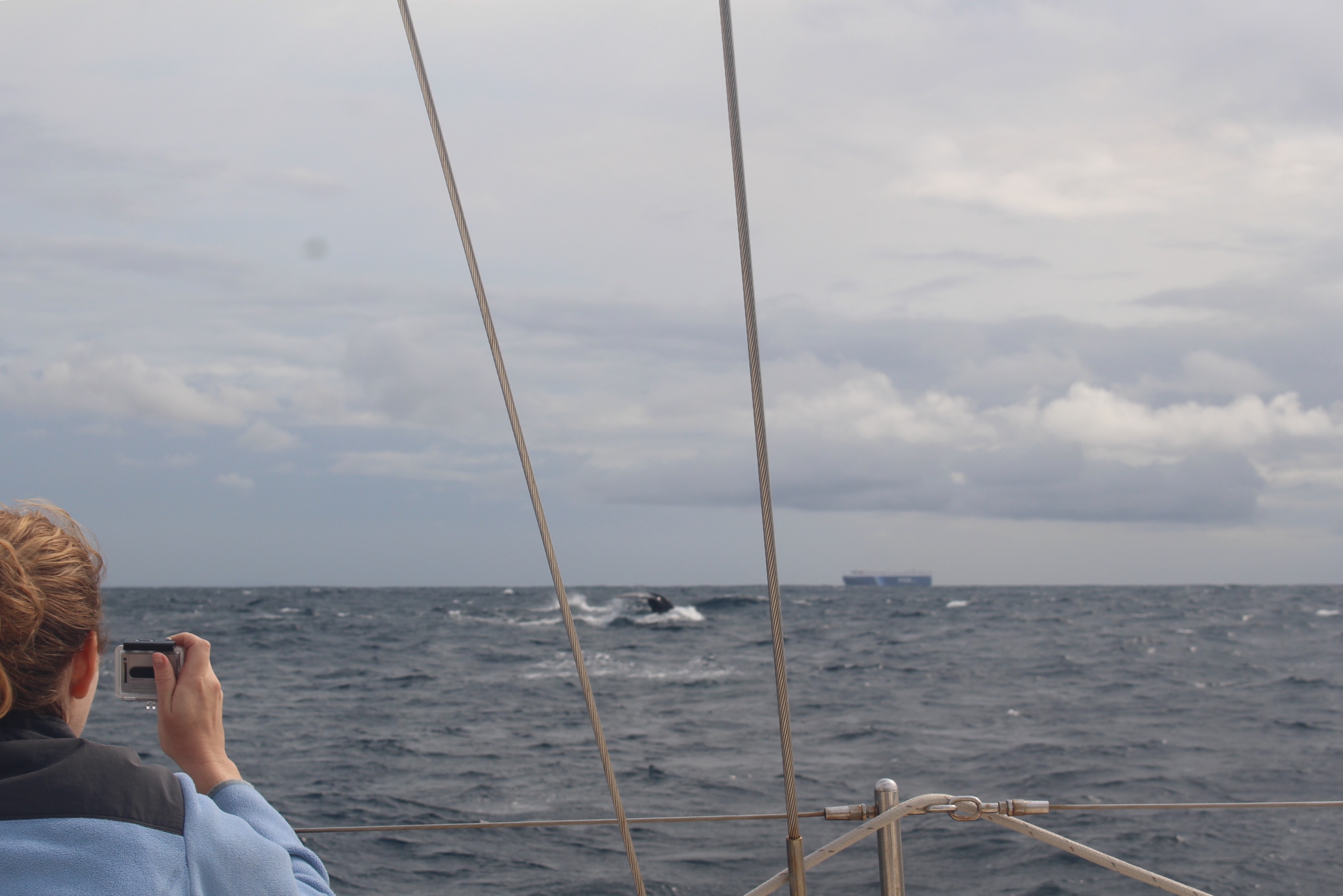
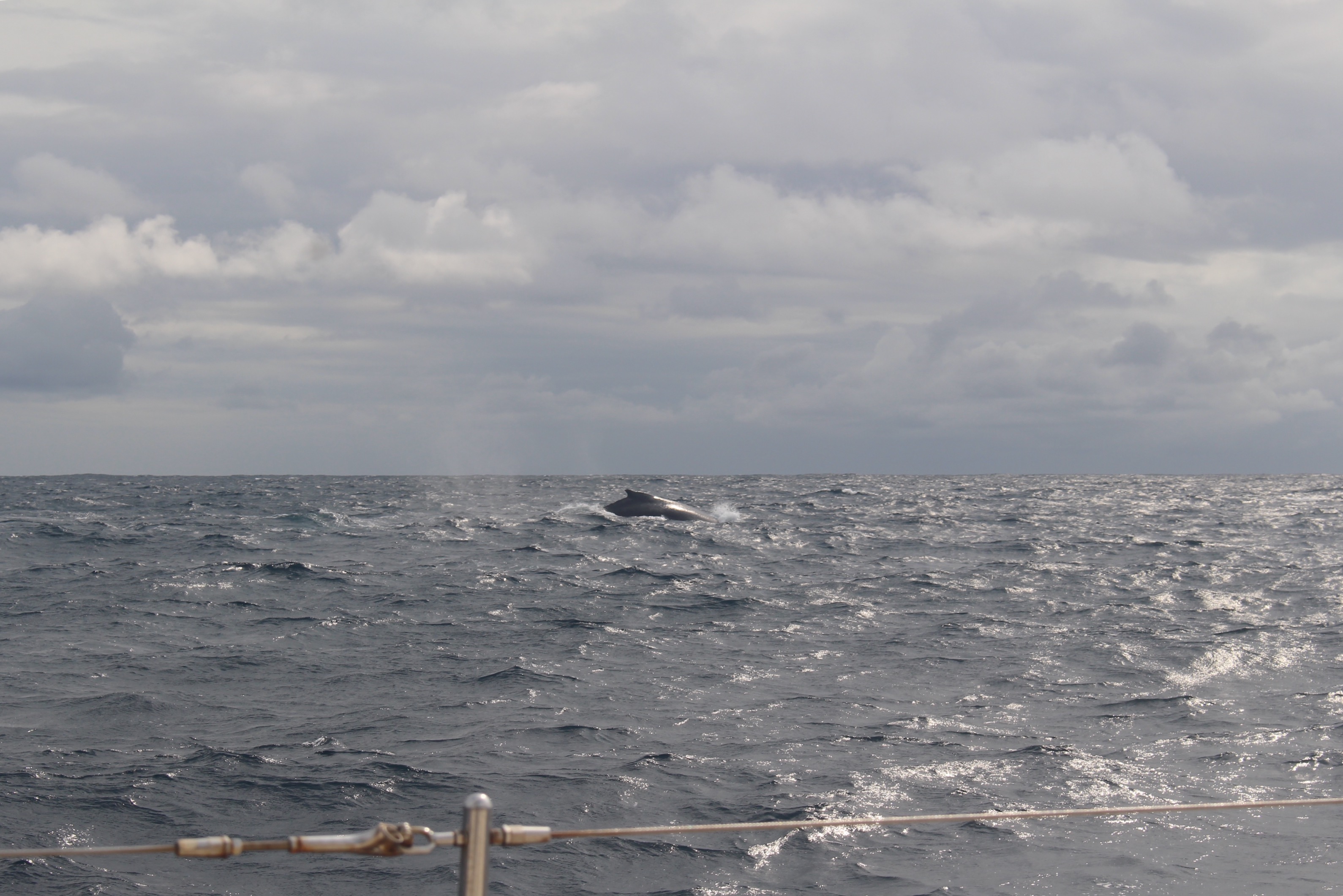
Zeke photo-bombs the Reunion volcano; courtesy of LiamOur spot in Reunion; Maggie departing in backgroundLiam managing the quesiesNora managing the quesiesFishingUnfortunately my camera chose to focus on Nora rather than the whale…




 ZekeTheSailor