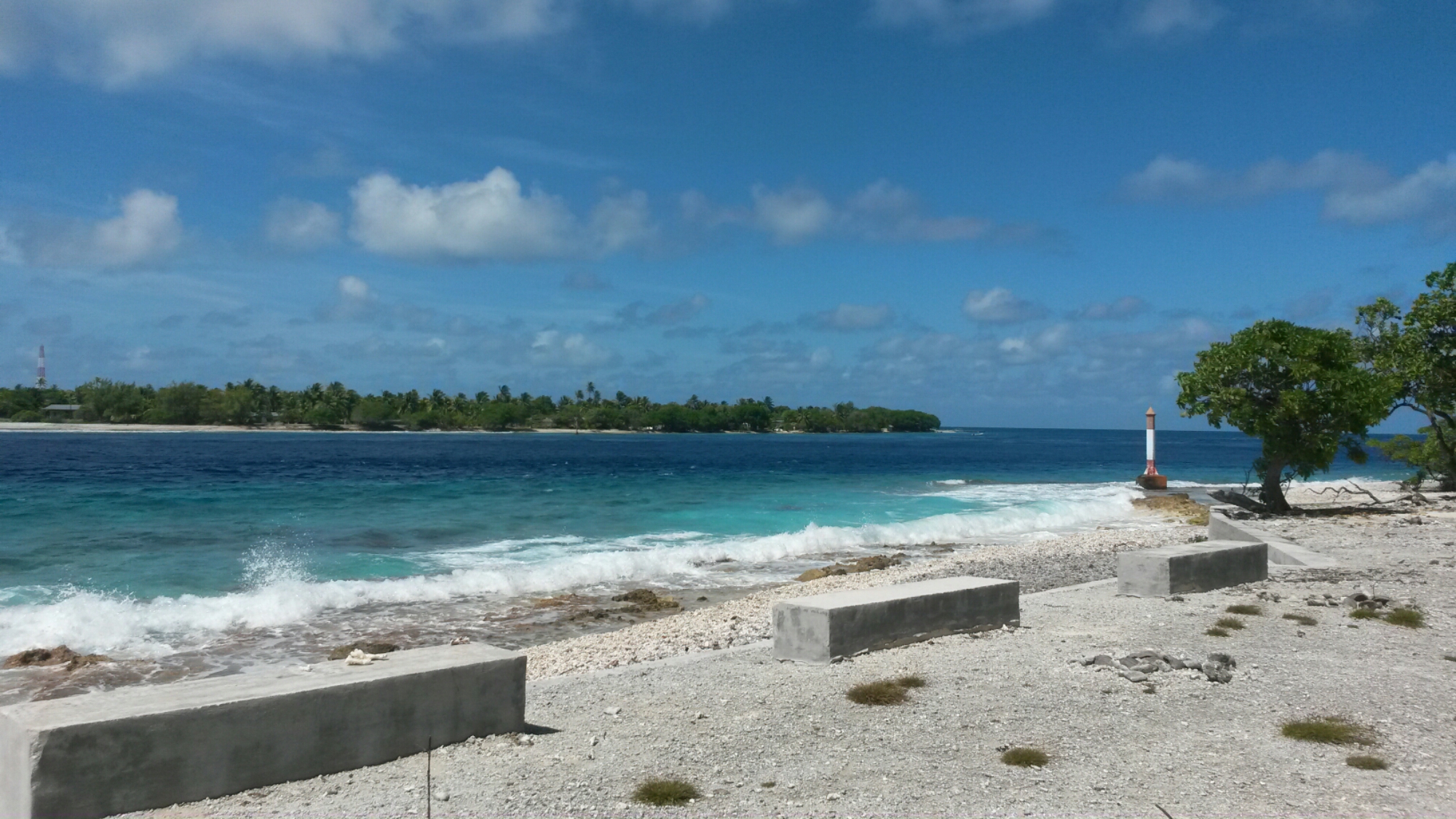
Photos of the Tuamotus are challenging because they are all flat and look similar. Nevertheless here we go…
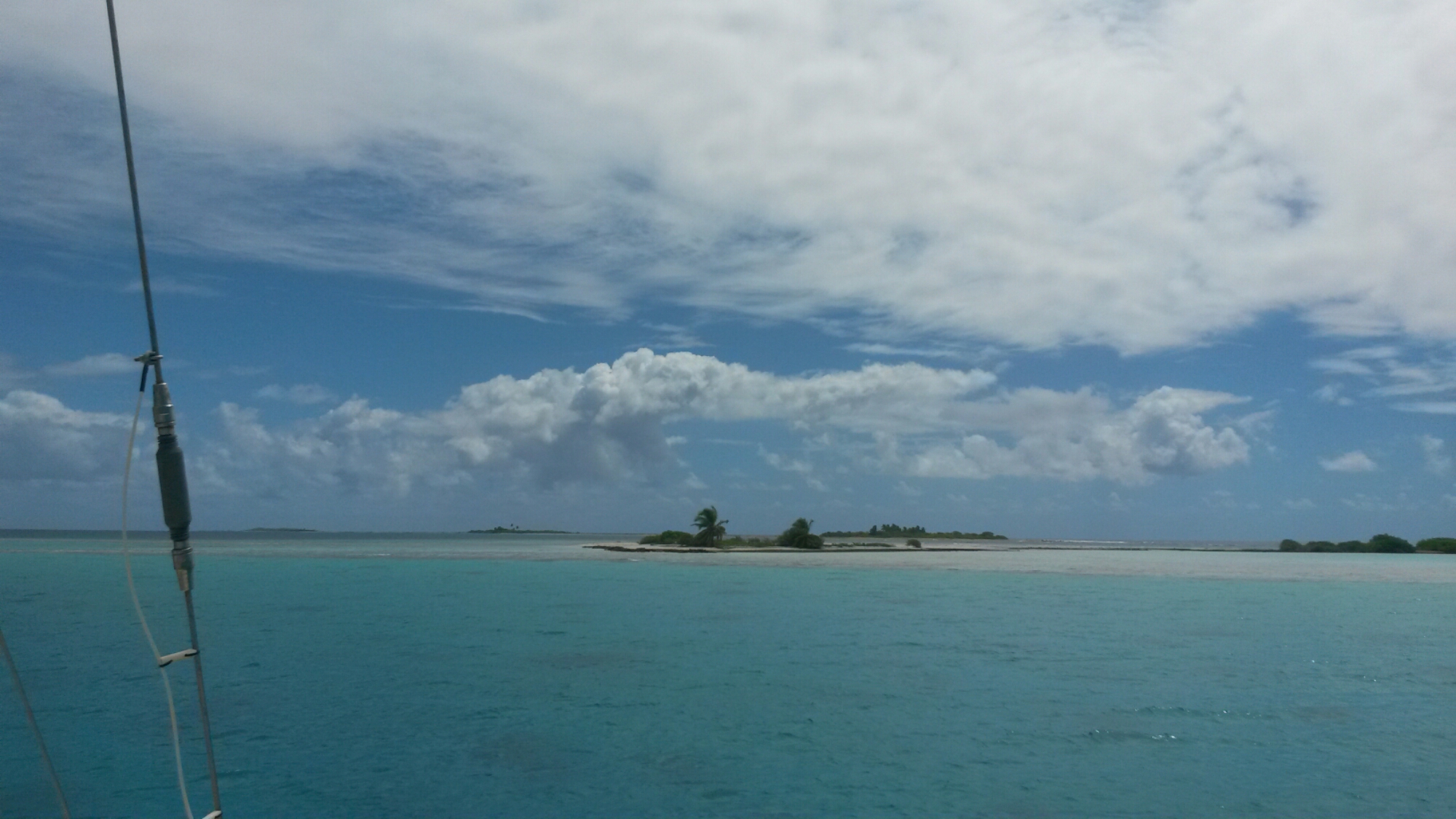
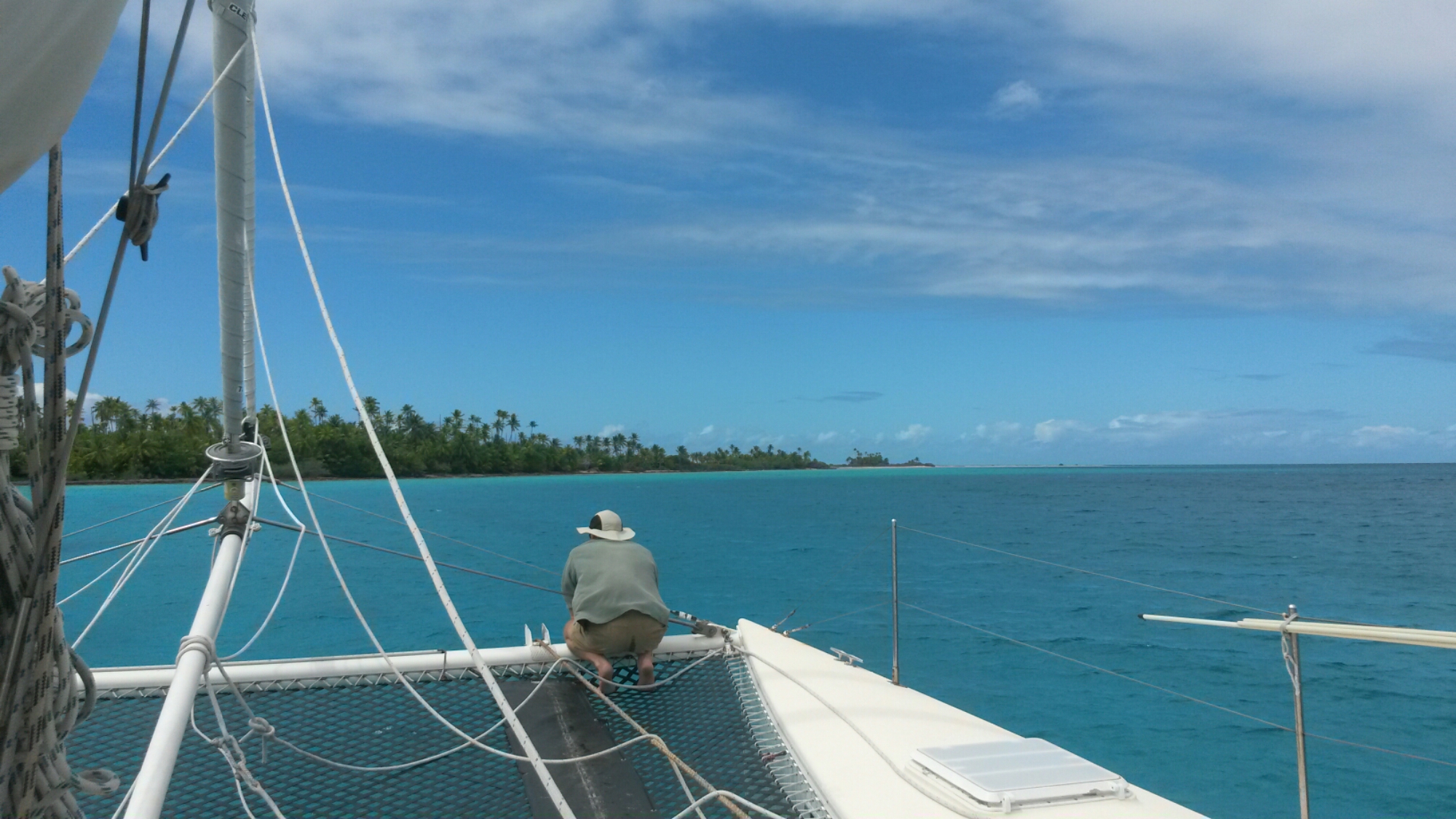
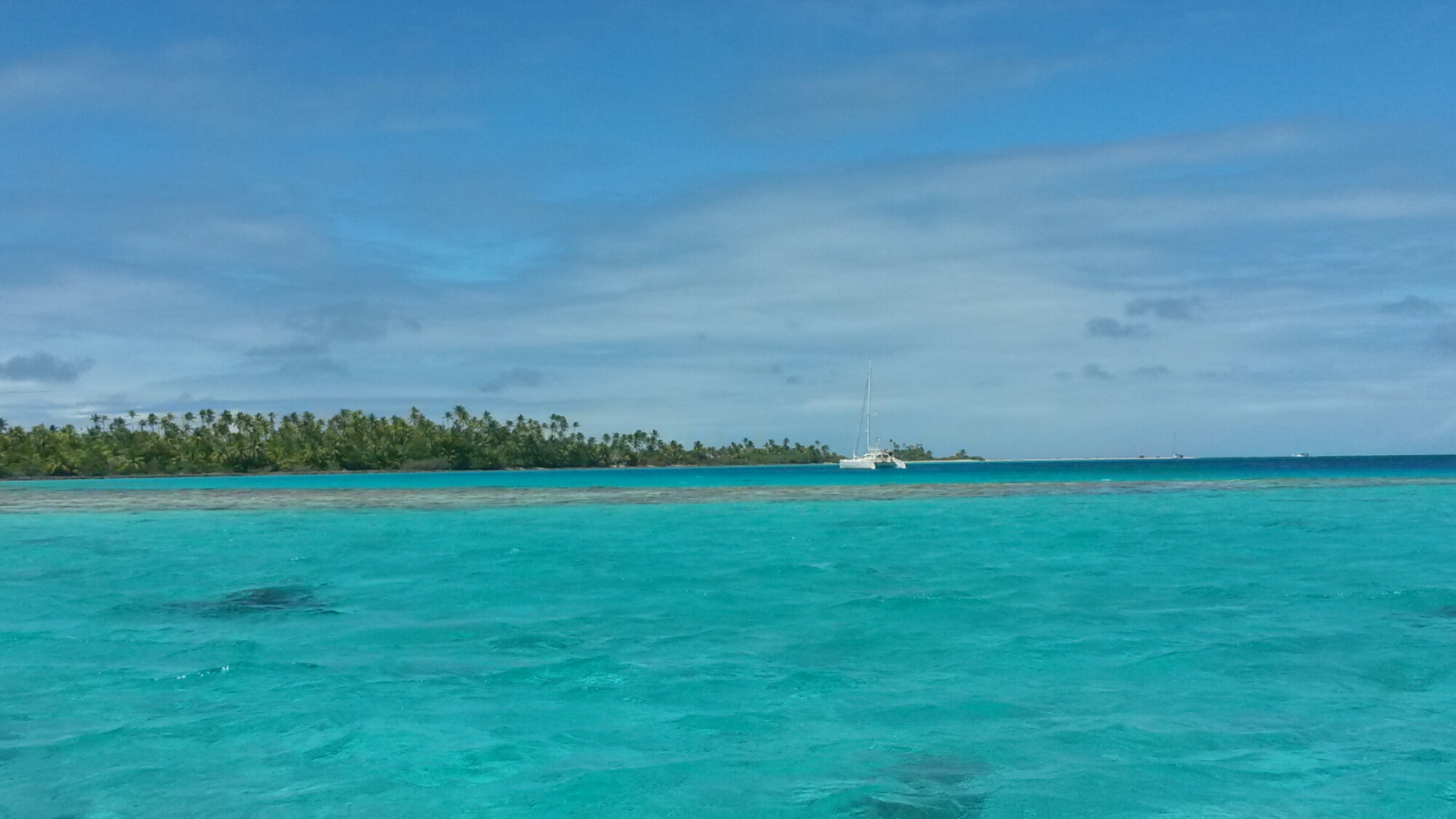
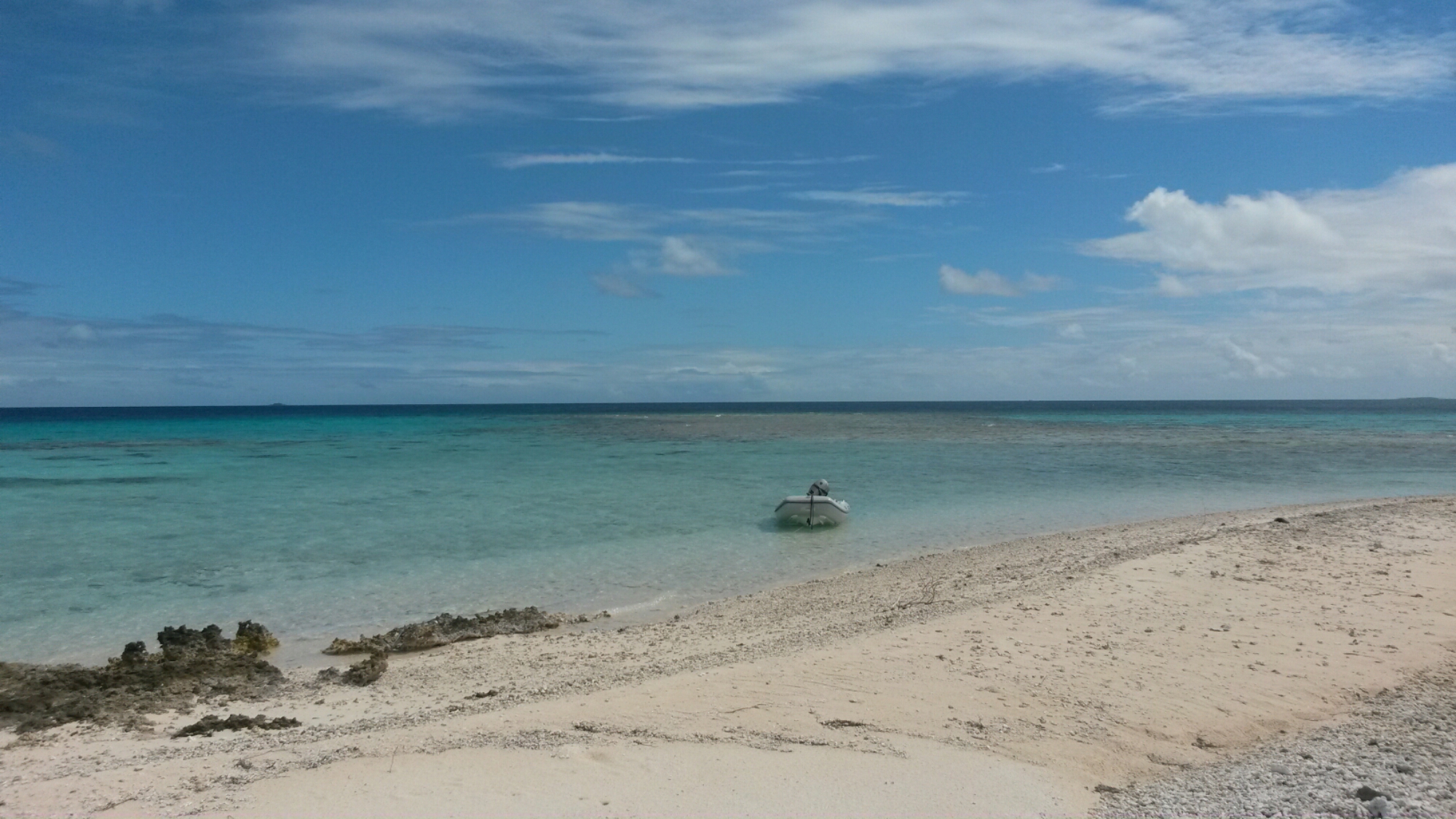
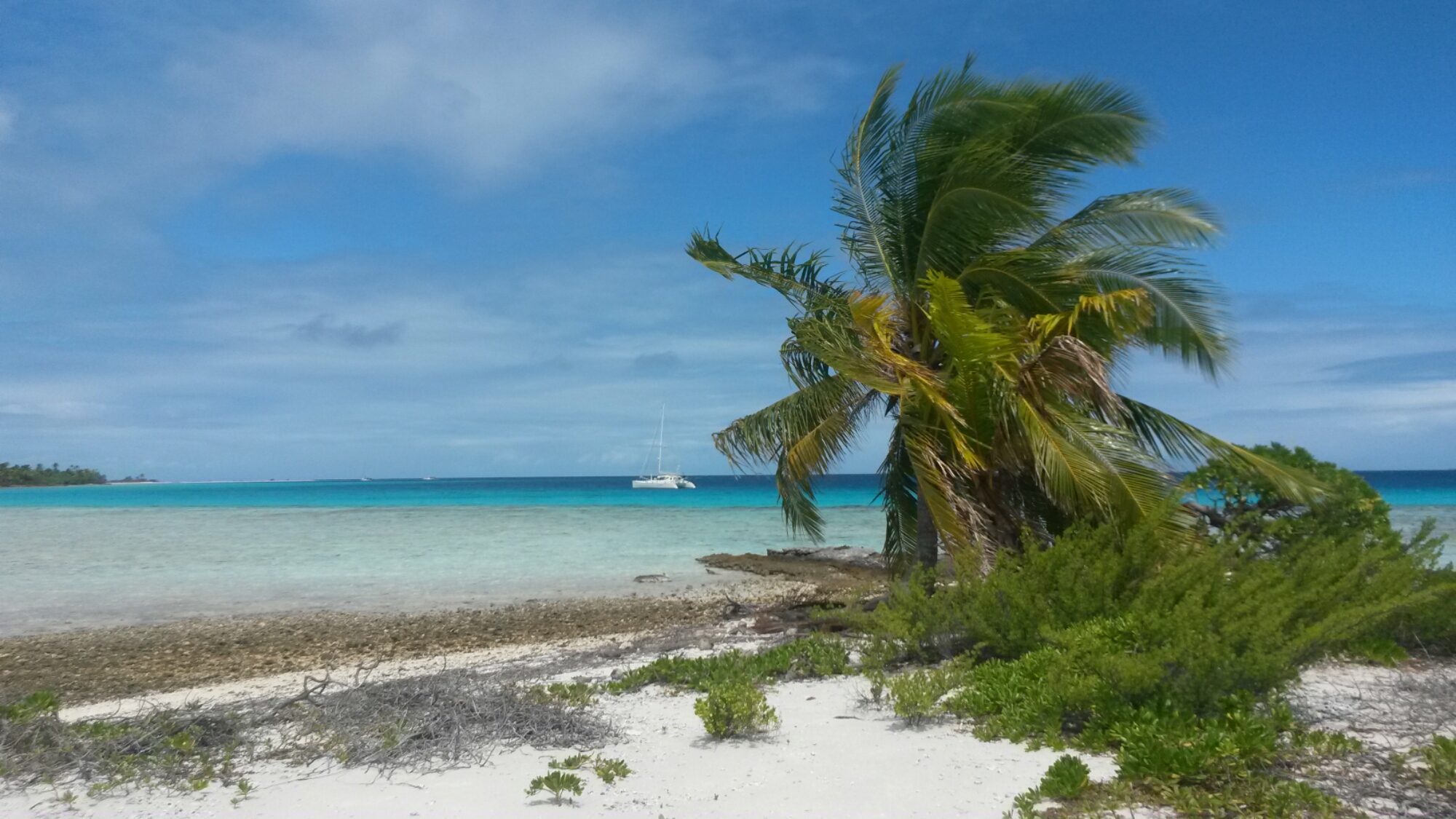
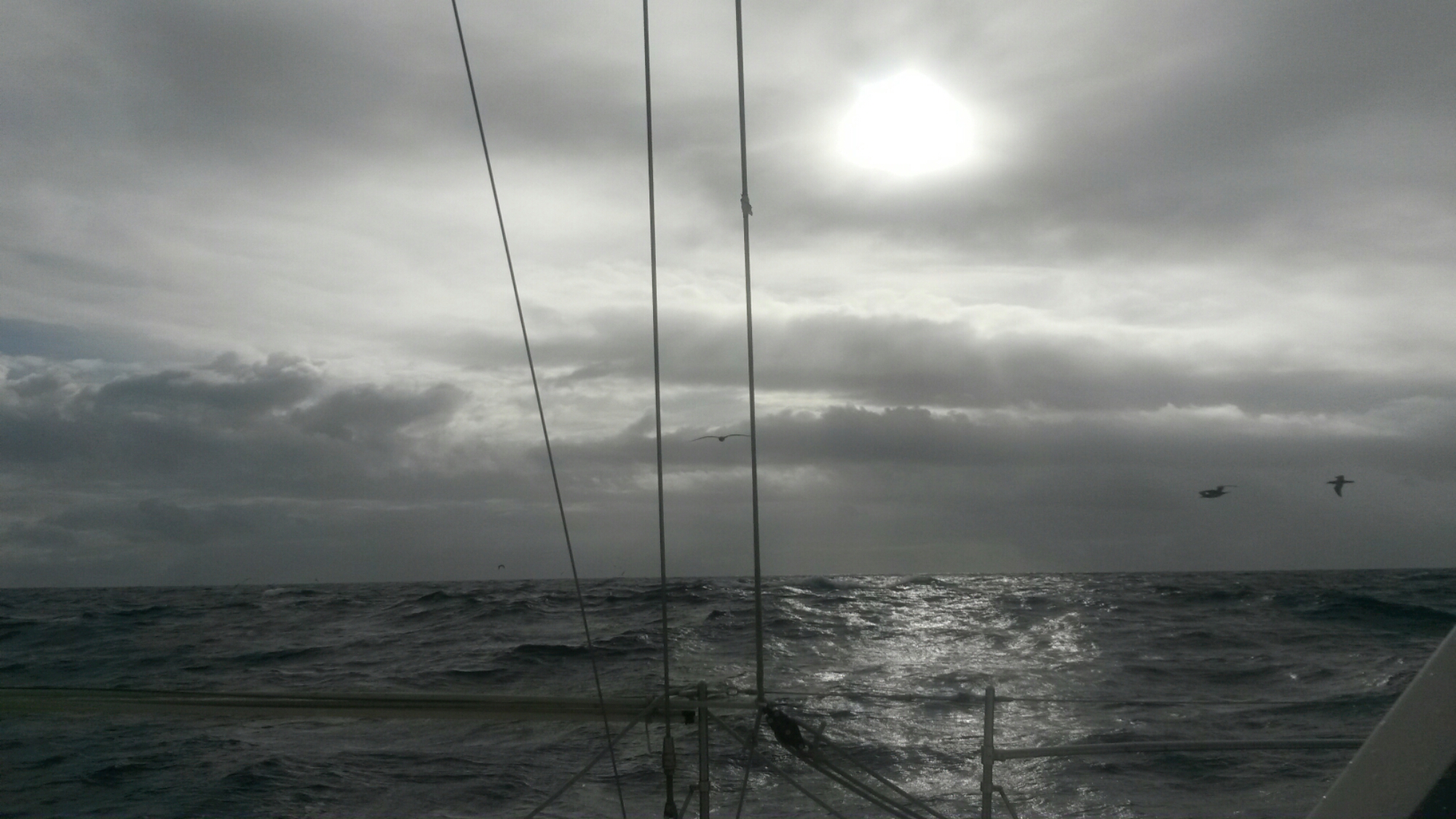

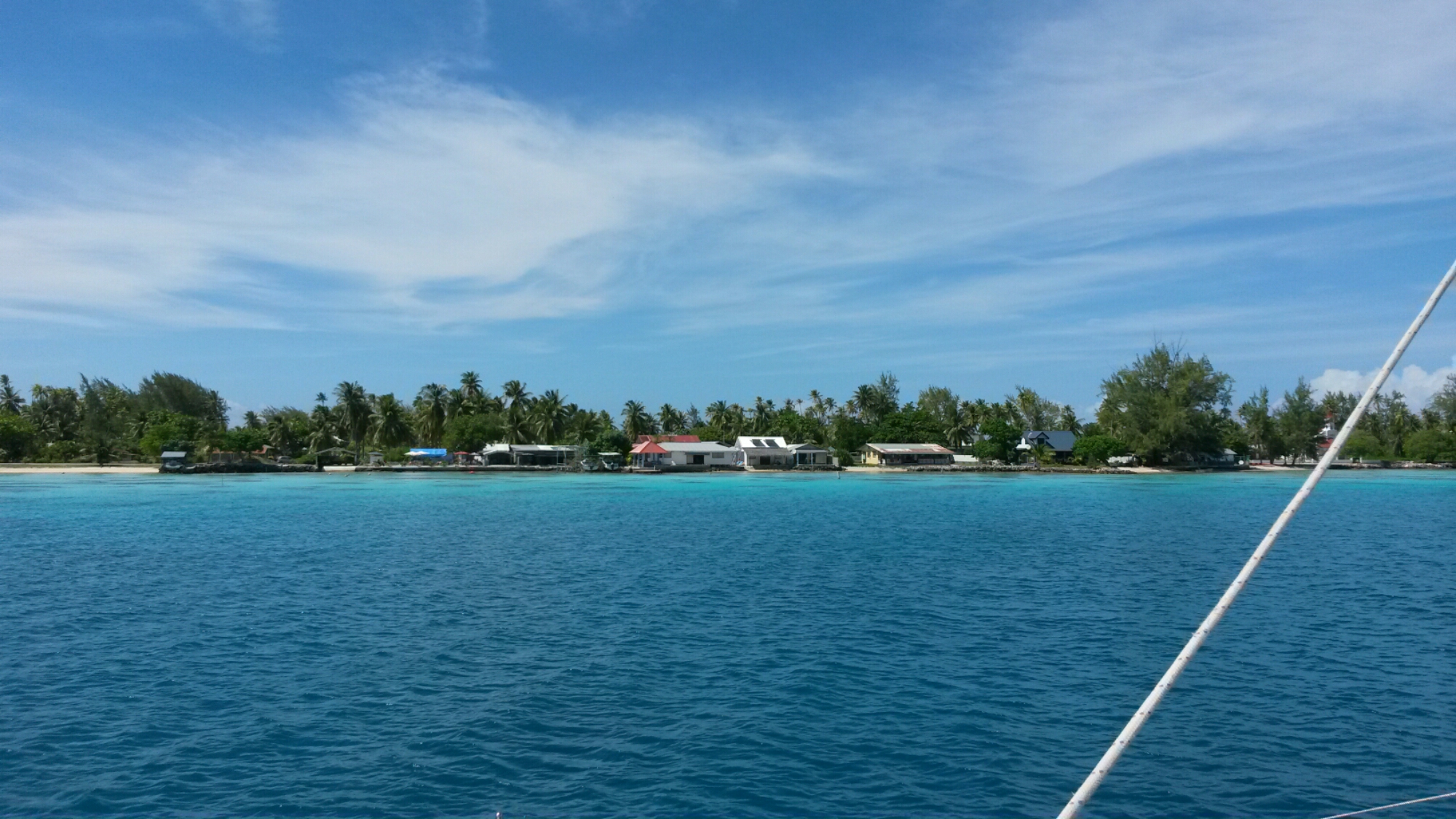
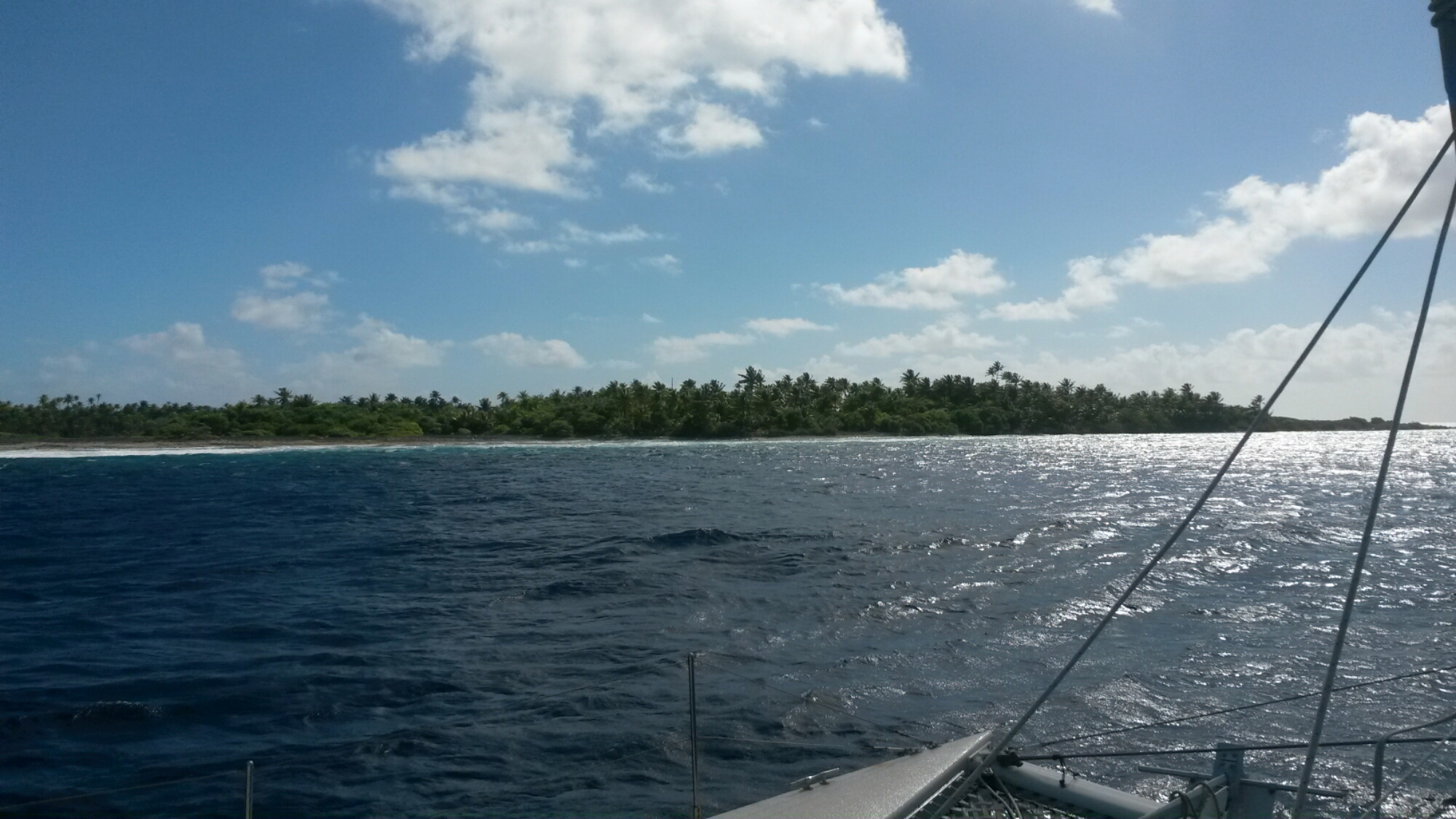


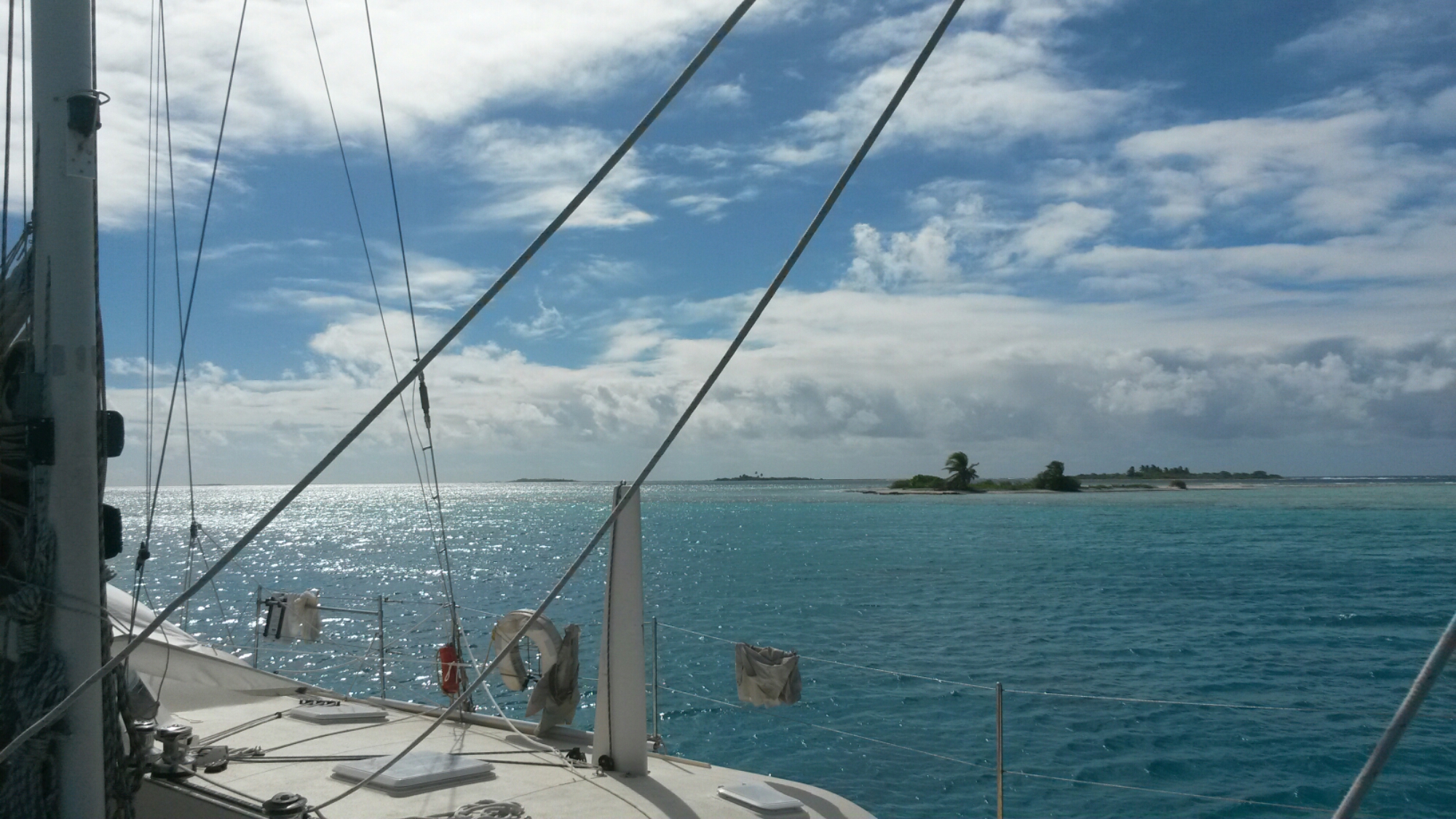
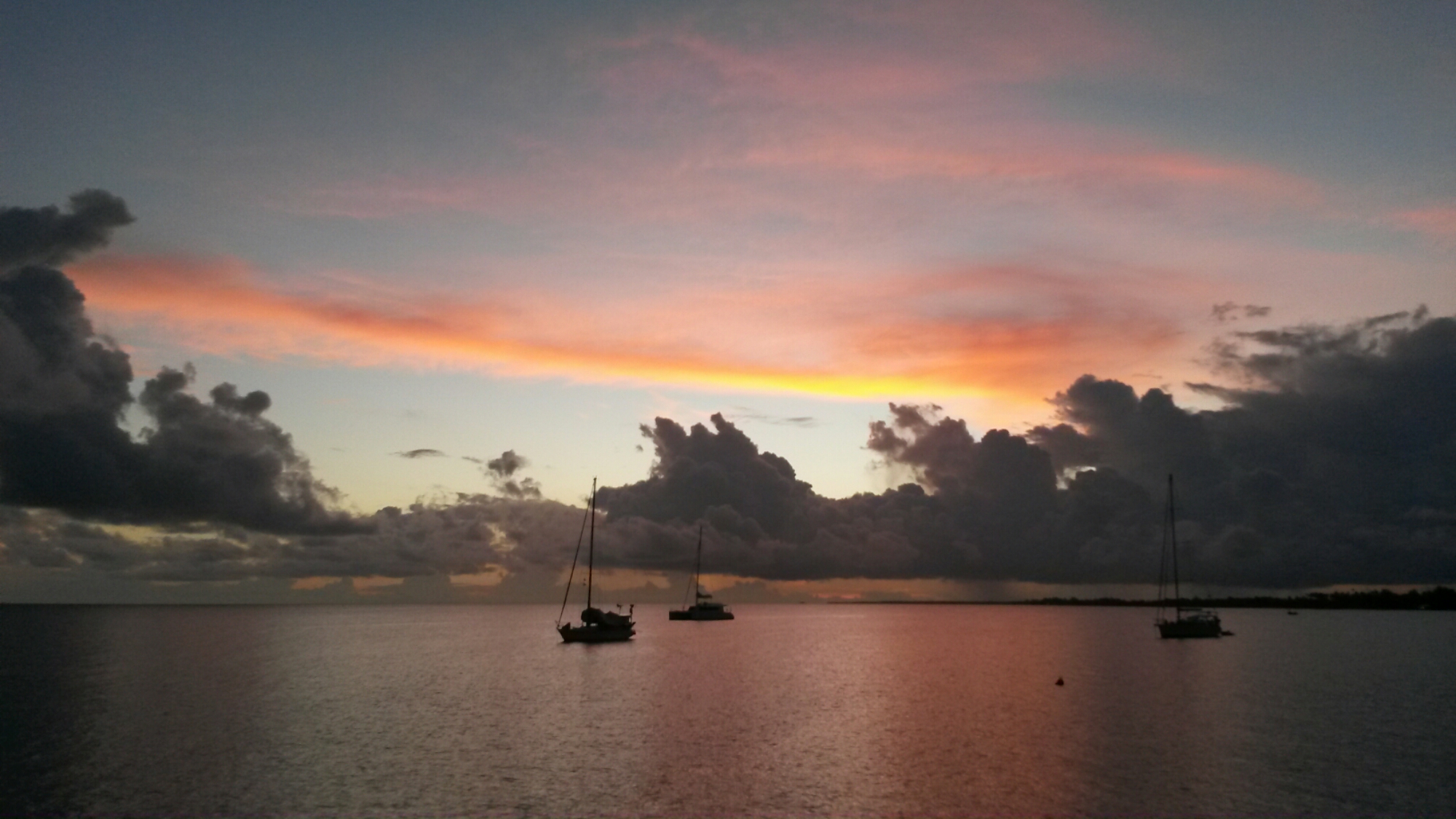
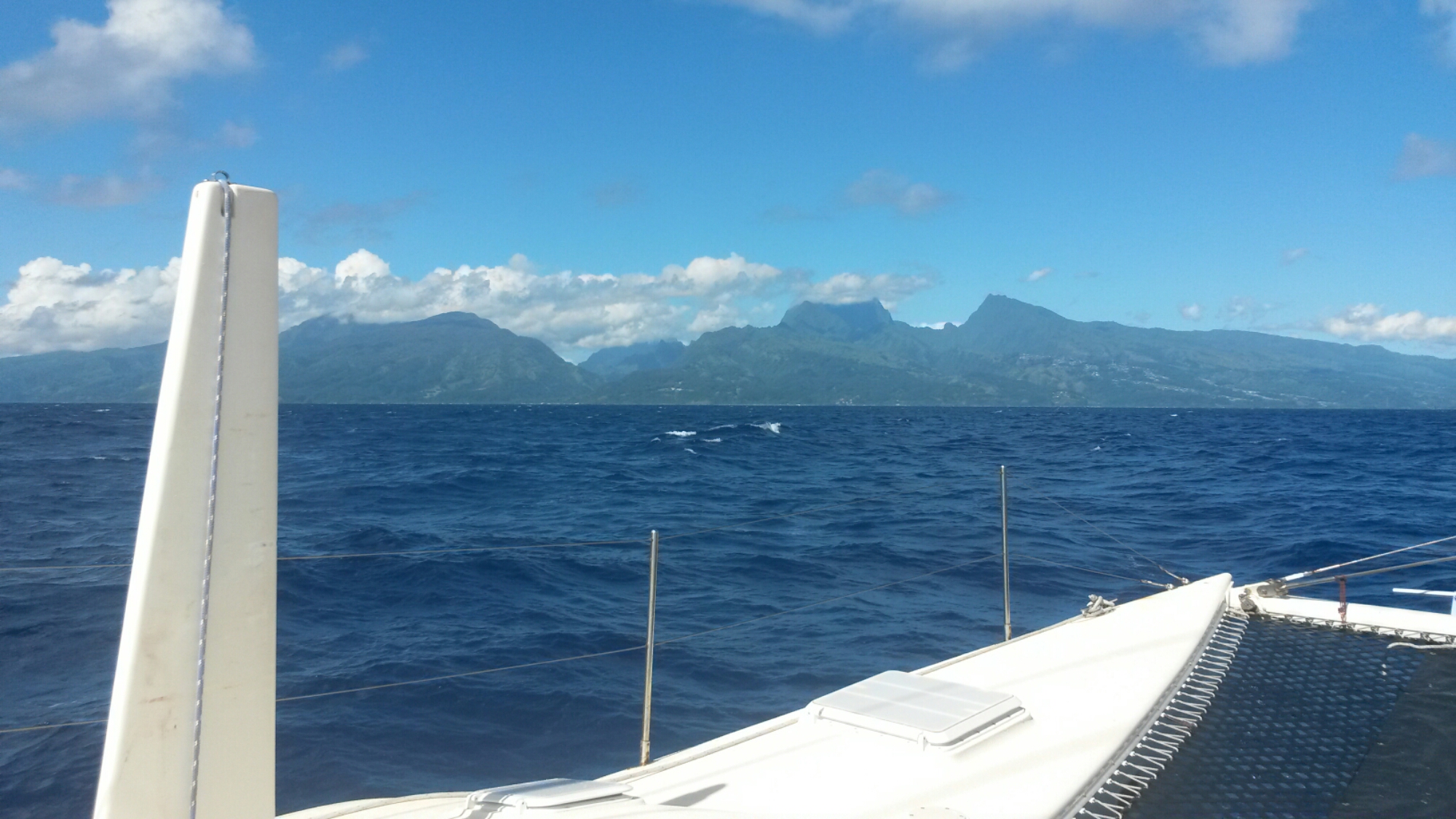
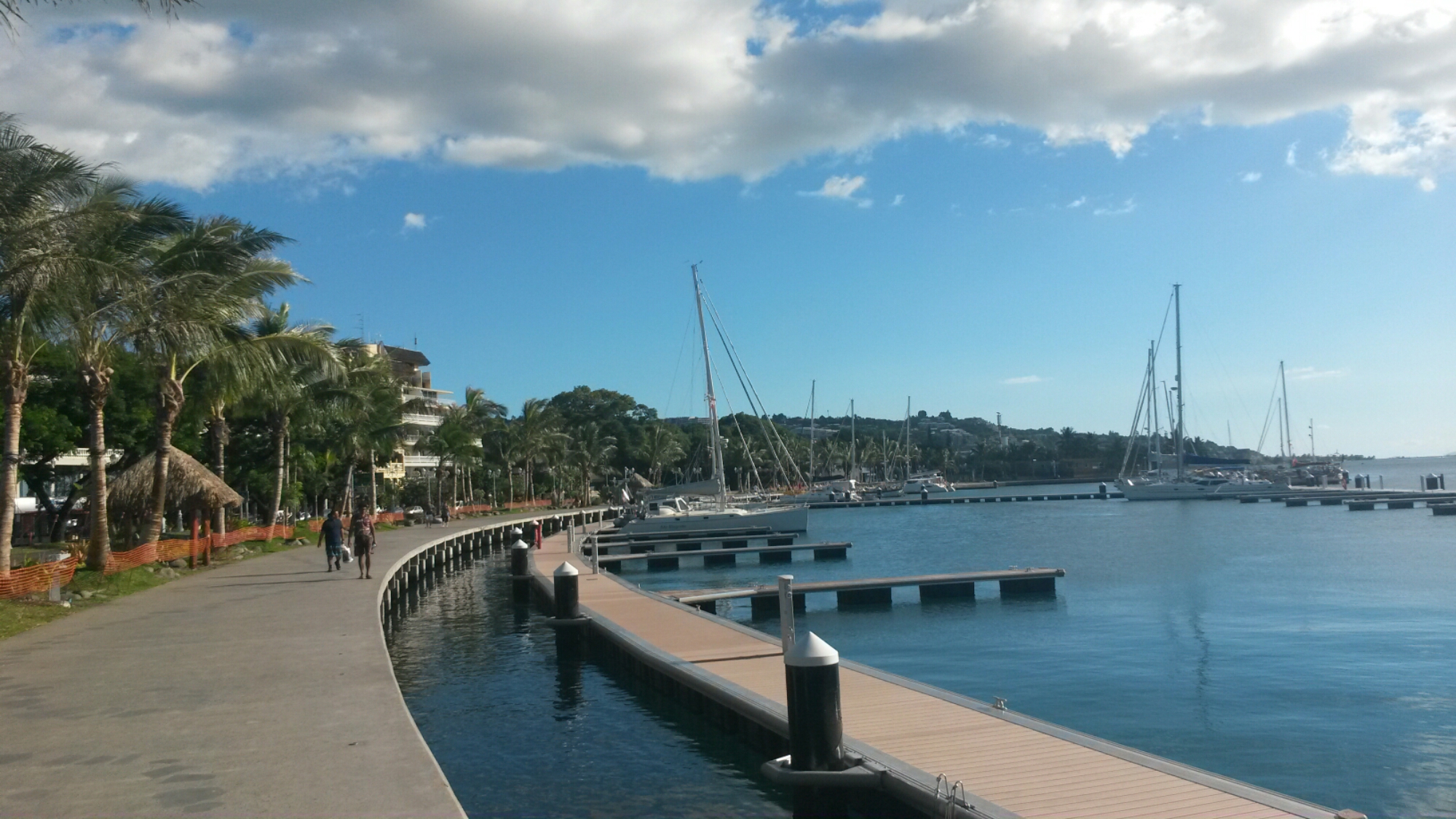

Photos of the Tuamotus are challenging because they are all flat and look similar. Nevertheless here we go…
Here’s some things that are ‘wrong’ with this area. It is way too hot in the sun. The primary activity for several hours during mid-day is to find shade, preferably with a breeze. There is no soft sand — it’s all bits of coral, not something you would want to dig your toes into. Pretty much everything except fish is brought in by boat. Supplies are very limited, and expensive. It struck me as funny today when we decided to stop into a store, after a walk in the heat, to splurge on an expensive ice cream bar. “Sorry, no ice cream until the boat comes tomorrow.”
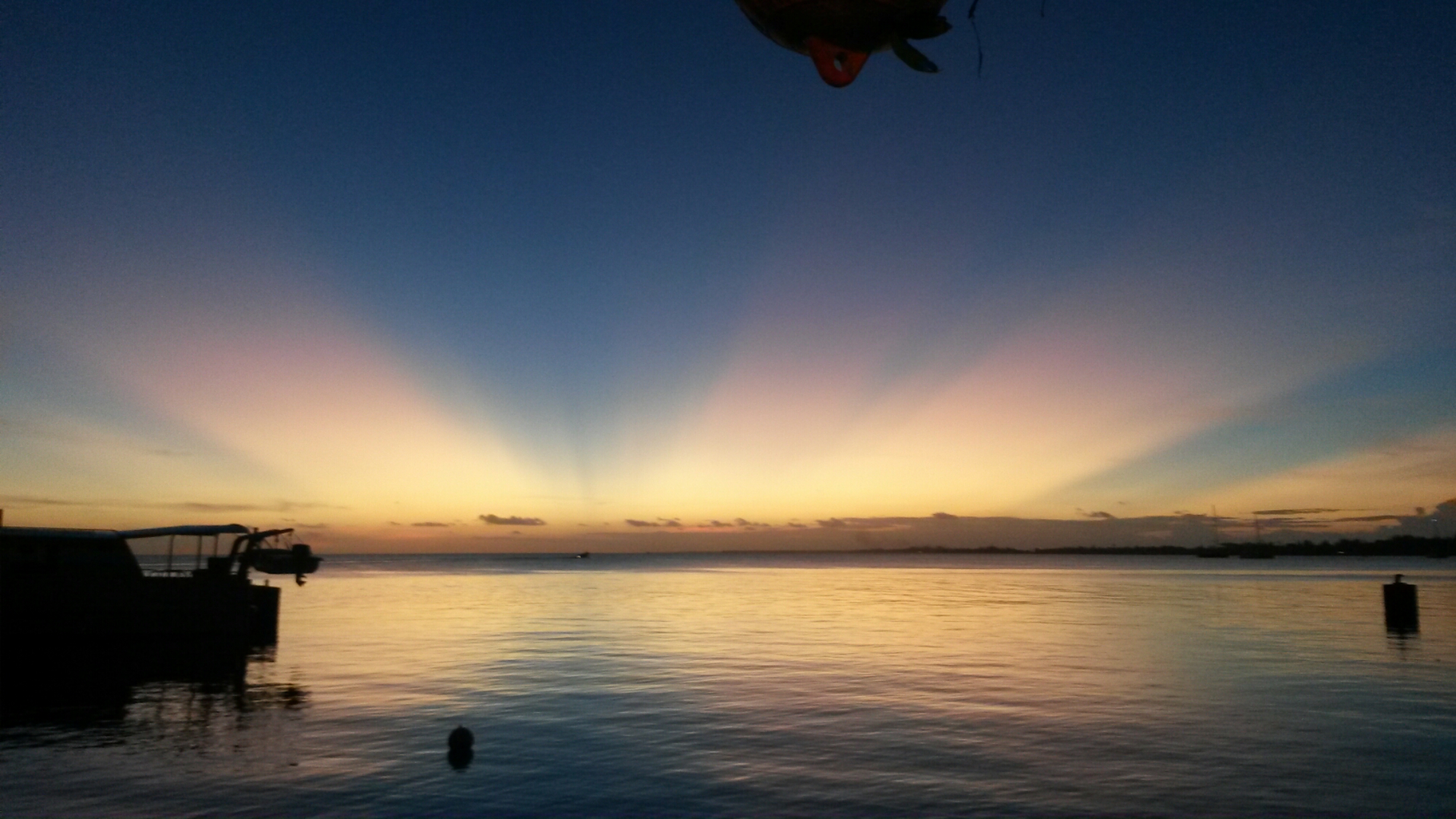
And yet, many think this is paradise. I’ve been thinking about what makes it so, and sitting in the cockpit in the cool breeze at the end of the day, watching a beautiful sunset, I came up with a one answer. Here you live outdoors. You feel that you are a part of the natural world, rather than apart from the natural world. You can swim in cool refreshing water that is clear enough to see the fish all around. You can sit outside with little or no clothing and enjoy the warmth and the breeze. There are no insects interfering with this enjoyment. It might rain, but it will stop in ten minutes, and you’ll be dry again in another ten.
I don’t think I could live here long. The sun erodes your will to do things, it seems to me. It becomes too easy to sit and do nothing. I would likely lose the satisfaction that I find in doing my projects (like circumnavigating, for example). Not much happens here; not much changes. I would never tire of the weather, but I would not like to be so far from friends and family. And a supermarket with a steady supply of cookies and ice cream (yes, and fresh vegetables, too).
So if I can’t live here, is there some other paradise for me? Or some aspects of this paradise that I could find or make at home? It’s challenging to spend time outside in Maine. The mosquitoes and other insects immediately come to mind, and the cold for much of the year. Would it be significantly different further south in the USA? Should I be focusing on building a screened deck with a heated floor and a hot tub and a view…? Would that be my paradise…?
Ashore at the edge of the lagoon, you can hear the wavelets lapping on the lagoon side, and simultaneously hear the crashing surf on the ocean side. The land is not wide, and more importantly it never seems to rise above about four feet from sea level. This is an archipelago that will be horrendously affected by sea level rise. I’ve heard some say that the atolls have a chance, because their coral reefs are alive and will continue to grow as sea level rises. But the land is the result of millions of years of coral growth. It seems doubtful that the coral can keep pace with the sea level rise that will occur as the ocean warms and polar ice melts. The reefs may live, but I’m not so sure that people here will still have their homes.
We sailed inside the Fakarava atoll, from the south end to the town at the north. In doing so we experienced an aspect of atoll cruising that I had not anticipated — inside the atoll you get all the wind but not the waves of the open sea. Makes for very pleasant sailing.
At the north end, almost the entire BPO fleet was there. It was nice to see some of our friends again. We had a dinner ashore; we ordered baguettes to pick up in the morning; we bought a few supplies. We snorkeled at a very nice little reef, a short swim from the boat. And then we decided it was time to head for Rangiroa, 150 miles away — our last stop in the Tuamotus.
Others told us that it was going to be high winds, and they were waiting for this to pass before they left. We went anyway, and the sailing was almost perfect. We left in company with 2 other BPO boats, but we soon left them behind. In fact we arrived off the Rangiroa pass before dawn, and had to drift for a few hours to wait for good light and reasonable current for entering.
Rangiroa is known for world-class diving. Luckily for us, the excellence extends to snorkeling, too. We snorkeled at “The Aquarium,” which is the name of a reef close by that is good for beginners, yet has an incredible number and variety of fish. I saw shapes and colors of fish that I’ve never seen before. Purple fish with long streamers off the tips of the tail; multicolored fish like parrot fish, but far larger than any parrot fish I’ve seen; tiny blue fish with brilliant color like neon; a fish that looks like it grew a finger out of its forehead, extending over and in front of its face… The coral also was beautiful colors and shapes.
Tomorrow’s activity is a “drift dive” in one of the passes. Rangiroa is said to have the best drift diving in the world (though I’m sure there are places that dispute this). The idea is to take your dinghy out the pass into the ocean when the current is coming in, and then get in the water and drift back in (hanging on to the dinghy) through the pass. Allegedly one can see large animals below in the pass — manta rays, large sharks, etc. We shall see.
The town here is disappointing. There isn’t any “town center” to walk through. The stores and restaurants and services are all spread out along a 6 mile long road. We went to the Air Tahiti office this morning to make sure that Tim’s flight out (in 3 days) is all set, and we went to the Gendarmarie to try to handle his exit and return properly. Surprisingly (based on our Marquesa experience) the gendarme spoke pretty good English. And although we thought we were just processing Tim’s exit/return, he said we should have brought all our passports (we didn’t, we only had copies); yet he let it go. This is paradise, he shrugged — kind of like, “No worries.”
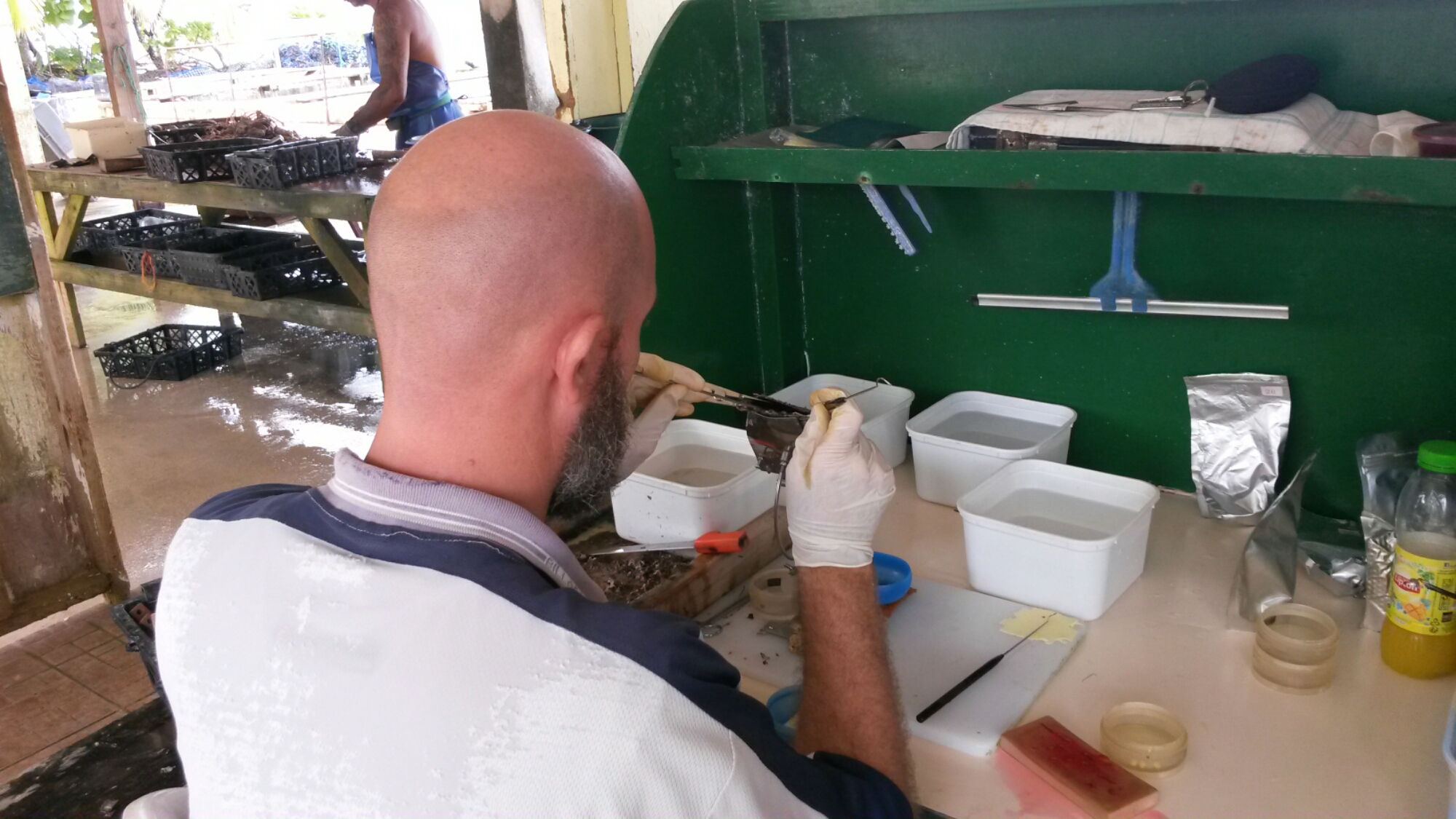
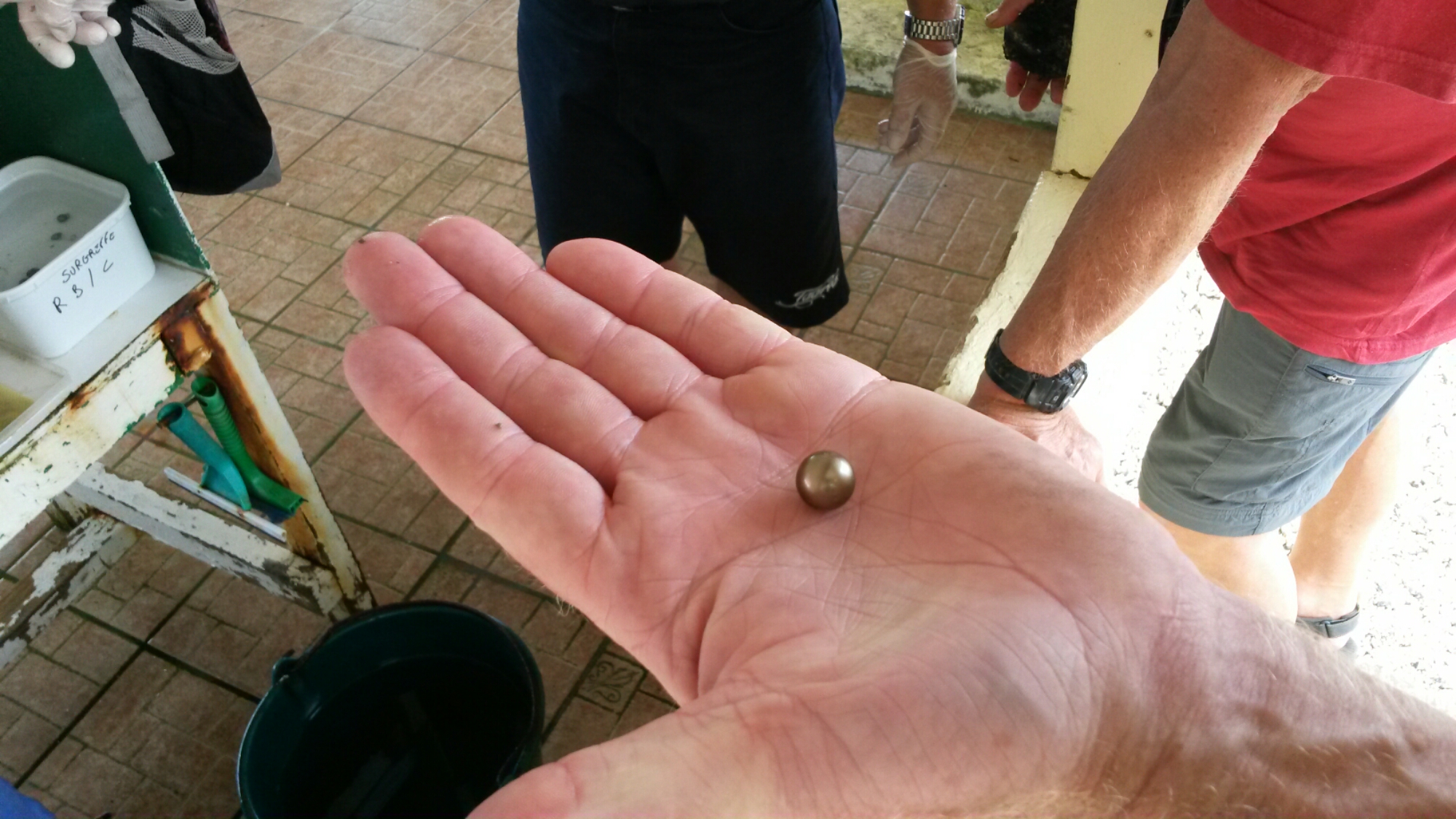
We visited the Gauguin Black Pearl Farm, and got a talk on how black pearls are cultured and harvested. It’s a surprisingly complex and interesting process. The oysters grow for 3 years before they “put them to work.” Then the pry open the oyster about 1 centimeter, and with special tools they make a small incision and insert a small “marble” and a graft of a small piece of tissue from a second oyster. The “marbles” are made from oyster shells from the Mississippi River! These shells are used because they are thick enough to cut the marbles from, and because the density is the same as the resulting Rangiroa pearl will be. The Mississippi shells are shipped to Japan to be cut into the marble shapes, and then shipped here to the pearl farm! The oysters are put into net bags for a month. After that time, if the marble is seen in the bag then the operation didn’t “take.” If no marble present, then the oyster is added to a string of oysters, and the string is surrounded by a cage to keep predators out, and the whole rig is hung out in the lagoon…for two years. Then the oysters are brought ashore and opened slightly again, and the pearl is taken. This is done by an expert who has been trained for two years — they reminded me of histotechnologists. This expert immediately judges the quality of the pearl. If it is inferior grade it goes into one box, and the oyster goes into a bin to be eaten. It the pearl is higher quality it goes into another box, and the oyster gets a new and slightly larger seed marble, and goes back out to the lagoon for another two years.
After learning all about growing black pearls, we of course had to visit the sales showroom, where they have zillions of pearls of all different quality, and people there who turn them into jewelry. Hallie, I know you rarely wear any jewelry that I buy for you, but…I had to buy a black pearl. I chose an oddly shaped one, which I prefer to the perfect ones (that hardly seem real), and I had them drill it and mount it on a silver chain. Hope you like it, even if it’s not something you will often wear!
 ZekeTheSailor