All posts by ZekeTheSailor

Broken Shroud

Awoke this morning to the best wind we’ve had on this passage. So…why were we motoring? Perhaps it’s related to the downpour we’re in? I think it’s the first heavy rain we’ve seen since leaving the States. But no, the rain is just a passing squall. We’re motoring, I’m informed, because during the night we broke our starboard lower shroud (that helps to keep the mast from flexing in the middle). It parted just above the Norseman fitting that connects the wire cable to the turnbuckle (which tensions it), which attaches to the chain plate (that attaches to the hull). Without the mast supported half way up by this shroud, it’s unsafe to have the sails up.

This is scary stuff. We have no spare mast! And we’re 2,000 miles from anywhere. Going all the way under power, besides sounding like a miserable idea, is not possible — we only carry enough fuel to motor about 500 miles, and we’ve probably used a quarter of it already. So what to do? The remaining cable is in good shape, except for the last couple of inches. My first thought is we could bend it around a thimble and use cable clamps to secure the loop, and then lash it to a shackle attached to the chain plate. I find that we have no suitable cable clamps. (Note for future shopping list…)

Second option: we could rig a line in place of the wire cable. Where the cable attaches to a tang up the mast we could put a shackle on the tang, and attach the line there. But the line we have would stretch under load — probably enough that it wouldn’t support the mast adequately.

Third option: Bill thinks we could take the Norseman fitting apart, clean it up, cut off the last two inches of wire cable, reattach the Norseman fitting to the good wire, and still have enough thread on the turnbuckle to be able to connect it all back together. Tim is hesitant to trust the wire or the Norseman fitting, so we decide we could try this approach but also rig a line as a backup. Belt + suspenders.

We look through our reference books and find that Nigel Calder’s “Boatowner’s Mechanical and Electrical Manual” (our bible for engine issues) describes how to properly connect Norseman fittings to wire cable. Since we’ve never done this before, this is very welcome information! Tim and I take turns going aloft to rig the suspenders line, but after reading Calder and replacing the Norseman fitting, we decide the belt alone is a satisfactory solution. Within a few hours we are sailing again.

In the meantime we have tried to send an email to Rally Control to alert them to our circumstance and to ask if a rigger can be found in the Marquesas to help us out. Our radio-based email system informs us that our service has been cut off because we have used too much connection time (presumably downloading multiple grib files). What timing! But we have a satellite tracker (that reports our position on the Cornell Sailing web site) that can also send short messages. So we get a message out, also explaining that we can’t use SailMail. Before the day is out we get a message from SailMail that we’ve been granted unlimited service until we reach the Marquesas. Is this the “Cornell influence” at work? However it came about, we are very grateful (and we’ll stop downloading as many grib files).

Naturally we inspect the rest of our shrouds, and find that the port side lower appears to have a strand or two broken. We decide not to wait for it to also fail. We’ll cut off the last inch or two, and reinstall the fitting just like we did on the other side. This process goes surprisingly smoothly, and is completed just as it is getting dark.

Our two “new” shrouds are now getting a test, as we sail through the night in what appears to be real trade winds at last.
Westward Toward the Distant Marquesas

First day out was fantastic. The BPO had a scheduled noon “start,” which I guess was essentially a chance for the shore crew to come out and take photos of the boats. We were anxious to go, and got out to the start at least an hour early. Do we keep going, or wait around? We decided it would be good form to wait, and that gave us a chance to clean most of the crud off our waterline that had accumulated in the dirty Galapagos harbors. But when noon arrived and most of the other boats were still motoring toward the start, up went our sails and off we went. There was a surprisingly pleasant wind, and we made the most of it, staying in front of all but one of the other boats.

It’s not a race, we are frequently reminded, and we remind ourselves. But in fact, for us, it is two races. The most important one is to make the best possible crossing given whatever conditions we encounter. In this race I think we are doing very well. The winds have been unusual/challenging. But we have kept the boat moving nicely, taking advantage of whatever is available, and I can see only minor details (even in retrospect) that we could have done better. Our second race is against the other boats. For starters we want to prove (to ourselves) we are faster under sail than the other catamarans. This is pretty much accomplished already, as they are 60+ miles behind us. But there are two boats ahead of us. Blue Wind is reputed to be a serious racing boat, though I know nothing more about this than seeing how fast they go! Tohawus is a fast cruiser, but is 54 feet long to our 42. We’d like to prove (to ourselves) that we can go faster than they can, in certain conditions. So far we have not found those conditions. We have been going fast, but they have been going equally fast, or slightly faster. They have been about 30 miles ahead of us for the past two days. I think there are conditions (fairly high wind, downwind, where we might be surfing at 13 knots or more) where we could overtake them, but we haven’t had such winds, and I’m not sure if we will on this crossing.

Our second day/night out was more what we expected for the first few hundred miles — very light winds; everybody motoring. Most of the boats go under power at about the same speed, but Tohawus is faster under power, so they pulled ahead. But we stayed in front of the pack, so when the wind came up, we got it before they did. And the wind has gradually increased each day, allowing us to stretch ahead of them (while Tohawus stretched their lead on us). Stay tuned. Check the Cornell Sailing “track the boats” web site to see how we’re doing!

During the day I do a lot of staring at the horizon, half expecting to see something. But there is nothing here but ocean, more ocean, an occasional bird, and lots of flying fish. I did see a whale spout once, but it remained in the distance, taking no interest in us. We haven’t seen another boat since our second day, nor do we expect to at this point. We’ve had a lot of pleasant idle time. I have a book to read, but that feels like a distraction from just sitting and watching the ocean go by.

Life has been pretty smooth aboard. The first days we tend to feel lethargic — just a touch of sea sickness. That is now past, and we have more energy. I started baking bread today, as our bread from the Galapagos has already turned moldy. Mine is a hundred times better than the crap they have there anyway. I don’t understand how such interesting people can put up with such lousy bread!

I’m on my night watch, and it is a black night — no moon, no stars. We are scooting along at 9+ knots with no fuss at all. Very cool that this boat can move like this, though eerie to be speeding into blackness.

I’m very, very happy to be exactly where I am right now! 🙂

Another Perspective on Galapagos

Being in the Galapagos, and seeing the interesting wildlife, is cool, of course. But I don’t want you to get stuck with romantic notions that might not be met should you ever come here, so here is a less-than-romantic view. First, there is the matter of getting in. Half a dozen officials come aboard, and require lots of redundant forms to be filled out, and payment of many hundreds of dollars in entry fees. You are not allowed to actually sail/anchor in the wonderful places. In our case we are limited to the two largest ports — Baquerizo Moreno being the smaller and nicer of the two. I’m told it is possible to get permission to visit three other islands, for additional dollars.

The harbors are not pleasant. Larger tour boats come in, bringing an oil slick and a stink and their excessive lights and generators. Sometimes you can both hear and smell a generator running on shore at night. It has mostly been windless. With our wind generator useless, and our solar panels relatively small, we have to run our own engine periodically to keep our batteries charged.

Dinghies are not used here — you call on the radio for a water taxi to take you ashore or aboard. While it is nice that we don’t have to rig/use our dinghy, and the dollar per person fee seems reasonable, it means there is no “casual” getting around and visiting the other boats. One has to plan their comings and goings. In Puerto Ayoro calling the taxi doesn’t seem to have much effect — you end up having to wait until one is in the area and hail it directly.

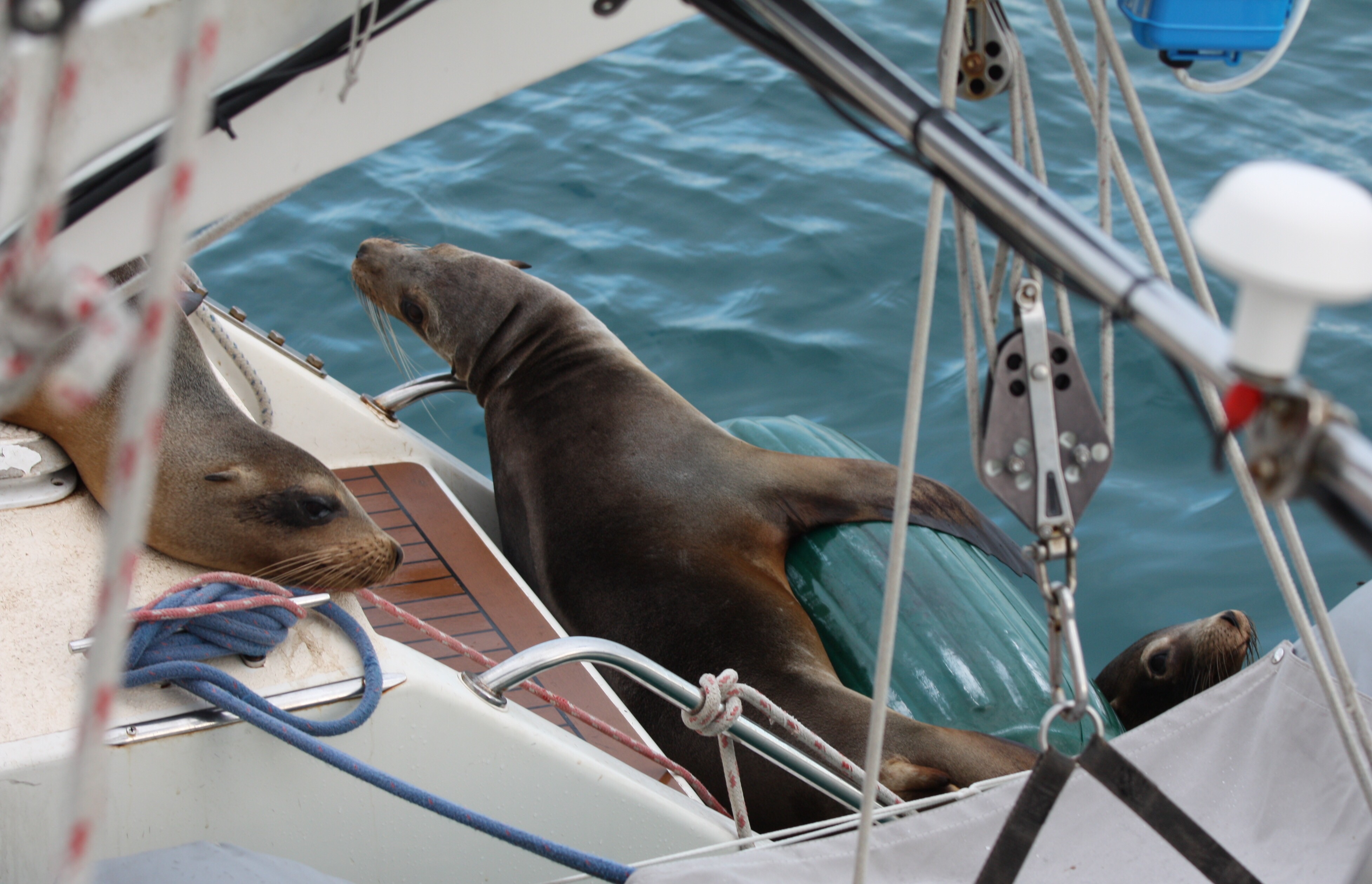
Then there are the sea lions in Baquerizo Moreno, which quickly lost their charm for us. On shore, where they haul out in large numbers, they stink. In the harbor, they are difficult to keep off of the boat (because of our steps up the transoms, which they know and love), and when they get aboard they shed and they sh*t. They also compete with each other for nice haul-out spots, so there can be middle of the night raucous commotion on deck when one tries to displace another.

But here is the major point. Getting to the “good stuff” mostly requires hiring a tour, at substantial expense. Thankfully there are a couple of places nearby that one can walk or bike or taxi to, but they are limited. The concept of “exploring” the Galapagos mostly consists of selecting which tours you want to sign up for. The wonders are undeniable. But they are fed to you by a guide who can tell you most of what you are going to see before you see it. There is a touch of Disney in it, even though it is all real.

This gets to the hard question that Robin asked in a comment. There are ever-increasing numbers of visitors (and residents) here. How do you enable them to experience the wonders without destroying the wonders? The Galapagos administration is clearly making a huge effort to preserve the ecosystem. The animals and the environment appear to be largely unaffected by the visitors. But one can no longer explore and discover on one’s own. And more restrictions will likely be needed as more airplanes, more cruise ships, and, yes, more yachts, bring added pressure to bear.

As some have quipped, the most destructive invasive species here is human!

In any case, it is time for us to leave. I wish we could have cruised to the remote areas, but that is no longer allowed. Or at least if we could have sailed to the smaller harbors, but probably they couldn’t handle a dozen boats all at once. Still, it has been a pleasure to be here. The wildlife is awesome. The people are very friendly. I was sitting in the cockpit tonight after a delicious meal aboard, watching the moon rise, enjoying the coolness after sundown, watching the monohulls rocking in the swells (being glad I was on a catamaran), listening to the distant music getting started ashore…and thinking how satisfied I am…just being here. And at the same time looking forward to what’s next.

We’ve done most of our provisioning, and we got our diesel tanks topped up. Today we do some laundry, buy a little more food (like several dozen eggs), get our “zarpe” paper that says we can leave, have a BPO-initiated meeting with some high-ranking official from the National Park (just about everything is national park), get our BPO sailing instructions, and probably have a drink and dinner with a BPO crowd. Tomorrow 8am we all get our passports stamped, and then we all head out…3,000 miles to the Marquesas. Done with using my Spanish for this trip, time to start learning a little French. No photos until we arrive, in about three weeks. Follow our progress on the CornellSailing web site!

Hey Tim, how did the big green fender work for keeping the sea lions off the boat...?
Hey Tim, how did the big green fender work for keeping the sea lions off the boat…?
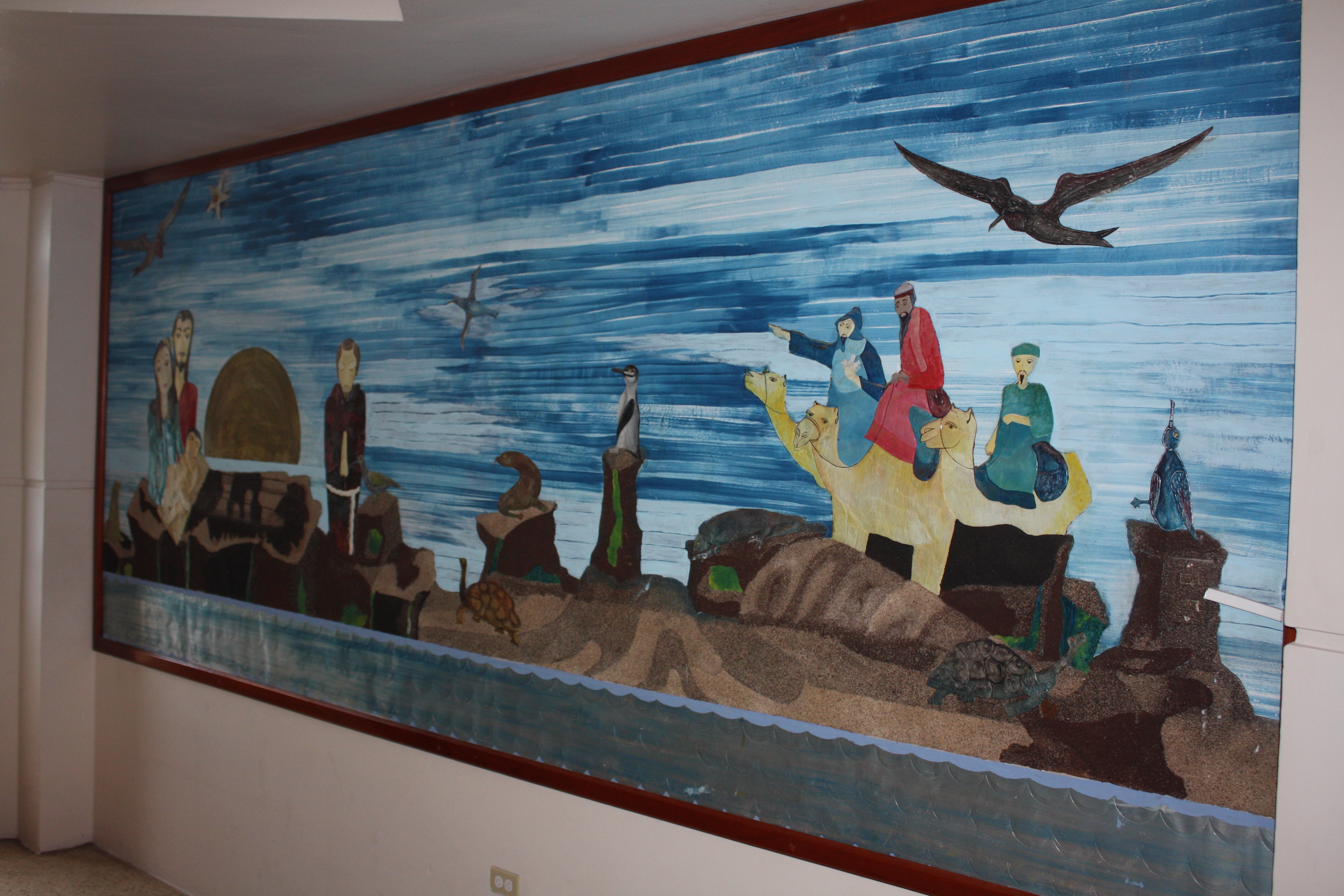
Christianity adapted to the local culture.
Bill in no hurry.
Bill in no hurry.
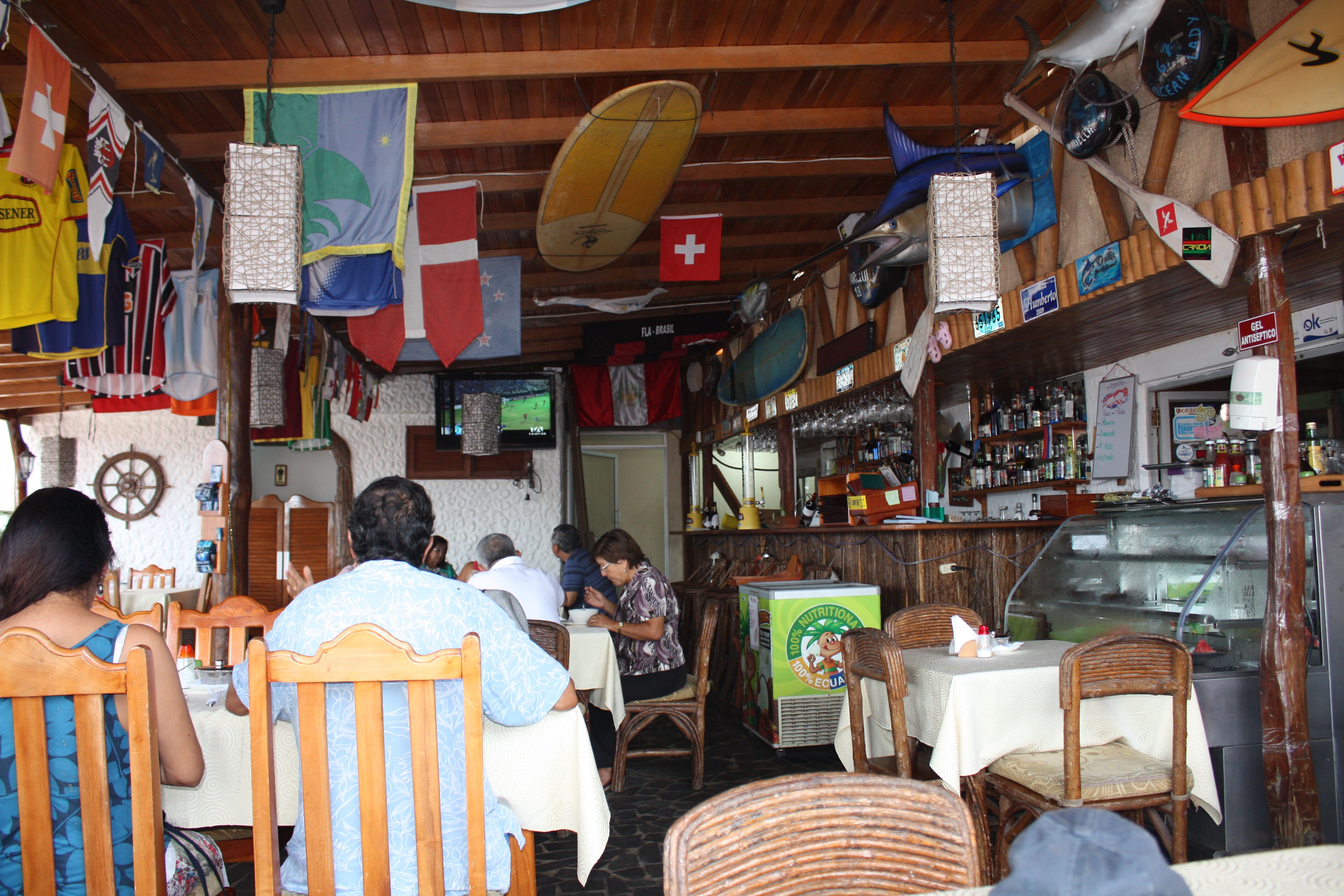
Fixed price lunch (more like dinner), $5.
Fixed price (huge) lunch, $5.
Baquerizo Moreno
Baquerizo Moreno
Entertainment at a group dinner at Pablo's house.
Entertainment at a group dinner at Pablo’s house.
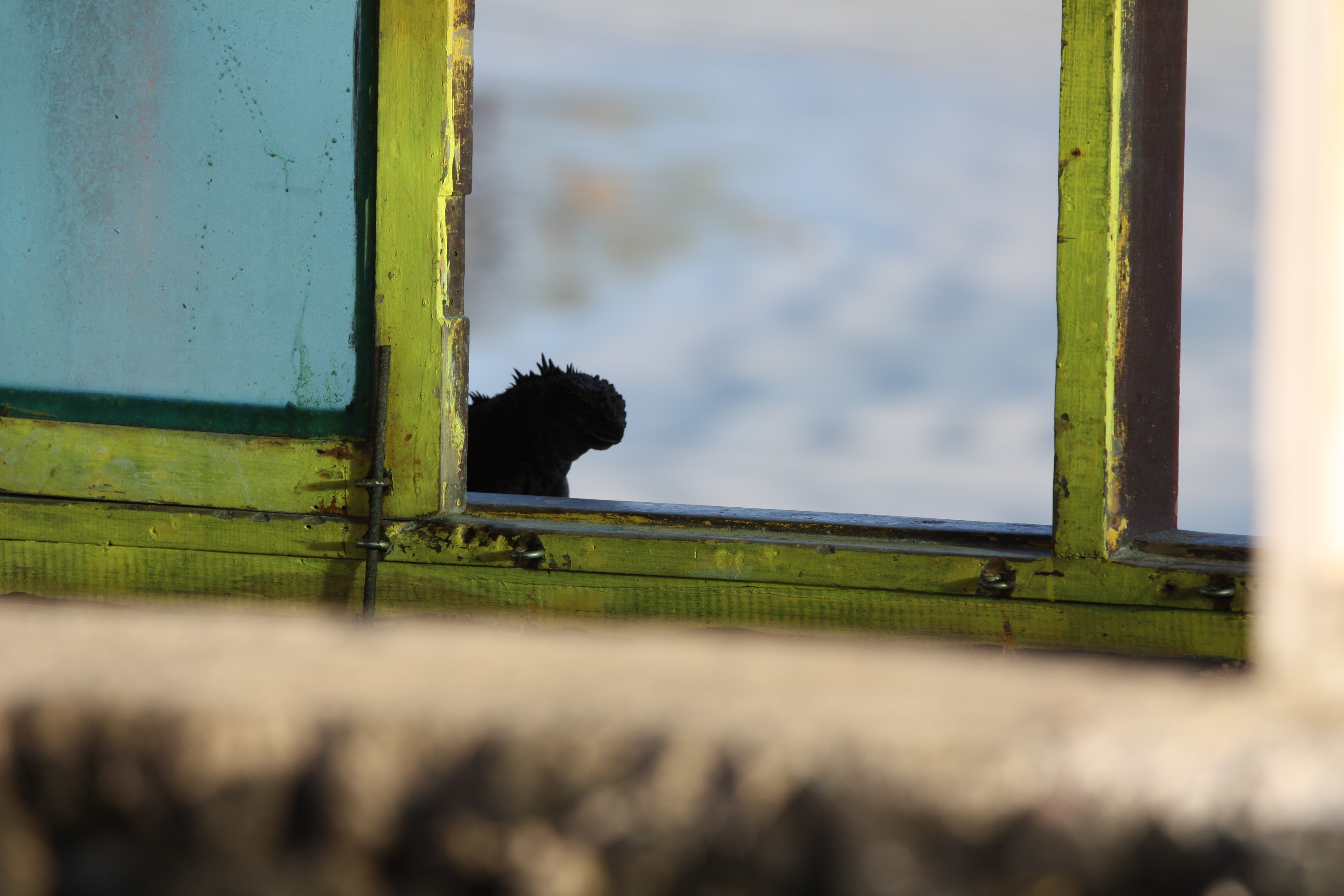
Iguana looking in the window of a defunct bar called The Iquana...
Iguana looking in the window of a defunct bar called The Iquana…
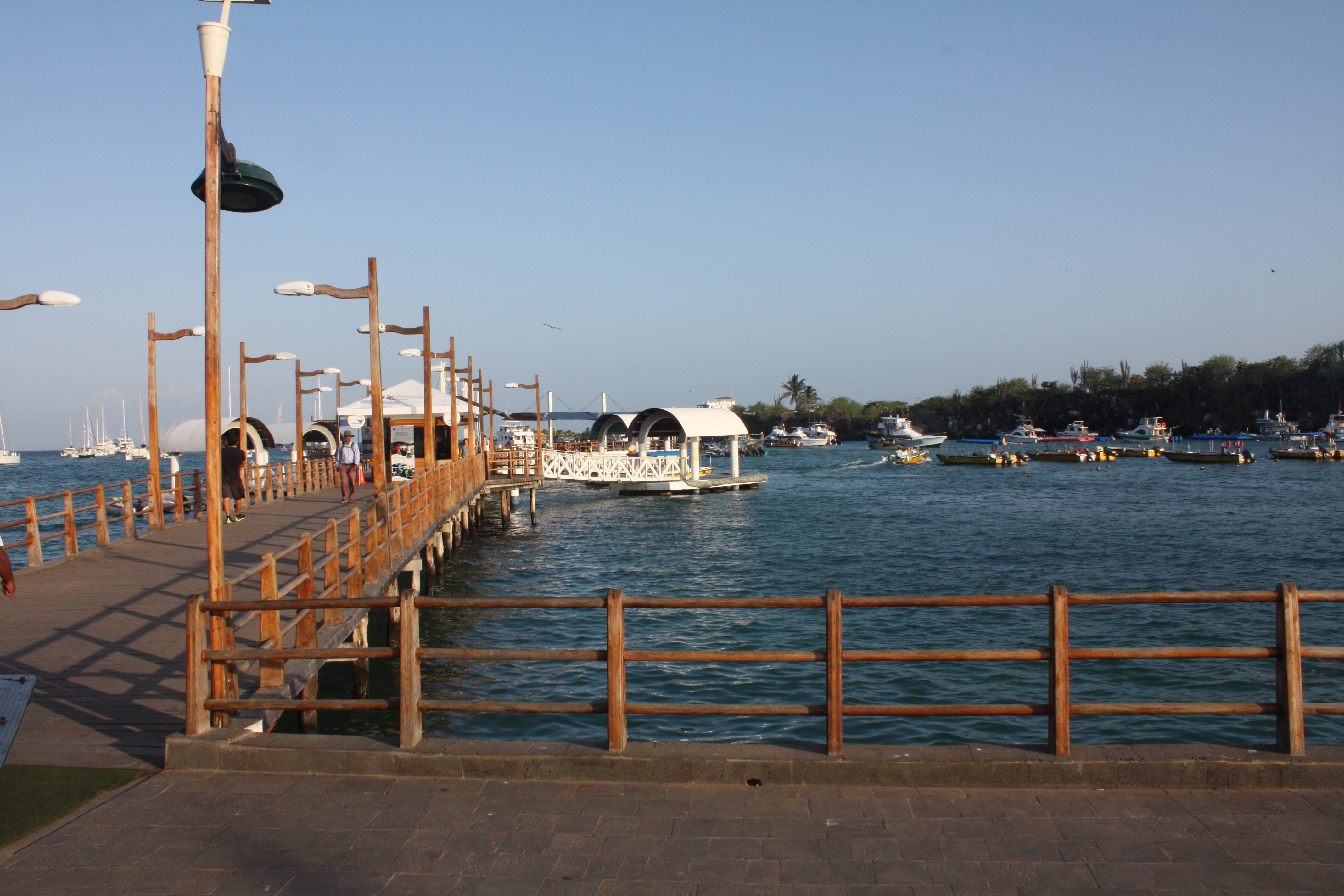
Puerto Ayora dock & water taxis.