Category Archives: 5. Panama to Tahiti

Kicker Rock – Galapagos

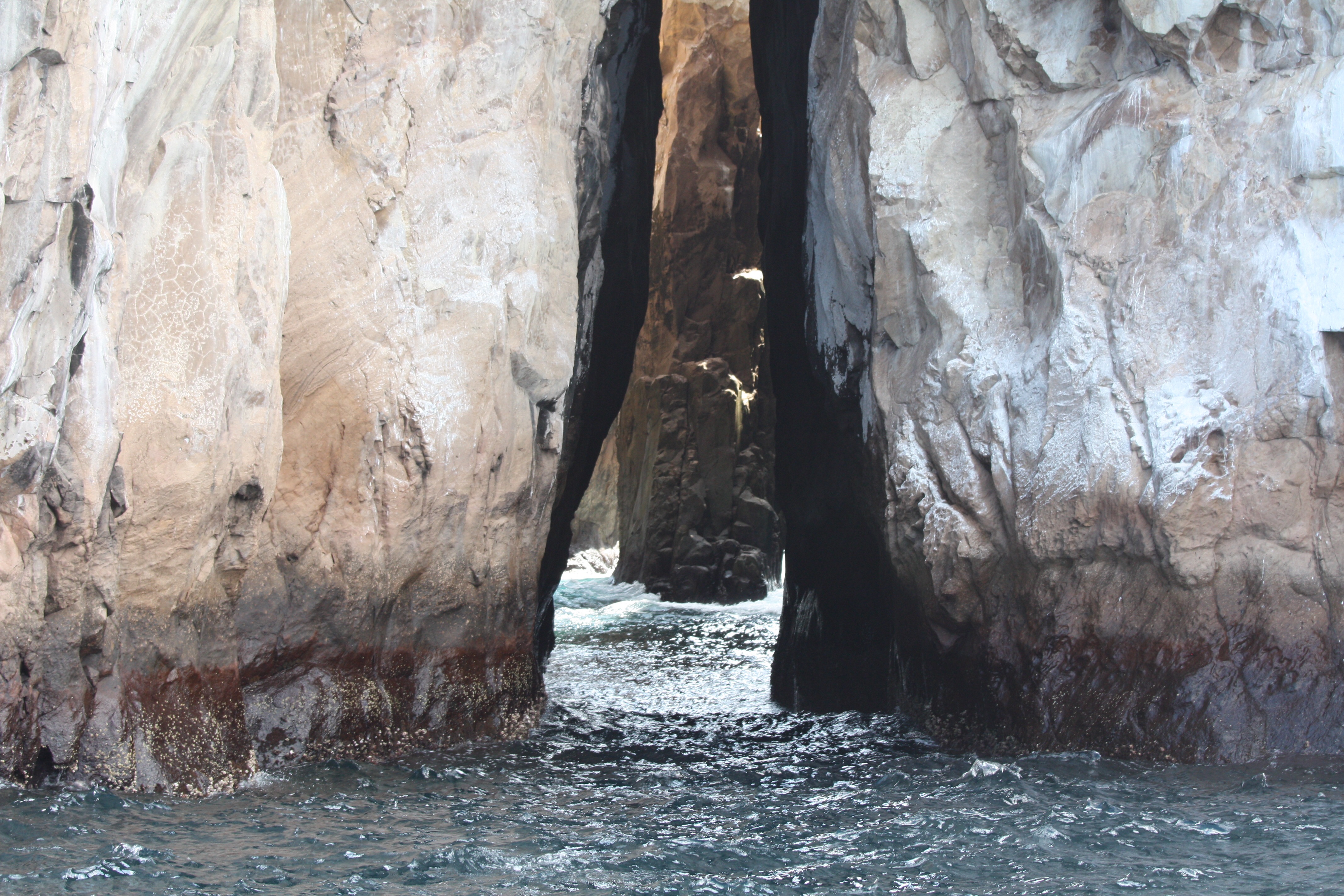
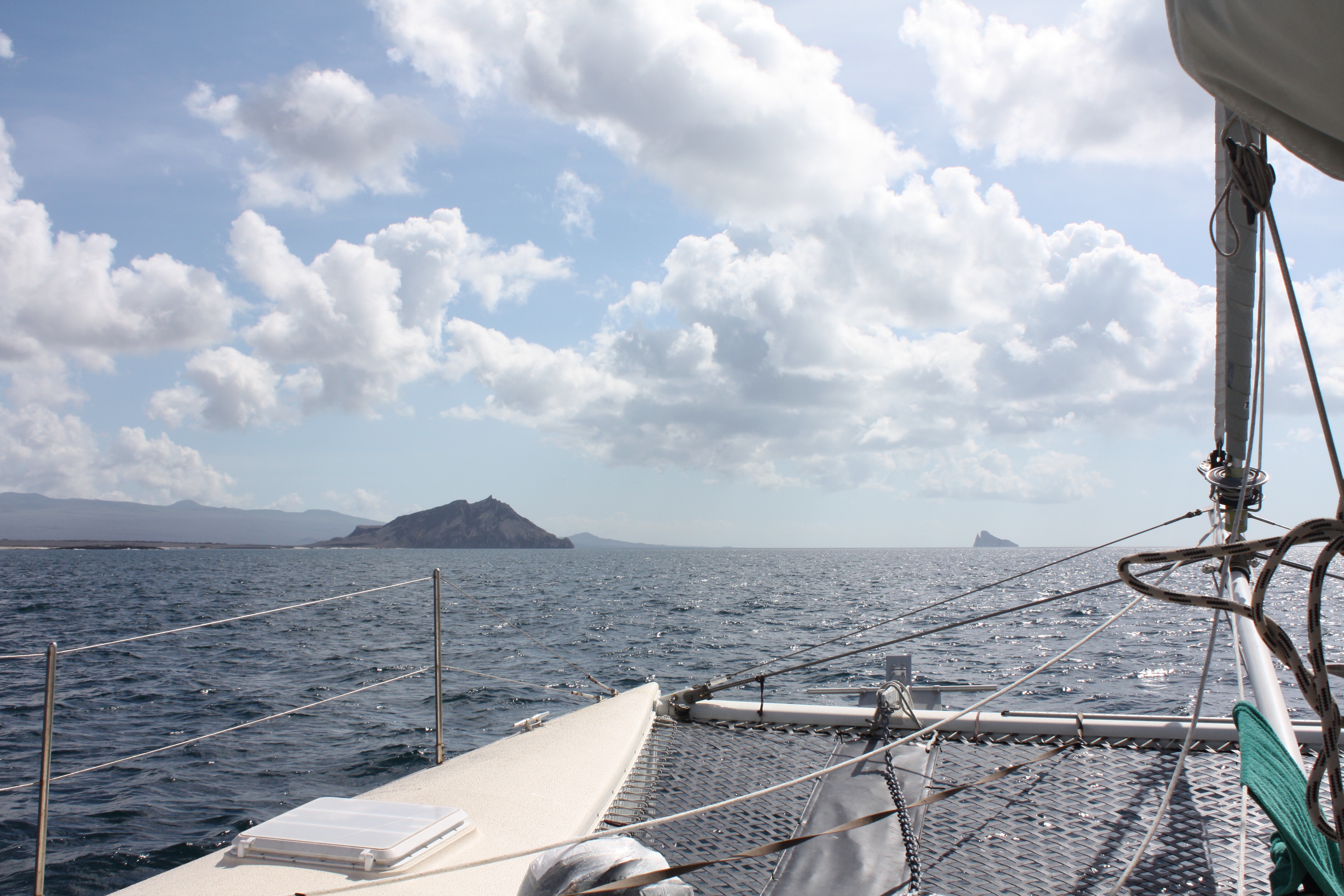
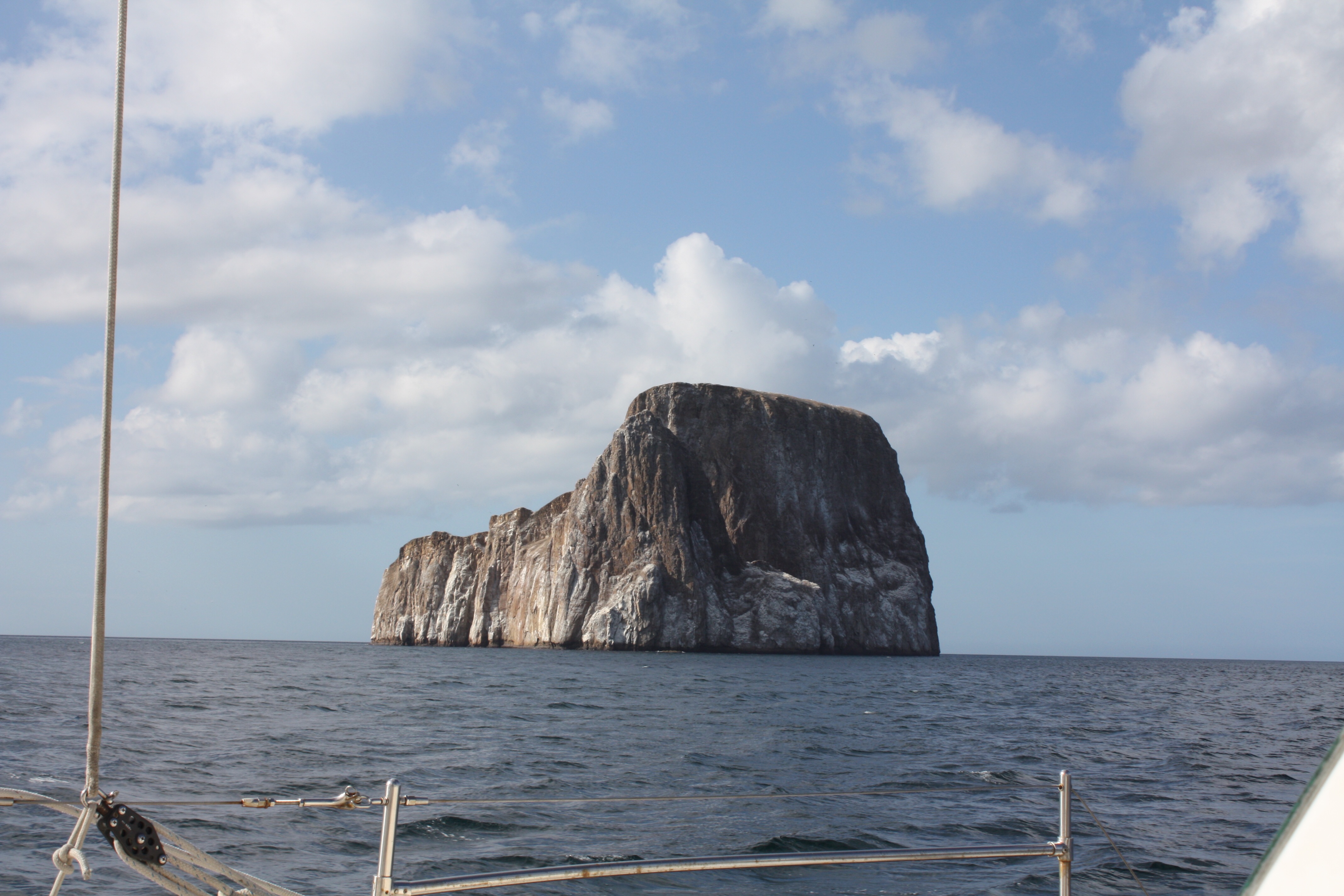
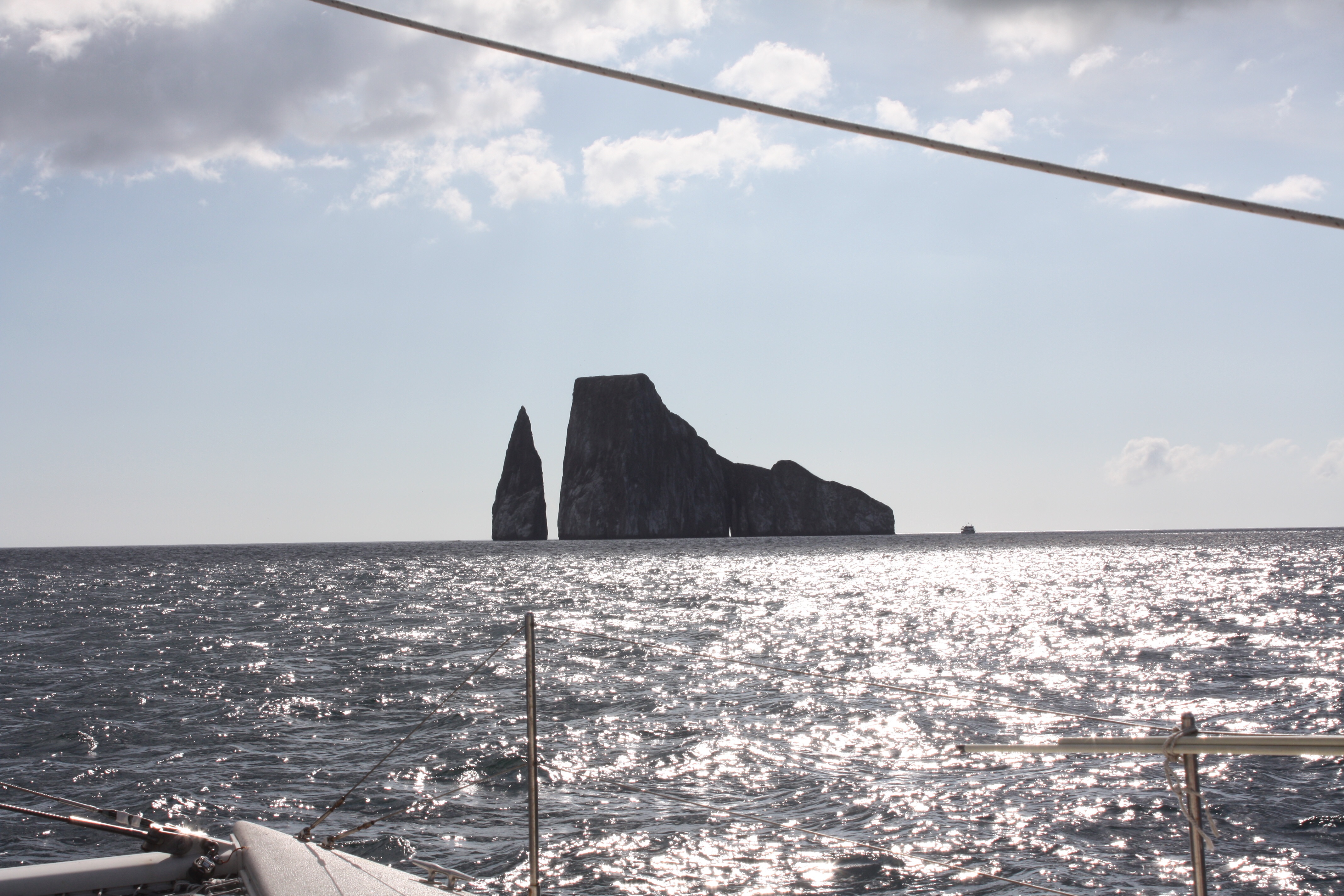
Remember this from our arrival?
image

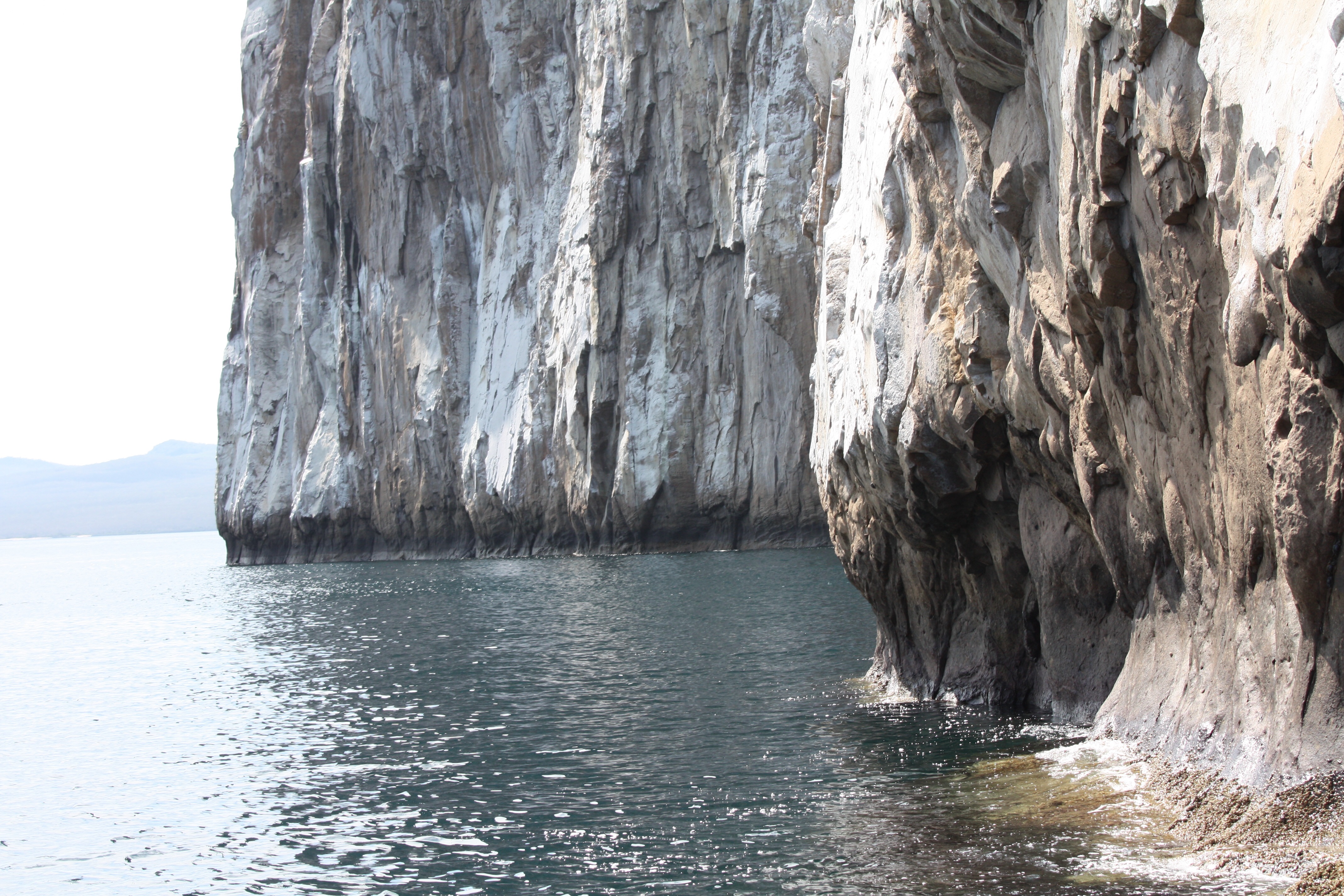
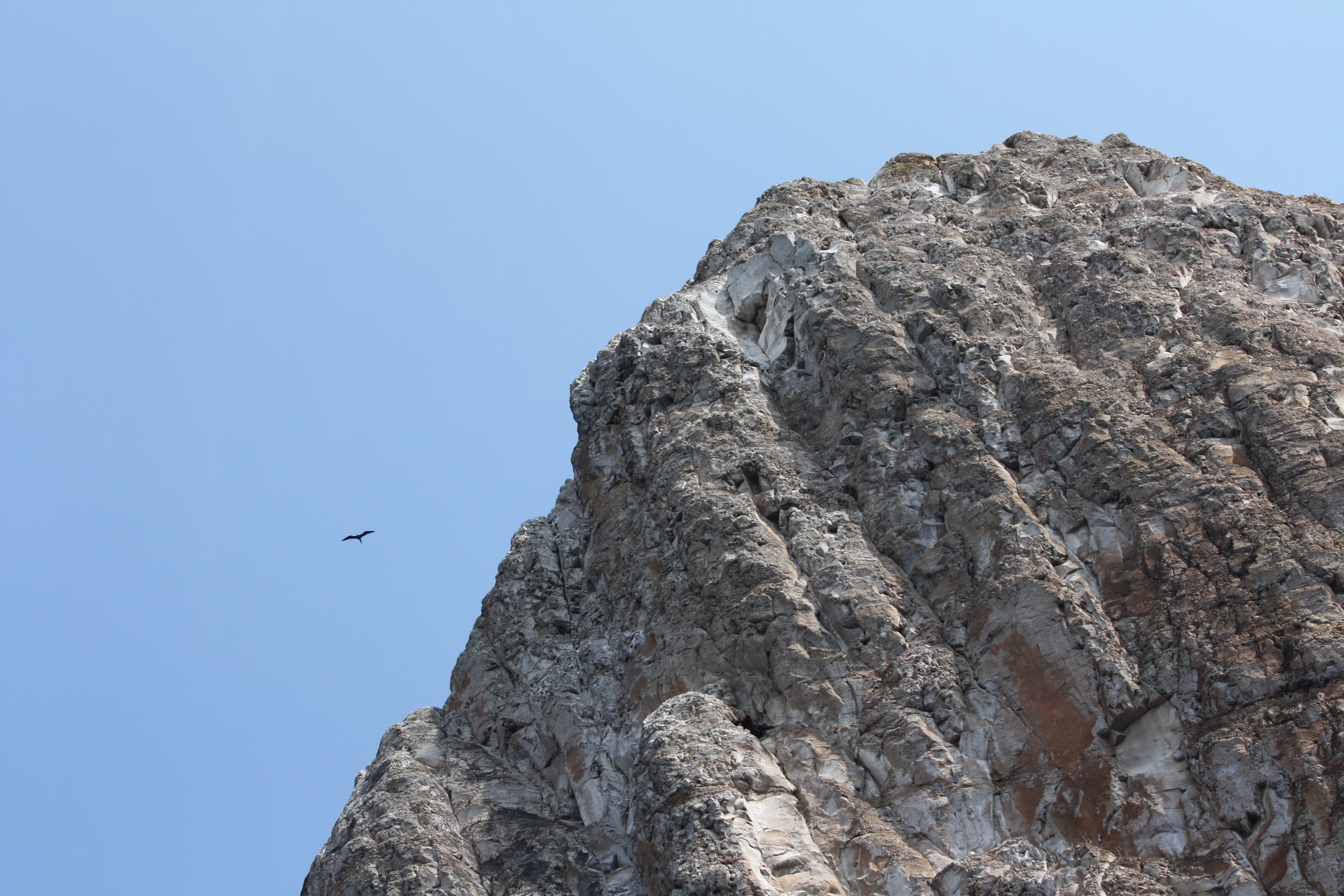
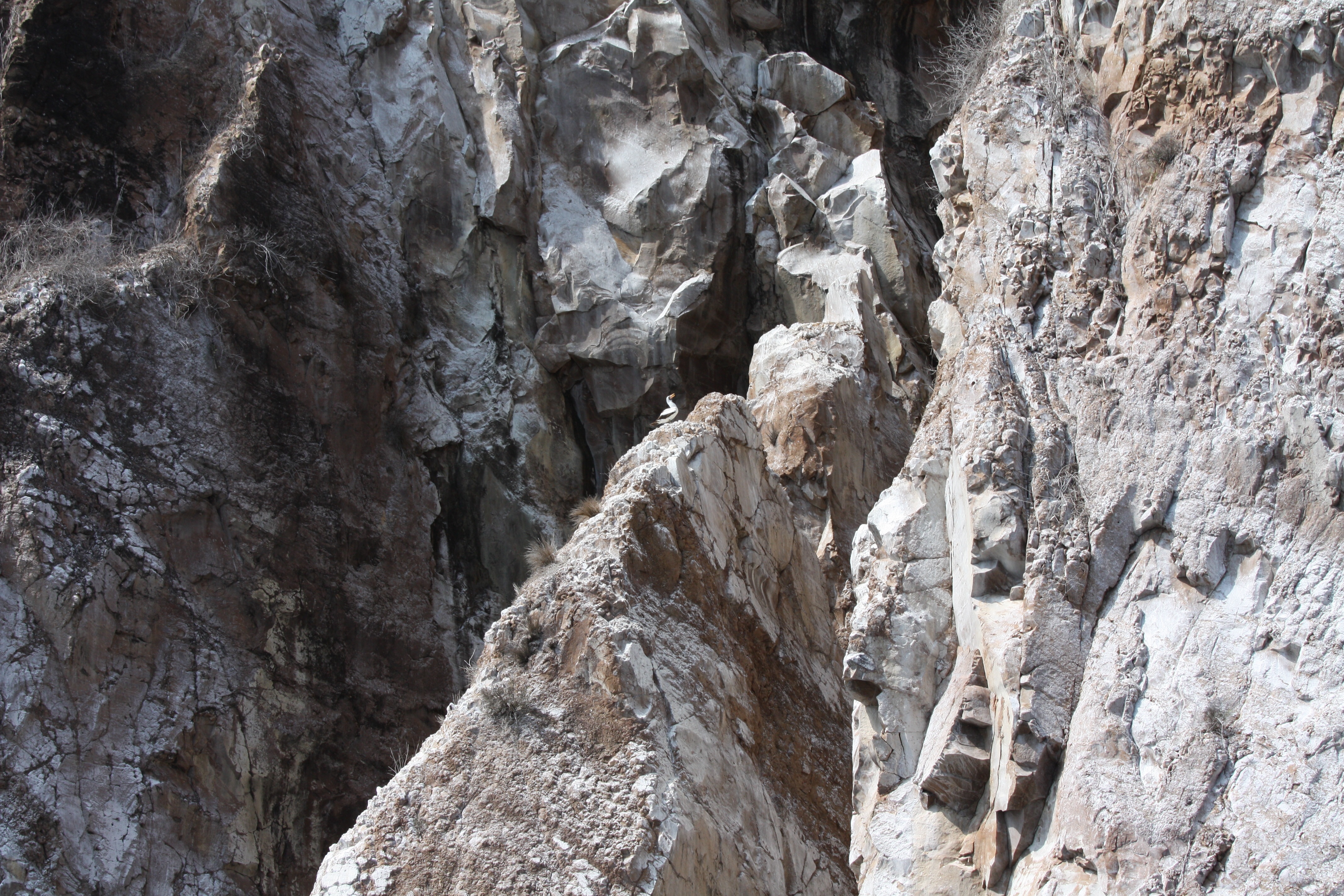
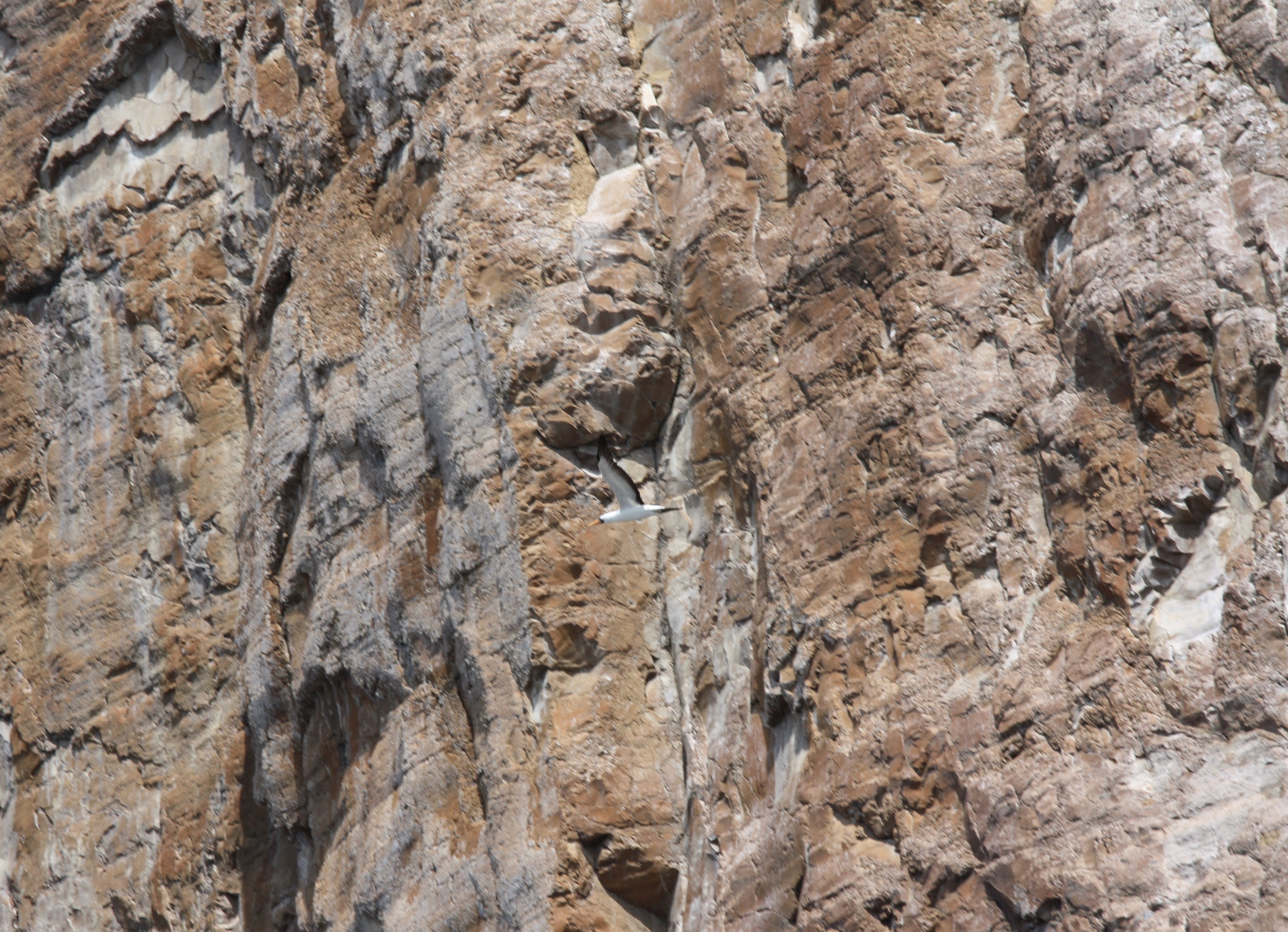
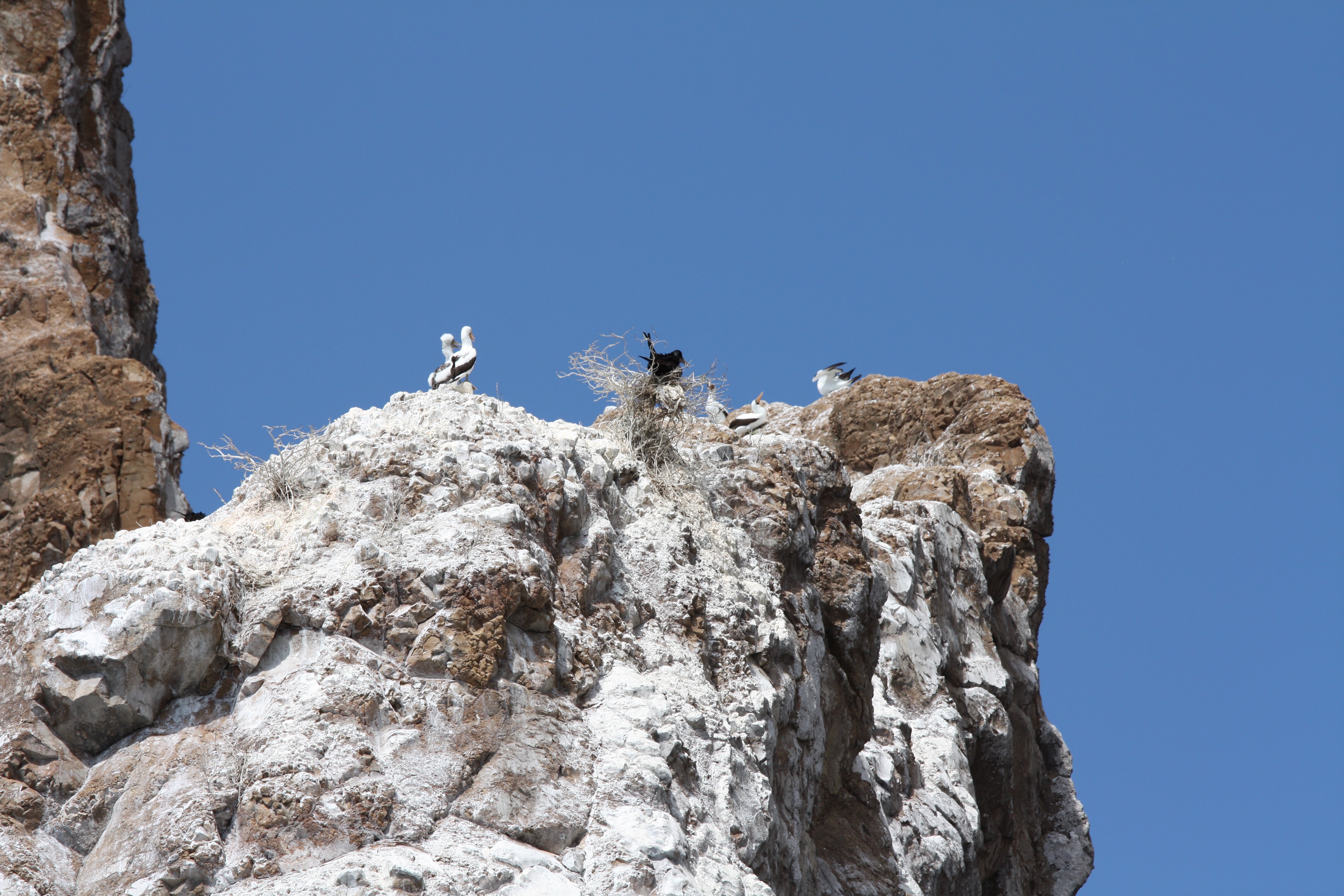
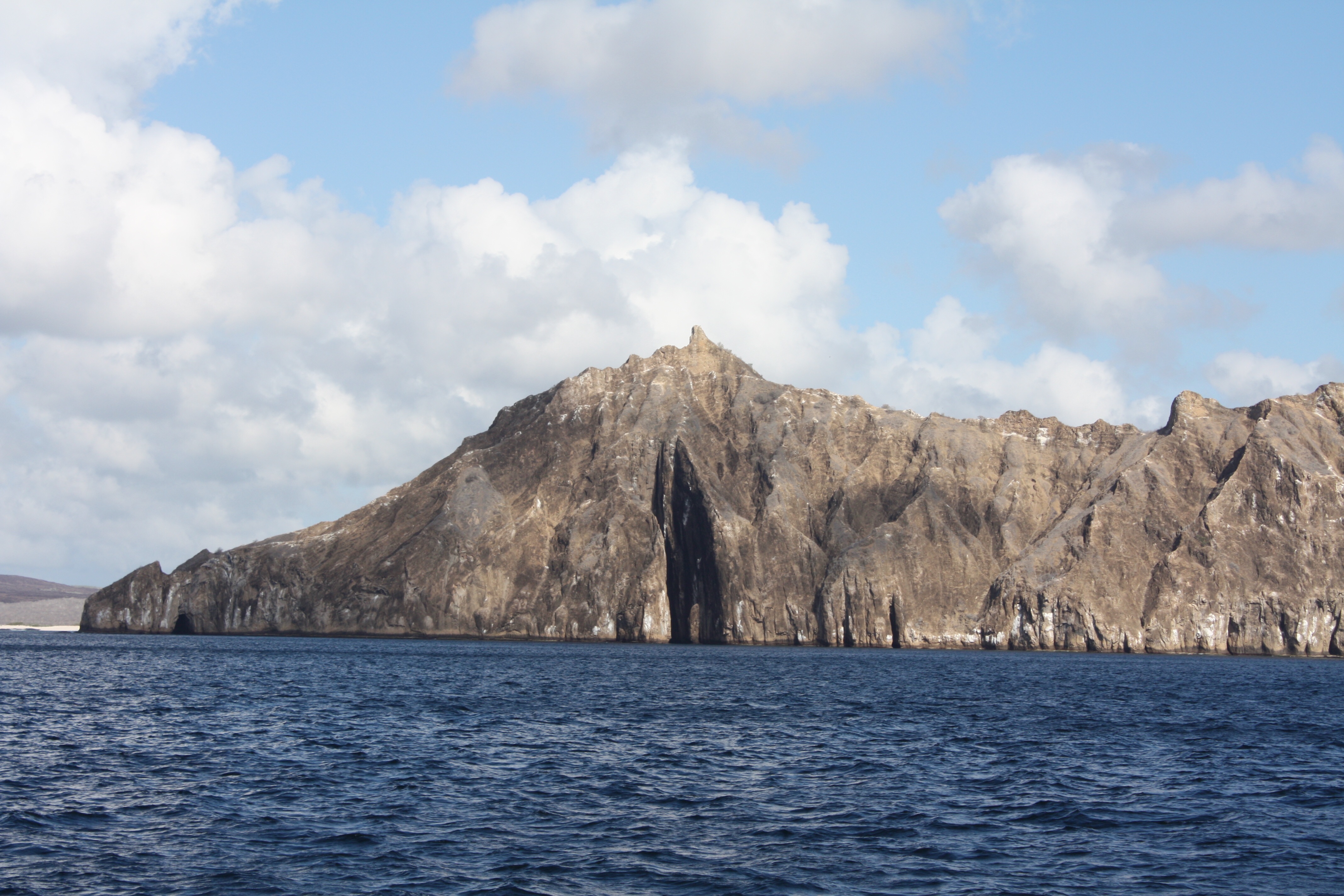
It’s known as Kicker Rock. The Spanish name is the Sleeping Lion; I have no idea why the English and Spanish names are unrelated. Tim and I did a day trip there. It’s an amazing place, with cliffs that not only plummet down to the water but continue straight down into the depths below. Exciting just to see the formation and the sea birds on and over it, but the real treat is snorkeling around it. Three ocean currents meet at the Galapagos – a warm one from Panama, that helped us get here quickly, the cold Humbolt current that comes up the coast of South America, and the deep ocean counter-current that flows opposite of the surface current that will push us toward the Marquesas soon. That confluence leads to great abundance of sea life, as nutrient-rich cold waters mix with the warm. In fact, swimming today the water mostly felt cold (we wore wet suits), but there were many pockets of much warmer water along the way.

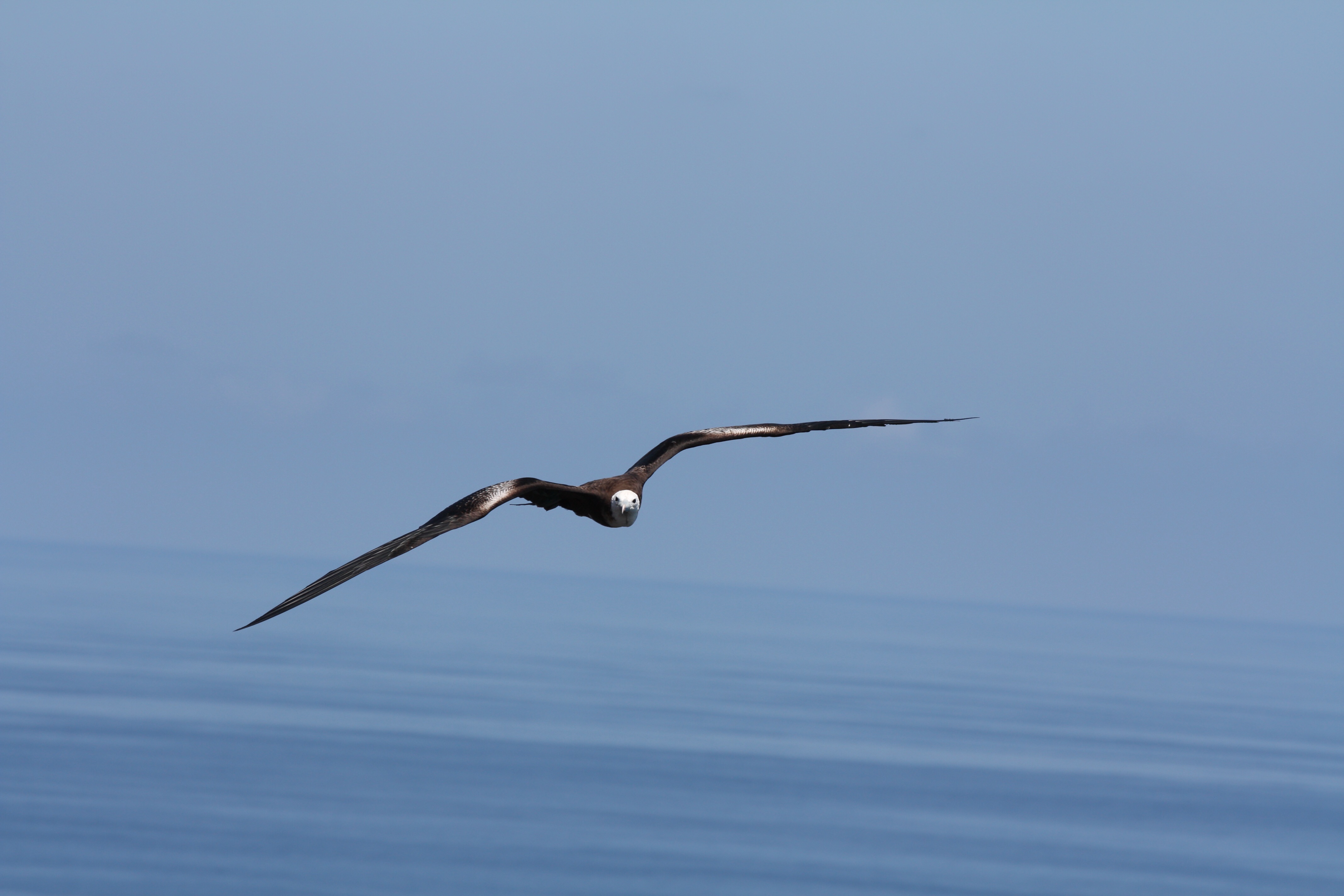
Snorkeling next to a sheer wall, with the sunlight shining on the many colors of the wall, plus zillions of fish…quite an experience! Sorry I have neither underwater photos nor the poetic abilities to convey it. Tranquil sea turtles amble by below, while sea lions dart by inches away (sometimes scaring the dickens out of you, when they approach from behind and suddenly appear next to your face!), in the depths a few sharks (not people-threatening ones, though one of our group did spot a hammerhead), colorful fish, and if you dive down 10 feet a school of fish so thick it almost seems solid, all while frigate birds are soaring overhead. With minimal supervision (a guide who would point out what he saw, if you could hear him while snorkeling) we swam around the perimeter for an hour until most of us were exhausted as well as awed.

I do have photos of the rock and the birds on/around it…

image

image

image

image

image

image

image
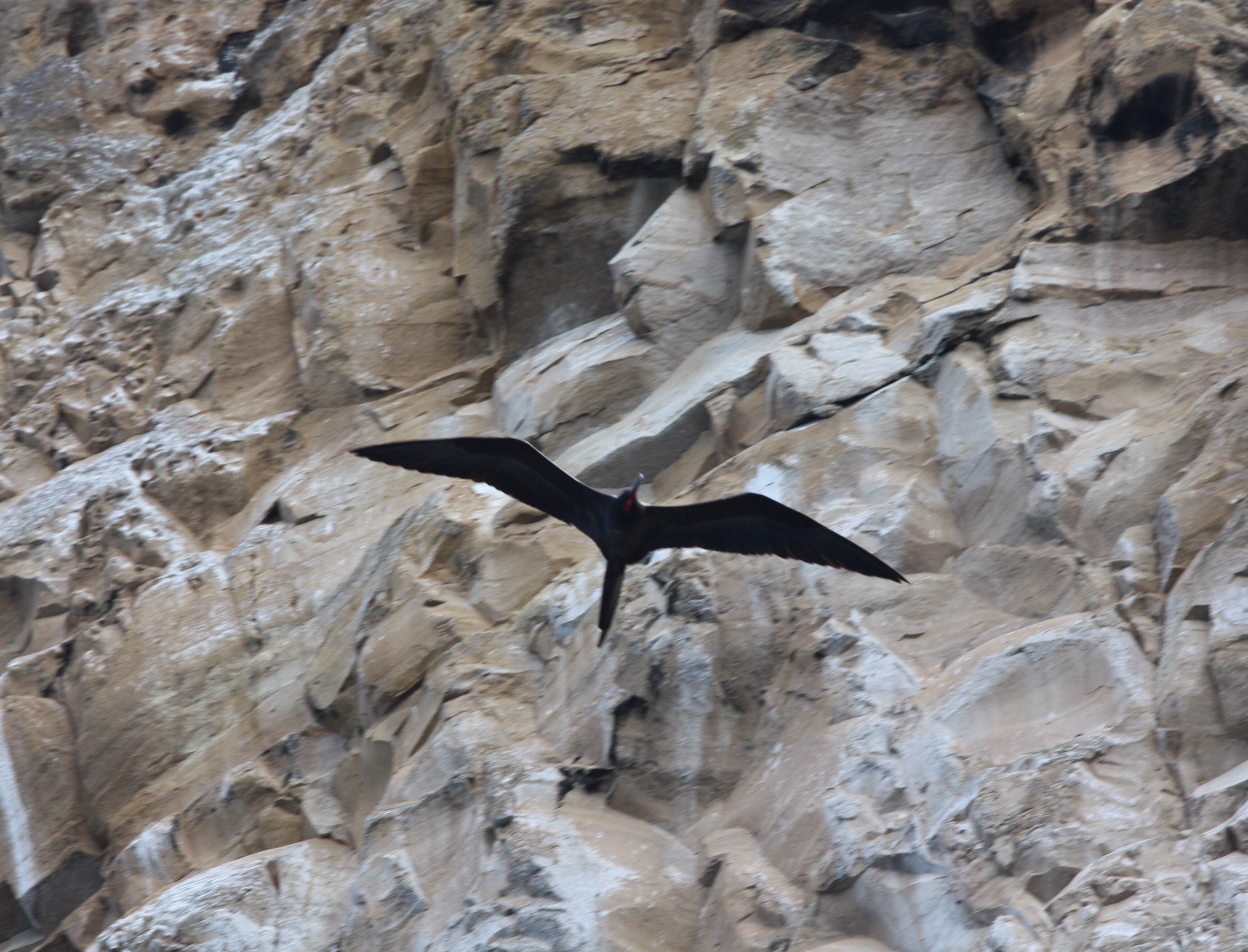
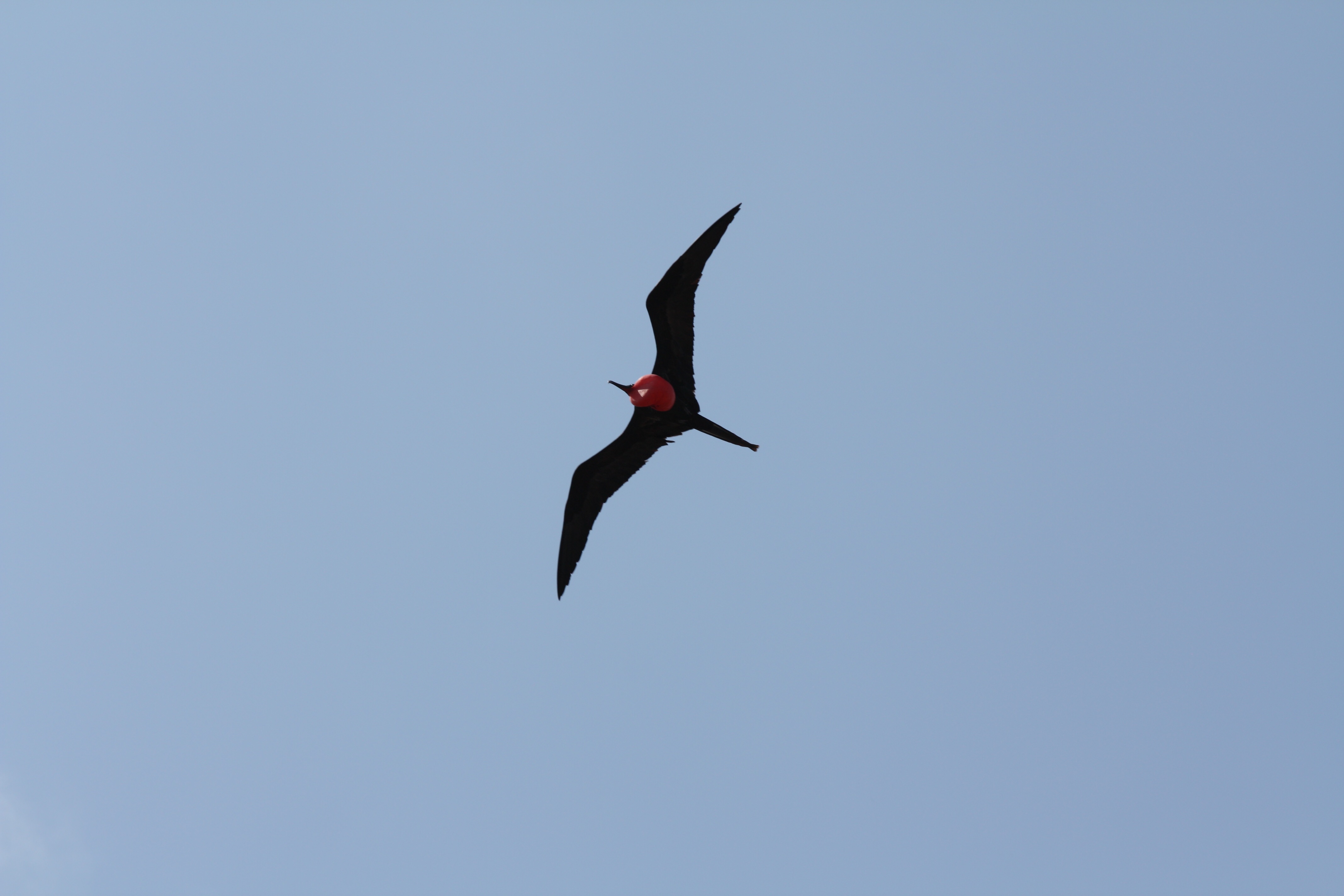
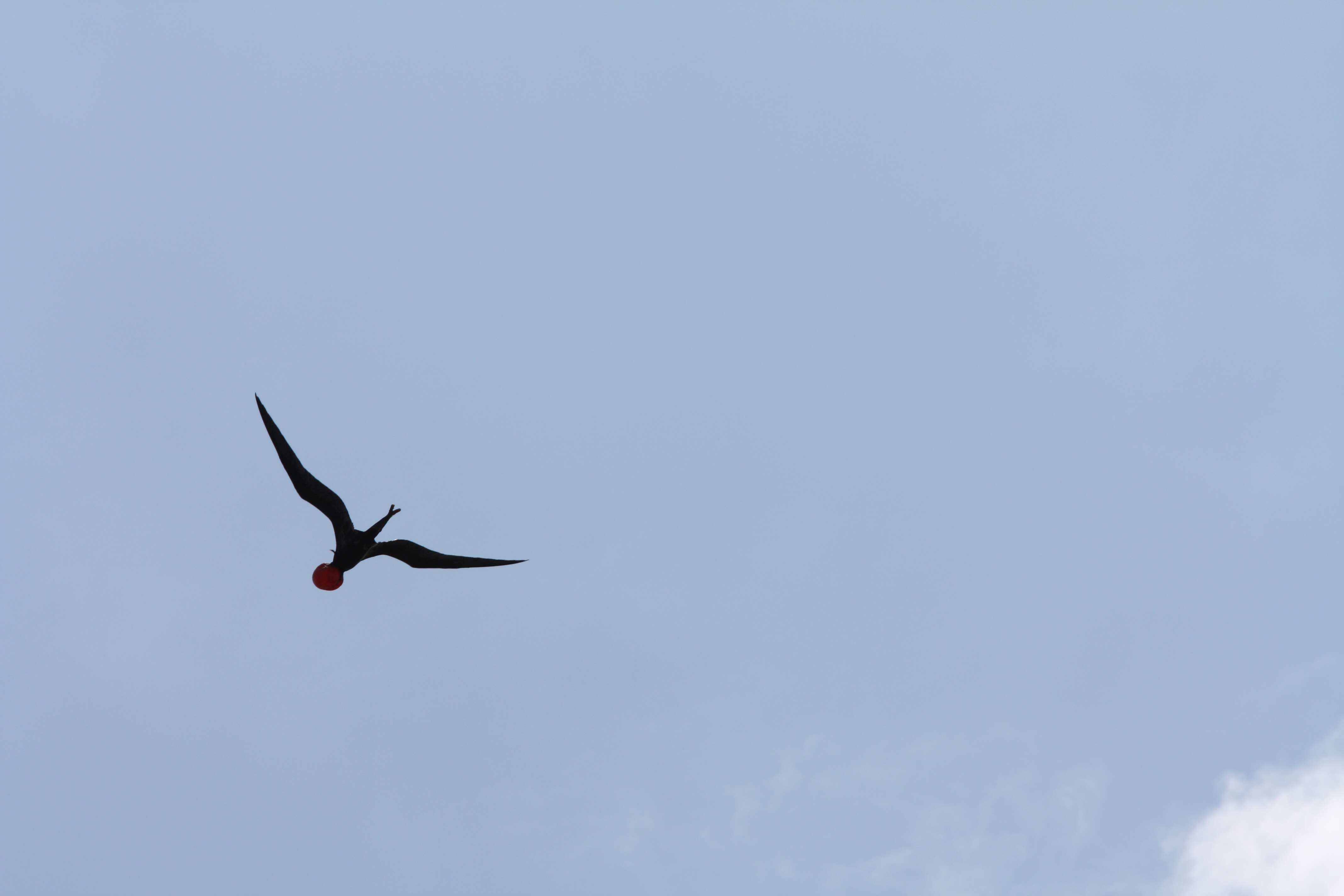
The male Magnificent Frigate looking to attract a mate with its inflated red pouch.

image

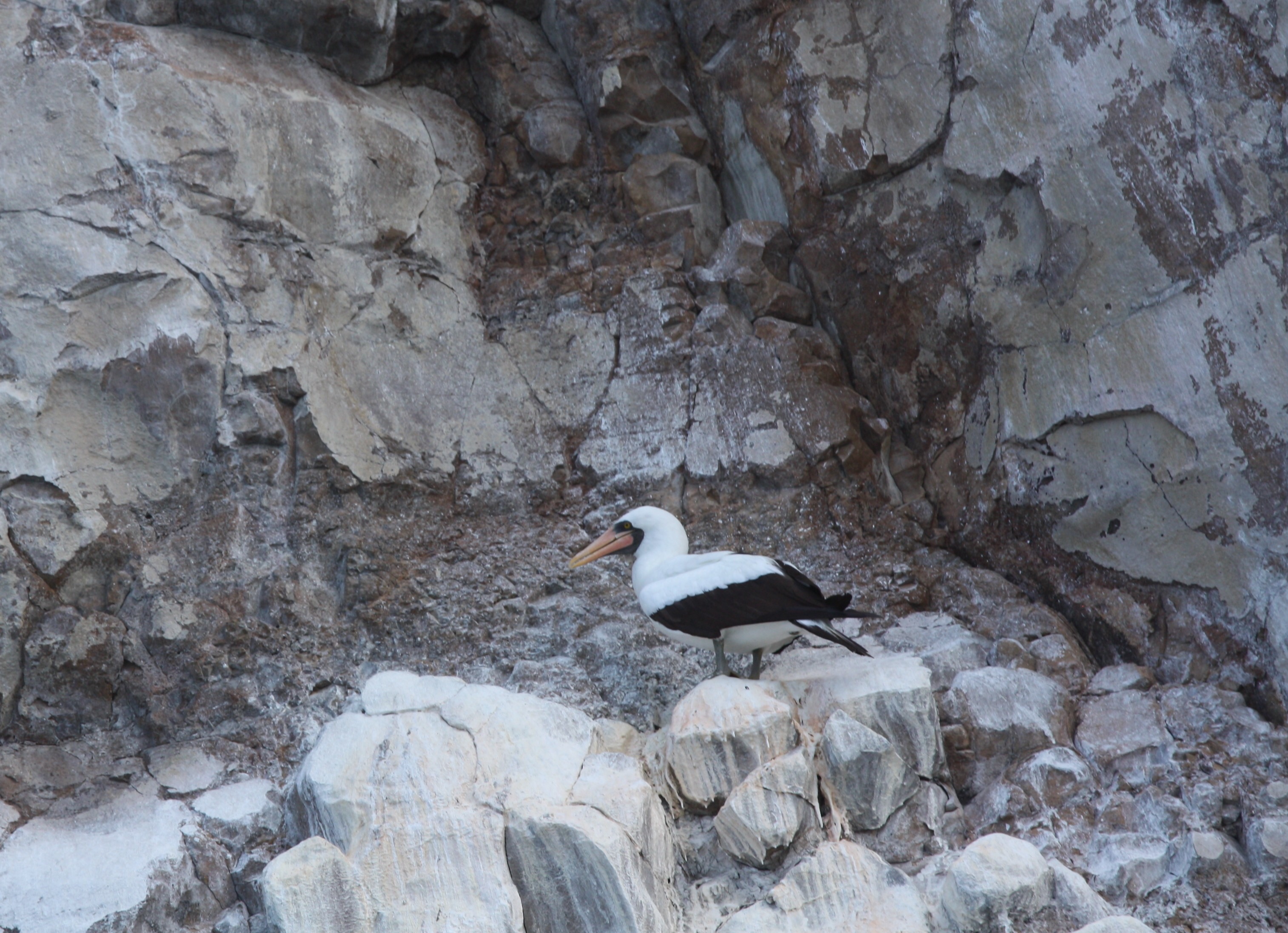
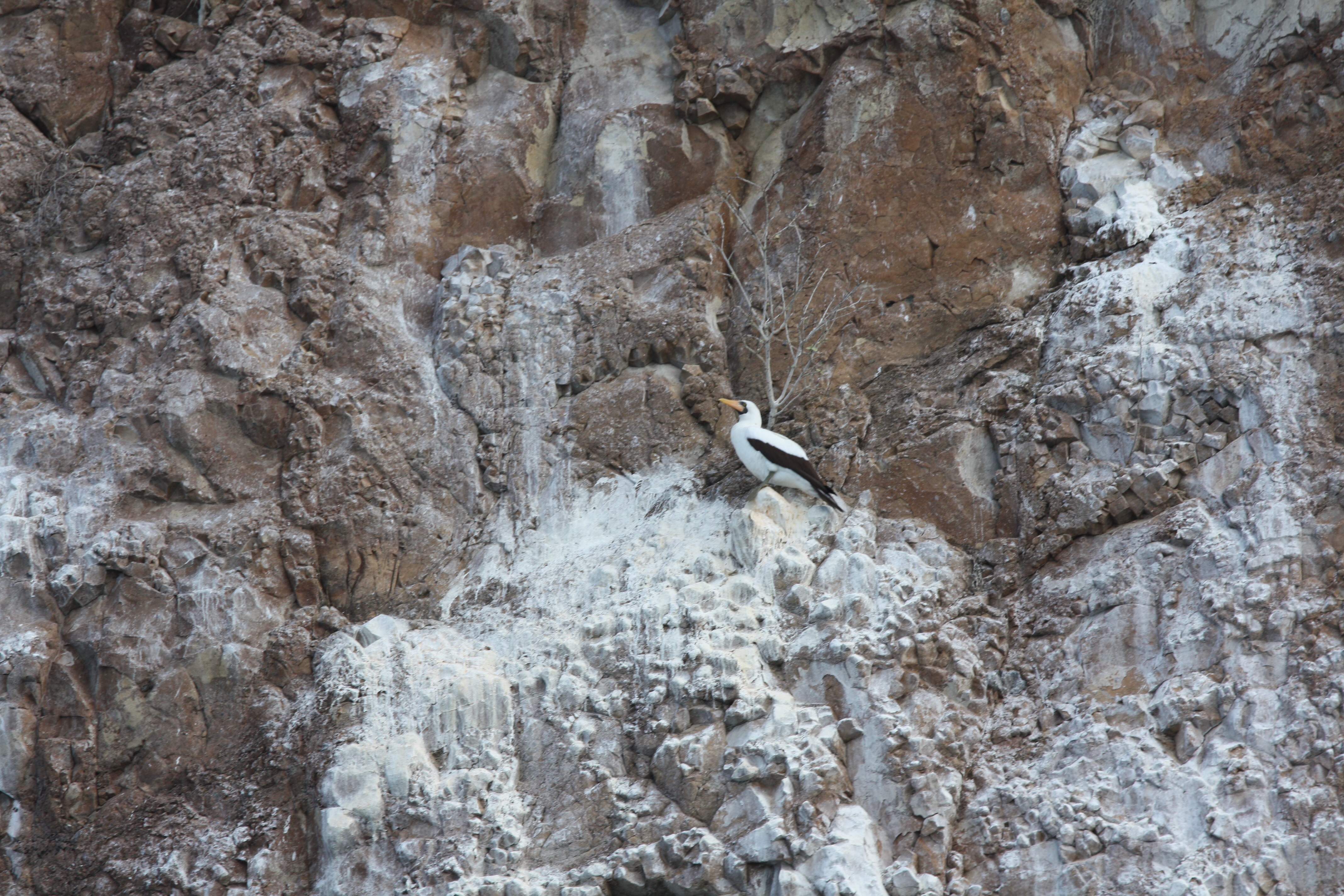
Masked booby

Masked booby

image

image

image

image
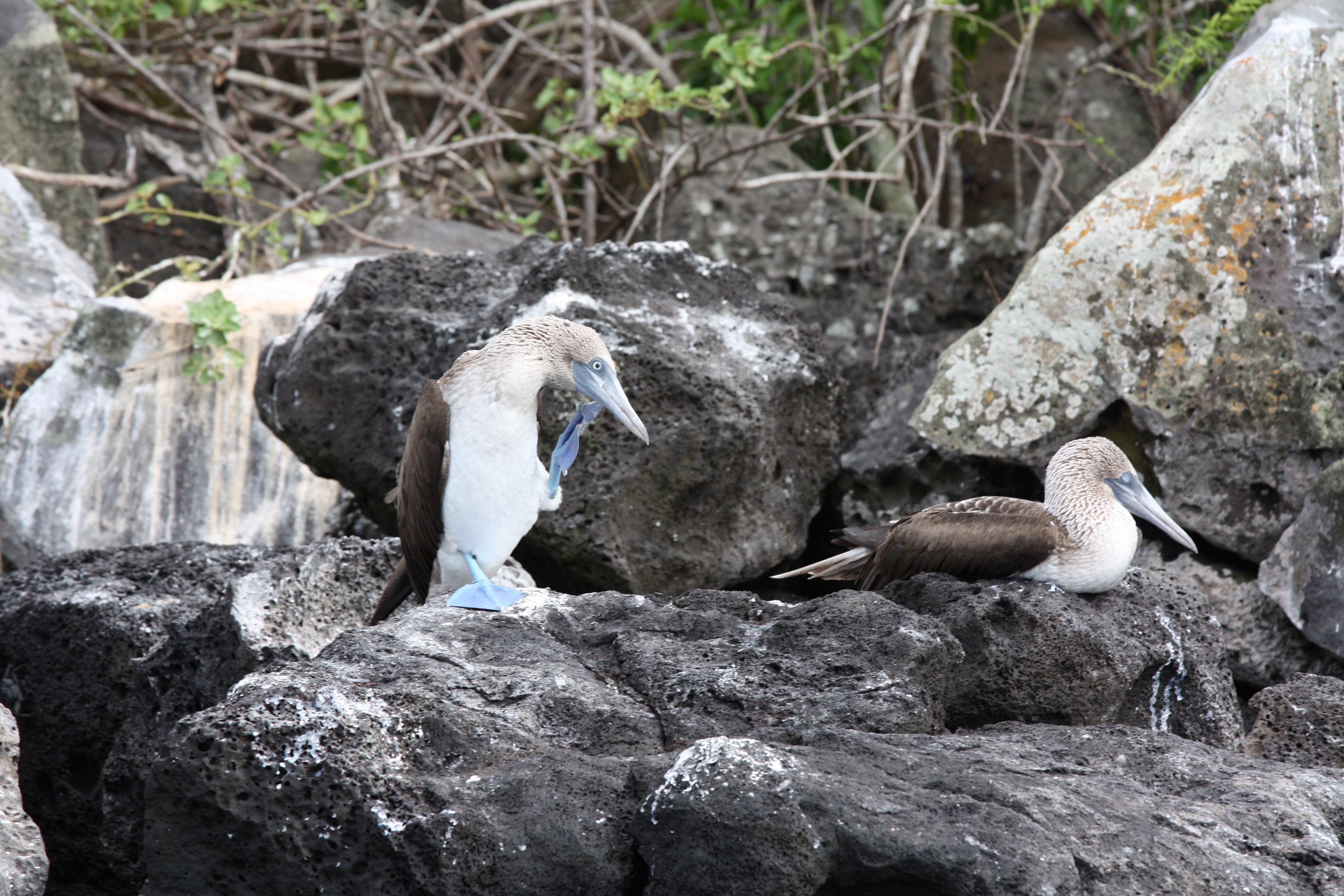
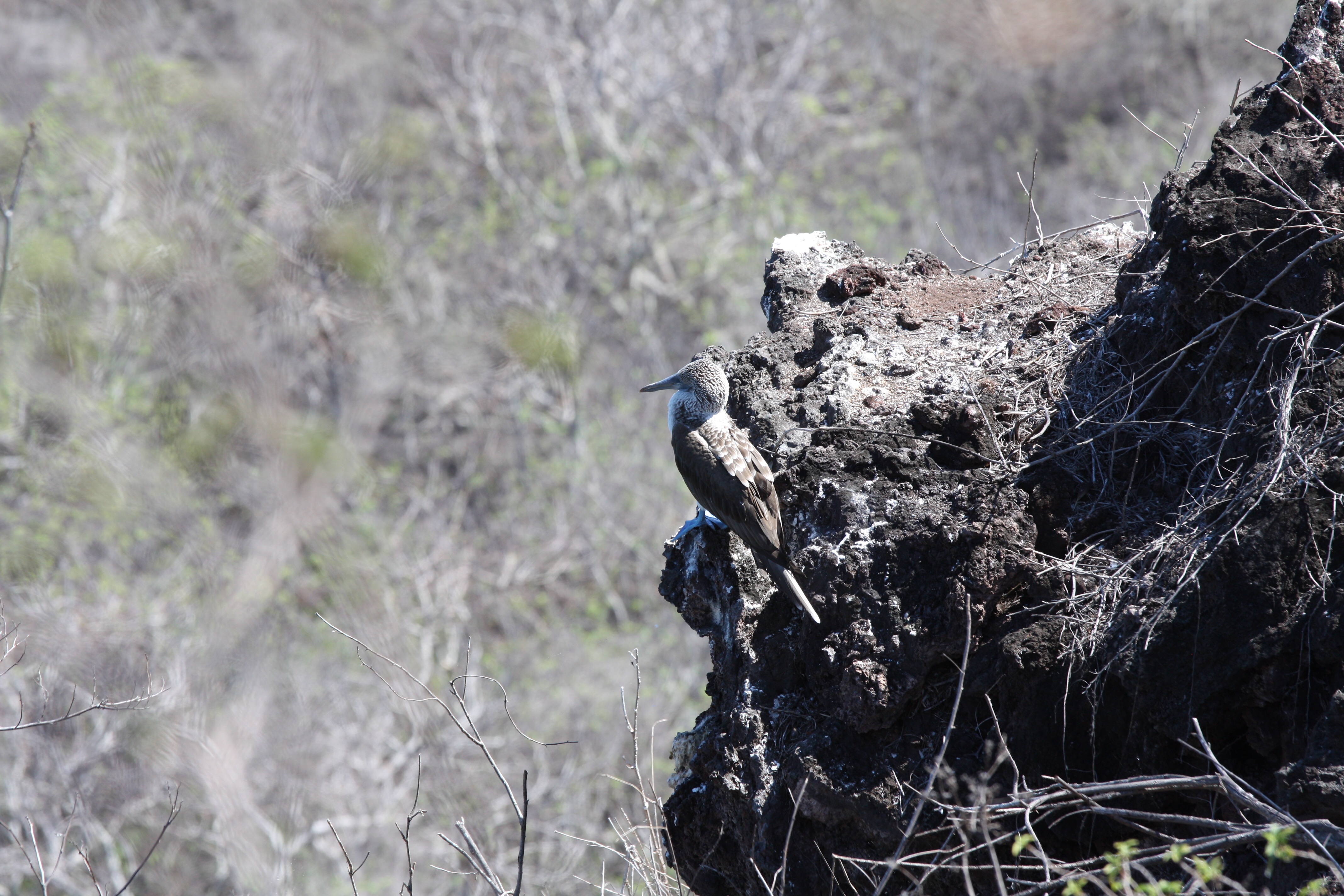
Blue-footed boobies

image

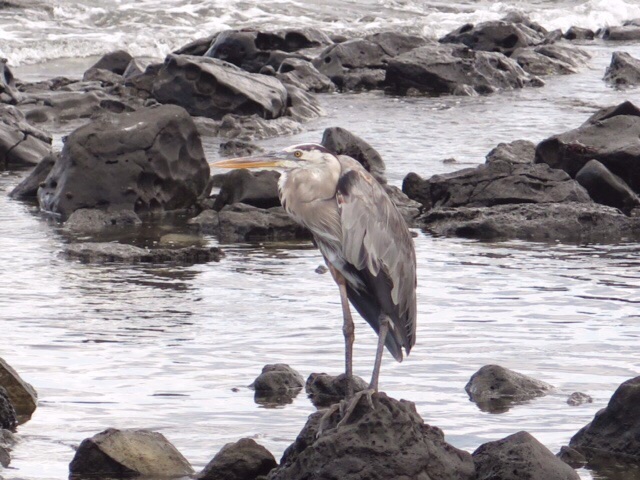
And surprising in its familiarity, a great blue heron!
image

A little hard on the neck...
A little hard on the neck…

image

Galapagos Wildlife

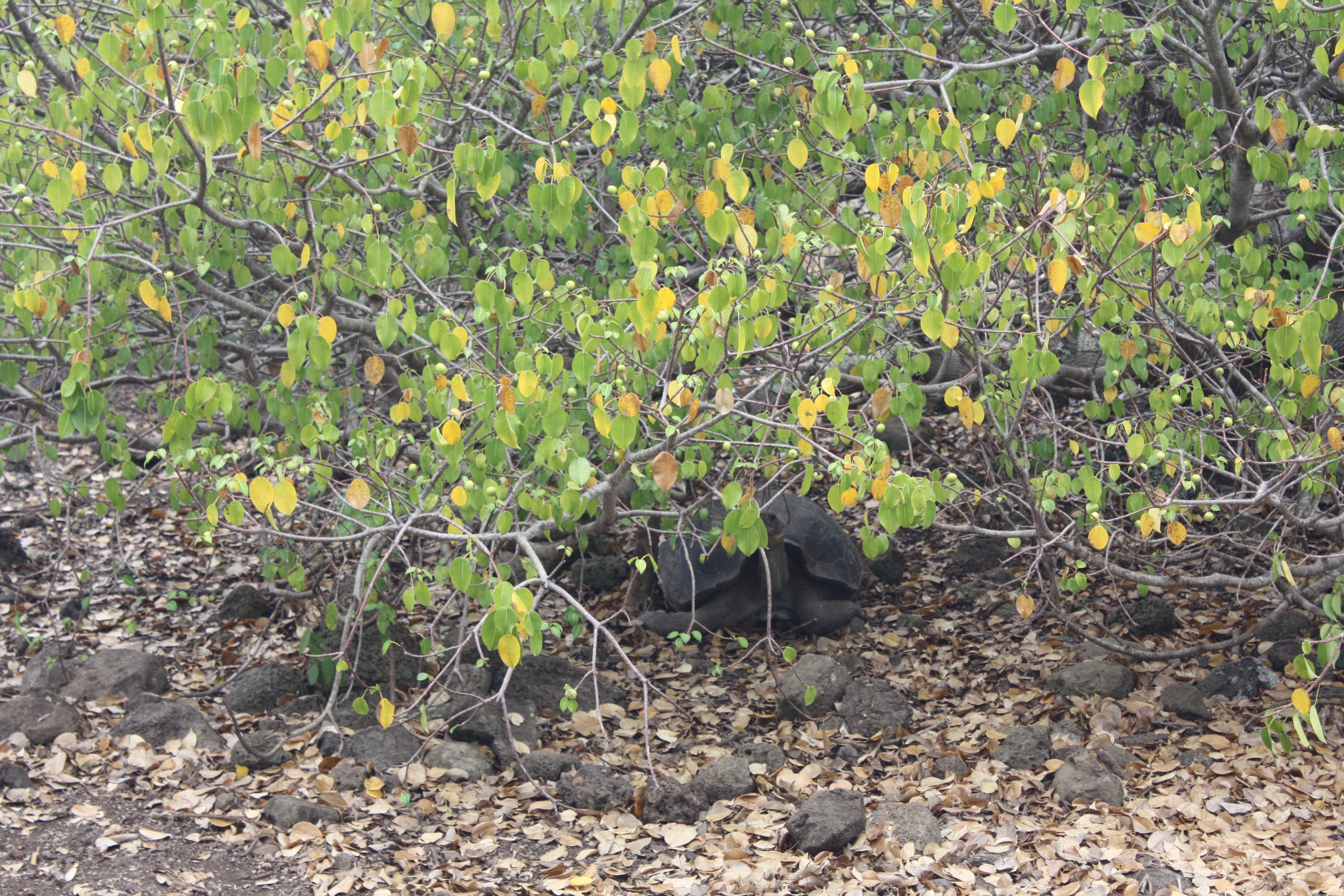
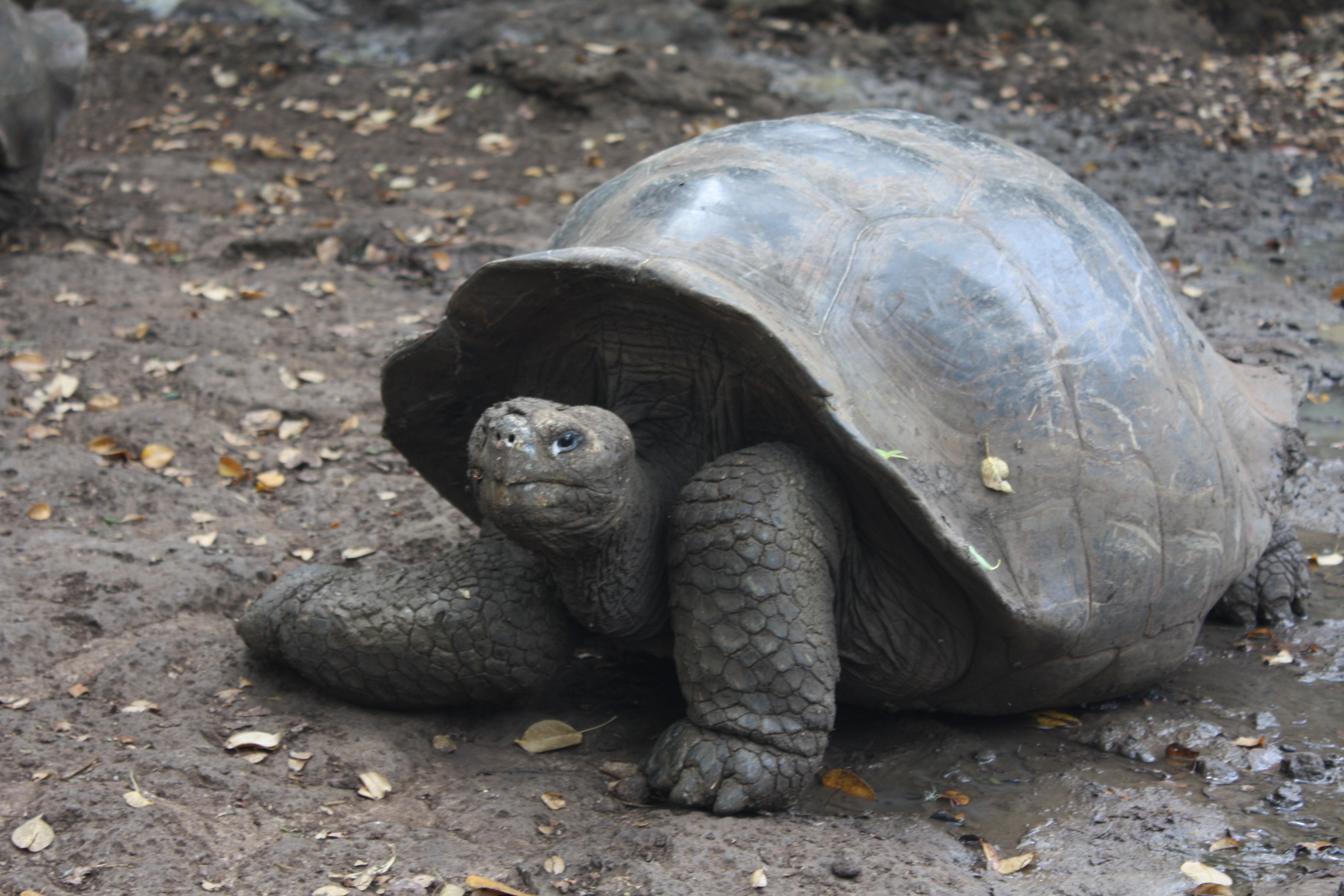
First glimpse of Galapagos tortoise.

image

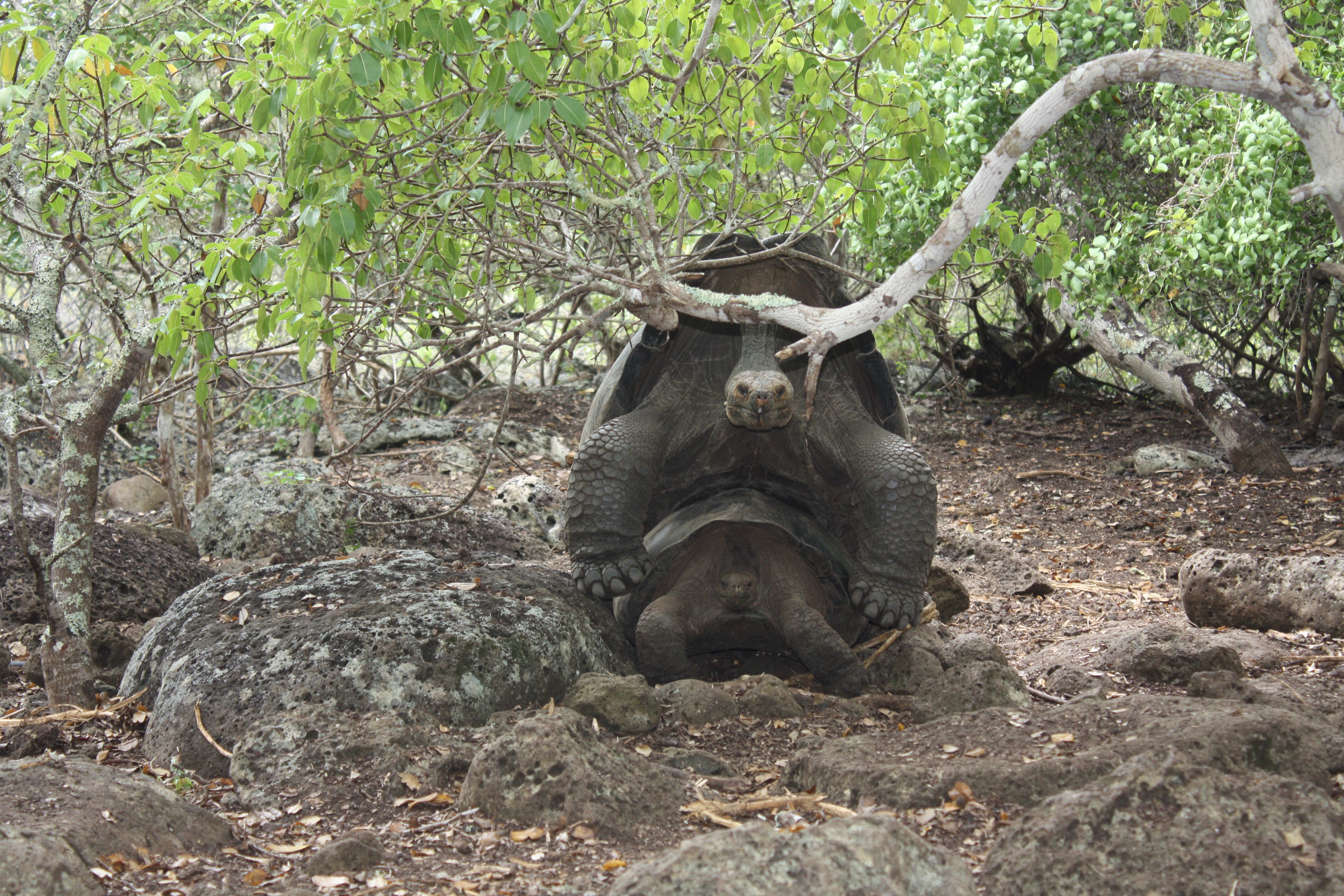
These photos are from a breeding center, where they protect the young for 10 years, until their shells will protect them, and then release to the wild.  The male here is doing his part, though the female seemed to be uninterested...
These photos are from a breeding center, where they protect the young for 10 years, until their shells will protect them, and then release to the wild. The male here is doing his part, though the female seemed to be uninterested…

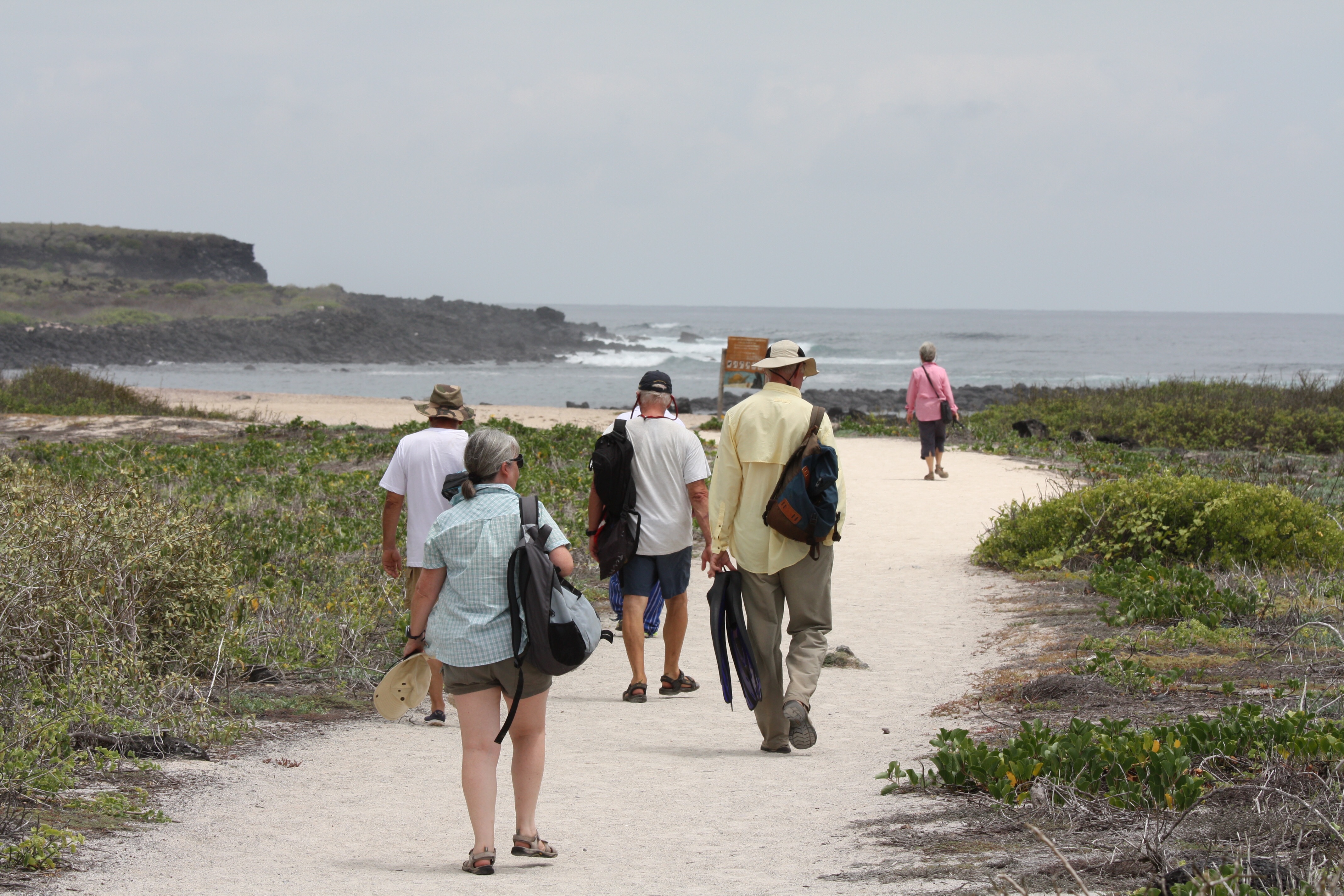
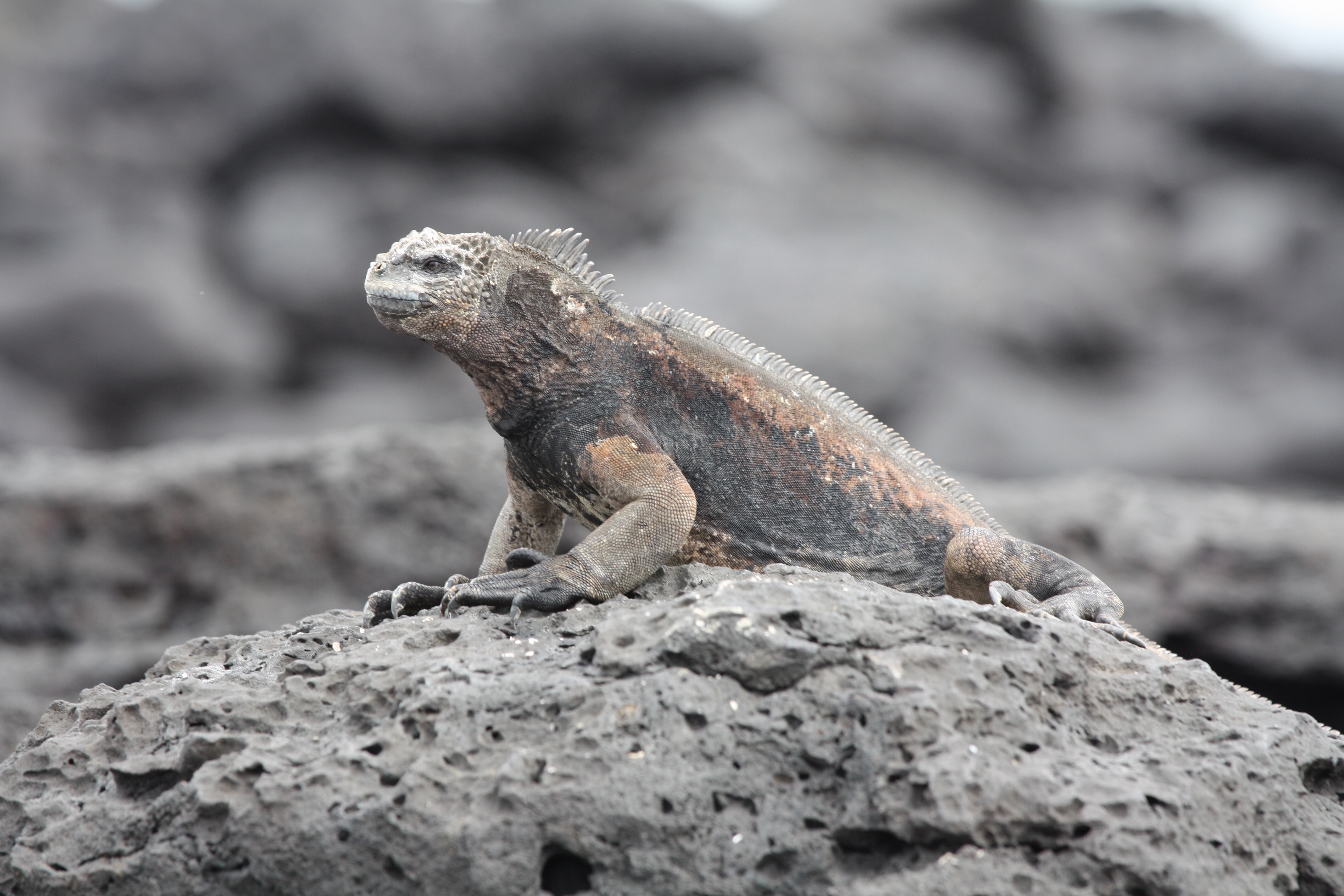
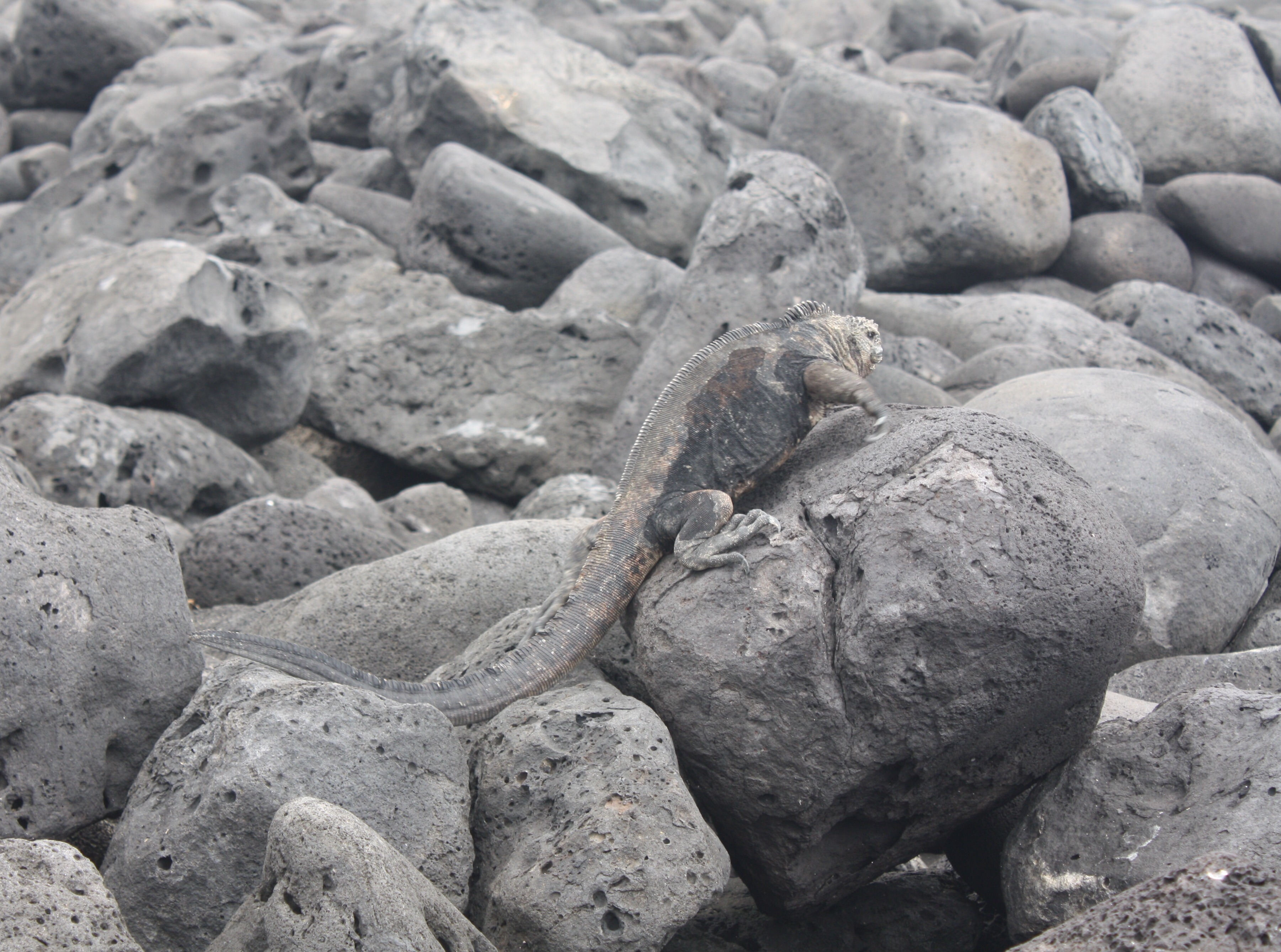
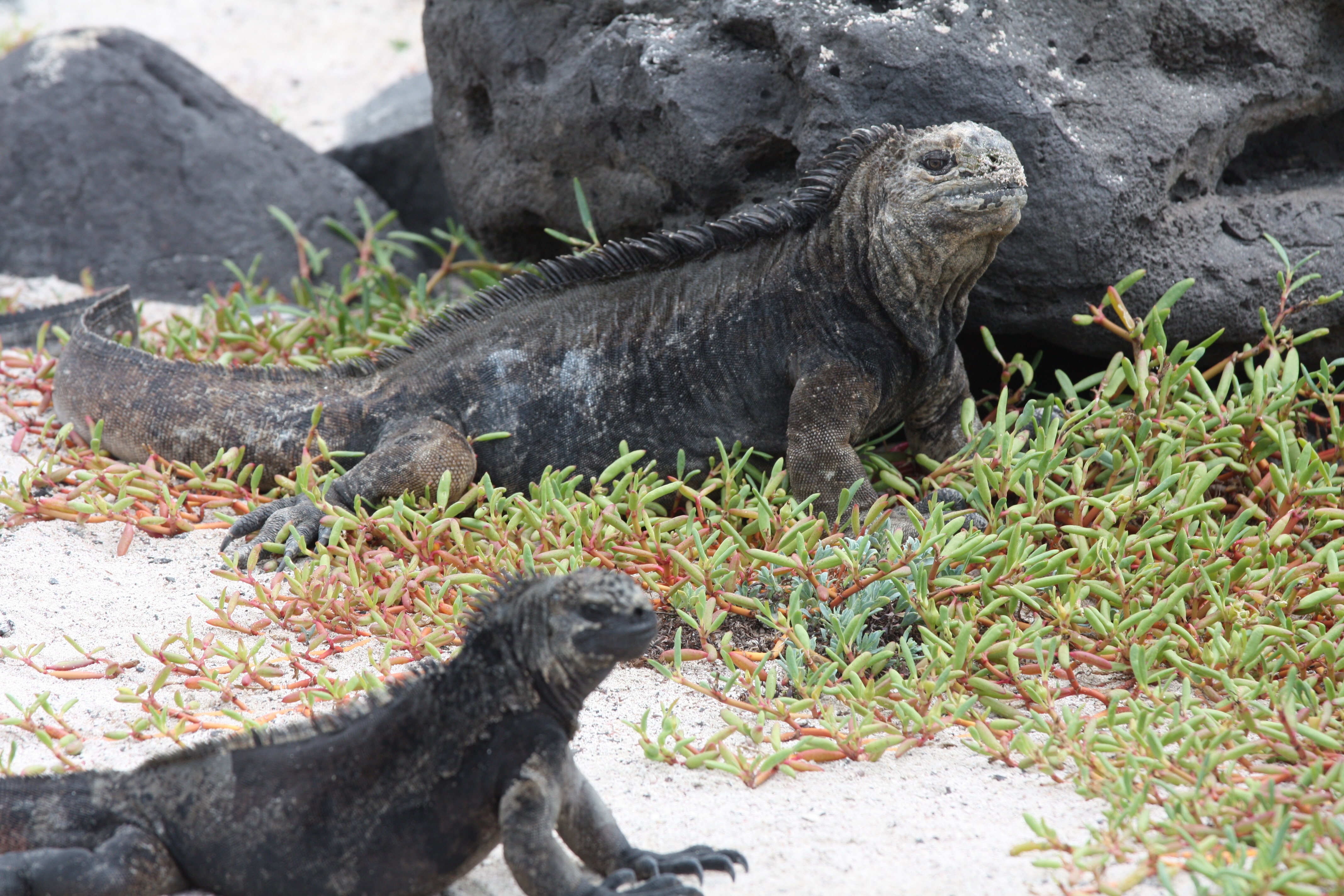
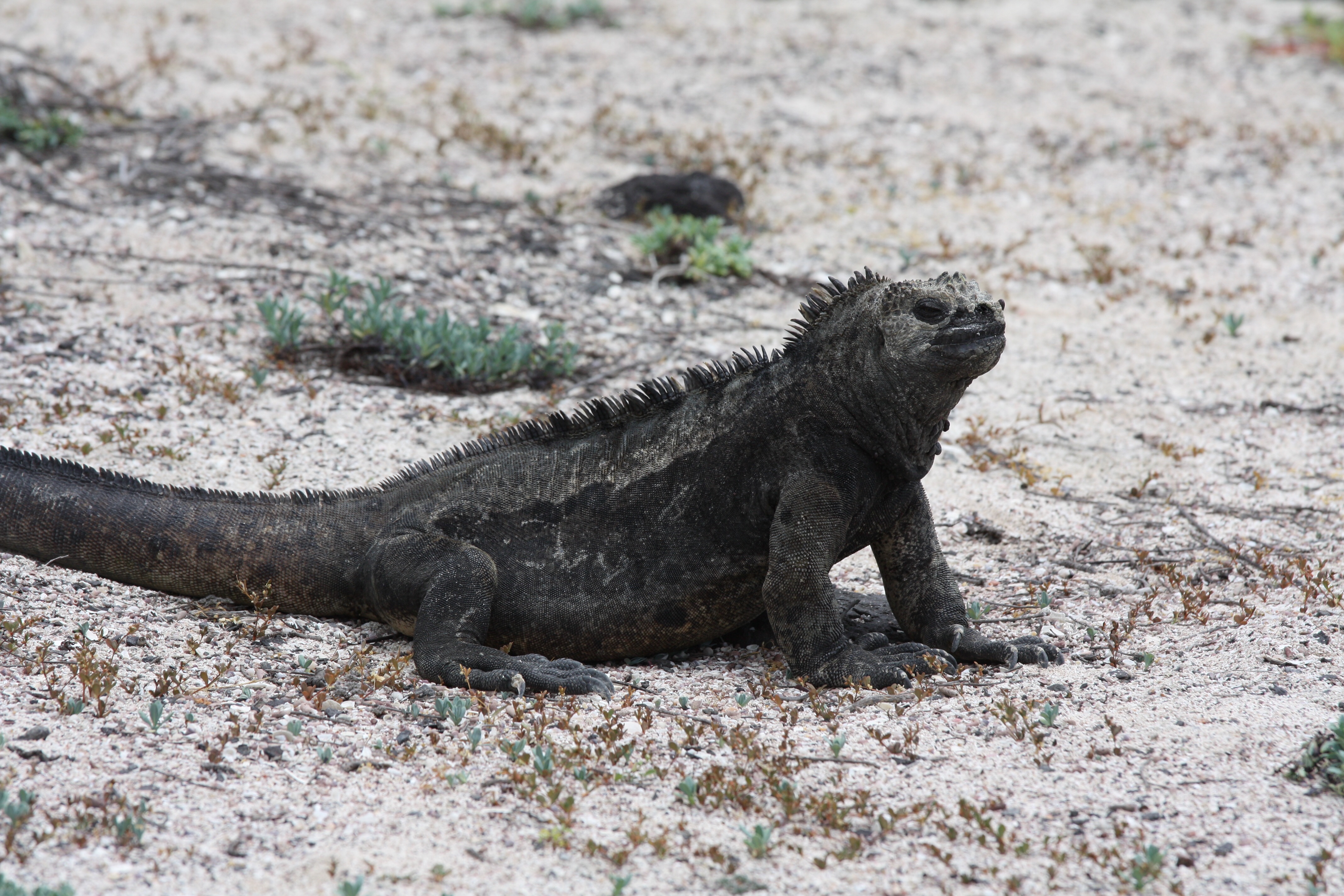
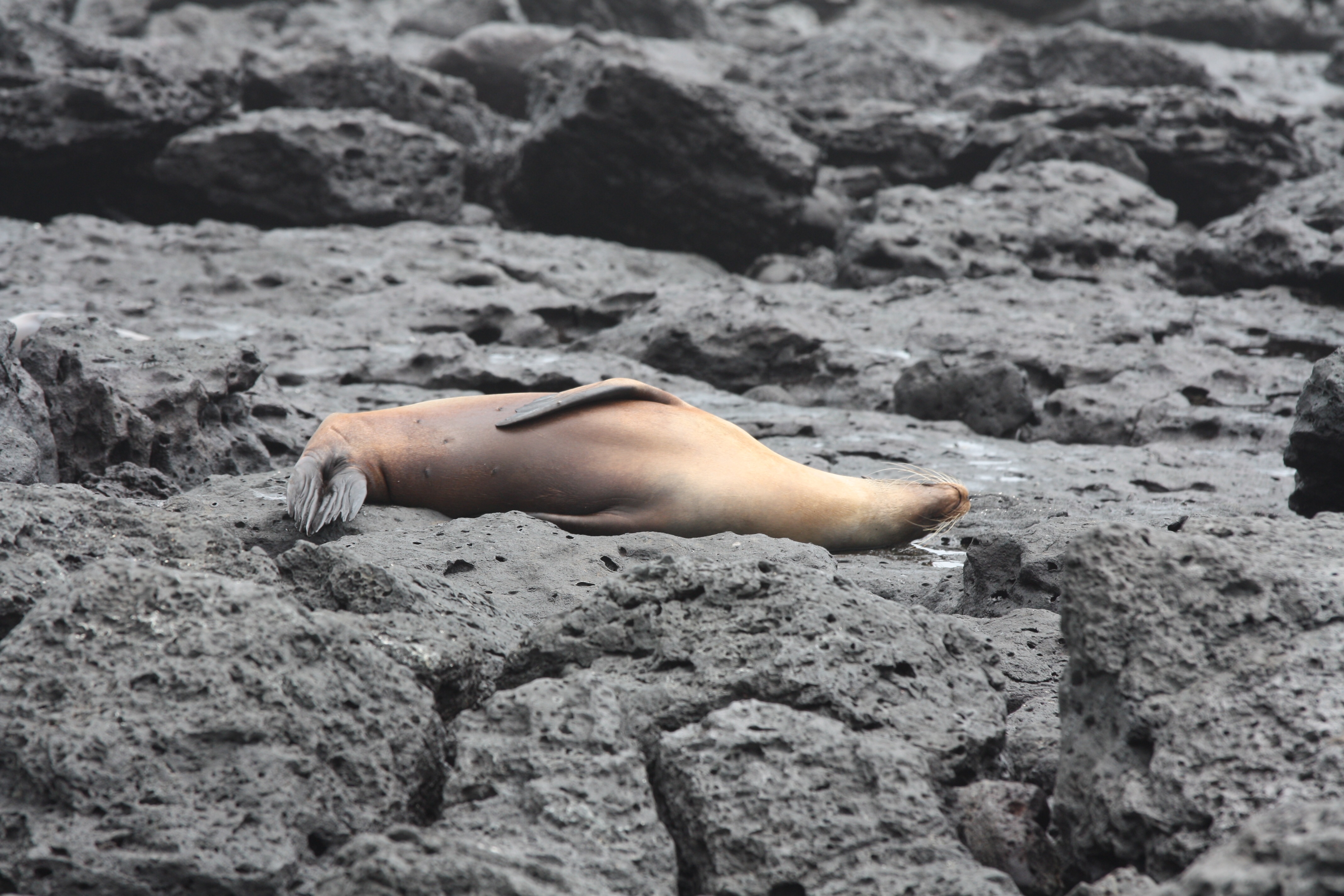
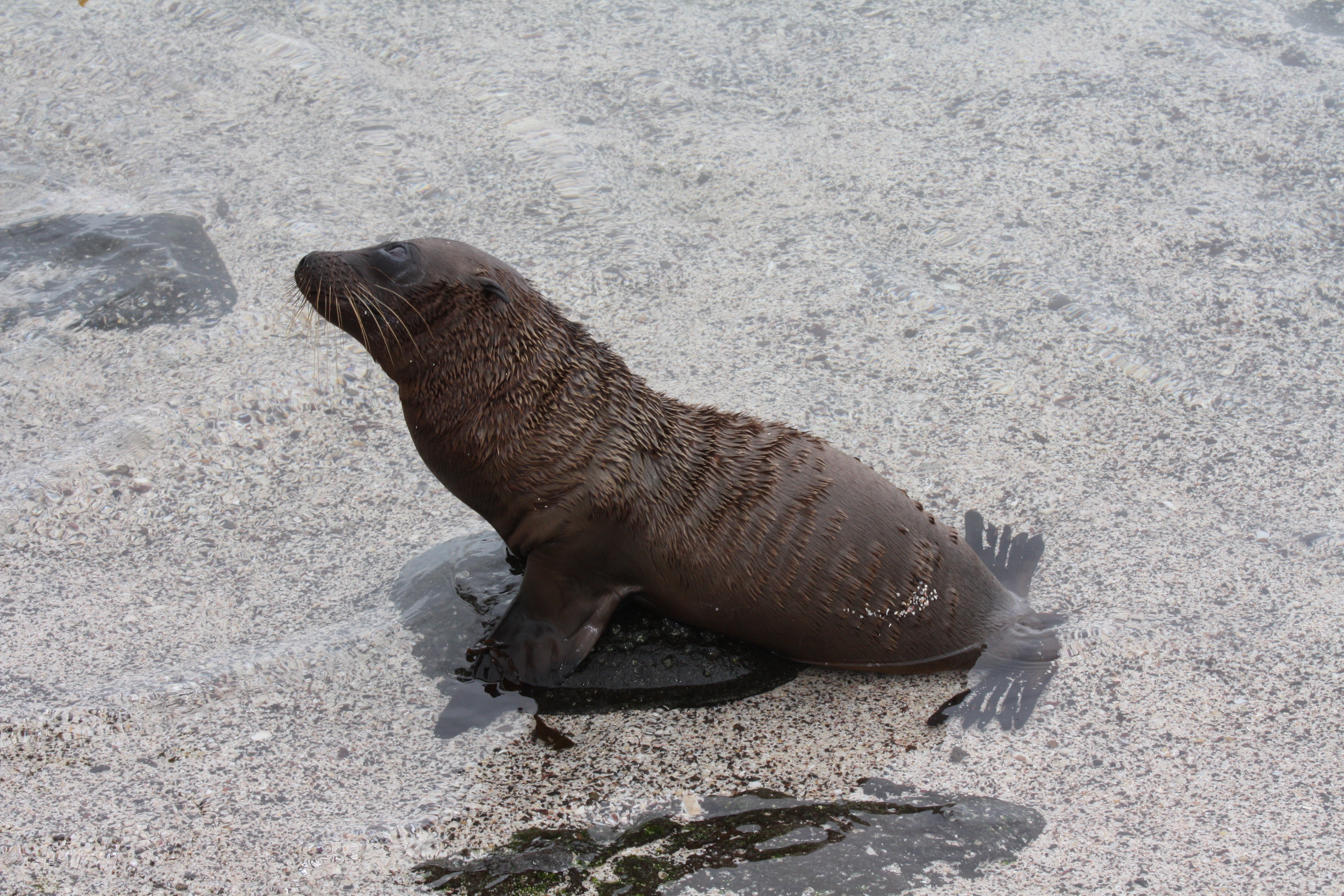
We went to a beach where I swam with a large sea turtle.  The water was only 4 or 5 feet deep.  The turtle ignored my presence just a couple of feet away, as it dove to feed on the bottom, and surfaced to breathe.  I don’t do underwater photos, though, so no images for y’all of the turtle.  But there were iguanas and, of course, sea lions…

image


image


image


image


image

image

image

image

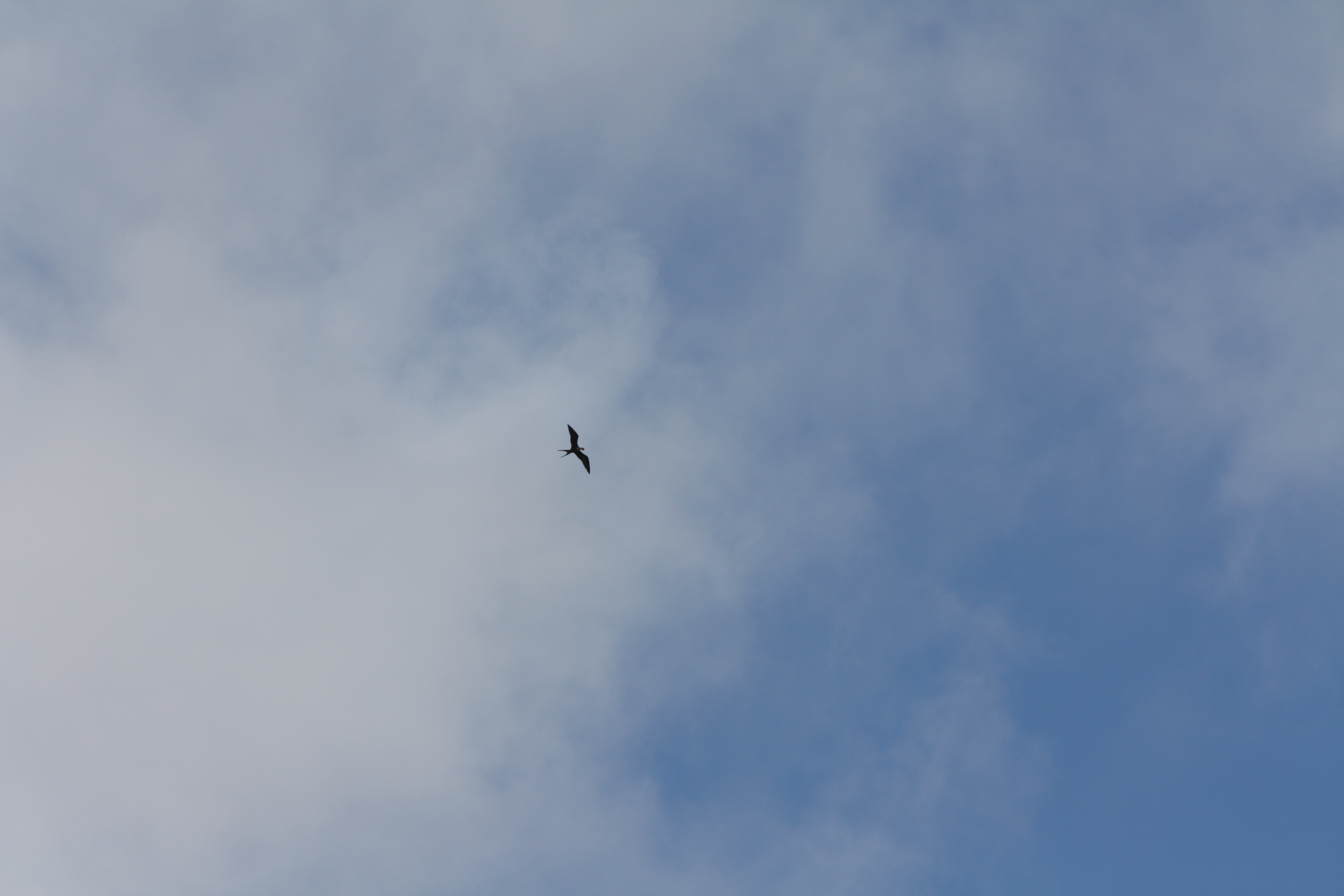
The usual view of a frigate bird, soaring high.
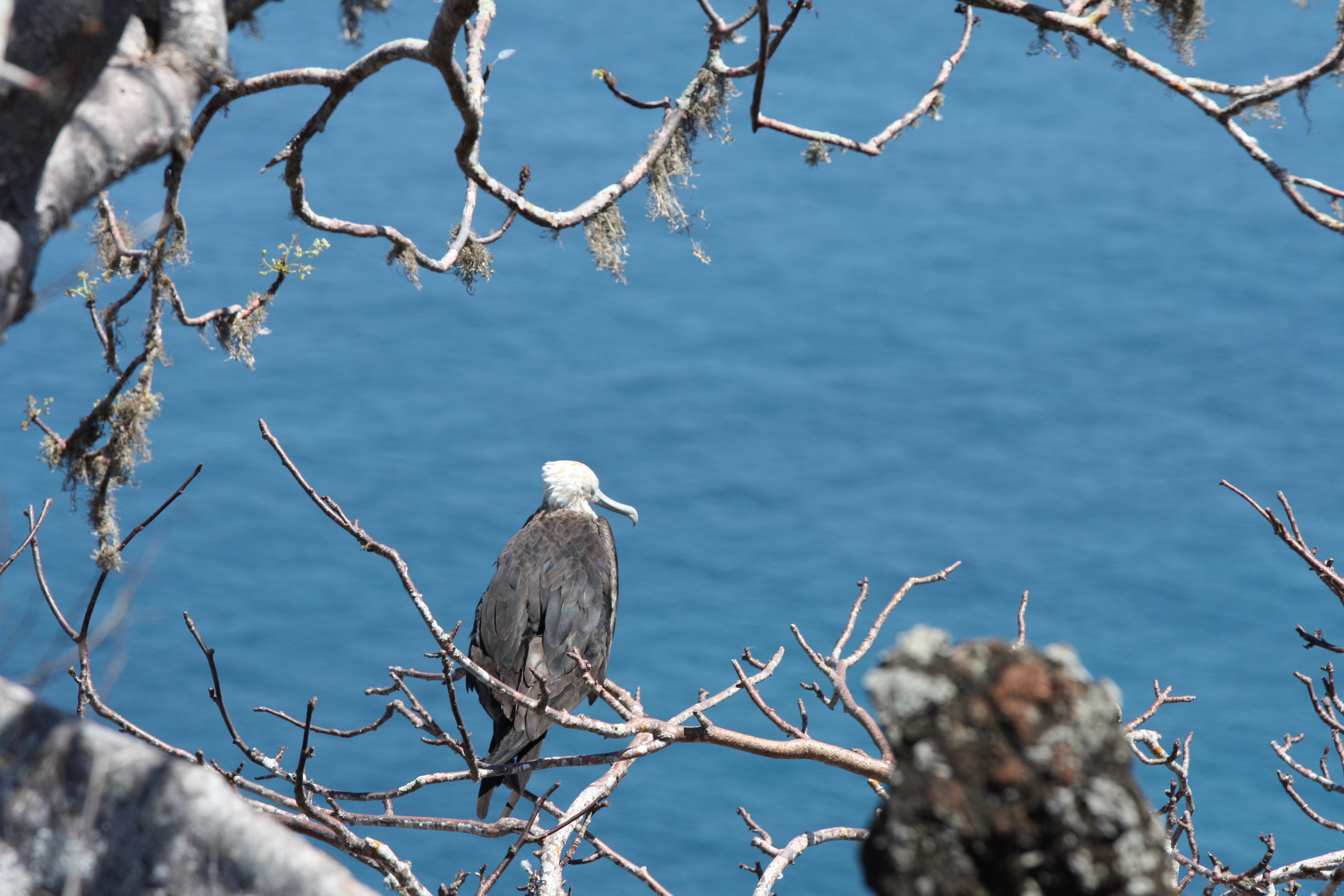
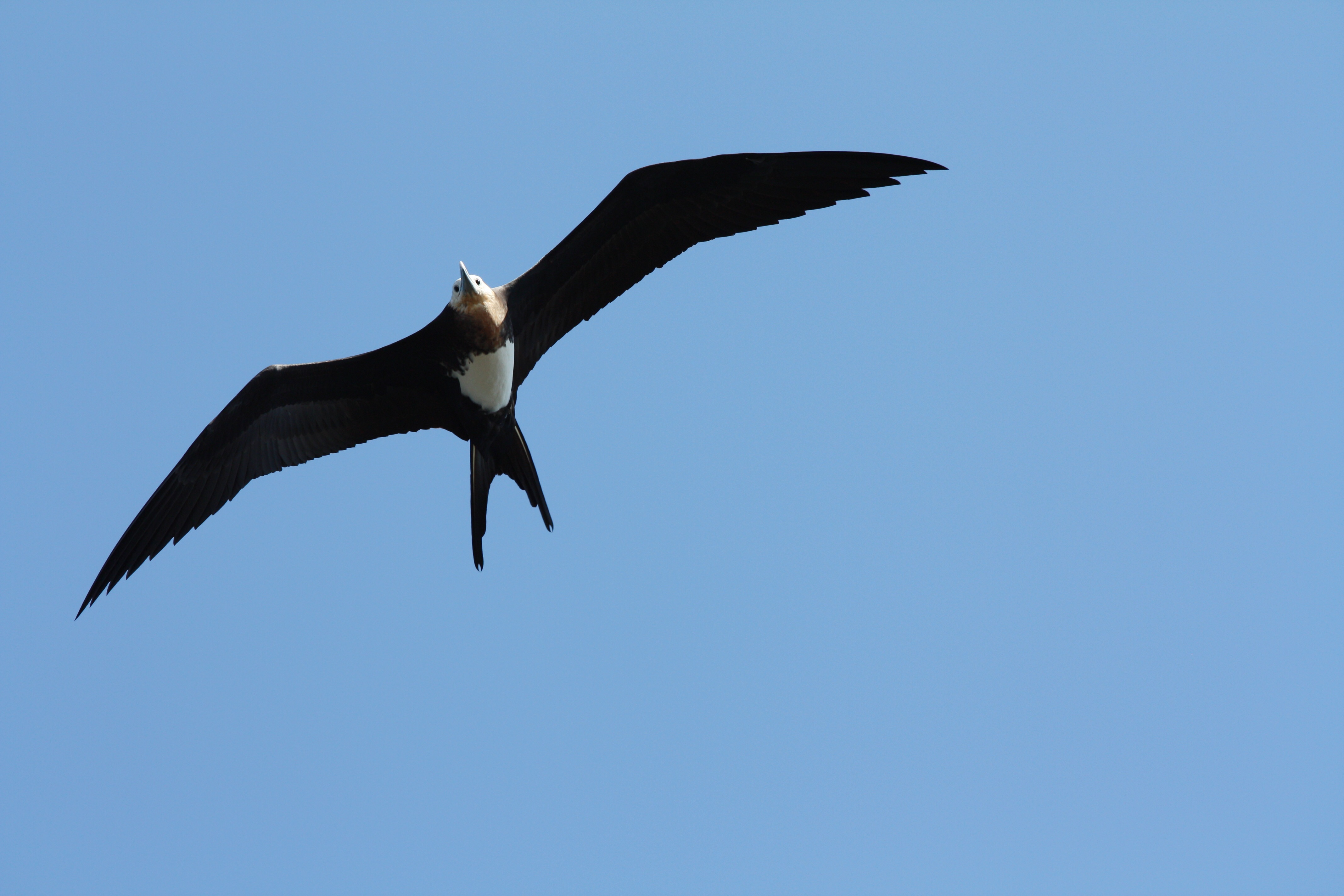
But if you climb up to their level...
But if you climb up to their level…

image

image

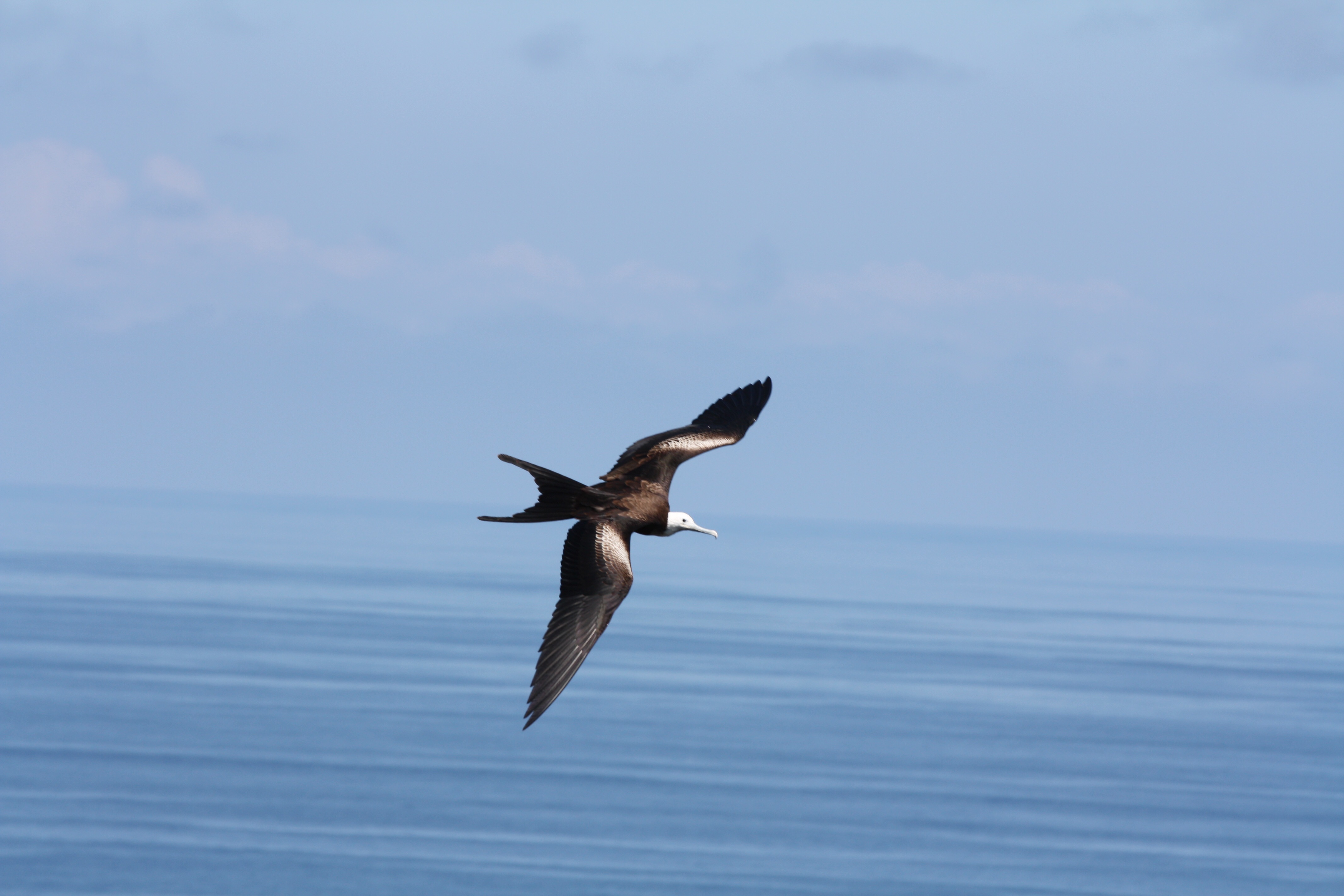
In Spanish they are called "scissors bird" because of the way they use their tail feathers.
In Spanish they are called “scissors bird” because of the way they use their tail feathers.
Blue-footed booby, unique to the Galapagos.  This is my one photo (so far) where you can zoom in and see the feet.
Blue-footed booby, unique to the Galapagos. This is my one photo (so far) where you can zoom in and see the feet.

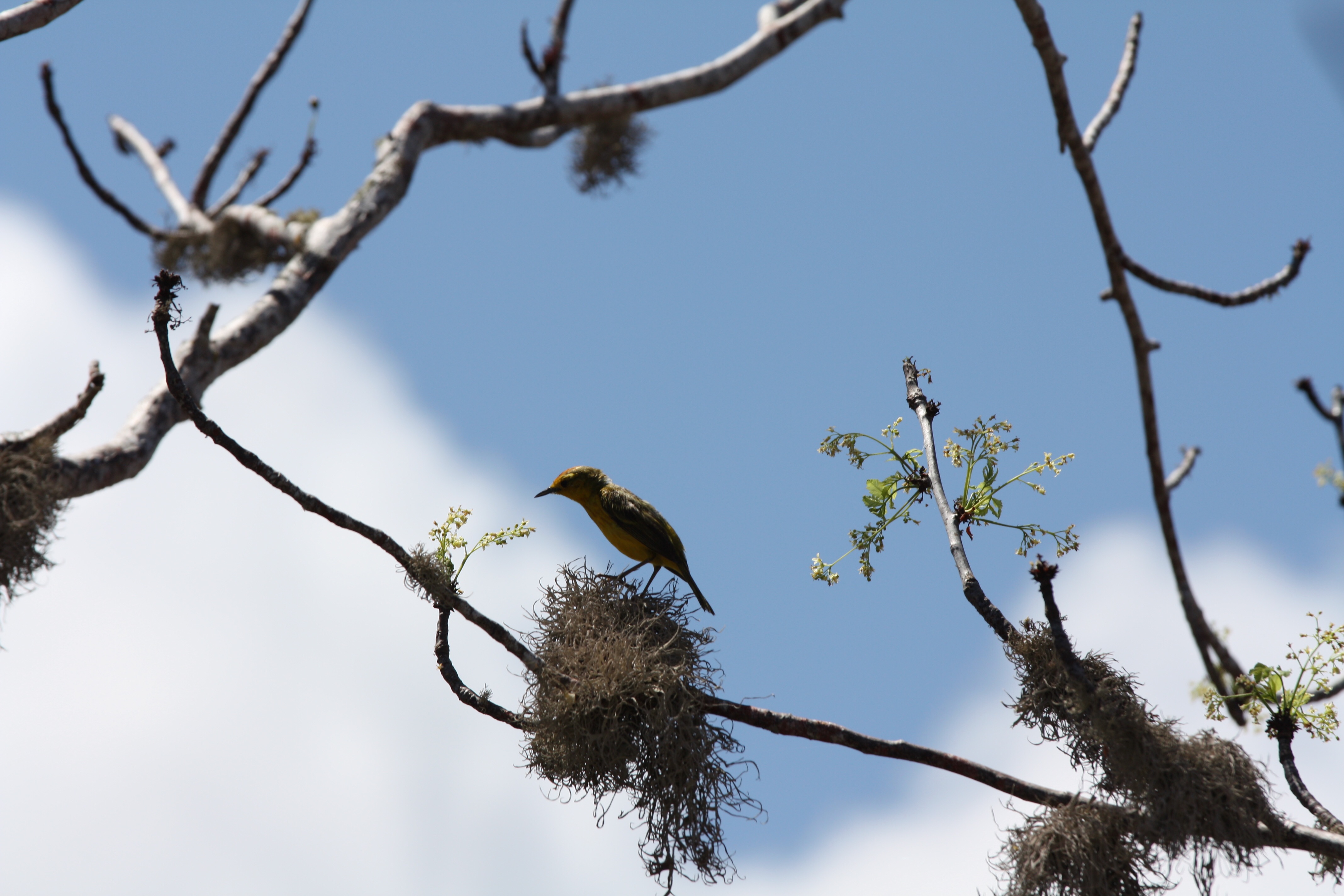
The Galapagos are famous for their finches, which were one of the species (actually they evolved into 13 species on the islands) that got Darwin thinking about why/how they had developed different beaks (adapting to the foods they were eating).  Also I find it rather amazing that a mating pair of finches somehow made it to these islands in the first place.  Recent “invasive species” aside, only animals that were blown 700 miles off course, or that could live for a long time drifting (perhaps on a downed tree) across in the current, live here.  Tortoises yes (they can go a long time without fresh water), frogs no (amphibians cannot last long without fresh water), for example.

image

Photos Panama to Galapagos

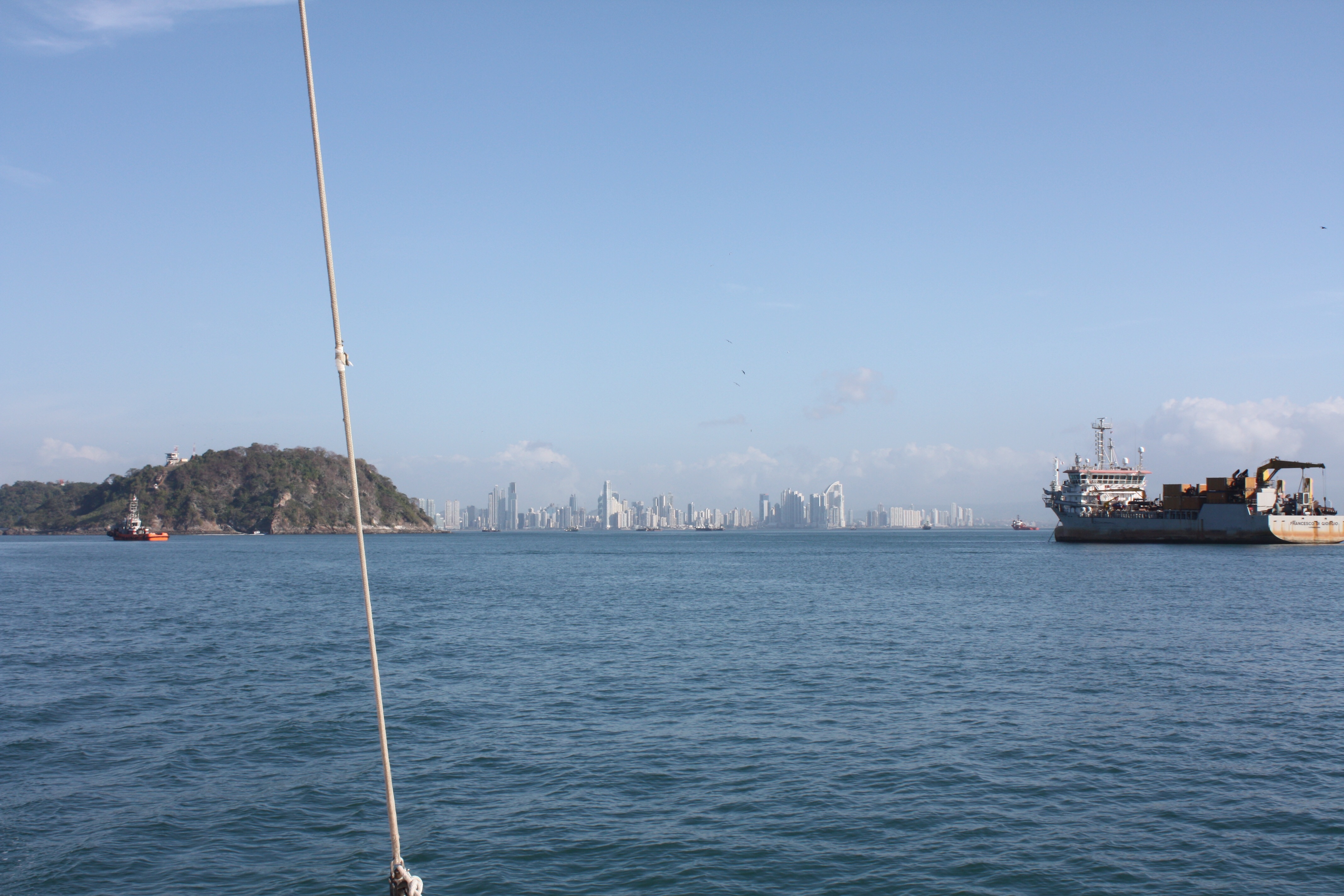
Goodbye to Panama City
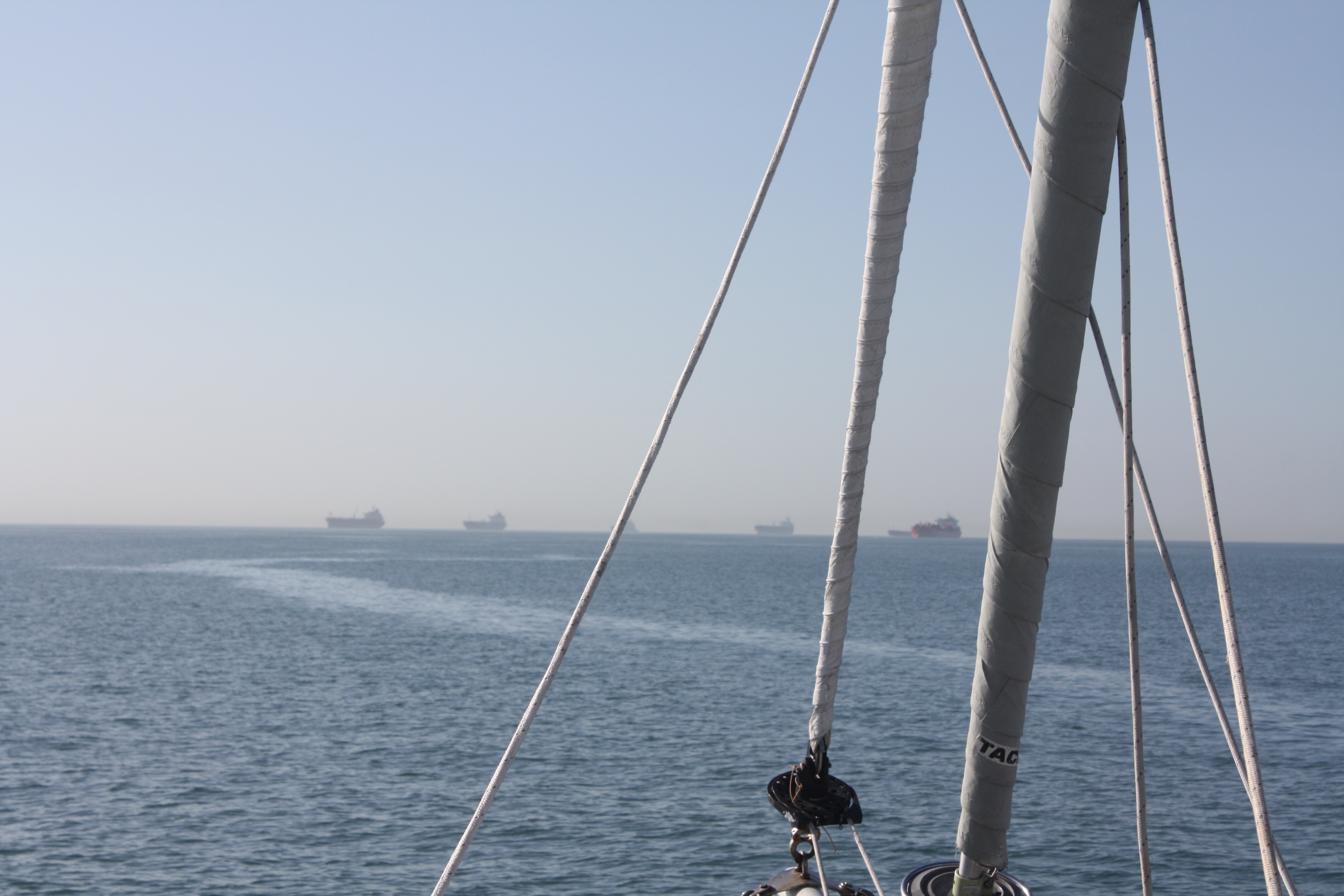
And so long to the parade of ships marching to the Canal.
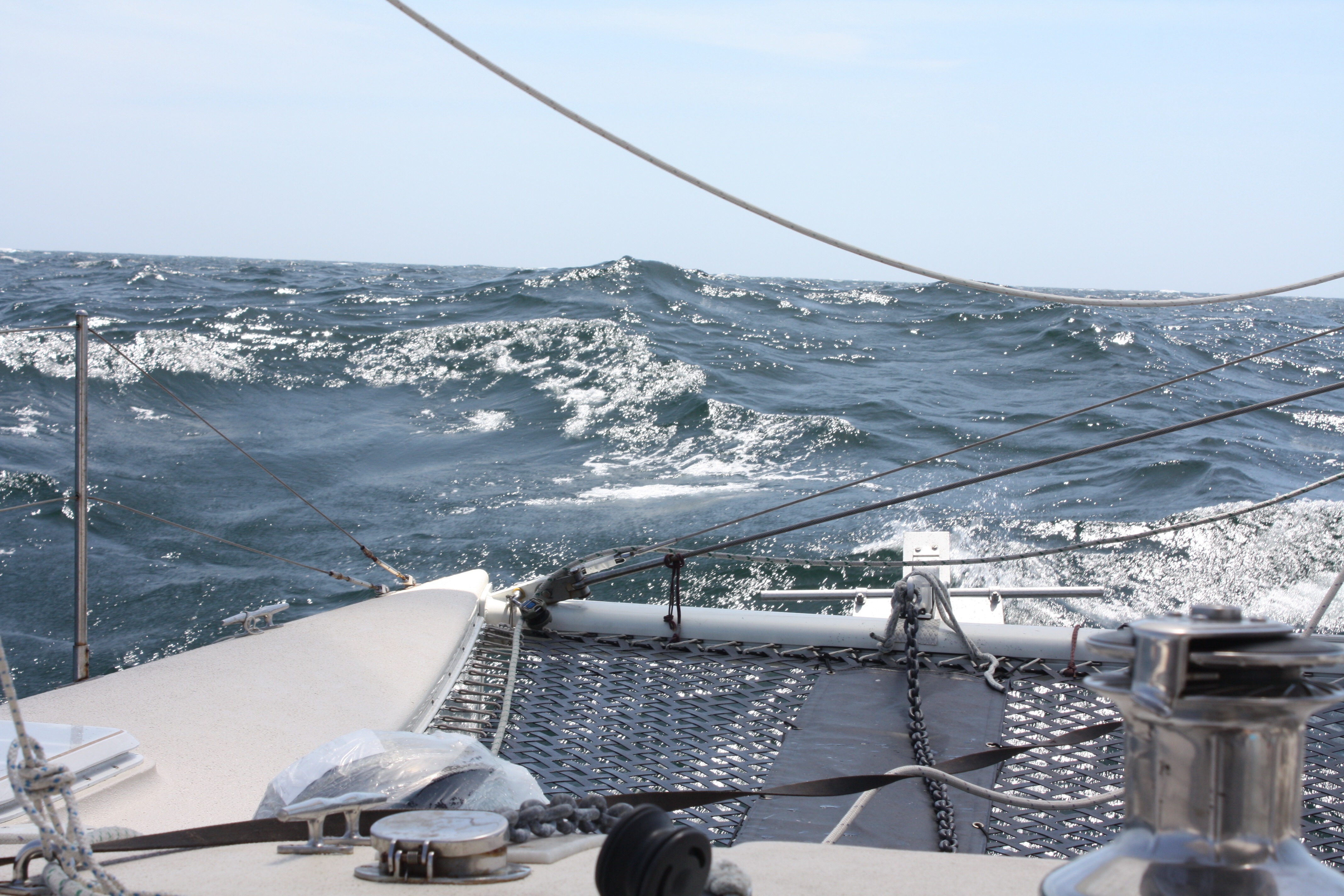
Offshore again.
Offshore again.
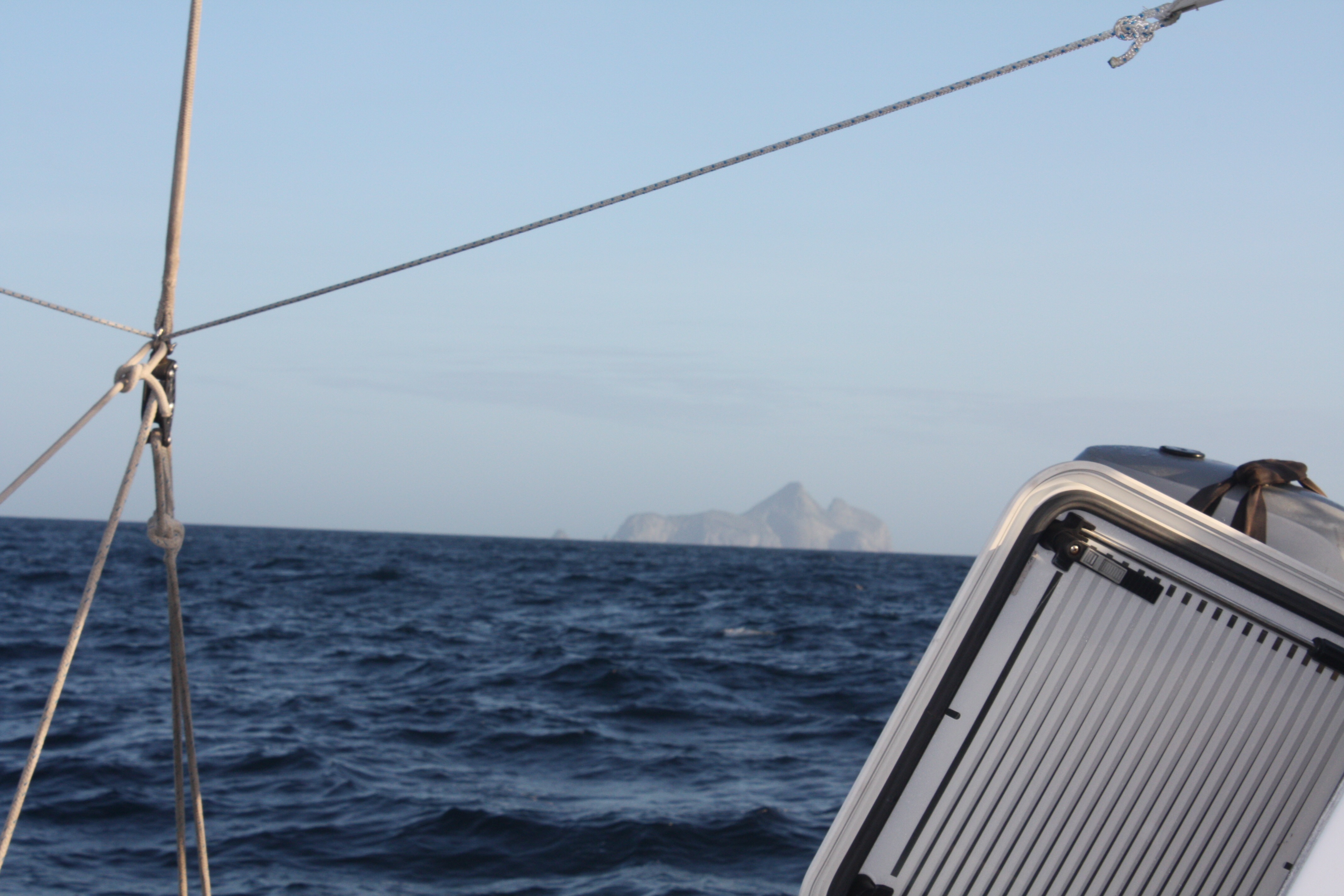
Isla Malpelo, belonging to Columbia.
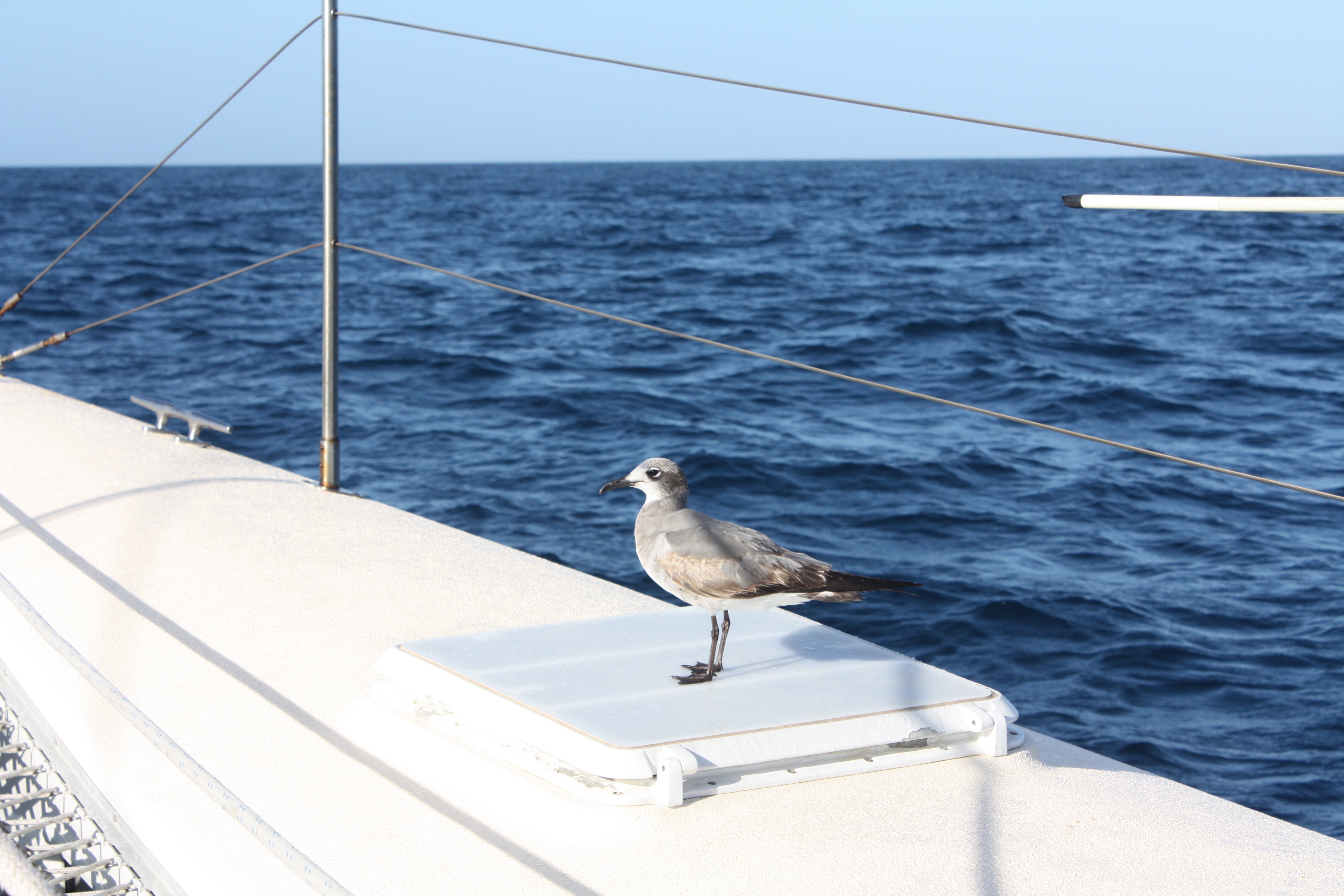
Visitor
Visitor

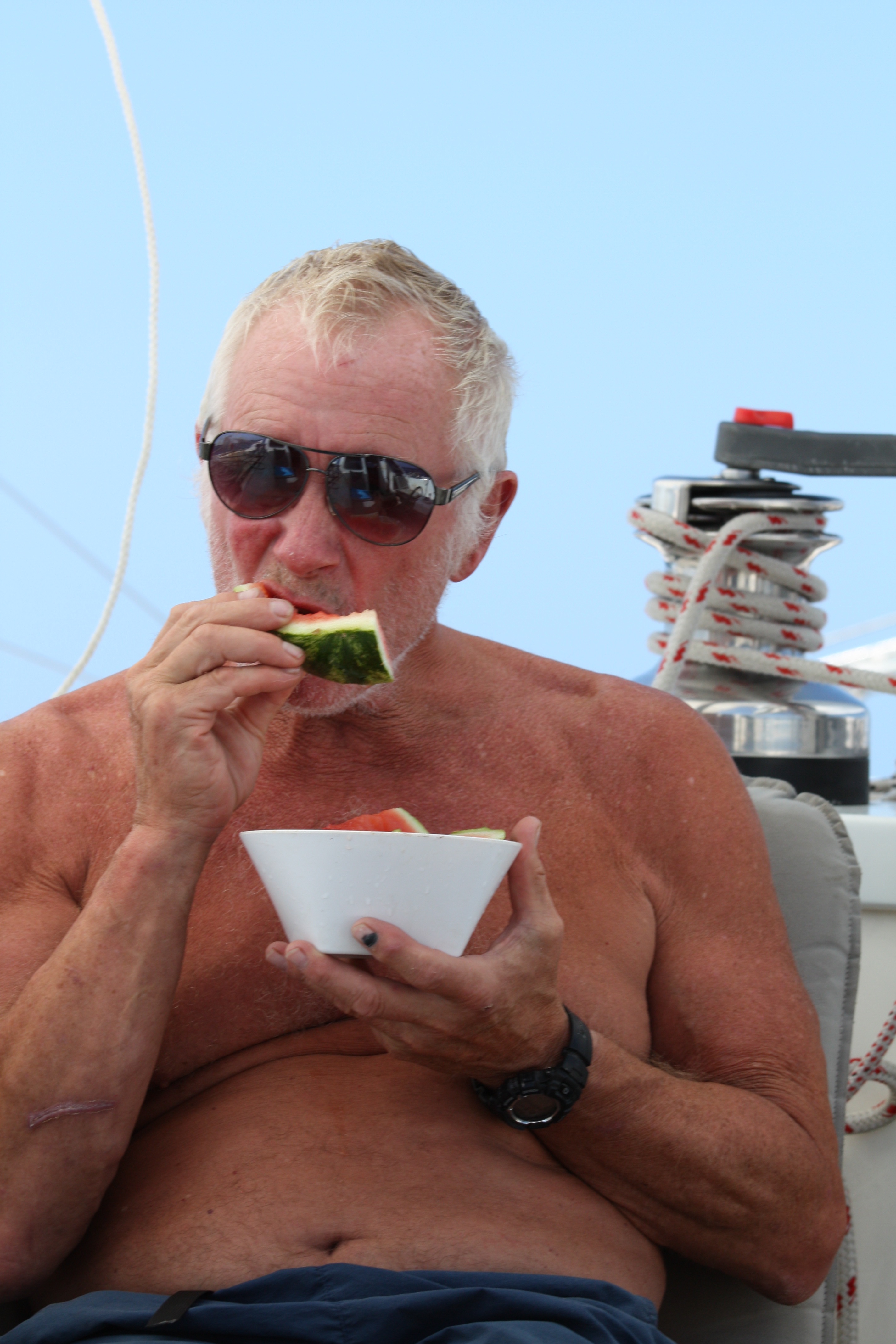
A treat we brought along.

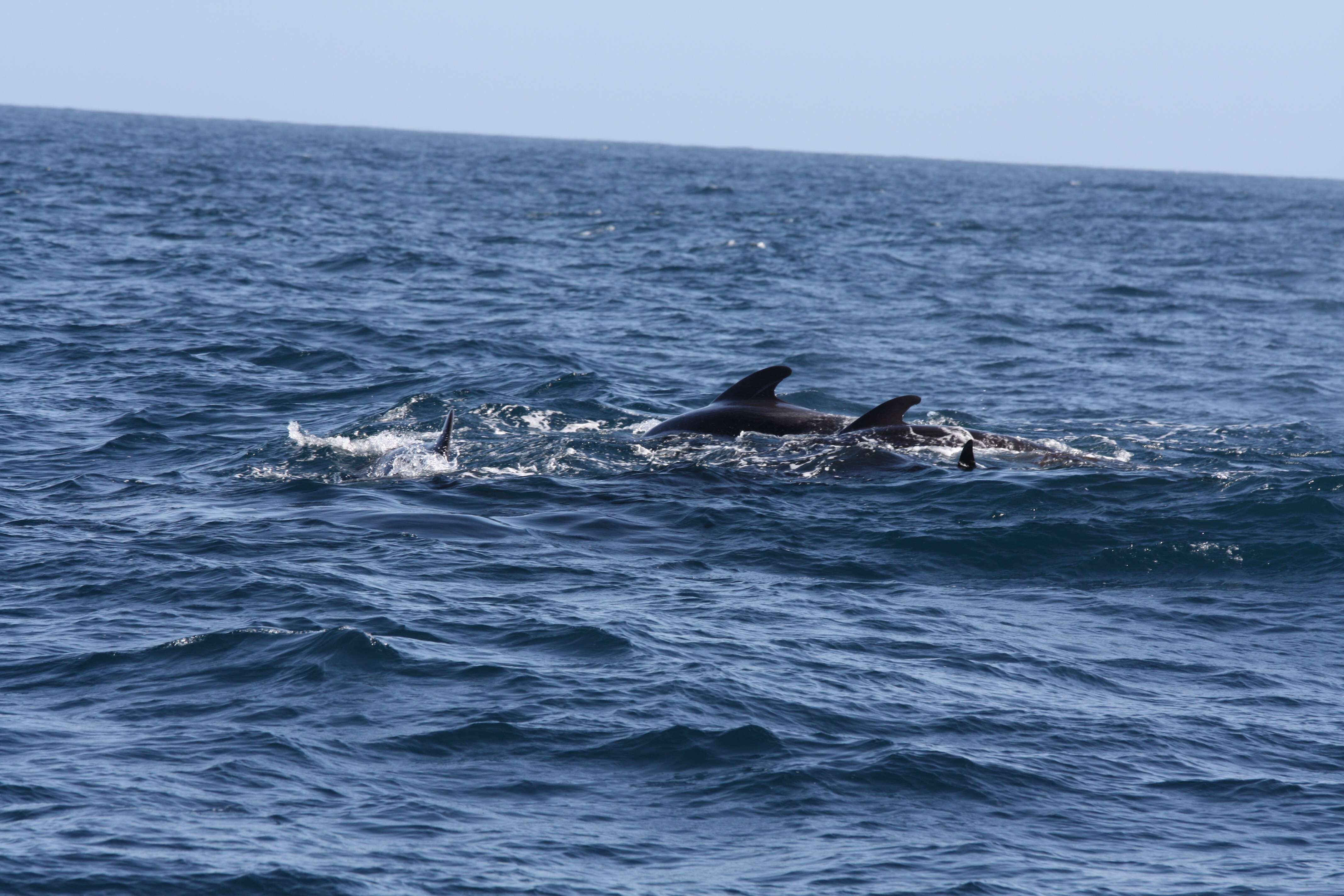
Traveling companions.
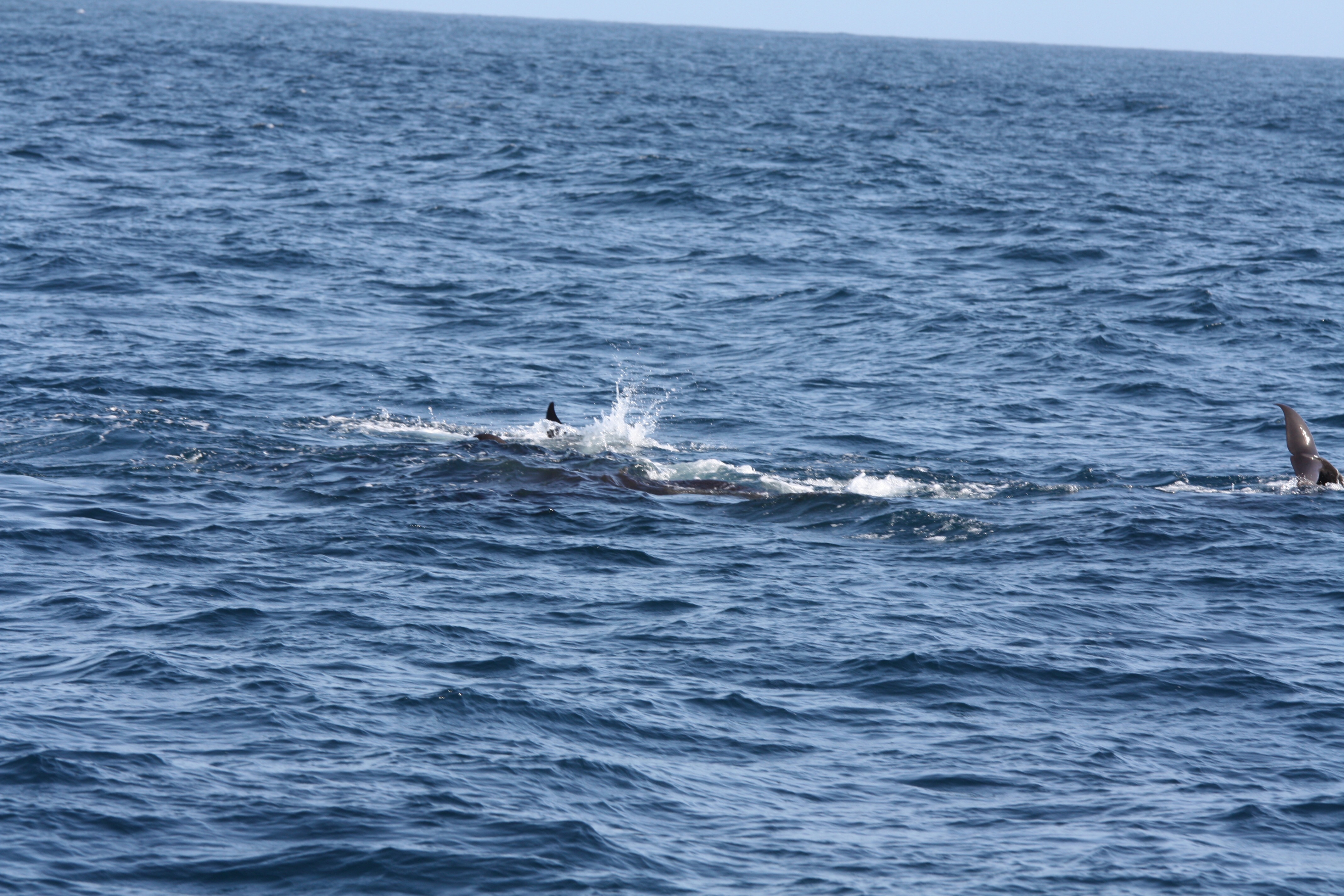
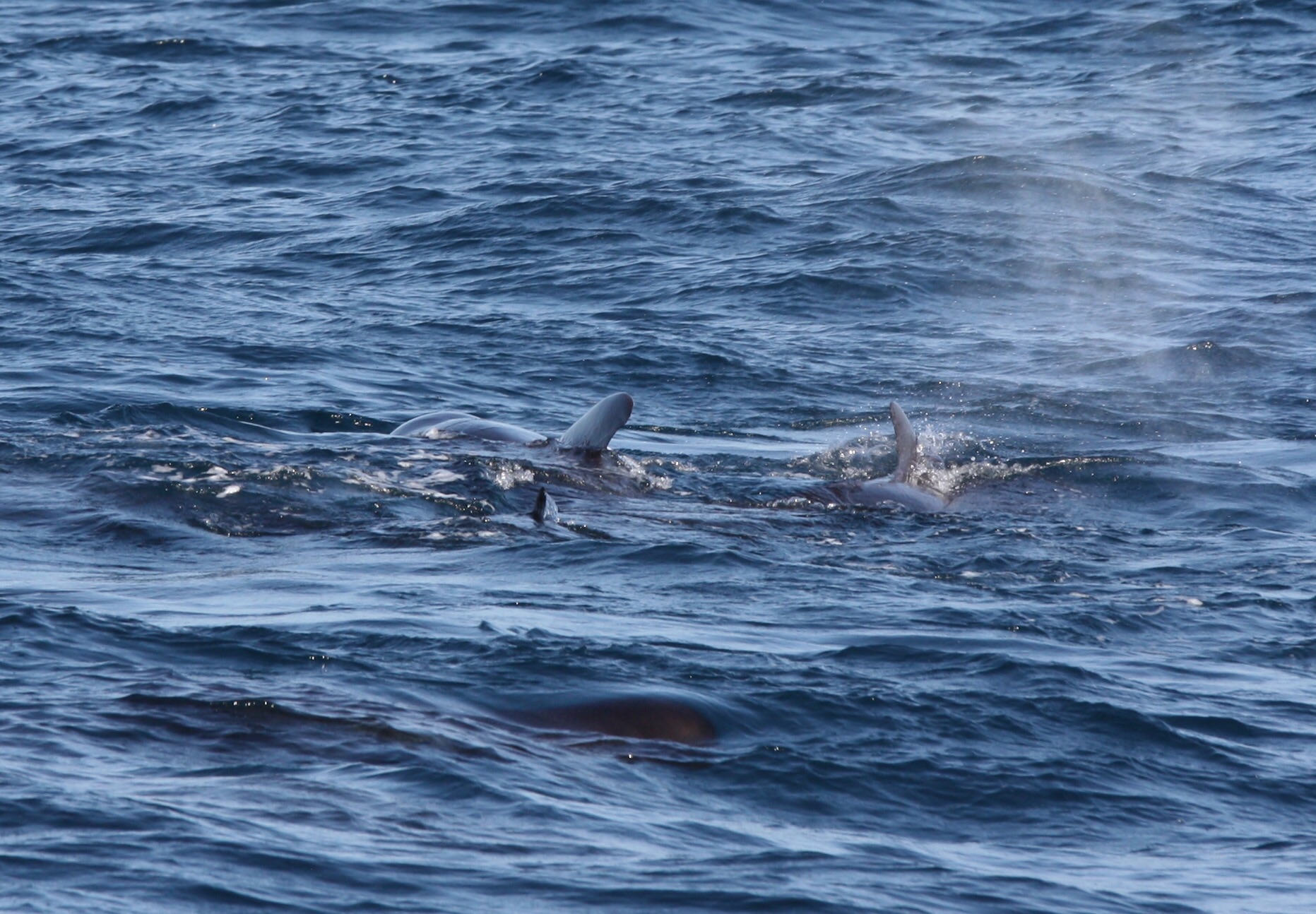
Pilot (I think) whales.
I missed the one jumping out of the water, but you can at least see a whale tail at the right.
The faint "cloud" in the upper right is from the whale "blowing" (breathing).
The faint “cloud” in the upper right is from the whale “blowing” (breathing).
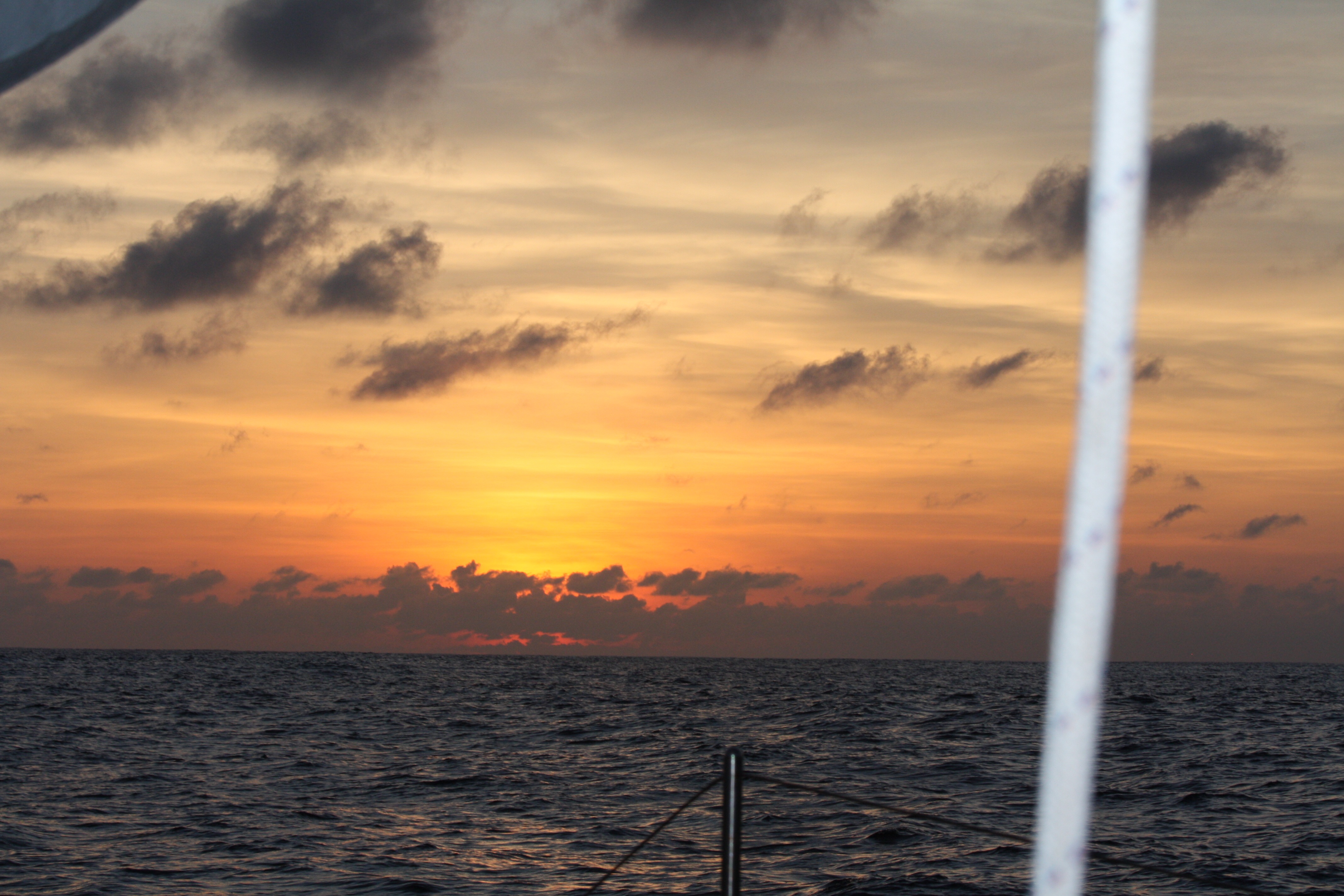
Sunset at sea.
Sunset at sea.
For whatever reason this formation makes me think of the lyrics, "I had some dreams, they were clouds in my coffee..."
For whatever reason this formation makes me think of the lyrics, “I had some dreams, they were clouds in my coffee…”
A treat we brought along.
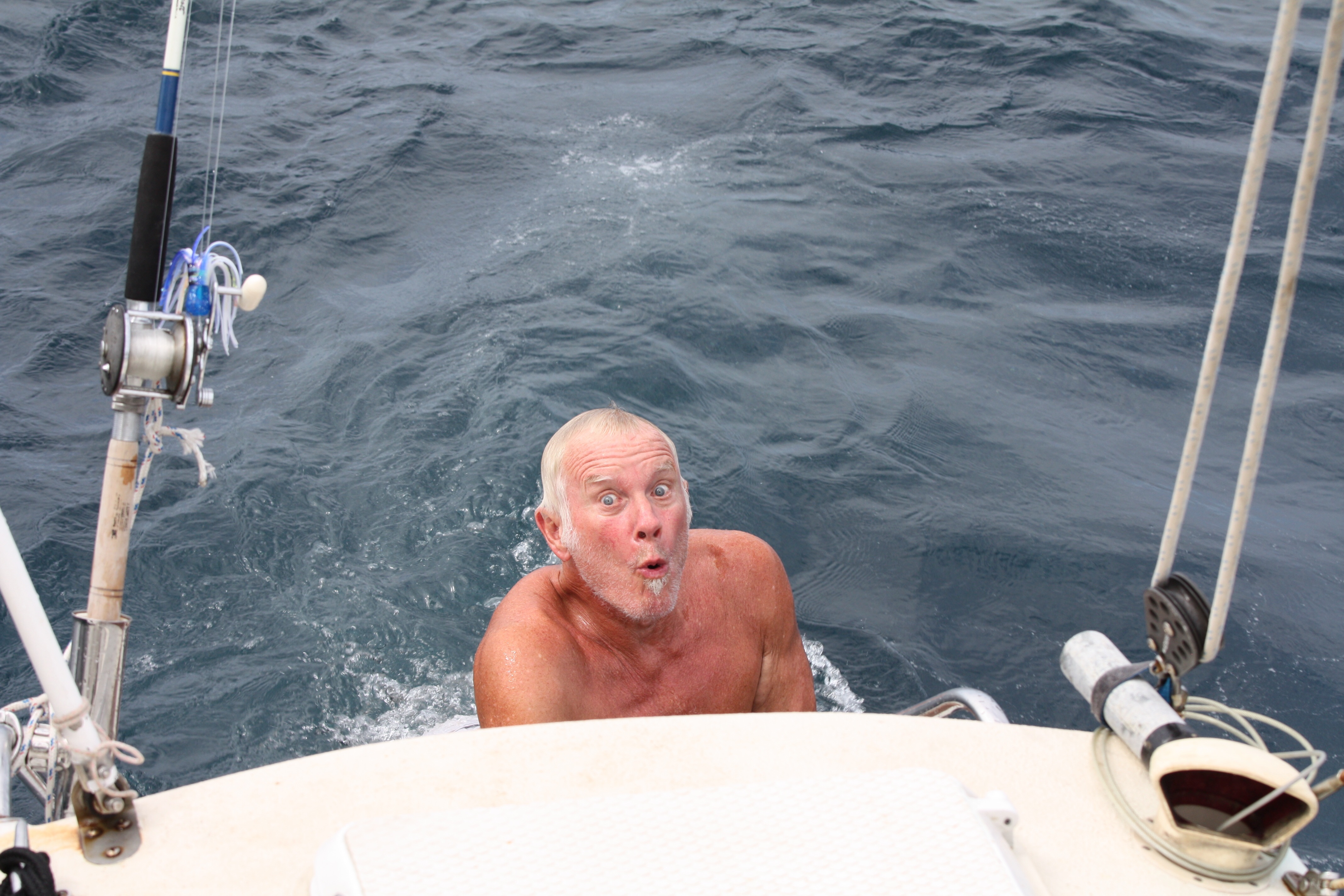
Followed by briefly slowing down the boat, and a refreshing dip in the ocean.
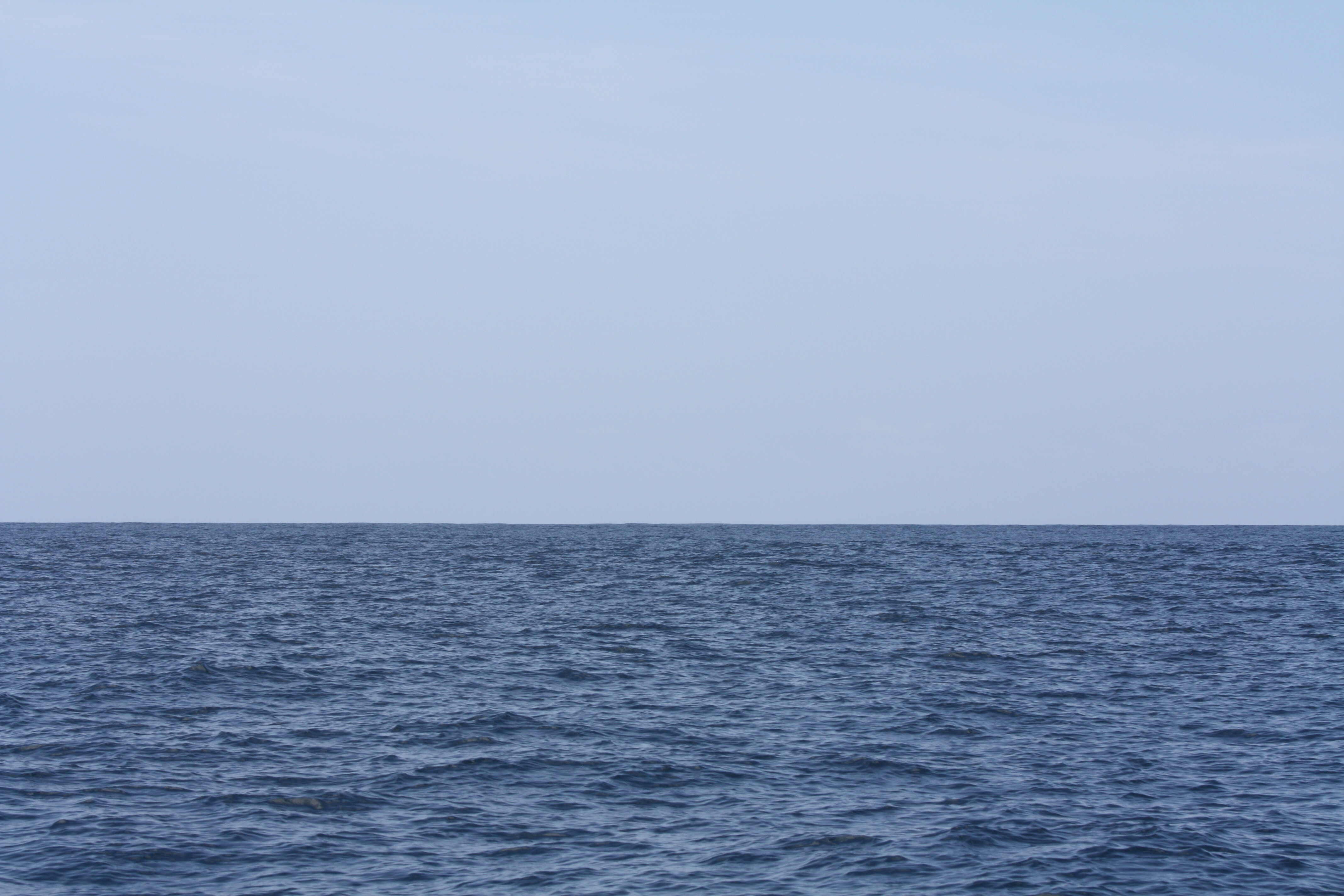
Blue over blue...pretty much anywhere you look.
Blue over blue…pretty much anywhere you look.
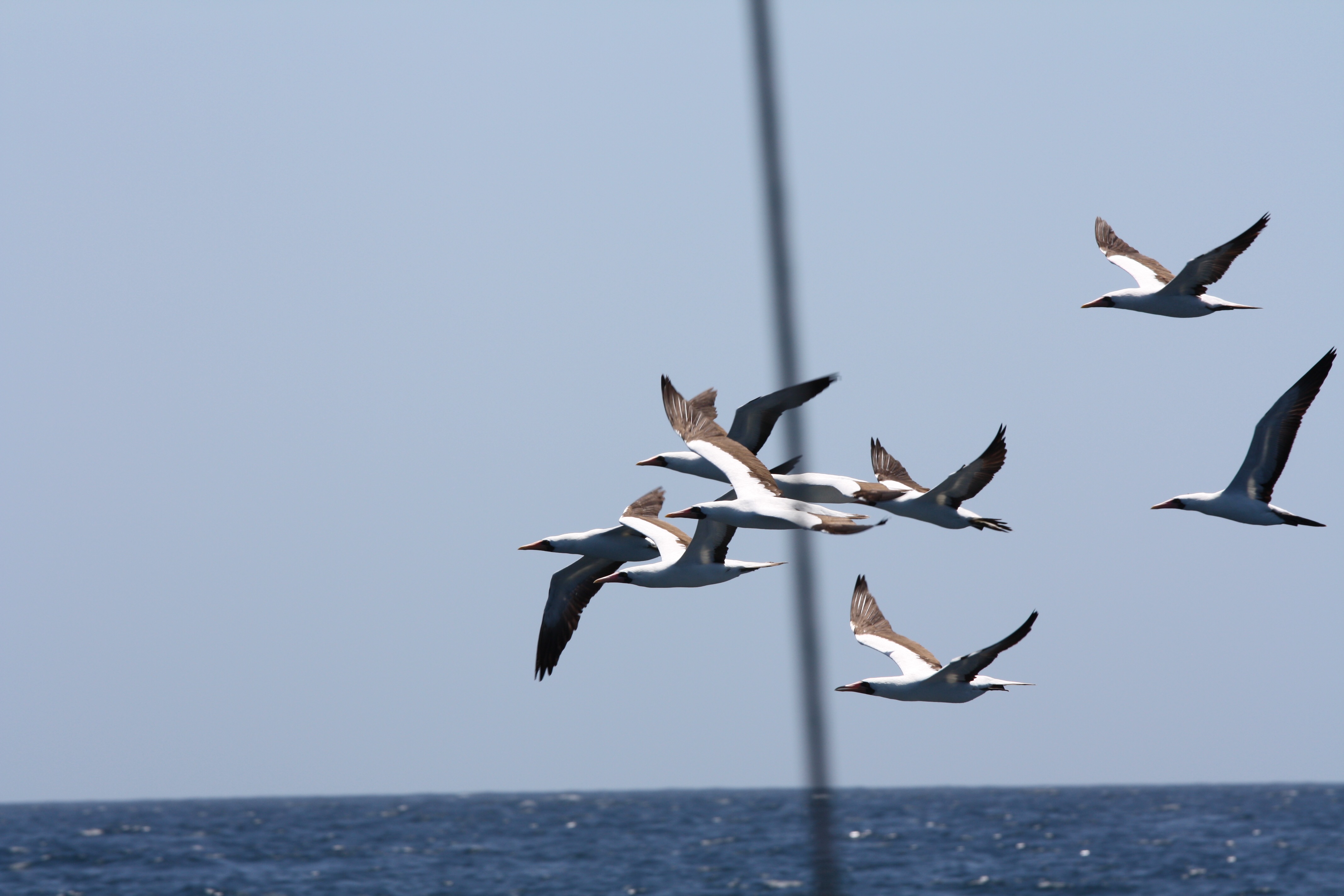
New birds as we get closer to the Galapagos.
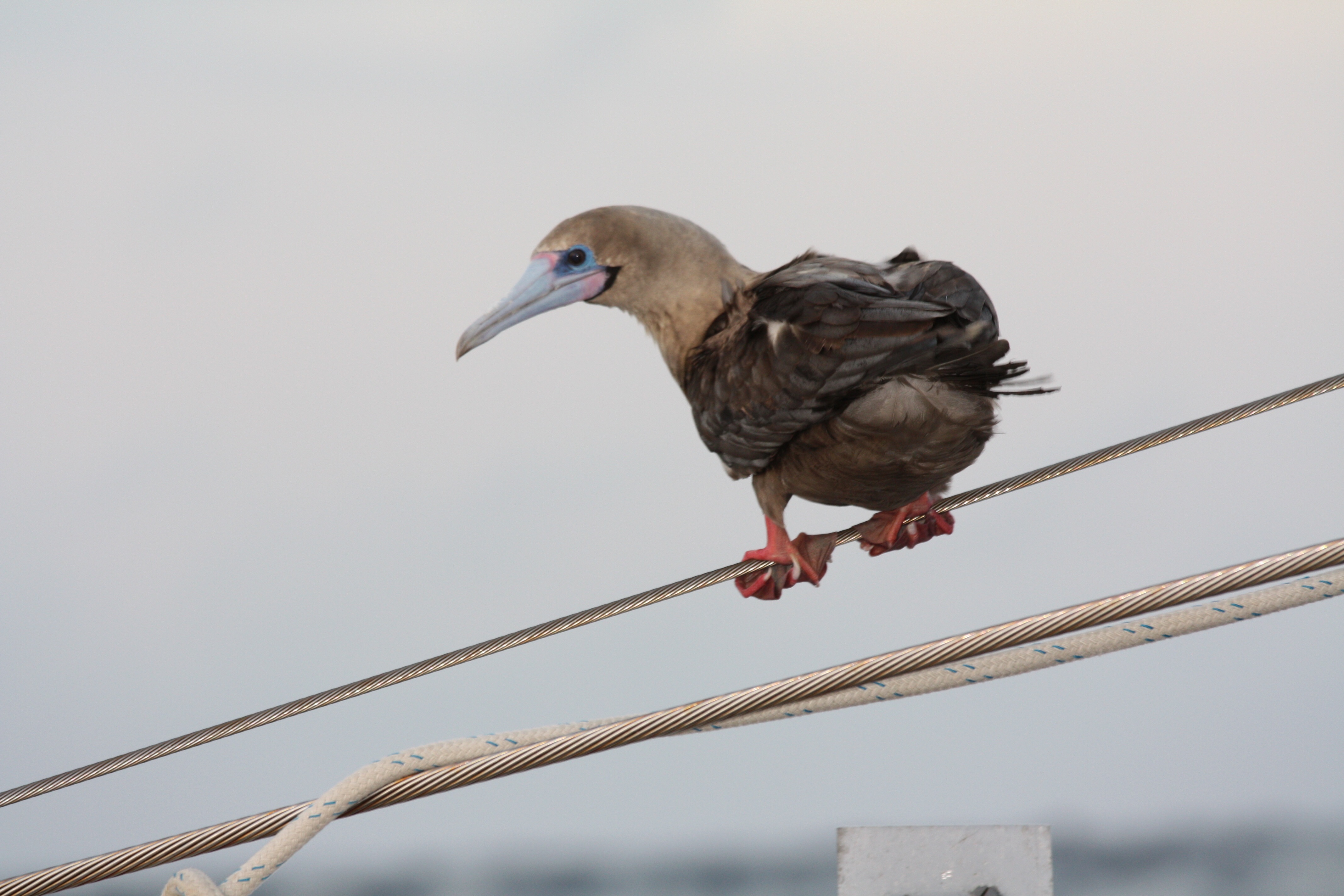
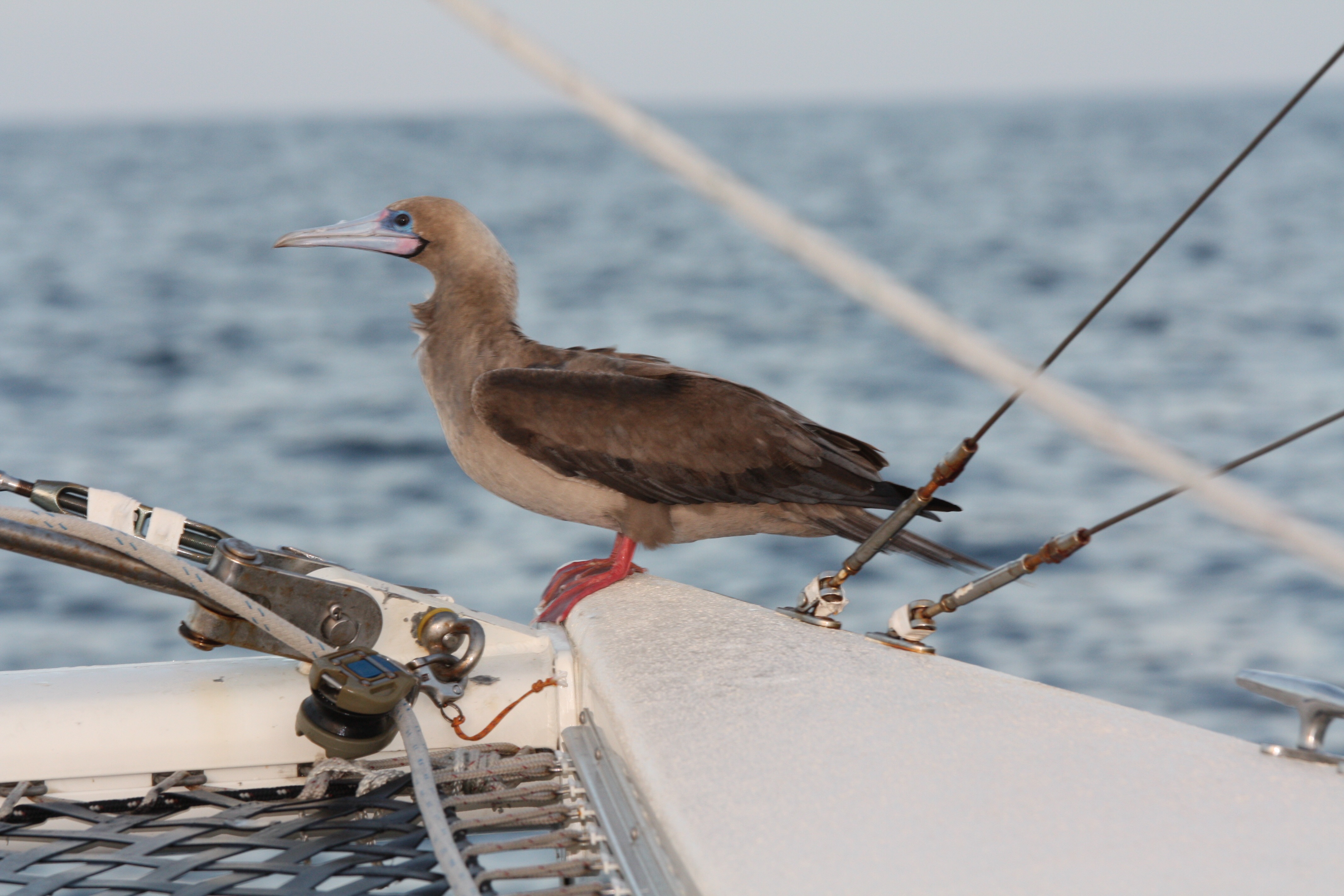
Red-footed booby that spent the entire night perched here, and returned the next night, too.
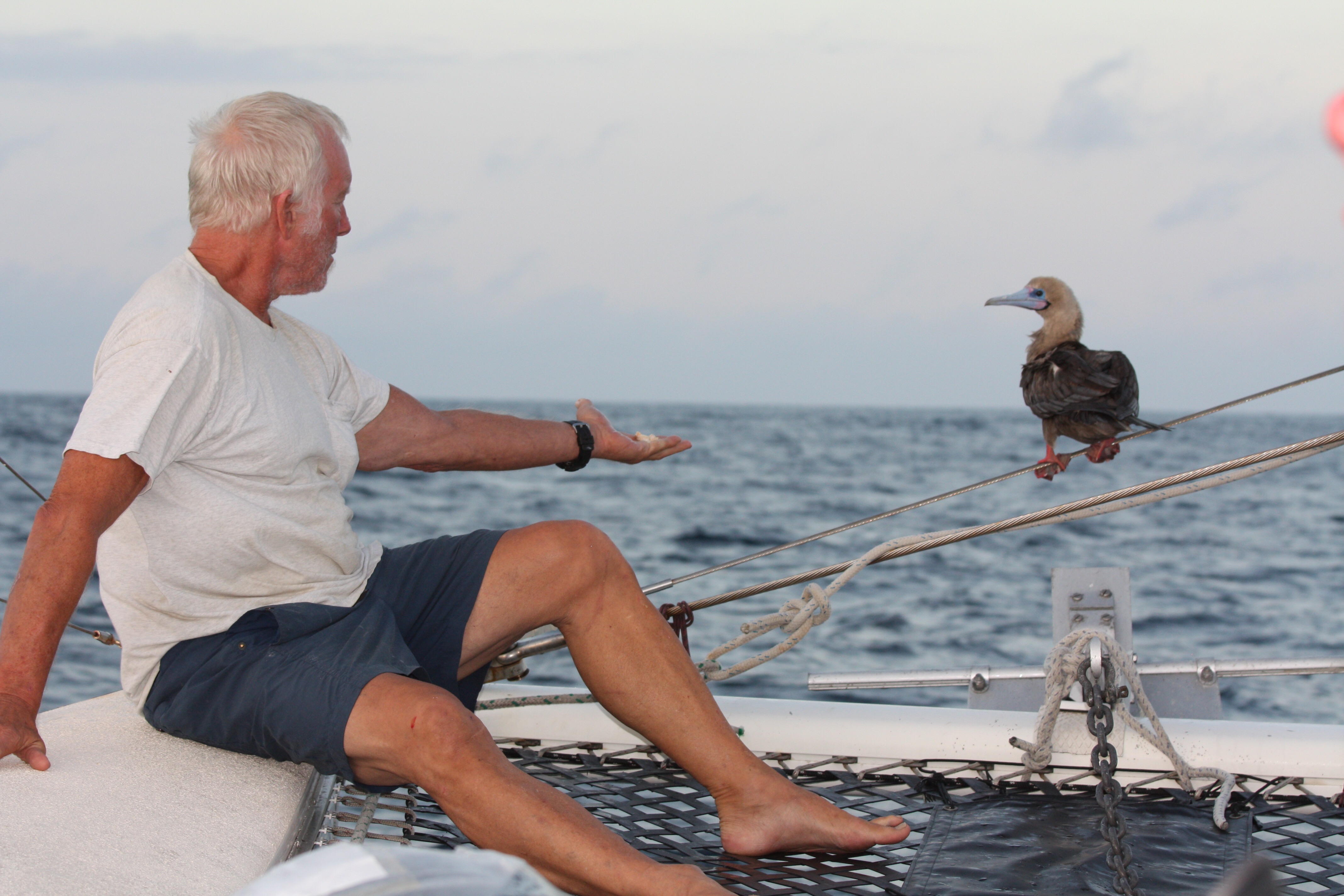
Tim invited him to dinner, which scared him away...
Tim invited him to dinner, which scared him away…
image
…but only as far as our other bow.


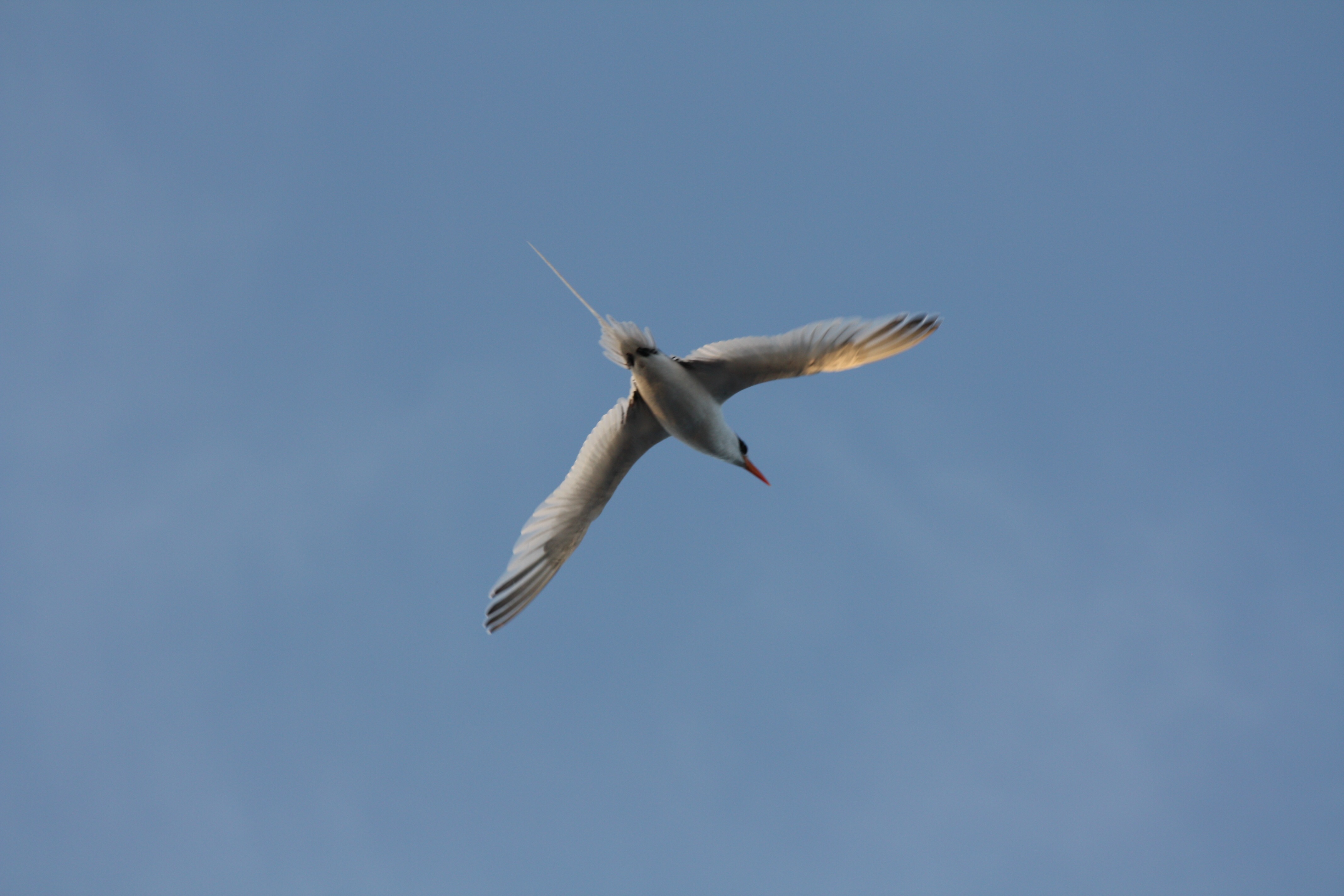
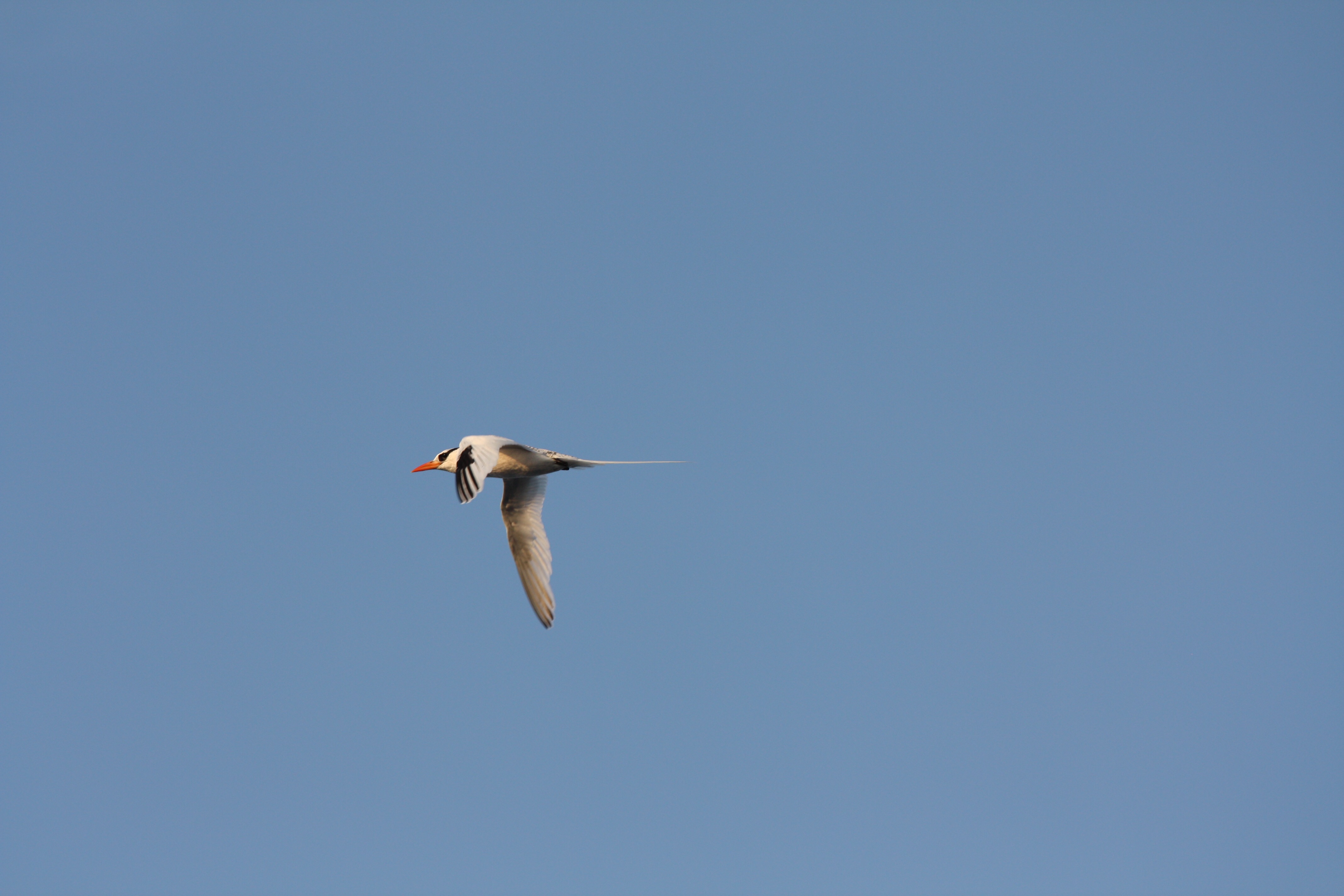
Can somebody help me with the name of this beautiful bird?

image

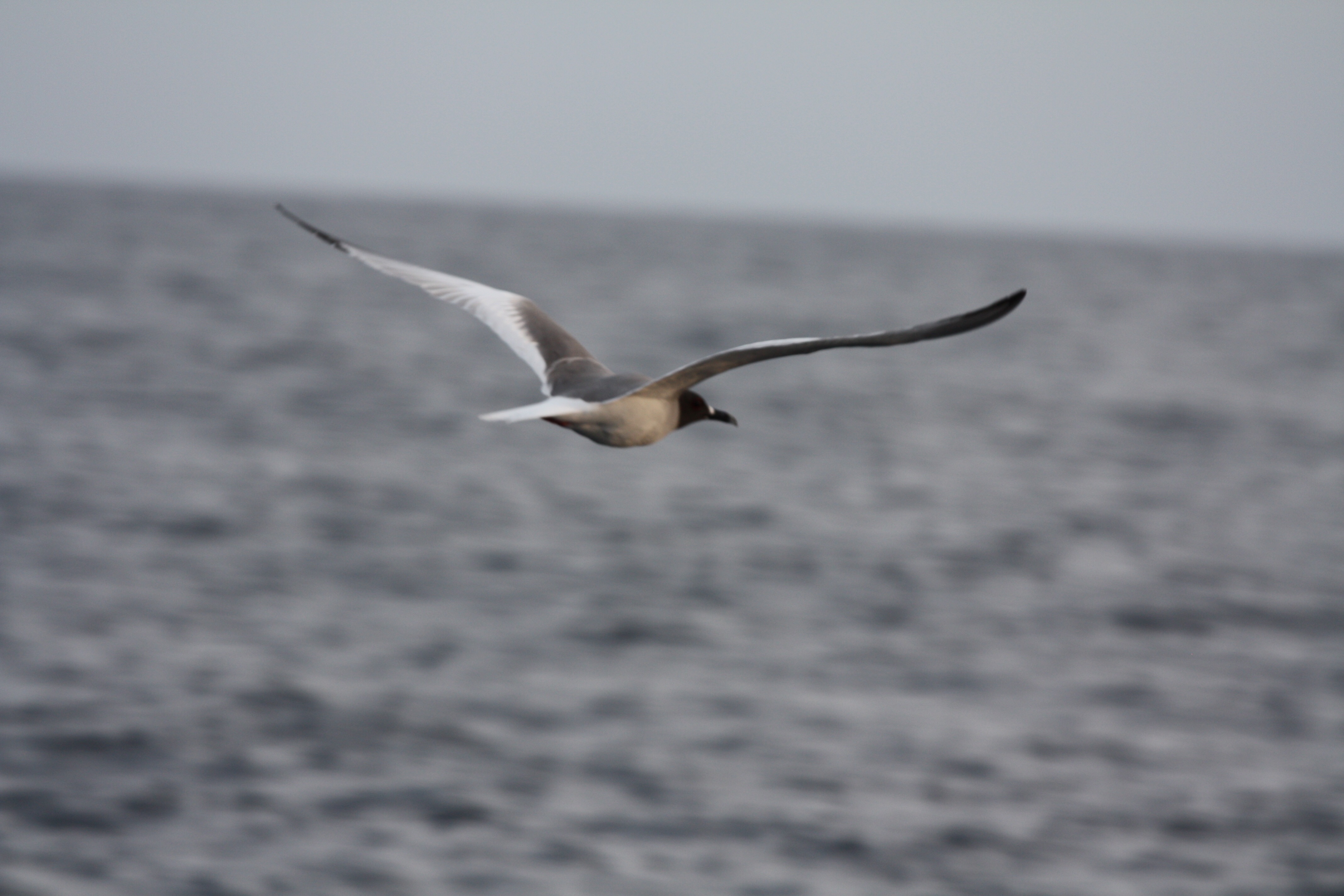
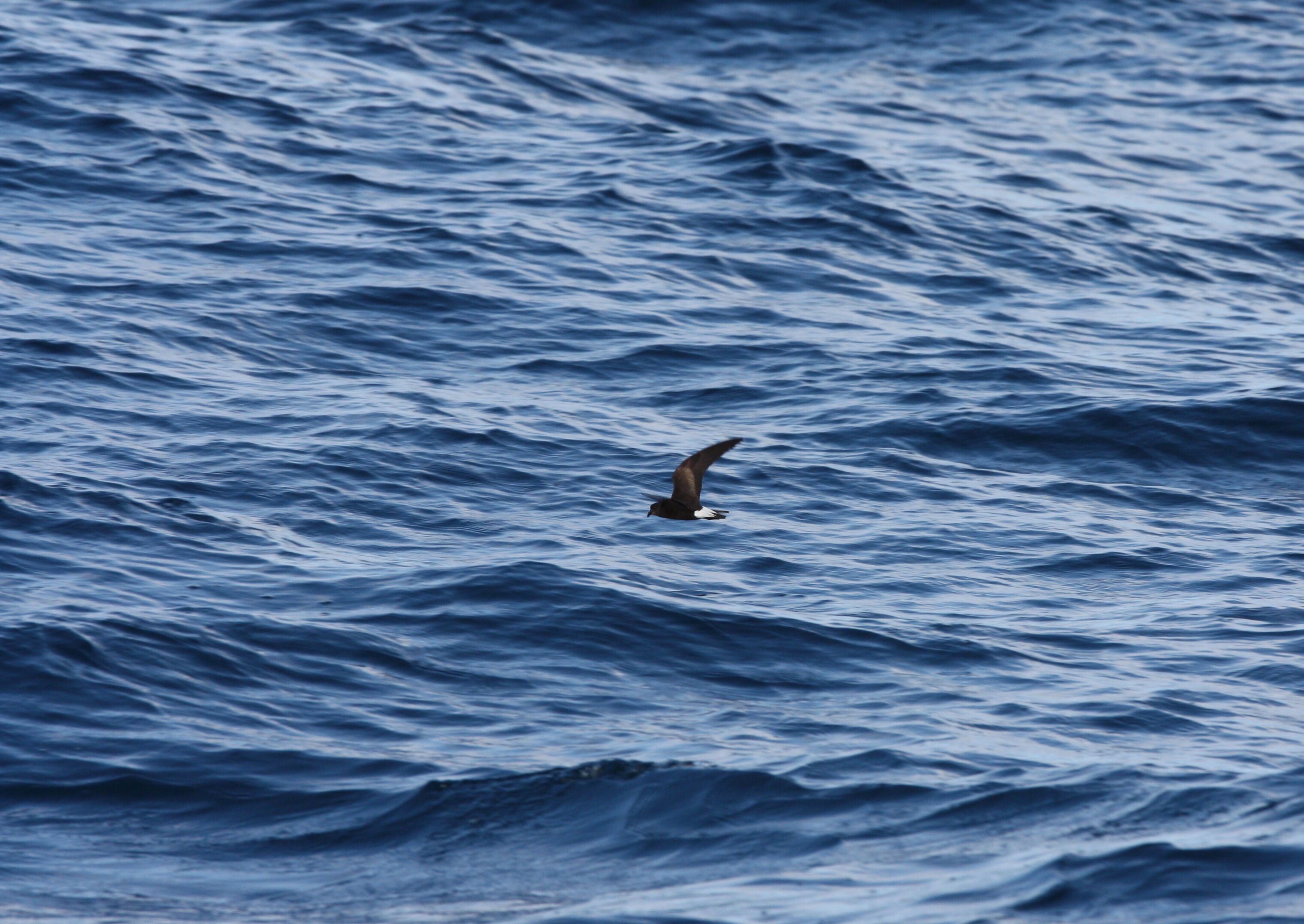
This little guy I think is a stormy petrel?
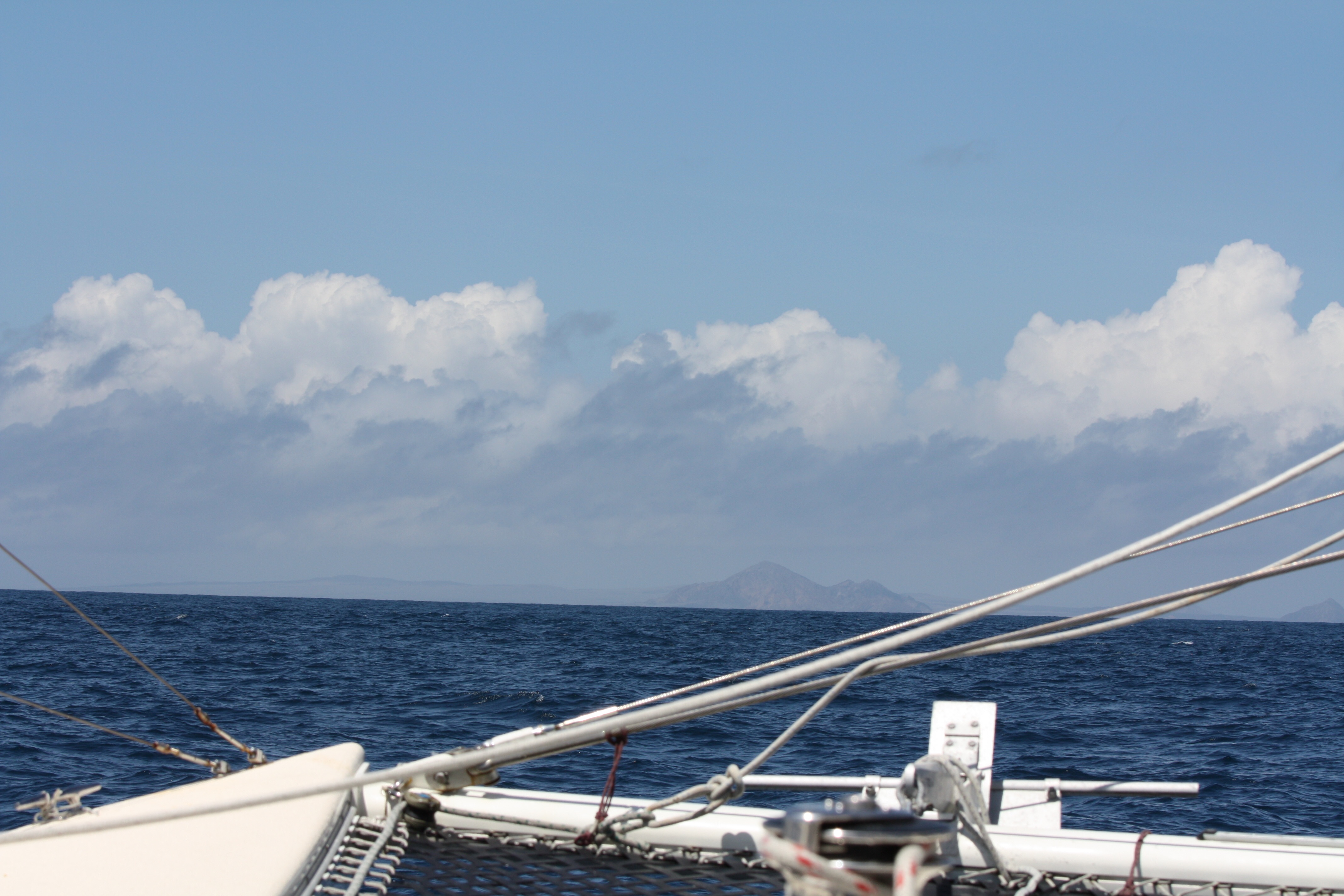
Land ho!  The island of San Cristobal in the Galapagos.
Land ho! The island of San Cristobal in the Galapagos.

image

image

image

image

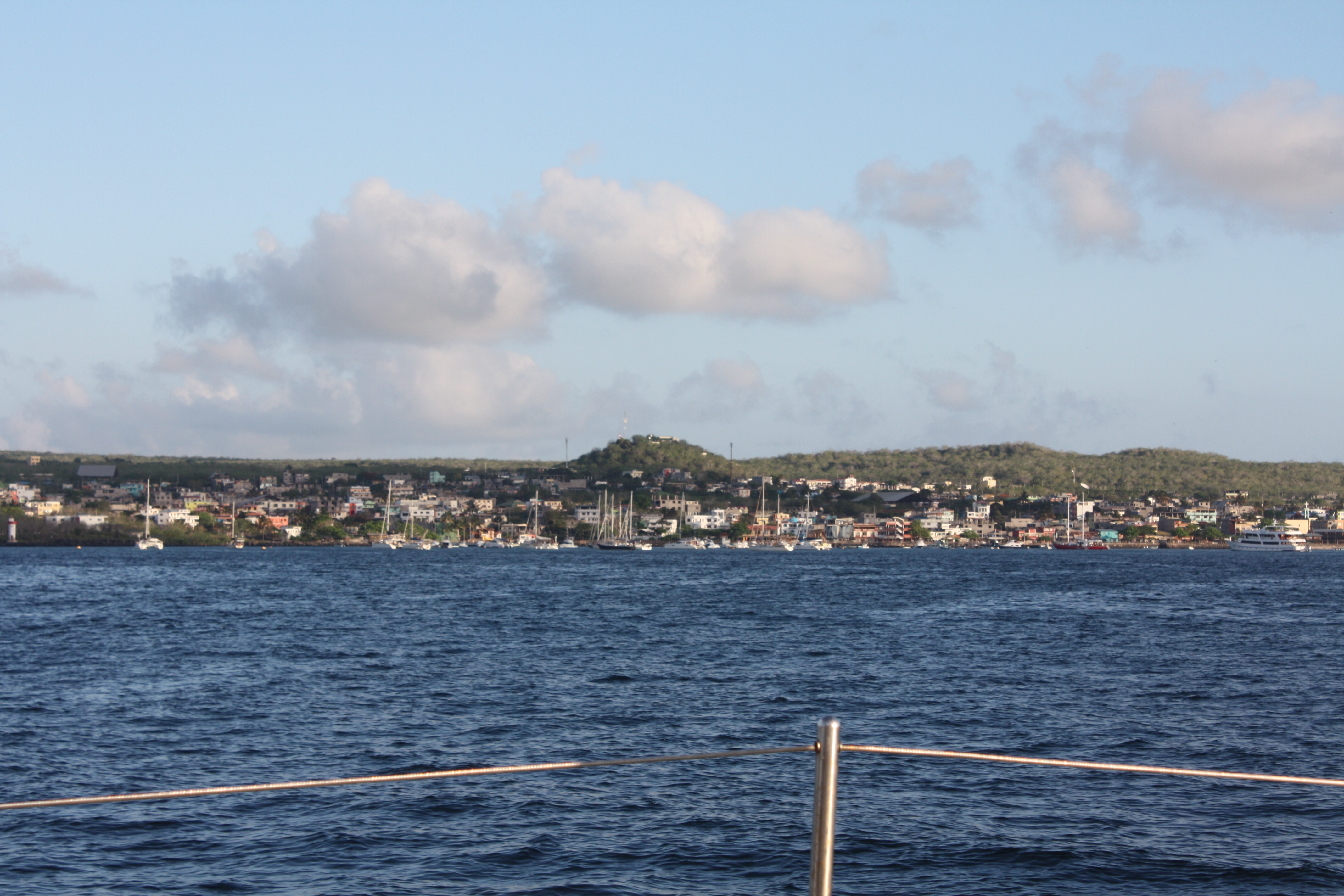
San Cristobal is 20 miles long, with no sign of humanity (at least from a distance), until the port/town of Baquerizo Moreno, where we are anchored.
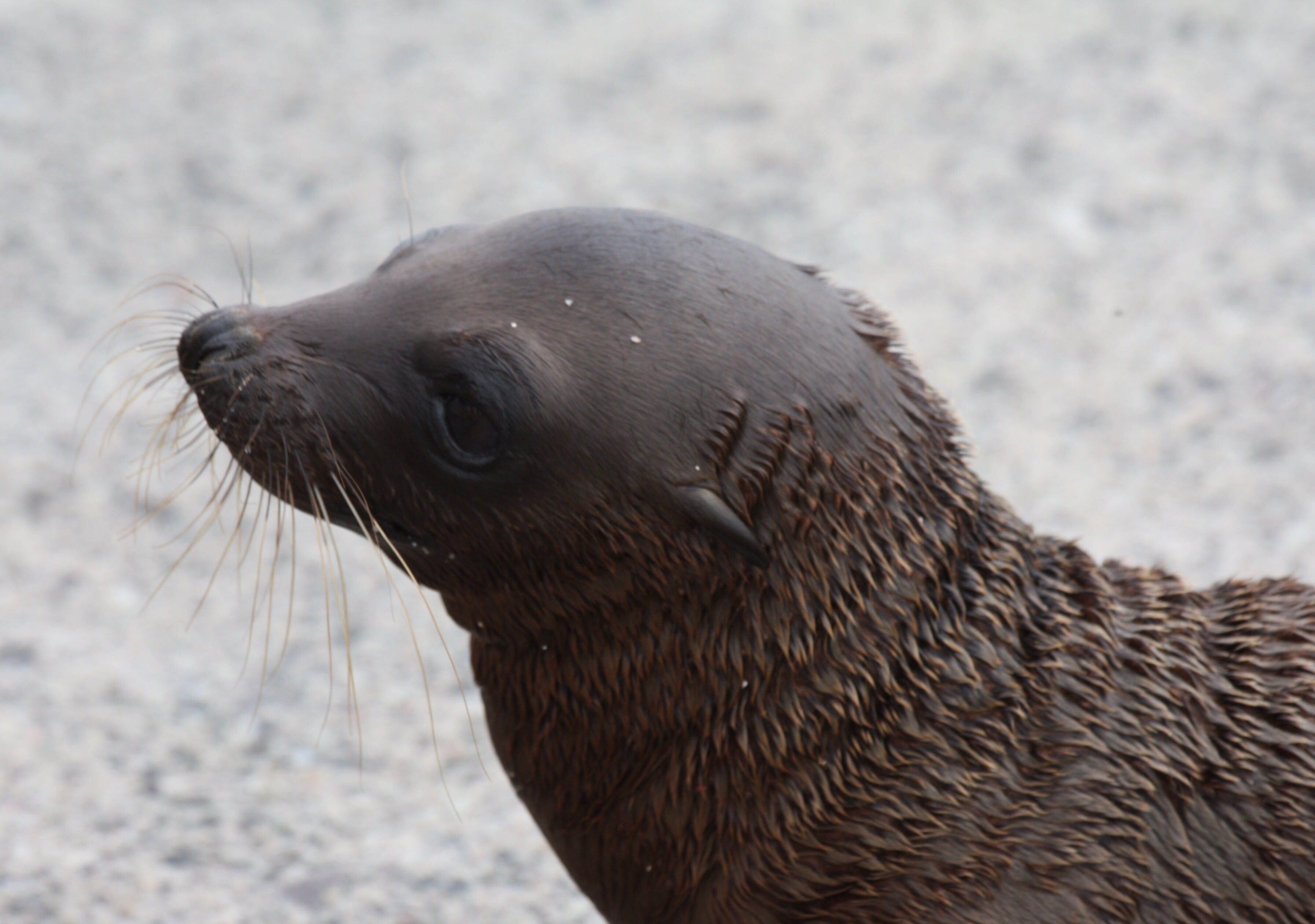
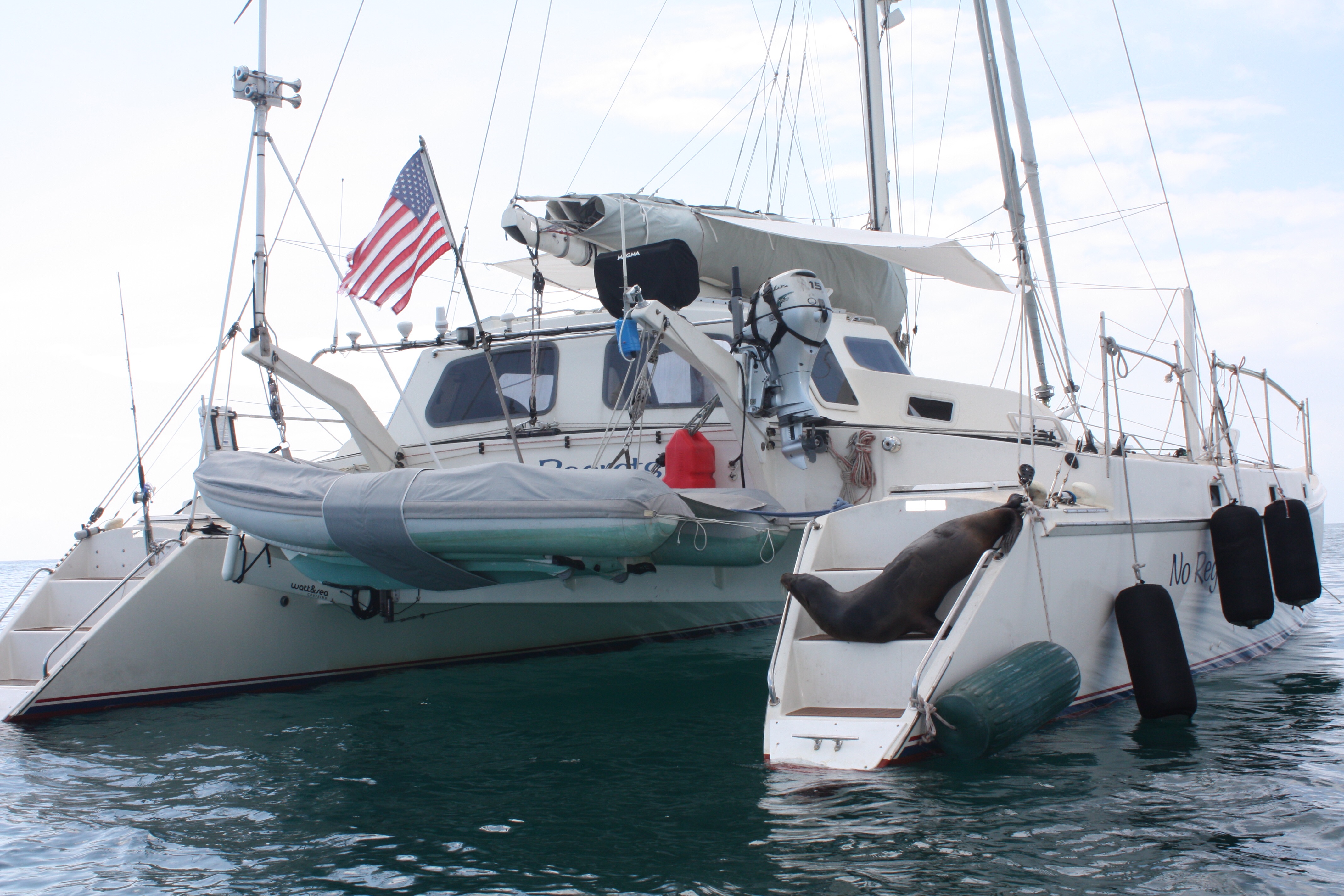
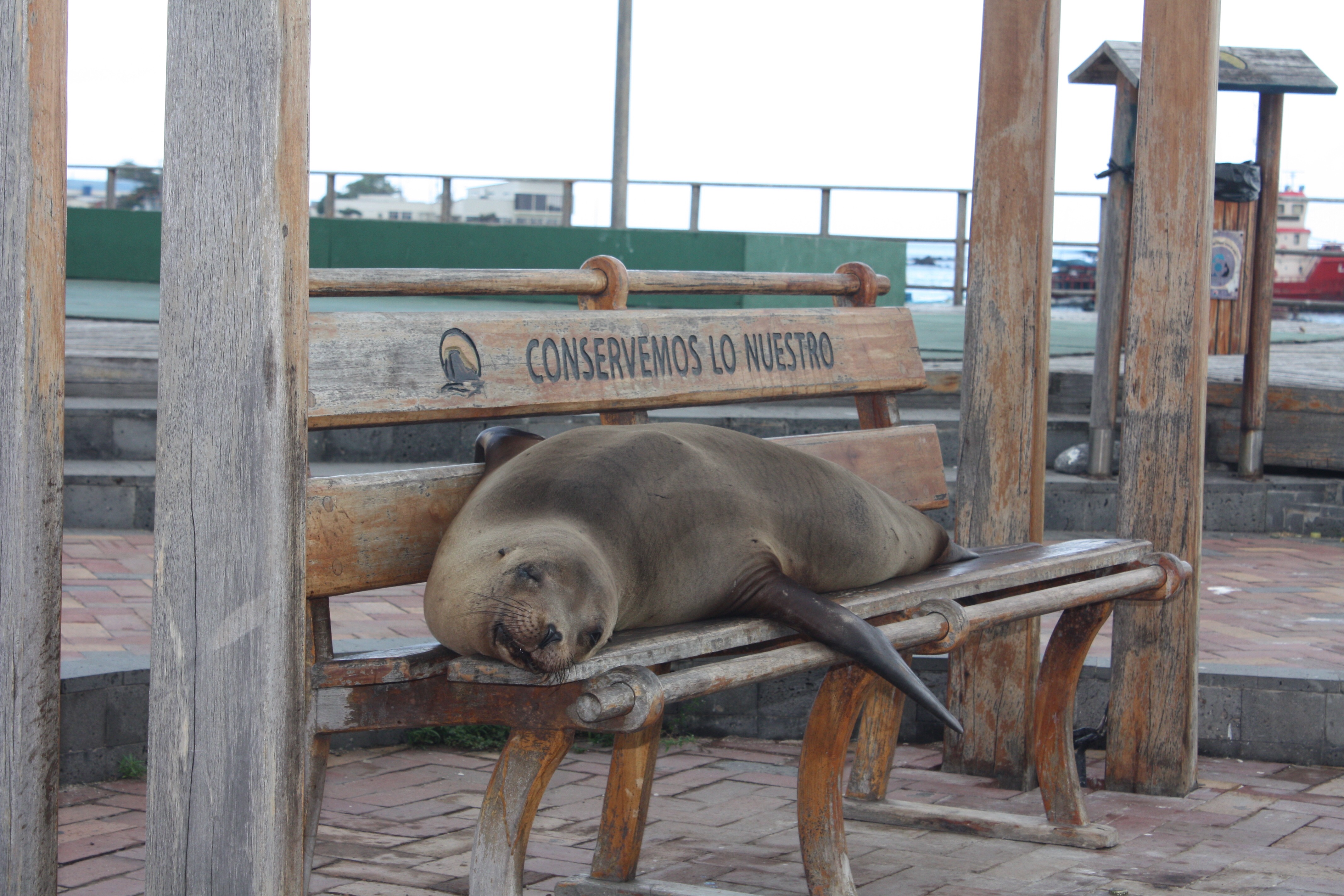
Sea lions (called sea wolves in Spanish) are everywhere.  Quite a surprise the first night to have one climb aboard!
Sea lions (called sea wolves in Spanish) are everywhere. Quite a surprise the first night to have one climb aboard!

image

Expecting to take/post lots more wildlife photos in the next two weeks!